Reynand Wu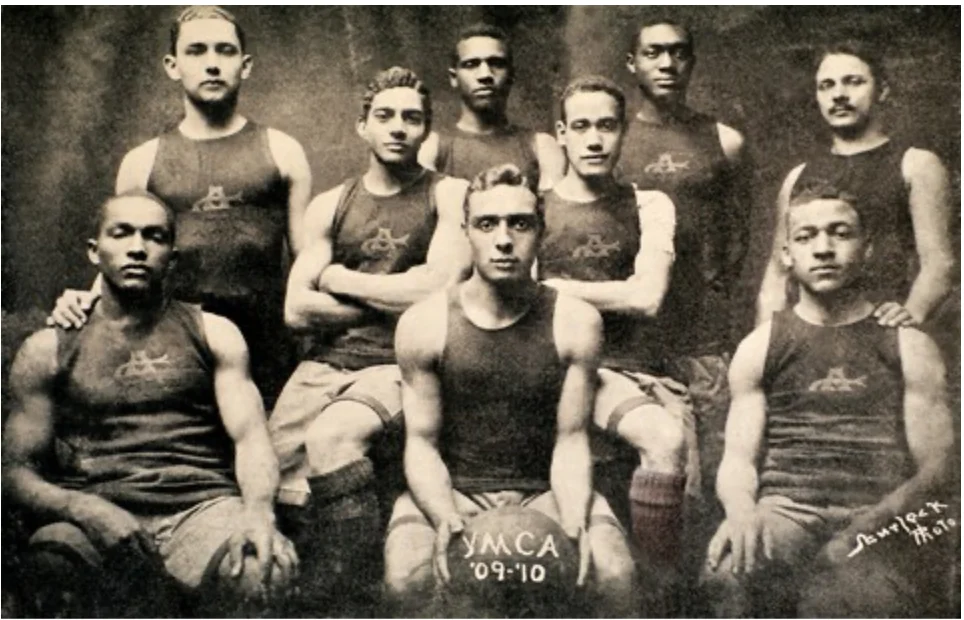
Picture this: A vibrant afternoon on 135th Street in Harlem, where the rhythmic thud of a basketball against asphalt cuts through the urban hum. A small, immaculately maintained outdoor court emerges into view, its fresh paint gleaming under the sun, enclosed by a sturdy chain-link fence. Within its confines, a dynamic scene unfolds: young athletes, a blur of motion, pass, dribble, and shoot from every conceivable angle. The infectious energy of the game—the shouts, the cheers, the sheer athleticism—acts as a magnet, drawing an ever-growing crowd of children and adults to the sidelines, all captivated by the unfolding drama on the court. This scene, replicated countless times across the five boroughs, is a testament to basketball’s indelible mark on New York City’s cultural fabric, a legacy particularly profound within its African American communities. While today basketball is a universal language spoken on every corner, its deep roots in minority urban centers like Harlem are inextricably linked to a complex history of discriminatory practices, notably redlining and segregation, which inadvertently shaped the sport’s trajectory and accessibility.
Basketball’s Genesis: A Sport for "White Men"
Basketball, as we know it, was not conceived as a sport for the masses, let alone for minority populations. Invented in December 1891 by Dr. James Naismith, a Canadian physical education instructor at the International YMCA Training School in Springfield, Massachusetts, the game was designed as a less injury-prone indoor alternative to football for his students. Initially, peach baskets served as hoops, and a soccer ball was used, with Naismith crafting 13 fundamental rules. By the early 20th century, the sport had rapidly spread through YMCAs, colleges, and high schools across the United States. Elite institutions like Harvard, Yale, Cornell, and Princeton were among the first to establish intercollegiate games as early as 1901, solidifying basketball’s initial image as an academic, largely white, middle-class pursuit.
The professionalization of the sport followed, with the National Basketball League (NBL) forming in 1937, followed by the Basketball Association of America (BAA) in 1946. These leagues, predominantly composed of white players, eventually merged in 1949 to form the National Basketball Association (NBA). For the first three decades of its organized existence, participation at both collegiate and professional levels was almost exclusively white, a consequence of explicit and implicit racial barriers. Black athletes were systematically excluded, barred from joining teams, and denied access to the very community centers, such as YMCAs, where the sport was primarily played and nurtured. The "Gentlemen’s Agreement," an unwritten rule among team owners and league officials, effectively maintained this color line.
The breaking of this barrier was a slow and arduous process. George Gregory Jr. became the first Black collegiate player at Columbia University in 1928, a pioneering but isolated achievement. It wasn’t until the 1949-1950 NBA season, a full year after Jackie Robinson integrated Major League Baseball, that professional basketball saw its first Black players: Chuck Cooper (Boston Celtics), Nathaniel Clifton (New York Knicks), and Earl Lloyd (Washington Capitols). Their entry marked a pivotal moment, signaling the gradual dismantling of overt racial segregation in professional sports. However, the legacy of exclusion meant that Black communities, if they wished to embrace basketball, often had to build their own infrastructure, fostering a grassroots movement that would profoundly shape the sport’s future.
Systemic Discrimination: Redlining and Its Athletic Impact in NYC
The disproportionate adoption of basketball within African American communities, particularly in cities like New York, cannot be understood without examining the pervasive impact of systemic racial and economic discrimination. Practices such as redlining, a discriminatory housing policy initiated in the 1930s, profoundly shaped urban landscapes and the lives of their residents. The National Housing Act (NHA) of 1934, ostensibly designed to improve the housing market and promote homeownership through programs like the Federal Housing Administration (FHA) and the Home Owners’ Loan Corporation (HOLC), became a tool for institutionalizing segregation.
The HOLC, tasked with assessing mortgage lending risk, created detailed "Residential Security Maps" for over 200 cities across the U.S. These maps categorized neighborhoods from "A" (green, best, low risk) to "D" (red, hazardous, high risk). Crucially, areas with significant Black populations, irrespective of their actual economic stability, were almost uniformly color-coded "red." This designation signaled to banks and other lenders that these neighborhoods were "risky" for investment, leading to a severe disinvestment cycle. The FHA then leveraged these maps to guide its lending policies, effectively denying federally insured housing loans to minority residents and those living in redlined areas. This practice starved Black neighborhoods of capital, leading to deteriorating housing stock, depressed property values, and a chronic lack of public and private investment.
As Black families, seeking opportunities and escaping Jim Crow laws in the South, migrated to Northern cities, the phenomenon of "white flight" accelerated. White homeowners, fearing declining property values and cultural shifts, moved en masse to newly developed suburbs, often facilitated by FHA-backed loans that were unavailable to Black buyers. This exodus further concentrated poverty and racial segregation in urban cores, exacerbating economic inequalities. The median wealth of Black households remains significantly lower than that of white households, a disparity that can be traced back, in part, to these foundational discriminatory policies. According to a 2020 Brookings Institution report, the median white household has 7.8 times the wealth of the median Black household, a gap rooted in generations of restricted access to wealth-building assets like homeownership.
This economic inequality directly impacted recreational opportunities. Redlined neighborhoods were—and often still are—characterized by less green space and smaller, less-maintained parks compared to affluent, predominantly white areas. A 2020 analysis by the Trust for Public Land revealed that in New York City, the average park size in low-income neighborhoods is 6.4 acres, starkly contrasting with 14 acres in wealthy neighborhoods. This disparity in public amenities meant fewer well-equipped baseball fields, soccer pitches, or tennis courts, pushing children in these communities towards sports requiring minimal infrastructure.
The Economic Divide: Why Basketball Became Accessible
Beyond the physical limitations of recreational spaces, the economic barriers associated with other popular sports made basketball an undeniable draw for minority youth. Baseball, for instance, requires significant financial outlay for equipment (bats, gloves, specialized cleats), uniforms, and increasingly, participation in costly travel teams and private coaching to reach competitive levels. Football demands expensive protective gear, and organized leagues often have substantial registration fees. Sports like hockey, tennis, or golf have even higher entry costs, requiring specialized facilities, expensive equipment, and often private club memberships.
Basketball, by contrast, offered a remarkably low barrier to entry. A single ball, a hoop (which could be improvised), and a patch of asphalt were often all that was needed. The game could be played individually, in pairs, or with full teams, adapting to available space and numbers. David C. Ogden, a professor at the University of Nebraska who extensively studied race and sport dynamics, highlighted this stark contrast in his 2003 research. He noted that the lack of baseball facilities in Black neighborhoods and the prohibitive cost of "select" (travel) baseball were primary reasons for the lack of racial diversity in the sport. Ogden’s study quoted coaches who observed, "More than two-thirds of the 27 coaches said that African-American youth prefer to spend their time on the basketball court rather than on the diamond." This preference was not merely cultural; it was a pragmatic response to economic realities imposed by systemic inequality.
Building Their Own: The Rise of Black YMCAs and Independent Leagues
In the face of segregation and exclusion from mainstream athletic institutions, African American communities created their own spaces and opportunities. Black YMCAs emerged as vital community hubs, offering not only physical fitness but also educational, social, and spiritual support. These institutions became crucibles for Black athletic talent, fostering the growth of basketball when white-run facilities remained closed off.
One pivotal figure in this movement was Edwin Bancroft Henderson, an educator in Washington D.C. Having learned basketball during summer sessions at Harvard University, Henderson became a tireless advocate for the sport, introducing it to young Black men in the D.C. area in the early 20th century. His efforts, alongside similar initiatives in other urban centers, rapidly spread the game across the East Coast, particularly in New York, Philadelphia, and Baltimore. These cities became hotbeds for independent Black basketball teams, forming the "Black Fives Era" (roughly 1904-1950), a period of vibrant, competitive basketball played by all-Black teams.
The Smart Set Athletic Club of Brooklyn, established in 1907, is often recognized as America’s first fully independent Black basketball team, demonstrating the self-sufficiency and organizational prowess within these communities. Other legendary teams emerged, such as the New York Renaissance, known as the "Rens," who dominated the court for decades, winning nearly 2,600 games against both white and Black teams. These teams played in armories, church basements, and community halls, drawing passionate crowds and building a distinct basketball culture long before the NBA integrated. They were not just sports teams; they were symbols of excellence, resilience, and community pride, challenging racist stereotypes through their athletic prowess.
The Harlem Globetrotters: A Global Stage for Black Talent
Amidst this burgeoning independent basketball scene, the Harlem Globetrotters emerged in 1926, transcending the sport to become a global cultural phenomenon. Founded by Abe Saperstein in Chicago, the team initially played serious, competitive basketball, often against white teams, before evolving into a unique blend of athleticism, comedy, and showmanship. Despite their name, the Globetrotters were not originally from Harlem, but Saperstein recognized the power of associating them with the iconic Black cultural mecca.

For Black basketball players, the Globetrotters offered one of the few viable pathways to make a living through their sport during an era of widespread professional segregation. They provided an international platform for Black athletes to showcase their extraordinary skills, captivating audiences worldwide with their innovative play and entertaining antics. The Globetrotters toured extensively, becoming de facto cultural ambassadors and demonstrating the talent and charisma of Black Americans to millions who might otherwise have held prejudiced views. Their success, both on and off the court, underscored the immense talent that had been historically denied entry into mainstream professional leagues.
New York City’s Enduring Basketball Legacy
The confluence of systemic discrimination, limited recreational options, and the proactive self-organization within Black communities solidified basketball’s status as a fundamental element of New York City culture, regardless of race. The sport became more than just a game; it was a means of expression, a source of community pride, and for some, a route to economic upward mobility.
New York City earned its moniker as a "basketball mecca" through the generations of talent nurtured on its courts. From the "Black Fives" era to the legends of Rucker Park in Harlem, West 4th Street in Greenwich Village, and Dyckman Park in Manhattan, streetball became an integral part of the city’s identity. These outdoor courts served as proving grounds, where reputations were forged, and legends were born, often drawing crowds as large and passionate as professional games. The informal, improvisational nature of streetball, emphasizing individual skill, creativity, and flair, profoundly influenced the style of play that would eventually permeate the professional game.
Basketball Today: A Transformed Landscape and Ongoing Influence
Today, the landscape of basketball is vastly different from its segregated origins. The NBA, once an exclusively white domain, is now overwhelmingly diverse. As of recent statistics, approximately 75% of NBA players are Black, reflecting the demographic shift and the enduring legacy of the sport in African American communities. Furthermore, the NBA has become a global league, with a significant number of international players, many of whom were inspired by the league’s predominantly Black stars. Black athletes from the United States also play professionally in leagues across the globe, a testament to the sport’s universal appeal and the opportunities it now affords.
In New York City, the tradition continues. Every summer, neighborhood parks across the city host legendary basketball tournaments that draw national attention and serve as vibrant community gatherings. Events like Nike-sponsored "NY vs. NY" and Slam magazine’s "Summer Classic" at Dyckman Park showcase the top high school and collegiate talent, attracting thousands of fervent fans. These tournaments are not merely sporting events; they are cultural institutions, celebrating community, competition, and the enduring spirit of streetball. They are living testaments to how segregation and redlining, though intended to stifle opportunity, inadvertently fostered the conditions under which basketball became an indelible and empowering staple of the community for generations.
The journey of basketball from a "white man’s game" to a global phenomenon deeply rooted in African American culture is a complex narrative of exclusion, resilience, and triumph. It highlights how systemic injustices can, paradoxically, catalyze unique cultural developments. New York City’s vibrant basketball scene is a powerful reminder that even in the face of adversity, communities can build their own spaces for excellence, joy, and aspiration, leaving an enduring legacy on the hardwood that resonates far beyond the court itself.
Additional Resources:
- Aaronson, D., Faber, J., Hartley, D., Mazumder, B., & Sharkey, P. (2020). The Long-Run Effects of the 1930s HOLC “Redlining” Maps on Place-Based Measures of Economic Opportunity and Socioeconomic Success. The Effects of the 1930s HOLC “Redlining” Maps. https://doi.org/10.21033/wp-2020-33
- Bowen, F. (2023, April 7). In its early years, NBA blocked black players. The Washington Post. Retrieved April 24, 2023, from https://www.washingtonpost.com/lifestyle/kidspost/in-nbas-early-years-black-players-werent-welcome/2017/02/15/664aa92e-f1fc-11e6-b9c9-e83fce42fb61_story.html
- Centopani, P. (2020, February 24). The makings of basketball mecca: Why it will always be New York. FanSided. Retrieved May 1, 2023, from https://fansided.com/2020/02/24/makings-basketball-mecca-will-always-new-york/
- Domke, M. (2011). Into the vertical: Basketball, urbanization, and African American … Into the Vertical: Basketball, Urbanization, and African American Culture in Early- Twentieth-Century America. Retrieved March 31, 2023, from http://www.aspeers.com/sites/default/files/pdf/domke.pdf
- Gay, C. (2022, January 13). The black fives: A history of the era that led to the NBA’s racial integration. Sporting News Canada. Retrieved April 24, 2023, from https://www.sportingnews.com/ca/nba/news/the-black-fives-a-history-of-the-era-that-led-to-the-nbas-racial-integration/8fennuvt00hl1odmregcrbbtj
- Gorey, J. (2022, July 25). How “White flight” segregated American cities and Suburbs. Apartment Therapy. Retrieved April 30, 2023, from https://www.apartmenttherapy.com/white-flight-2-36805862
- Hunt, M. (2022, October 11). What is the National Housing Act? Bankrate. Retrieved April 25, 2023, from https://www.bankrate.com/real-estate/the-national-housing-act/#:~:text=What%20is%20the%20National%20Housing%20Act%20(NHA)%3F,Loan%20Insurance%20Corporation%20(FSLIC).
- Hu, W., & Schweber, N. (2020, July 15). New York City has 2,300 parks. but poor neighborhoods lose out. The New York Times. Retrieved April 21, 2023, from https://www.nytimes.com/2020/07/15/nyregion/nyc-parks-access-governors-island.html
- Ivy league regular season champions, by Year. Coaches Database. (2023, March 5). Retrieved April 24, 2023, from https://www.coachesdatabase.com/ivy-league-regular-season-champions/
- McIntosh, K., Moss, E., Nunn, R., & Shambaugh, J. (2022, March 9). Examining the black-white wealth gap. Brookings. Retrieved April 25, 2023, from https://www.brookings.edu/blog/up-front/2020/02/27/examining-the-black-white-wealth-gap/
- Ogden, D. C. ., & Hilt, M. L. . (2003). Collective Identity and Basketball: An Explanation for the Decreasing Number of African Americans on America’s Baseball Diamond. Retrieved March 31, 2023, from https://www.nrpa.org/globalassets/journals/jlr/2003/volume-35/jlr-volume-35-number-2-pp-213-227.pdf
- Ortigas, R., Okorom-Achuonyne, B., & Jackson, S. (n.d.). What exactly is redlining? Inequality in NYC. Retrieved March 30, 2023, from https://rayortigas.github.io/cs171-inequality-in-nyc/
- Pearson, S. (2022). Basketball origins, growth and history of the game. History of The Game Of Basketball Including The NBA and the NCAA. Retrieved April 24, 2023, from https://www.thepeoplehistory.com/basketballhistory.html
- Robertson, N. M. (1995). [Review of Light in the Darkness: African Americans and the YMCA, 1852-1946., by N. Mjagkij]. Contemporary Sociology, 24(2), 192–193. https://doi.org/10.2307/2076853
- Townsley, J., Nowlin, M., & Andres, U. M. (2022, August 18). The lasting impacts of segregation and redlining. SAVI. Retrieved March 30, 2023, from https://www.savi.org/2021/06/24/lasting-impacts-of-segregation/