Reynand Wu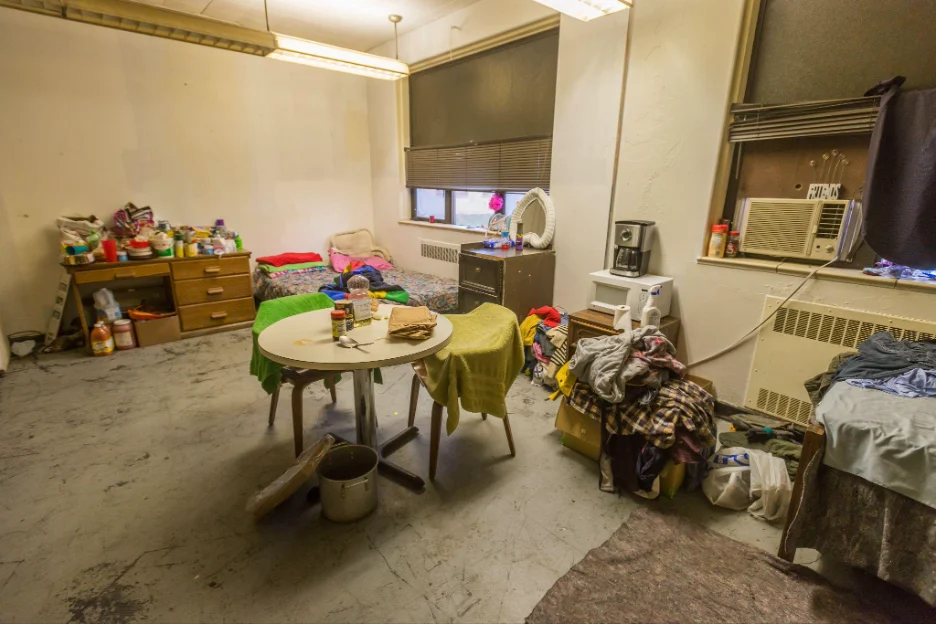
Migrant labor is the indispensable backbone of American agriculture, a constant and essential force that underpins the nation’s food supply. Yet, the individuals performing this vital work often remain deliberately obscured, their contributions rendered invisible not just socially, but spatially. This manufactured invisibility is deeply embedded in the design and location of their housing, strategically tucked away behind groves, far from public roads, or sequestered on private lands behind locked gates. These sites are challenging to access, making it equally difficult for their occupants to leave, fostering an environment of isolation and control.
The Architecture of Invisibility: A Deliberate Design
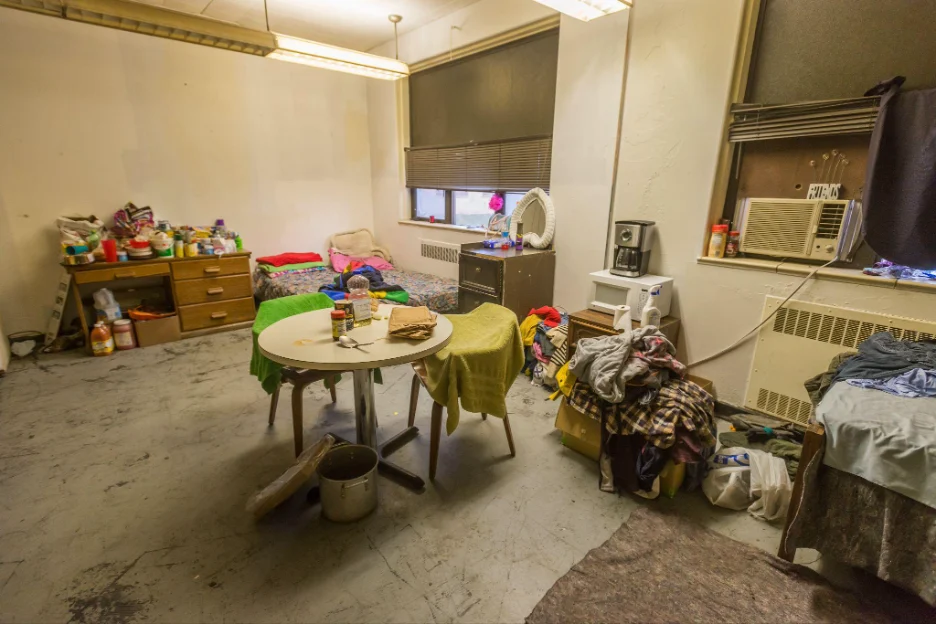
The physical arrangement of migrant housing is rarely accidental; it is a meticulously crafted system that serves a specific purpose. Reports from various regions, including insights from individuals who have worked closely with migrant communities, consistently describe similar living conditions. Workers, often toiling six or seven days a week in extreme heat across fields and orchards, return to dormitories or shared cabins built far from town centers. These accommodations are frequently characterized by a profound lack of privacy, comfort, and basic dignity. Shared beds, cramped quarters, communal bathrooms, and often sparsely equipped kitchens are common features. These conditions, as noted by former paralegals assisting migrant workers, paint a stark picture of a system that prioritizes control over human well-being.
Visual documentation from states like North Carolina and California corroborates these narratives, showing rows of identical cabins, each containing narrow beds, small windows, and barely enough space for personal belongings. Such photographs transcend mere documentation; they serve as critical evidence, revealing the deliberate construction of a system designed to marginalize and erase the very people who keep it operational. The repetitive, uniform nature of these structures underscores a systematic approach rather than isolated incidents of poor housing.
A Sociological Lens: Power, Space, and Discipline
Sociology offers a robust framework for understanding these housing structures not merely as substandard living arrangements, but as manifestations of a deeply entrenched structural problem. When employers control housing, every complaint or expression of dissent becomes a significant risk. Speaking up can jeopardize not only one’s employment but also one’s shelter, potentially leading to immediate homelessness and, for undocumented workers, the threat of forcible deportation. This design inherently limits autonomy, fostering a culture of silence where fear of reprisal outweighs the desire for improved conditions. The fewer choices an individual possesses, the more susceptible they become to control.
Conflict theory, a foundational sociological perspective, posits that societal development and change are driven by struggles over power and resources. In the context of migrant labor, this struggle is overtly visible in the very organization of housing. Drawing on the work of Henri Lefebvre, who argued that space is socially produced, we can understand that the spaces in which migrant workers live are not neutral. They are shaped by those who hold the authority to determine living conditions, and this shaping is not primarily driven by comfort, fairness, or functional efficiency. Instead, the arrangement and social production of space reflect the interests of those in power and control. The dimensions of a room, the proximity of houses, and the overall layout of a facility are never random; they are intentional reflections of power relationships.
Similarly, Michel Foucault’s analysis of how institutions utilize architecture to enforce discipline provides further insight. In migrant housing, space itself becomes a signal of control. These dormitories often do not require overt bars or guards; their very design, frequently meeting only the bare minimum legal standards—standards sometimes barely exceeding those for a prison cell—serves to dehumanize and, by extension, control. The inherent lack of privacy, the communal nature of essential facilities, and the isolated locations collectively create an environment where workers feel constantly monitored and disempowered. Accounts from workers detail the oppressive closeness of bunks, the inability for married couples to live together, and stringent rules regarding visitors, meals, and noise. These homes are not truly theirs, a reality underscored by a system meticulously designed to ensure it.
Historical Roots and Policy Frameworks
The reliance on migrant labor in U.S. agriculture has deep historical roots, evolving from various labor systems, including post-slavery agricultural labor, the Dust Bowl migrations, and programs like the Bracero Program (1942-1964), which formalized the importation of Mexican agricultural workers. These historical precedents established a pattern of temporary, often exploitable, labor to meet seasonal demands.
Today, a significant portion of authorized migrant farmworkers enter the U.S. through the H-2A visa program. This program allows U.S. agricultural employers to bring foreign nationals to the U.S. to fill temporary agricultural jobs. A key requirement of the H-2A program is that employers must provide housing to workers at no cost or provide a housing allowance. This obligation, while intended to protect workers, paradoxically grants employers significant control over their lives.
The Migrant and Seasonal Agricultural Worker Protection Act (MSPA) is the primary federal statute governing the employment of migrant and seasonal agricultural workers. MSPA sets forth worker protections relating to wages, housing, transportation, disclosures, and recordkeeping. While MSPA mandates certain housing safety and health standards, enforcement is often challenging. State and local regulations may also apply, but the dispersed, often remote nature of farmworker housing makes consistent oversight difficult. The "minimum legal standard" often becomes the de facto maximum, with little incentive for employers to exceed these baseline requirements.
Statistical Realities: The Scale of Migrant Labor and Its Conditions
The U.S. Department of Agriculture (USDA) estimates that there are approximately 2.4 million farmworkers in the United States, with a significant portion being migrant workers who move across states or within regions to follow harvest seasons. These workers are predominantly from Mexico and Central America, and a substantial number are undocumented, further exacerbating their vulnerability. They are critical to the U.S. food system, performing labor that many native-born workers are unwilling or unable to do, often for low wages and under arduous conditions.
Despite their essential contribution, farmworkers face some of the highest poverty rates and lowest wages in the country. The median annual income for farmworkers is often below the federal poverty line, even for those working full-time. This economic precarity is directly linked to their housing situation. Reports from organizations like the Economic Policy Institute and various labor advocacy groups consistently highlight the inadequate and often hazardous living conditions. Overcrowding, lack of climate control, pest infestations, and insufficient sanitation are frequently cited issues. These conditions are not just uncomfortable; they pose serious health risks, including respiratory illnesses, infectious diseases, and mental health challenges stemming from stress and isolation.
A 2018 report by the Government Accountability Office (GAO) noted persistent challenges in enforcing H-2A housing standards, citing inadequate inspections and a lack of clear guidance for investigators. This lack of robust oversight means that even the minimum legal standards are not always met, and violations often go unaddressed.
Challenges and Vulnerabilities: A Human Cost
The implications of this spatially enforced control extend far beyond physical discomfort. The isolation of housing locations often means limited access to transportation, healthcare, grocery stores, and community services. This compounds their social invisibility, making it harder for workers to form community ties, access legal aid, or simply live a life outside of work. For families, the impact is profound, with children often growing up in environments that lack space for play, privacy for study, or access to stable educational opportunities.
The power dynamic inherent in employer-provided housing also creates significant barriers to reporting abuses. Workers fear retaliation, including job loss, eviction, and even deportation. This fear suppresses complaints about wage theft, unsafe working conditions, and sexual harassment, perpetuating a cycle of exploitation. Labor advocates frequently describe how this fear is a primary tool used by unscrupulous employers to maintain control over their workforce. The design of the housing, far from external oversight, reinforces this isolation and makes it easier for abuses to occur unchecked.
Advocacy and Industry Perspectives
Labor advocacy groups, such as the United Farm Workers (UFW), Farmworker Justice, and local legal aid organizations, have consistently campaigned for improved housing conditions, stronger enforcement of labor laws, and greater protections for migrant workers. They argue that the current system allows for exploitation and dehumanization, calling for comprehensive immigration reform, increased funding for oversight agencies, and a shift towards worker-centric policies. These groups often highlight the discrepancy between the essential nature of farmworkers’ labor and the substandard conditions they endure.
On the other side, agricultural industry representatives and grower associations often articulate the significant economic pressures faced by farmers. They point to the high costs of production, fluctuating market prices, and labor shortages as reasons for their reliance on temporary foreign workers and the challenges of providing housing. They argue that providing housing is an additional burden and that compliance with numerous regulations is already complex. Some also highlight efforts to improve conditions, but acknowledge that economic realities often dictate what is feasible. The debate often centers on balancing the economic viability of agriculture with the human rights and welfare of its workforce.
Enforcement Gaps and Legal Battles
Despite the existence of federal and state regulations, the enforcement of housing standards for migrant farmworkers remains a significant challenge. The sheer number of agricultural operations, the temporary and mobile nature of the workforce, and the remote locations of many farms make comprehensive inspections difficult. Agencies like the Department of Labor (DOL) and the Occupational Safety and Health Administration (OSHA) are responsible for oversight, but often operate with limited resources.
When violations are found, penalties can range from fines to orders for remediation. However, the process can be slow, and workers may have moved on before issues are resolved. Legal challenges brought by workers, often with the support of legal aid organizations, have sometimes resulted in successful lawsuits against employers for substandard housing, wage theft, and other labor abuses. These cases, while impactful, represent only a fraction of the issues faced by the broader migrant worker population, many of whom remain unaware of their rights or too fearful to act.
Broader Implications: Food Security and Ethical Consumption
The pervasive issues within migrant labor housing have profound implications for American society. They highlight a fundamental tension between the desire for affordable food and the ethical treatment of the workers who produce it. The "invisibility" of migrant workers and their living conditions allows consumers to remain disconnected from the human cost embedded in their food supply chain.
This system, which prioritizes economic efficiency and control over human dignity, raises critical questions about food security and ethical consumption. Can a food system be truly sustainable if it relies on the systematic exploitation and marginalization of its most foundational labor force? The answer, for many scholars and advocates, is a resounding no. Bringing these designs to light is not just an academic exercise; it is a moral imperative. As scholars and citizens, we must recognize that we cannot change what we refuse to see.
The conditions of migrant labor housing are not accidental byproducts of a complex industry; they are, in essence, a deliberate labor strategy. These camps are not temporary mishaps but long-term solutions to a problem that many in power have shown little inclination to genuinely fix. Understanding this reality is the first step toward advocating for meaningful reforms that ensure dignity, safety, and equity for the millions of workers who feed the nation.