
 Reynand Wu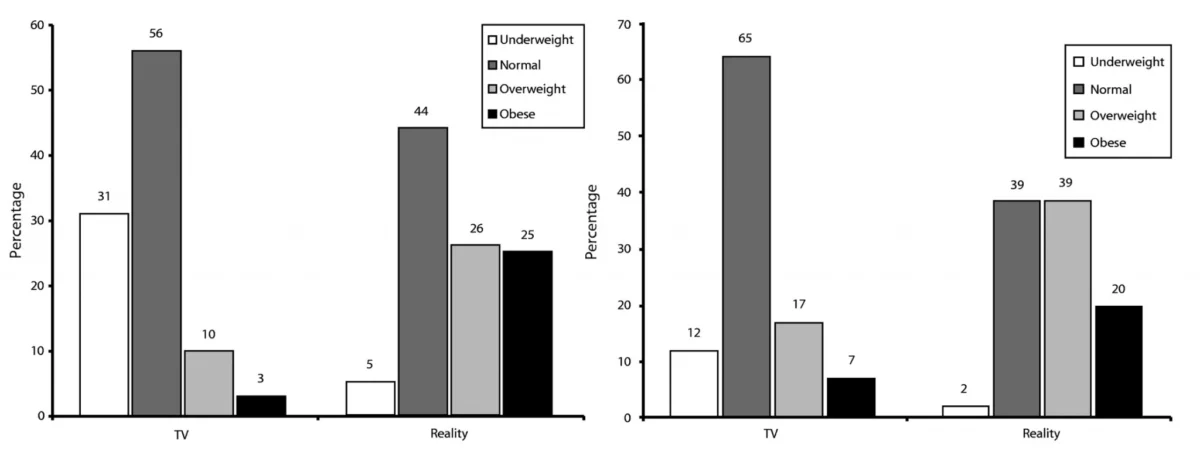
Television, a ubiquitous medium shaping cultural narratives and individual perceptions, consistently distorts, mocks, and marginalizes individuals with larger bodies, reducing them to one-dimensional caricatures whose stories and identities are frequently underdeveloped and deemed inconsequential. This deeply ingrained pattern of misrepresentation extends beyond mere underrepresentation, actively fostering an environment where external beauty is narrowly defined by thinness, excluding anyone who deviates from this restrictive ideal. The implications for viewers, particularly those who do not conform to these societal body standards, are profound, contributing to negative self-perception, body dissatisfaction, and the internalization of harmful biases.
Recent research underscores the stark disparity in how body types are depicted and affirmed on screen. A seminal study by Tzoutzou et al., published in Sexes, meticulously analyzed on-screen interactions, revealing a disturbing trend: all 36 compliments related to appearance given to women within the observed programming were exclusively directed towards thin women. Crucially, not a single positive message regarding physical appearance was extended to a woman of average or overweight body type. The pattern for male characters, while slightly less absolute, mirrored this bias, with only one overweight character receiving a positive message about his physique. This data paints a clear picture of an entertainment landscape that not only fails to celebrate diverse body types but actively reinforces a singular, exclusionary standard of beauty, effectively telling audiences that attractiveness resides solely within the realm of thinness.
The visual reinforcement of this "thin ideal" through constant exposure can have a corrosive effect on audience self-esteem. Viewers, especially impressionable young individuals, can internalize these messages, making it exceptionally challenging to cultivate a healthy self-image if their bodies do not align with the narrow beauty standards propagated by television. Witnessing the consistently negative or dismissive treatment of individuals with larger bodies on screen can directly influence how viewers perceive their own bodies, fostering feelings of inadequacy and self-consciousness. This phenomenon is not merely about representation; it is about the implicit lessons television teaches about worth, desirability, and social acceptance based on physical appearance.
Underrepresentation: A Striking Disparity Between Screen and Reality
Beyond the quality of representation, the sheer quantity of diverse body types on television remains strikingly out of sync with demographic realities. Individuals with larger bodies are significantly underrepresented on TV shows, creating a visual vacuum that further isolates and marginalizes. A foundational study by Brownell et al., published in the American Journal of Public Health in 2003, analyzed television content from 1999-2000, revealing a stark contrast between the body types depicted on screen and those prevalent in the general population. The data clearly illustrated that while a substantial portion of the population identified as average or overweight, these body types were dramatically less visible in fictional narratives. For instance, while a significant percentage of women in reality fell into the overweight or obese categories, their on-screen counterparts were overwhelmingly depicted as thin. A similar, though perhaps less pronounced, discrepancy was observed for male characters.
This persistent pattern of underrepresentation, even two decades after such studies highlighted the issue, suggests a systemic failure within the entertainment industry to reflect the diverse physiognomy of its audience. The consequence is not merely a lack of visibility; it contributes to the normalization of an unrealistic body ideal, making larger bodies seem exceptional, rare, or even undesirable by their absence in mainstream narratives. When diverse body types are absent from roles that convey competence, desirability, or heroism, it implicitly sends a message about who is worthy of being seen and whose stories matter. The implication is that if you don’t fit the narrow mold, your story is less valuable, or perhaps, not worth telling at all. This scarcity of diverse body types also limits the range of experiences and perspectives presented, failing to reflect the richness and complexity of human existence.
Stereotypes in Storytelling: From Sidekick to Villain
When individuals with larger bodies do appear on screen, their roles are frequently constrained by reductive stereotypes that strip them of their humanity and narrative complexity. They are often relegated to the roles of comedic sidekicks, foils, or outright villains, perpetuating harmful tropes that contribute to a broader societal weight stigma. These archetypes serve to reinforce existing prejudices rather than challenge them, cementing negative associations in the public consciousness.
In the realm of comedy, the humor often comes at the expense of characters with larger bodies, rather than with them. Research indicates that overweight women, for instance, are approximately twice as likely to be the punchline of a joke compared to their thinner counterparts. These characters are frequently given smaller, less developed roles, are less likely to be involved in romantic relationships, and engage in fewer positive interactions than thin characters. This phenomenon, sometimes termed the "Melissa McCarthy effect" when referring to prominent actresses, often still traps them within a framework where their body is central to their comedic persona, rather than their wit or character depth. The laughter generated is frequently rooted in discomfort, pity, or even derision, rather than genuine shared humor, further dehumanizing the character and, by extension, individuals in the audience who share similar body types. This type of humor cultivates an environment where body shaming is normalized and even encouraged, contributing to a culture of insensitivity.
Equally pervasive and arguably more insidious is the portrayal of individuals with larger bodies as antagonists. Media frequently equates larger bodies with negative character traits, cementing a visual shorthand for villainy that is particularly damaging to young audiences. A study by Himes and Thompson explicitly found that "obesity was equated with negative traits (evil, unattractive, unfriendly, cruel) in 64% of the most popular children’s videos." This alarming statistic reveals a deliberate and consistent choice by creators to use body size as a visual cue for moral corruption or unpleasantness. Iconic examples abound in children’s media, such as the voluptuous and malevolent sea witch Ursula from The Little Mermaid or the corpulent and tyrannical Queen of Hearts from Alice In Wonderland. These characters, with their exaggerated physical forms and malicious intentions, help to draw a subconscious connecting line between larger bodies and negative qualities in the impressionable minds of children, establishing harmful biases from a young age.
By consistently assigning these roles, whether comedic or villainous, creators deny characters with larger bodies the opportunity for complex character development, nuanced emotional arcs, or aspirational journeys. Their stories become less human, less relatable, and less deserving of empathy compared to other characters who are afforded full, multi-faceted narratives. This isn’t merely an oversight; it’s an active demonization, constructing a powerful visual rhetoric that implicitly condemns larger bodies and those who inhabit them. The consequence is a reinforcement of the idea that physical appearance is intrinsically linked to moral character, a dangerous and unfounded premise.
The Psychological Toll: Audience Internalization and Harmful Repercussions
The consistent barrage of negative and stereotypical portrayals of individuals with larger bodies on television exerts a significant psychological toll on audiences, leading to the internalization of negative self-perceptions and a range of adverse behavioral outcomes. The impact can be surprisingly immediate and profound. A study by Fouts and Burggraf revealed that as little as 30 minutes of watching television can significantly affect how a young woman views her own body. This rapid internalization suggests that even casual exposure can trigger self-critical thoughts and body dissatisfaction, highlighting the pervasive influence of media.
The Tzoutzou et al. study further highlighted this vulnerability, with young girls reporting that media portrayals directly influenced their desire to be thin and conform to prevailing beauty standards. This desire often manifests in frequent dieting and, in more severe cases, can contribute to the development of disordered eating patterns. Many eating problems are rooted in the pursuit of unrealistic body standards, an image relentlessly transmitted and reinforced by mass media. The constant visual feedback loop from television, showing only thin bodies as desirable and healthy, creates a distorted reality that pressures viewers to strive for an often unattainable ideal, leading to chronic dissatisfaction and a harmful relationship with food and their own bodies. This relentless pursuit of an impossible ideal can lead to a cycle of shame, anxiety, and self-criticism, impacting mental health significantly.
Beyond direct body image issues, these misrepresentations can instill a deeper sense of insecurity and fear. Viewers may internalize the belief that if they do not conform to the "body norm" propagated on screen, they will face similar sexist or prejudiced treatment in real life. This fear can lead to social anxiety, self-isolation, and a reluctance to engage fully in social situations, all stemming from the perceived judgment rooted in fictional, distorted depictions on television. The collective weight of these factors – negative self-perception, body dissatisfaction, disordered eating tendencies, and social anxiety – significantly diminishes the overall well-being and mental health of female viewers, fostering a pervasive sense of inadequacy tied directly to their appearance and the perceived reactions of others, all influenced by the distorted lens of television.
The Roots of the Problem: Industry Dynamics and Societal Bias
The perpetuation of these harmful portrayals is not accidental; it is deeply entrenched in a complex interplay of historical biases, industry dynamics, and a lack of diverse voices behind the camera. Historically, media has often reflected and amplified prevailing societal prejudices, and weight stigma is no exception. The "thin ideal" has been a dominant aesthetic in Western media for decades, influencing fashion, advertising, and entertainment. This long-standing cultural preference has created a self-reinforcing cycle where creators, often unconsciously, revert to established tropes and character archetypes, finding comfort in what is familiar and perceived as safe.
A significant contributing factor is the lack of diversity within the creative and executive ranks of the television industry. When writers’ rooms, directorial teams, and studio executives lack individuals with diverse body experiences or a nuanced understanding of body positivity, the likelihood of perpetuating stereotypes increases. Without these varied perspectives, the default often becomes the familiar, which, in this case, means reductive and harmful portrayals of larger bodies. There can also be perceived market pressures, where some creators or networks might believe that audiences prefer or respond better to traditional beauty standards, or that comedic relief derived from body-shaming is universally accepted. This commercial logic often overrides ethical considerations regarding representation and its societal impact. Furthermore, the inherent desire for visual shorthand in storytelling can lead to lazy writing, where body type becomes a convenient, albeit damaging, substitute for genuine character development or a complex villainous motivation. The pressure to quickly establish character types can lead to relying on visual stereotypes rather than investing in nuanced character building.
The Broader Societal Impact of Media Misrepresentation
The implications of television’s misrepresentation of larger bodies extend far beyond individual self-esteem, contributing significantly to systemic weight stigma and discrimination in broader society. When media consistently portrays individuals with larger bodies as lazy, unintelligent, undesirable, or morally corrupt, it reinforces and legitimizes these biases in the minds of viewers. This cultivation of negative stereotypes contributes to a societal environment where individuals with larger bodies face discrimination in various aspects of life, including employment, healthcare, education, and social interactions.
For instance, studies have shown that individuals perceived as overweight or obese often experience prejudice in hiring decisions, receive less attentive medical care, and are subject to bullying and social exclusion. Television, by consistently linking body size to negative character traits or social outcomes, acts as a powerful cultural amplifier of these prejudices. It normalizes the idea that such discrimination is acceptable or even justified. This pervasive stigma can have serious public health consequences, leading to increased stress, anxiety, and depression among those targeted, and can paradoxically hinder healthy behaviors by making individuals feel disempowered or ashamed to seek help. The constant media messaging can also lead to internalized fatphobia, where individuals with larger bodies absorb and apply these negative stereotypes to themselves, further exacerbating mental health challenges and creating a vicious cycle of self-blame and societal condemnation.
A Call for Inclusive Storytelling: Towards a More Equitable Future
Recognizing the profound and often damaging impact of current television portrayals, there is a growing imperative for the industry to embrace more inclusive and responsible storytelling. This shift demands a conscious effort to move beyond simplistic caricatures and to depict individuals with larger bodies as multifaceted, complex human beings, capable of heroism, romance, intelligence, and dignity, just like any other character. Industry leaders, writers, and producers have a moral obligation to consider the broader societal implications of their creative choices.
Inclusive storytelling means creating narratives where body size is not the defining characteristic of a character. It involves showcasing individuals of all body types in diverse roles – as protagonists, professionals, romantic leads, and family members – without their weight being the central plot device or source of ridicule. It means ensuring that positive messages about appearance, health, and worth are not exclusively tied to thinness but are extended to a full spectrum of body types. Furthermore, it necessitates increasing diversity behind the scenes, ensuring that writers, directors, and producers from varied backgrounds, including those with personal experiences of body diversity, are empowered to shape narratives that are authentic and respectful. Advocacy groups and public discourse increasingly call for such changes, demanding that media reflect the rich tapestry of human experience.
Examples of progress, though still nascent, can be seen in certain contemporary productions that strive for more realistic and affirming portrayals. These shows demonstrate that compelling narratives do not require harmful stereotypes and that audiences are receptive to diverse representation. The goal is not merely to include larger bodies but to integrate them meaningfully and respectfully into the fabric of television storytelling, allowing them to exist as fully realized individuals whose identities and experiences are valued. This represents a move towards genuine inclusivity, where diversity is not just tokenism but an integral part of compelling narrative construction.
Conclusion: Television Should Be a Space for All
Television, at its best, is a communal space meant for enjoyment, reflection, and shared experience. However, this fundamental purpose is undermined when viewers feel their bodies are being judged, mocked, or erased by the very shows they choose to watch. For television to truly be a space that is fun for everyone, it must evolve to embrace and reflect the full spectrum of human experience and physical diversity. All bodies deserve to feel seen, valued, and accurately represented within television narratives. They deserve to inhabit complex roles, experience rich emotional lives, and be protagonists in their own stories, free from the constraints of reductive stereotypes. The entertainment industry holds immense power to shape perceptions and influence culture. By choosing to depict all body types with respect, nuance, and humanity, television can contribute to a more inclusive, empathetic, and healthy society, where every viewer can sit back, relax, and truly feel at home with the stories unfolding on their screens. Tori Lieberman’s insightful observations underscore this critical need for change, urging the industry to move towards a future where television is indeed a fun and affirming space for all, fostering positive self-image and societal acceptance rather than perpetuating harmful biases.








