Layla Zulfa
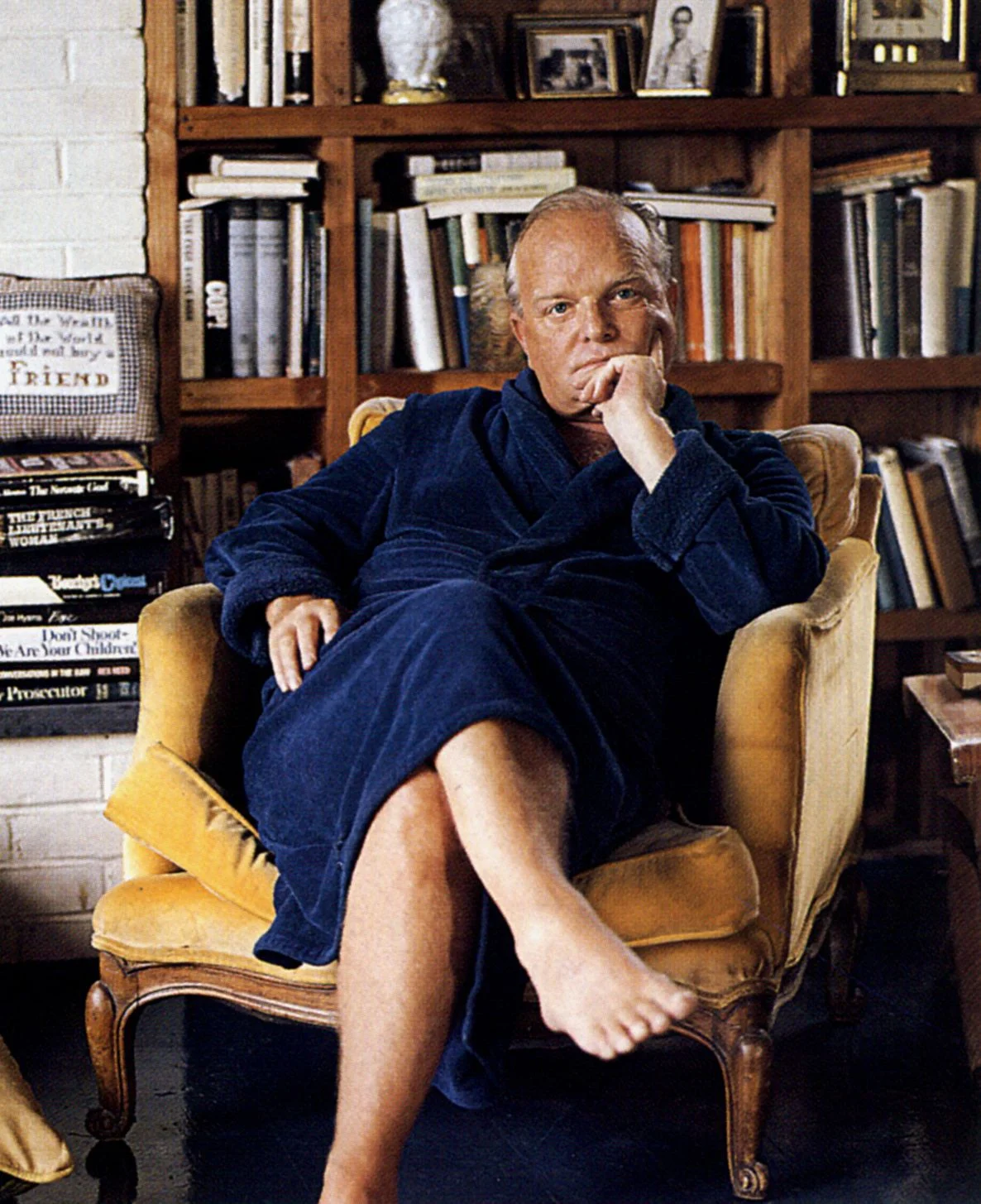
Fans of Truman Capote’s literary legacy and those fascinated by the intricate life of the author of In Cold Blood will soon have an unprecedented opportunity to acquire pieces of his private history. Nearly 400 personal items, ranging from the mundane to the deeply sentimental, are scheduled to go under the hammer at a Cornell Auction event on November 21, with online previews and remote bidding commencing on October 26. This collection represents the vast majority of the personal effects bequeathed to biographer and longtime confidant Gerald Clarke following Capote’s death in 1984 at the age of 59.

The auction arrives at a moment of renewed cultural interest in the writer’s life, fueled by recent dramatizations such as the 2005 biopic Capote and the 2024 miniseries Feud: Capote vs. the Swans. For the 89-year-old Clarke, the decision to part with these items is a practical necessity born of downsizing, yet it functions as a significant historical dispersal of one of America’s most polarizing and influential 20th-century voices.
A Half-Century in the Making: The Provenance of the Collection
The upcoming sale is notable not just for its provenance, but for its documentation. According to representatives from the Bellport, New York–based auction house, a substantial portion of the objects included in the catalog were featured in a 1976 Architectural Digest profile. That spread, which offered a rare glimpse into Capote’s custom-built residence in Sagaponack, Long Island, served as a time capsule for his aesthetic preferences and daily habits.

The items slated for auction provide a tactile connection to a man who, while often described as a social butterfly, maintained a fiercely private, monastic existence within his Long Island "raincoat" house. Among the most anticipated lots are the writer’s extensive collection of paperweights. Clarke, in a recent interview with The New York Times, noted that Capote was famously "addicted" to these objects. The collection includes commercially produced glass pieces, artisanal items with preserved flowers, and a singular, evocative paperweight crafted by Capote himself, embedded with stones from the Kansas farm that served as the primary setting for his seminal true-crime work, In Cold Blood.
Other significant items include a signed copy of To Kill a Mockingbird, a testament to his lifelong friendship with Harper Lee; a bronze frog inkwell; and the literal keys to the home that Capote once described as "Kansas with a sea breeze."

Chronology of a Legacy
To understand the weight of these objects, one must consider the timeline of the home they inhabited. Capote purchased the six-acre plot in 1962, commissioning a local carpenter to construct a box-shaped, flat-roofed dwelling that favored "run-down comfort" over luxury. For nearly 25 years, this site served as his creative sanctuary, contrasting sharply with his high-society life in Manhattan’s U.N. Plaza.
- 1962: Capote commissions the construction of his Sagaponack residence.
- 1966: The publication of In Cold Blood elevates Capote to a new echelon of global fame.
- 1976: Architectural Digest publishes a feature on the Sagaponack house, capturing the items that are now being brought to auction.
- 1984: Truman Capote passes away, leaving his estate and personal archives to Gerald Clarke.
- 1988: Clarke publishes his definitive biography, Truman Capote.
- 2026: The Cornell Auction sale marks the public dispersal of the remaining personal inventory.
The Intersection of Art and Domesticity
The items for sale offer a window into the dual nature of Capote’s personality. While he was known for his sharp tongue and attendance at the most exclusive galas of the era, his home environment was spartan and highly curated. Visitors to the Sagaponack property described a "witchcraft altar" in the living room—a collection of peculiar objects including an antique wood cat and a Cocteau-designed needlepoint pillow.

This juxtaposition of the macabre, the refined, and the kitsch is a recurring theme in the inventory. The collection is not merely an assemblage of antiques; it is a record of his intellectual life. His study, featuring a steel spiral staircase and walls lined with red sofas, contained the tools of his trade: unruled Sphinx paper, notebooks, and a rotating stack of detective magazines. The presence of these items in the auction catalog offers researchers and collectors alike a chance to examine the physical environment that birthed his final, unfinished masterpiece, Answered Prayers.
Implications for Literary Historians
The dispersal of a writer’s personal effects is always an event of historical gravity. When items as intimate as house keys and handwritten paperweights enter the private market, there is a risk of losing the context provided by their original arrangement. However, the documentation provided by the 1976 AD profile and the subsequent preservation by Gerald Clarke ensures that these objects will retain their historical value.

For academic institutions and private collectors, the auction represents a rare opportunity to acquire primary artifacts of the mid-century American literary canon. The sale also invites a reassessment of Capote’s domestic life. While he often played the role of the eccentric millionaire or the gossiping socialite, the auction reveals a man deeply attached to his material surroundings. His insistence on designing his own interiors—eschewing professional decorators because he "knew exactly what [he] wanted"—speaks to an individual who exerted total control over his environment, even as his personal life became increasingly turbulent.
Broader Impact and Market Reaction
Market analysts following the auction indicate that the "Capote brand" remains robust. Items associated with his work on In Cold Blood, in particular, are expected to draw significant interest. The association with Harper Lee, whose own reputation has only grown in recent decades, further elevates the value of the signed materials.

Beyond the monetary value, the auction serves as a final chapter in the stewardship of Gerald Clarke. Having spent decades preserving the memory of his friend, Clarke’s decision to downsize is a poignant reminder of the transience of material legacy. The items will soon be distributed among various collections, effectively ending the "closed" nature of the Capote estate.
As the bidding begins on October 26, the focus will likely remain on the tension between the public persona of the writer and the quiet, solitary reality of the man who collected stones from Kansas and spent his evenings reading by the sea. Whether these objects end up in a museum, a university archive, or a private collection, their sale ensures that the physical remnants of Truman Capote’s world will continue to circulate, keeping the conversation around his complex, brilliant, and often tragic life alive for a new generation.