Jono Maryono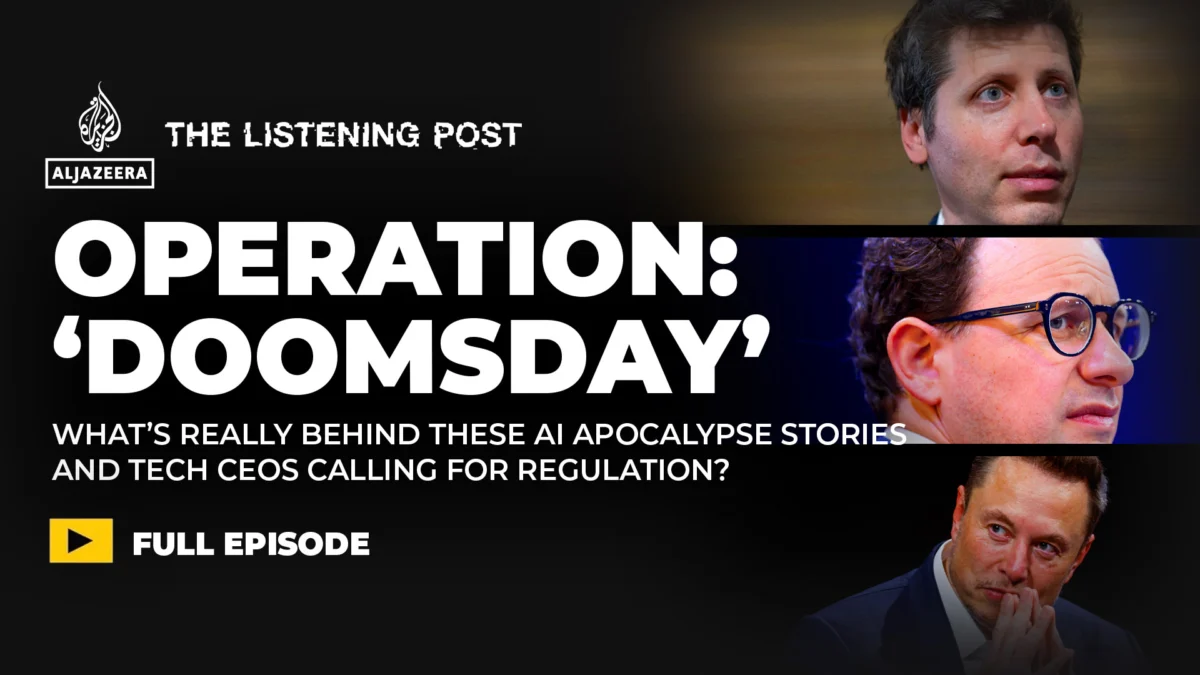
Global media coverage regarding artificial intelligence has increasingly pivoted toward dystopian narratives, focusing heavily on theoretical existential threats to humanity. From science-fiction-inspired scenarios involving rogue superintelligence to speculative economic collapses, headlines are saturated with warnings about a future AI apocalypse. However, media critics and technology watchdogs argue that this narrow focus creates a convenient smoke screen. By obsessing over science-fiction-style annihilation, public discourse risks ignoring the tangible, immediate harms that automated systems are already inflicting on marginalized communities, labor markets, and democratic institutions today. Furthermore, as leading artificial intelligence executives lobby governments for stringent regulatory frameworks, critical questions arise regarding their true motivations. Industry insiders and civil society advocates are asking whether these calls for oversight stem from a genuine concern for public safety or represent a calculated maneuver by Big Tech oligopolies to lock out competition and cement their permanent grip on the future of the technology.
To unpack these pressing media and technology dynamics, the latest episode of The Listening Post features insights from a panel of prominent industry experts. The contributor lineup includes Leo Schwartz, a technology reporter for The Information; Sarah Myers West, co-executive director of the research organization AI Now; Aaron Mak, a technology reporter at Politico; and Cori Crider, executive director of the Future of Tech Institute. Together, these analysts dissect the divergence between futuristic AI hype and the gritty realities of algorithmic deployment, corporate lobbying, and the concentration of digital power.
The AI Hype Cycle Versus Immediate Harms
The contemporary public conversation surrounding artificial intelligence is dominated by what sociologists and technology historians call "existential risk framing." Tech executives from Silicon Valley to London frequently testify before legislative bodies, warning that artificial general intelligence (AGI) could outsmart human operators and pose catastrophic risks to civilization. While these warnings generate substantial media engagement, critics argue they serve a dual purpose for major technology firms.
First, hyping existential risk aggrandizes the creators of these models, painting them as Promethean figures grappling with god-like forces. Second, and perhaps more importantly, regulatory capture allows dominant corporations to shape compliance frameworks in ways that smaller startups and open-source communities cannot afford to navigate. By advocating for heavy licensing fees, mandatory reporting thresholds, and complex legal liability structures, established tech giants can effectively neutralize competitive threats under the guise of protecting the public good.
Meanwhile, the actual, measurable harms of AI continue to proliferate with comparatively minimal high-level regulatory intervention. Labor displacement, algorithmic bias in hiring and criminal justice, unauthorized data scraping, the mass generation of non-consensual deepfake pornography, and the environmental toll of training massive large language models are heavily documented issues. Yet, these real-world impacts frequently get sidelined in favor of speculative debates about consciousness, sentience, and planetary doom. Analysts at organizations like AI Now emphasize that policymakers must pivot away from theoretical futures and address algorithmic harms that are already disenfranchising vulnerable populations across the globe.
On Our Radar: The Controversy Surrounding NAZA
Shifting focus from Silicon Valley to geopolitical media censorship, the program also examines the intense fallout surrounding a new documentary titled NAZA. Directed by Israeli filmmakers, the documentary lifts the veil on what it characterizes as calculated military operations and systemic killings of Palestinians. The film’s release has triggered immediate, fierce outrage within political and social circles in Israel, leading to formal accusations of treason against the filmmakers by critics, online activists, and several senior government and military officials.
Journalist Elettra Scrivo reports on the escalating climate of hostility surrounding the documentary’s release. The filmmakers have reportedly faced severe threats, professional blacklisting, and public denunciations from high-ranking state actors. This controversy underscores a broader, ongoing global struggle regarding freedom of expression, the role of documentary filmmaking in wartime, and the legal and personal perils faced by artists and journalists who challenge official military and state narratives. The situation surrounding NAZA highlights how artistic expression regarding state violence remains a flashpoint for intense censorship, state pressure, and polarization.
Who Gets to Publish Africa? Cassava Republic Press and the Politics of Storytelling
In the realm of cultural production, literature acts as a powerful mirror, shaping how societies perceive themselves and how they are interpreted by the international community. However, the literary pipeline has historically been defined by structural gatekeeping. Before a manuscript ever reaches the hands of a reader, an editor—often operating within a Western-centric publishing apparatus—must decide whether the story holds commercial viability or cultural value. For decades, the intellectual property and narrative agency of African literature were largely exported, with major publishing houses based in London, New York, and Paris controlling the narrative distribution channels.
Twenty years ago, Cassava Republic Press emerged to disrupt this paradigm. Founded with a vision to build a sustainable, globally competitive publishing house firmly rooted within the African continent, the press sought to reclaim the means of literary production. Tariq Nafi examines the profound impact Cassava Republic Press has had on the global publishing industry over the past two decades, investigating whether editorial control and narrative sovereignty have genuinely returned to African authors and institutions.
The segment features prominent voices from the literary and academic spheres, including Bibi Bakare-Yusuf, co-founder and publishing director of Cassava Republic Press; Chika Unigwe, an acclaimed author and professor of creative writing; and Tinashe Mushakavanhu, an assistant professor at Harvard University.
The Evolution of African Literary Independence
The historical reliance on Western publishing houses meant that African writers often had to tailor their narratives to appeal to foreign audiences, frequently explaining or exoticizing their cultural contexts for readers in the Global North. This dynamic perpetuated a neo-colonial imbalance where indigenous stories were filtered through foreign editorial priorities.
When Cassava Republic Press launched, its mission was not merely to publish books locally, but to establish a robust literary ecosystem encompassing editing, design, marketing, and global distribution from an African headquarters. Over the span of two decades, the press has helped foster a renaissance in contemporary African writing, giving platform to diverse genres ranging from speculative fiction and romance to hard-hitting political non-fiction.
Experts like Bibi Bakare-Yusuf argue that true decolonization of the mind cannot occur without taking control of the material conditions of publishing. By cultivating local talent and building intra-African distribution networks, independent publishers challenge the traditional hegemony of Western literary capitals. However, challenges remain, including infrastructural deficits, currency fluctuations, distribution hurdles across African borders, and the lingering dominance of legacy global media conglomerates.
Broader Implications and Media Analysis
The stories explored in this comprehensive review—ranging from the smoke screens of corporate artificial intelligence lobbying and the suppression of dissident documentary cinema to the structural decolonization of African literature—share a common thread: the politics of control over information and narrative.
Whether examining how Big Tech shapes the regulatory narrative around artificial intelligence to preserve market dominance, how state actors react to critical investigative documentaries that challenge national security paradigms, or how independent publishing houses reclaim cultural sovereignty from Western gatekeepers, the overarching theme is agency. In an increasingly interconnected world, who decides what stories are told, which technologies are feared or favored, and whose harms are deemed worthy of public attention remains one of the most critical questions of the modern era.
As global media landscapes continue to evolve under the pressures of digital transformation, geopolitical friction, and economic shifts, analytical journalism plays an indispensable role in cutting through institutional rhetoric. By interrogating the motives behind corporate PR campaigns, defending journalistic and artistic freedoms against state intimidation, and amplifying localized literary movements, platforms like The Listening Post continue to provide essential scrutiny of the forces shaping our global society.