Jono Maryono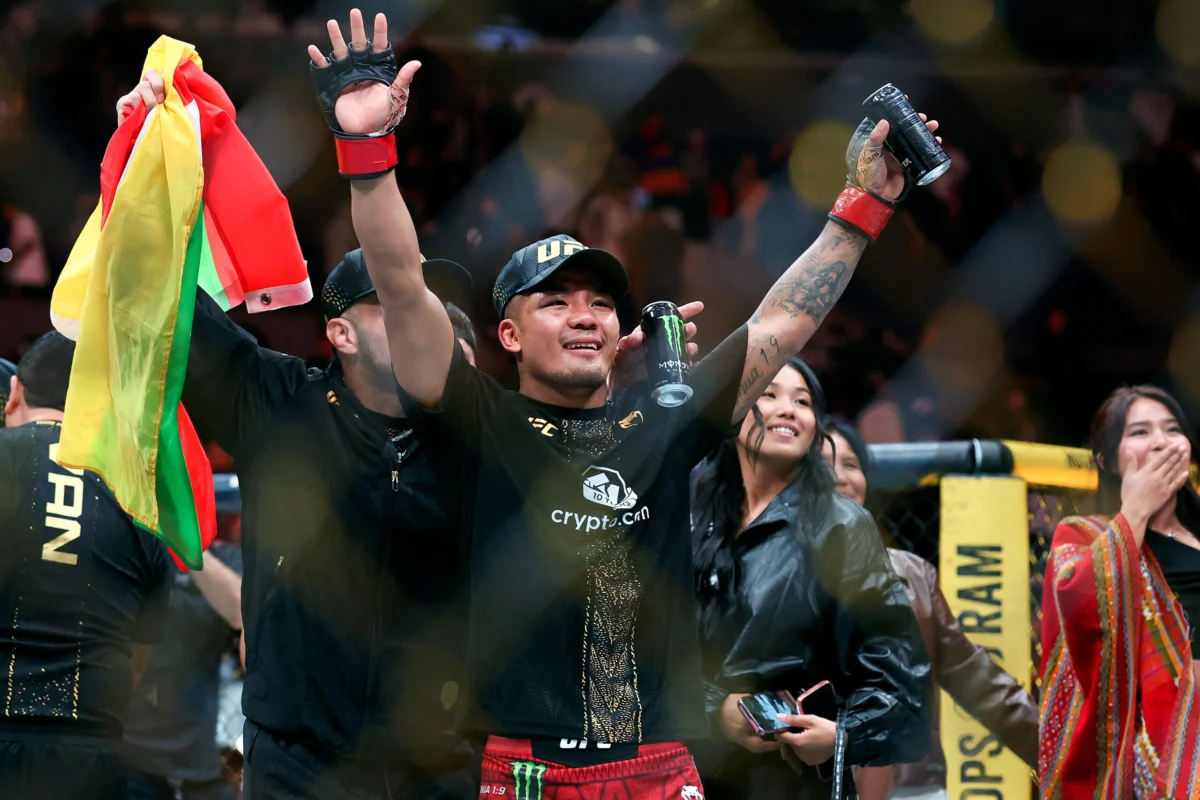
The electrifying atmosphere inside the Crypto.com Arena in Los Angeles reached a fever pitch on Saturday night as UFC 331 delivered a historic card filled with high-stakes championship action, shocking upsets, and definitive statements across multiple weight classes. Headlining the pay-per-view event was a fiercely anticipated rematch between reigning, undisputed flyweight champion Joshua Van and former divisional kingpin Alexandre Pantoja. For the 24-year-old champion representing Myanmar, Saturday’s main event was far more than a standard title defense; it was an opportunity to erase lingering doubts and decisively cement his status as the undisputed apex predator of the Ultimate Fighting Championship’s 125-pound division.
When the final horn sounded, the judges’ scorecards—reading 49-46, 49-47, and 50-45—formalized what the partisan Los Angeles crowd had witnessed over 25 minutes of high-paced combat: a striking masterclass by Van. By neutralizing Pantoja’s grappling threats and punishing the Brazilian veteran on the feet, Van extended his professional mixed martial arts record to 18 wins against two losses, successfully defending his crown for the second time in 2026. Yet, the victory carried a heavy psychological weight, effectively closing the book on a controversial chapter that had shadowed the division for nearly a year.
The Long Road to the Rematch: Anatomy of a Rivalry
To fully understand the gravity of UFC 331’s main event, one must look back to December of the previous year. When Joshua Van and Alexandre Pantoja first shared the Octagon, the encounter was cut tragically short. Just 26 seconds into the opening frame, Pantoja suffered a freak, accidental elbow dislocation, forcing an immediate technical knockout stoppage and crowning Van the new flyweight champion by default.
While the victory officially transferred the belt to Van—making him the first-ever UFC champion born in Myanmar—the manner of his coronation left critics and purists asking questions. Pantoja had reigned over the 125-pound weight class for over two years, defending the belt against elite contenders and establishing himself as one of the most dangerous grapplers in the history of the division. For months, detractors labeled Van’s title win an asterisk victory, arguing that the young striker had not truly beaten the reigning standard-bearer.
Van attempted to silence those narratives in May with a successful title defense against surging Japanese contender Tatsuro Taira. However, the shadow of the incomplete Pantoja saga lingered. As Pantoja underwent a rigorous rehabilitation program to repair his elbow, the promotional machinery quietly built toward an inevitable rematch. On Saturday night, all external noise was finally quieted inside the Octagon.
Inside the Octagon: A Tactical Masterclass
The opening round of UFC 331’s main event immediately underscored the high-stakes tension between the two elite martial artists. Pantoja, recognizing the danger of trading strikes at range with the younger, sharper Van, aggressively closed the distance. The Brazilian secured a crucial takedown in the opening frame, utilizing his veteran savvy to neutralize Van’s mobility before launching heavy punches and knees in a fiery, close-quarters exchange. Undeterred, Van fought off his back foot, slicing open Pantoja’s defense with a razor-sharp elbow from the clinch.
Sensing that a prolonged brawl favored the grappling-heavy submission specialist, Van’s corner delivered stern, tactical advice during the ensuing break between rounds.
"You’re too good to brawl with this guy," Van’s coaches urged, imploring their fighter to lean on his superior footwork, technical boxing, and distance management.
The champion heeded the instruction to perfection. In the second round, Van completely altered the landscape of the bout, peppering Pantoja with crisp, snapping left-handed jabs that continuously disrupted the challenger’s forward momentum. By the third round, Van’s offensive output reached a crescendo. He visibly rocked the 36-year-old Brazilian with a fluid, blinding combination of punches that forced Pantoja into survival mode.
Pantoja, displaying the championship grit that had defined his multi-year reign, mounted a furious comeback in the fourth round. He successfully grounded Van once more, hunting desperately for rear-naked chokes and transitional submissions. Yet, Van’s defensive grappling held firm, preventing any catastrophic damage and neutralizing the submission threats before the round expired.
Entering the championship rounds with a razor-thin margin on certain scorecards, Van turned the pressure up to maximum velocity in the fifth and final stanza. Stalking a visibly fatigued Pantoja across the canvas, Van uncorked a devastating overhand right that sent the former champion crashing to the canvas. Although Pantoja managed to scramble back to his feet, the knockdown effectively sealed the round and cemented Van’s dominance on the judges’ scorecards.
"A lot of people said that was an accidental win… well, doubt me now," a triumphant Van declared during his post-fight interview inside the Octagon, letting out months of pent-up frustration.

Co-Main Event Chaos: Tsarukyan Demands Gold
While the flyweight championship clash provided a technical chess match, the remainder of the UFC 331 main card delivered blistering, highlight-reel violence. In the evening’s co-main event, Armenian lightweight contender Arman Tsarukyan solidified his position as the division’s undisputed number-one contender with a chilling performance against Mauricio Ruffy.
Tsarukyan, displaying the suffocating pressure and wrestling credentials that have made him a nightmare for the lightweight top ten, pinned Ruffy against the cage early in the opening round. After softening his opponent with positional dominance, Tsarukyan cracked Ruffy with a blistering left elbow on the break, immediately following up with a catastrophic right elbow that rendered Ruffy unconscious with a mere four seconds remaining in the first frame.
"I knew my time would come, so I was patient," Tsarukyan remarked after extending his current win streak to six consecutive victories. With the momentum firmly at his back, the Armenian contender used his post-fight microphone time to directly challenge reigning lightweight champion Justin Gaethje, setting the stage for a blockbuster title showdown in the near future.
Featherweight and Heavyweight Shockwaves
Earlier in the main card, veteran presence and divisional crossover talent took center stage. In featherweight action, former four-time, two-division Bellator champion Patricio "Pitbull" Ferreira made a resounding statement in his ongoing UFC campaign. Facing promotional mainstay Dooho Choi—a South Korean striker who had competed under the UFC banner since 2014—Pitbull put on a striking clinic.
Overwhelming Choi with suffocating volume and sharp, calculated boxing, Pitbull snapped Choi’s three-fight finishing streak in emphatic fashion. A devastating right hand midway through the opening round forced the referee to step in at the 3:28 mark, handing Pitbull his very first official stoppage victory inside the Octagon and signaling that the veteran is a dangerous new threat at 145 pounds.
However, the most jaw-dropping moment of the evening arrived courtesy of the heavyweight division. In what will undoubtedly be analyzed as one of the most stunning upsets of the 2026 calendar year, Sean Sharaf needed a mere 12 seconds to dismantle Olympic gold medalist and promotional newcomer Gable Steveson.
Steveson entered the Octagon surrounded by immense media hype and sat as a massive betting favorite among oddsmakers. The amateur wrestling standout barely had time to settle into his stance before Sharaf caught him in the very first exchange. Unleashing a blistering, hurricane-like flurry of heavy strikes, Sharaf overwhelmed Steveson instantly, forcing a lightning-fast referee stoppage that etched the bout into the history books as the third-fastest knockout in UFC heavyweight history.
While the Crypto.com Arena crowd erupted into pandemonium, the contrast in post-fight body language was stark. A visibly frustrated Steveson immediately exited the cage, refusing to remain inside the canvas as Sharaf had his hand officially raised in triumph. For Sharaf, the 12-second masterclass represented a career-defining breakthrough on the sport’s biggest stage.
Broader Implications for the UFC Divisions
As the dust settles on UFC 331, the organizational landscape across multiple weight classes has undergone significant realignment.
In the flyweight division, Joshua Van’s comprehensive victory over Alexandre Pantoja definitively closes the door on any legitimacy debates. At only 24 years old, the champion from Myanmar has proven that his elite striking, rapidly improving grappling defense, and championship composure are built for a lengthy reign. With the old guard successfully turned back, the 125-pound division now belongs entirely to the new generation, though hungry contenders like Tatsuro Taira and rising prospects will undoubtedly monitor Van’s championship trajectory.
In the lightweight division, Arman Tsarukyan’s thunderous first-round finish leaves the UFC matchmakers with a clear path forward. A matchup between Tsarukyan and Justin Gaethje presents a classic clash of styles—wrestling dominance versus elite, concussive striking—that figures to headline a major pay-per-view event in the coming months.
Meanwhile, the heavyweight and featherweight divisions have been injected with fresh volatility. Patricio Pitbull’s violent integration into the featherweight top tier proves that championship pedigree translates across promotional boundaries, while Sean Sharaf’s record-setting 12-second knockout of Gable Steveson serves as a stark reminder that in the unpredictable theater of mixed martial arts, pre-fight hype and betting odds vanish the moment the cage door closes.