Jono Maryono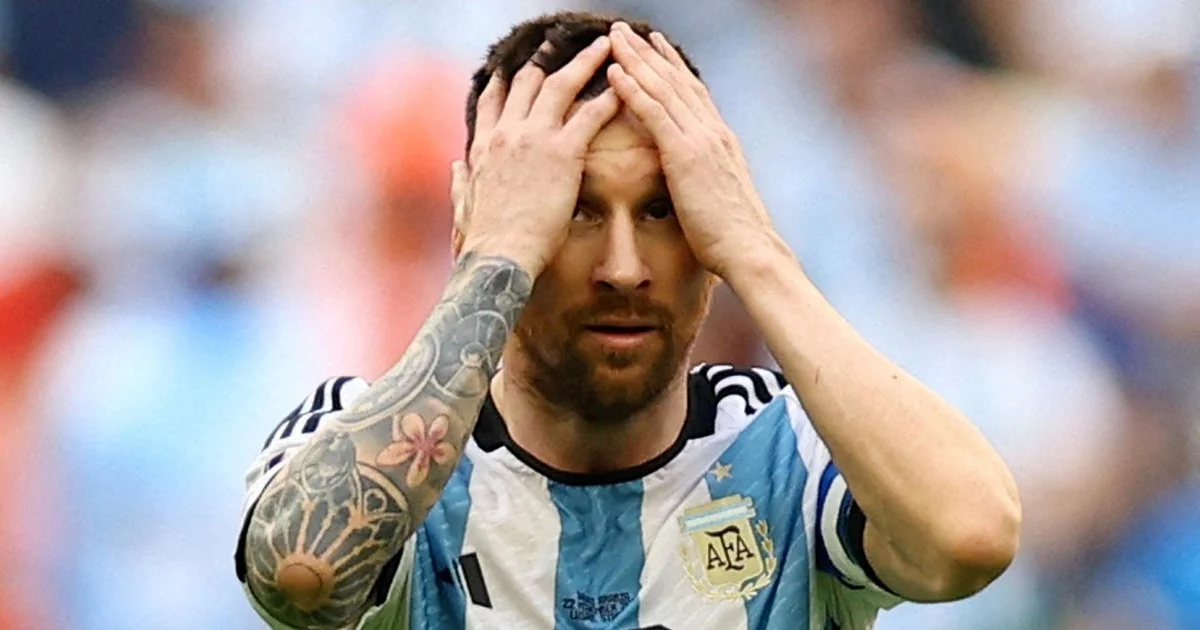
The FIFA World Cup, a quadrennial spectacle that captivates billions, is renowned not only for the dazzling displays of footballing prowess and the crowning of global champions but also for its rich tapestry of improbable victories and shocking defeats. As anticipation builds for the 2026 tournament, a look back at its storied history reveals a consistent theme: the beautiful game is inherently unpredictable, often defying form, expectation, and the most meticulously laid plans. From humble beginnings to the grandest stages, the World Cup has consistently delivered moments where the underdog has triumphed, forever etching their names into the annals of sporting history. This chronicle delves into some of the most significant upsets, exploring the context, the drama, and the enduring legacy of these unforgettable encounters.
The Genesis of Unpredictability: Early Shocks and the Dawn of a New Era
The FIFA World Cup, since its inception in 1930, has been a fertile ground for upsets. While early tournaments were dominated by established European and South American powers, the seeds of unpredictability were sown early, often due to the sheer novelty of the competition and the logistical challenges faced by participating nations.
USA 1-0 England (1950): A Disbelieving Nation and a Part-Time XI
The 1950 FIFA World Cup, held in Brazil, bore witness to one of the most astonishing results in its history. The England national team, boasting a roster filled with legendary figures like Alf Ramsey, Tom Finney, and Billy Wright, arrived in South America as overwhelming favorites to lift the trophy. Their pedigree was undeniable, having achieved remarkable success in domestic football and possessing a squad brimming with talent.

In stark contrast, the United States team was a collection of amateur players, many of whom juggled their footballing ambitions with day jobs. Their squad included a dishwasher, a postman, and a teacher. The team’s preparation was minimal, with the players only managing to practice together for a single day before embarking on a transatlantic voyage to Brazil. The gulf in professionalism and expectation between the two sides could not have been wider.
The match, played in Belo Horizonte, unfolded in a manner that defied all pre-game analysis. In the 38th minute, Joe Gaetjens, a Haitian-American center forward, scored a pivotal goal with a header, giving the USA an unlikely lead. The second half saw England launch a relentless offensive barrage, desperate to salvage their World Cup aspirations. However, the heroic efforts of American goalkeeper Frank Borghi, who made a series of crucial saves, denied England at every turn. The final whistle confirmed a historic 1-0 victory for the United States, a result that sent shockwaves through the footballing world and remains one of the most iconic upsets in World Cup lore. The image of Gaetjens being carried aloft by jubilant fans symbolized the sheer disbelief and elation of an improbable triumph.
The Miracle of Bern and the Shifting Sands of Power
The 1950s saw a re-emergence of European footballing giants, but even amidst this period of dominance, the World Cup continued to deliver moments of profound surprise.
West Germany 3-2 Hungary (1954): The Miracle of Bern
The 1954 World Cup final in Switzerland pitted a resurgent West Germany against the formidable "Mighty Magyars" of Hungary, led by the legendary Ferenc Puskás. Hungary entered the tournament as heavy favorites, having showcased their attacking brilliance with a staggering 9-0 demolition of South Korea and an 8-3 victory over West Germany itself in the group stages. Their reputation preceded them, and many anticipated a coronation rather than a contest.

The final began as expected, with Hungary establishing a commanding 2-0 lead within the first eight minutes, their attacking prowess seemingly unstoppable. However, this West German side, though less heralded than their Hungarian counterparts, possessed a steely resolve. They clawed their way back into the game, scoring two quick goals to level the score. The tension was palpable as the match entered its final minutes, with the outcome hanging precariously in the balance. In the 84th minute, Helmut Rahn, a dynamic forward, scored his second goal of the match, snatching victory from the jaws of defeat for West Germany. This dramatic comeback, against arguably the greatest Hungarian team of all time, became known as "The Miracle of Bern" and marked a significant moment in post-war German national identity and their resurgence on the global sporting stage. The handshake between captains Ferenc Puskas and Fritz Walter before the match symbolized the sporting respect, but the outcome ultimately redefined expectations.
The Cold War and an Unthinkable Victory
The geopolitical landscape of the 20th century often cast a shadow over international sporting events, and the World Cup was no exception. The 1966 tournament in England witnessed a geopolitical tremor manifest on the football pitch.
North Korea 1-0 Italy (1966): A David and Goliath Encounter
The mere presence of North Korea at the 1966 World Cup was itself a surprising development. Political tensions during the Cold War era had led to considerations within the English Football Association about granting visas to the North Korean team, given the strained relations with South Korea. However, they eventually participated, and their journey took an astonishing turn in the group stages.
Facing a two-time World Cup champion, Italy, North Korea was widely expected to be an easy opponent. The Italian side, anchored by the midfield artistry of Giacomo Bulgarelli, struggled to impose their authority. A significant turning point came when Bulgarelli sustained an injury during the match, and with substitutions not yet permitted in World Cup games, Italy was forced to play with ten men for a considerable portion of the encounter. Capitalizing on this numerical disadvantage and the ensuing disarray, North Korean midfielder Pak Doo Ik scored a memorable goal in the 42nd minute. This solitary strike not only secured a historic victory for North Korea but also led to the unceremonious elimination of Italy from the tournament. The match is widely regarded as one of the most significant upsets in World Cup history, with the original match ticket now a prized exhibit in the FIFA Football Museum. The site of Pak Doo Ik’s iconic goal, after the stadium’s demolition, has been marked with iron stud marks, a testament to the enduring significance of this improbable triumph.

The Rise of African Nations and the Undermining of European Giants
The latter half of the 20th century saw an increasing presence and impact of African nations in the World Cup, often challenging the established European and South American hierarchies with flair and resilience.
Algeria 2-1 West Germany (1982): A Shockwave in Gijón
The 1982 World Cup in Spain saw reigning European champions and two-time World Cup winners West Germany enter as one of the tournament favorites. Their squad was a constellation of stars, including Hansi Mueller, Wolfgang Dremmler, Karl-Heinz Rummenigge, and Lothar Matthaus. Algeria, on the other hand, was a relatively unknown entity on the global stage, comprised of players who had largely made their names within African football. Despite their underdog status, Algeria had shown promising form in the lead-up to the tournament.
The opening match of Group 2 between these two nations in Gijón delivered a seismic upset. The German team, perhaps exhibiting a degree of complacency, found themselves undone by Algeria’s spirited performance. Rabah Madjer opened the scoring for Algeria in the 54th minute, a goal that sent shockwaves through the stadium and beyond. Although Karl-Heinz Rummenigge managed to equalize for West Germany, the Algerian spirit remained unbroken. In the 68th minute, Lakhdar Belloumi, who would go on to become an Algerian footballing legend, scored the winning goal, securing a famous 2-1 victory for his nation. This result not only handed West Germany a humiliating defeat but also sent a clear message that African football had arrived on the world stage with a competitive force. The reverberations of this upset were felt globally, challenging the established order and inspiring a new generation of footballers from emerging nations.
Cameroon 1-0 Argentina (1990): The Indomitable Lions Roar
The 1990 FIFA World Cup in Italy began with a fixture that, on paper, appeared to be a straightforward victory for the defending champions, Argentina. Led by the incomparable Diego Maradona, arguably the greatest footballer of his generation, Argentina was a formidable force, expected to easily overcome their opening opponents. Cameroon, making their World Cup debut, represented the hopes of sub-Saharan Africa, a region seeking greater representation and recognition in the global game.

The match, held at the iconic San Siro stadium in Milan, initially saw Argentina dictate play. However, as the game progressed, the Cameroonians, imbued with a tenacious spirit and a growing confidence, began to assert themselves. They frustrated the Argentine attack, denying them clear scoring opportunities. In the 59th minute, Francois Omam-Biyik, rising majestically to meet a free-kick, powered a header past the Argentine goalkeeper, giving Cameroon a stunning lead. The Indomitable Lions, as they became known, defended resolutely for the remainder of the match, holding on to secure a historic 1-0 victory. This triumph was not only Cameroon’s first World Cup win but also the first time a team from sub-Saharan Africa had defeated a reigning World Cup champion. The jubilant celebrations of the Cameroonian players after Omam-Biyik’s goal encapsulated the magnitude of their achievement, a victory that resonated far beyond the confines of the football pitch and cemented their status as a team to be reckoned with.
France 0-1 Senegal (2002): A Colonial Echo and a Debutant’s Dream
The opening match of the 2002 FIFA World Cup, co-hosted by South Korea and Japan, presented a fascinating narrative. It pitted the reigning World Cup champions, France, against a debutant nation, Senegal, a former French colony. The subplots were numerous: the established power against the emergent force, the colonizer against the colonized, and the opening game of the tournament itself. The pundits and the French team, it appeared, had underestimated the meticulous planning and sheer determination of the Senegalese squad.
Senegal’s game plan was executed with remarkable precision, stifling the potent French attack. El Hadji Diouf, with his electrifying pace and skill, proved a constant menace, and in the 30th minute, Papa Bouba Diop scored the decisive goal. His close-range finish, following a scramble in the box, sent the Senegalese fans into a frenzy and gave his nation a dream start to their World Cup campaign. France, unable to find an equalizer, went on to endure a disastrous group stage, failing to advance. Senegal, on the other hand, continued their fairy-tale run, becoming only the second African nation to reach the quarterfinals of the World Cup, a testament to their tactical discipline and individual brilliance. The match became a symbol of national pride for Senegal and a stark reminder of football’s capacity for surprise, even against the reigning champions.
The Era of Unprecedented Scorelines and Humiliations
The 21st century has witnessed some of the most dramatic and statistically improbable results in World Cup history, often involving established footballing giants succumbing to unexpected defeats.

Germany 7-1 Brazil (2014): The Agony of Mineirão
The 2014 FIFA World Cup, hosted by Brazil, was meant to be a redemption story for the nation that had suffered the infamous "Maracanazo" in 1950. The stage was set for Brazil to claim their sixth World Cup title on home soil, a dream that had captivated the samba nation for decades. However, their ambitions were brutally shattered in the semi-final against Germany.
Brazil entered the match without two of their key players: star forward Neymar Jr. was sidelined with a back injury sustained in the quarter-final, and captain Thiago Silva was suspended due to an accumulation of yellow cards. These absences proved to be critical. Germany, a team renowned for its efficiency and tactical discipline in knockout matches, took an early lead in the 11th minute through Thomas Müller. What followed was a devastating and unprecedented collapse from the Brazilian side. Between the 23rd and 29th minutes, Germany scored four astonishing goals, effectively ending the contest and leaving the Brazilian players and their fervent supporters in a state of disbelief and anguish. The second half offered little respite, as Germany added two more goals before Brazil managed a late consolation strike.
The final score of 7-1 was Brazil’s heaviest defeat since 1920 and is indelibly marked in World Cup history as "The Agony of Mineirão." The match represented a profound national humiliation for a country that lives and breathes football. Germany, meanwhile, went on to win the final against Argentina, securing their fourth World Cup title, but the memory of their semi-final demolition of Brazil remains a dominant narrative of the 2014 tournament. The statistical anomaly of such a lopsided scoreline in a World Cup semi-final underscored the unpredictable nature of the sport at its highest level.
Netherlands 5-1 Spain (2014): A Reigning Champion’s Rout
In another stunning result from the 2014 World Cup, the opening match of Group B saw a rematch of the previous tournament’s final between the Netherlands and Spain. Spain entered the competition as the reigning European and World champions, a formidable side that had dominated international football for years. Their pedigree suggested a comfortable victory against the Dutch.

The match began as many anticipated, with Xabi Alonso converting a penalty in the 27th minute to give Spain the lead. However, just before halftime, Robin van Persie scored a goal that would become one of the most iconic images of the tournament. In spectacular fashion, he executed a diving header from a looping cross, leaving Spanish goalkeeper Iker Casillas, a veteran of countless crucial saves, bewildered. This moment seemed to ignite the Dutch team and shatter the confidence of the Spanish side.
In the second half, the Netherlands unleashed a torrent of goals, scoring four more to complete a stunning 5-1 rout. This was not only Spain’s second-largest defeat in World Cup history but also the biggest margin of loss for a defending champion in the tournament’s annals. The result signaled the end of Spain’s era of dominance, as they were subsequently eliminated in the group stages. The Netherlands, on the other hand, went on to secure a commendable third-place finish, demonstrating the unpredictable shifts in power that the World Cup consistently produces.
South Korea 2-0 Germany (2018): The Defending Champions’ Exit
The 2018 FIFA World Cup in Russia continued the trend of defending champions facing early exits, marking the third consecutive tournament where the reigning titleholder failed to advance beyond the group stages. Germany, a perennial powerhouse, found themselves in a precarious position heading into their final group match against South Korea. Needing a victory to progress, Germany faced a South Korean side that, while out of contention, was playing for pride.
The match was a tense affair, seemingly heading towards a goalless draw that would have eliminated Germany. In a desperate attempt to find a winning goal, the German captain and goalkeeper, Manuel Neuer, pushed forward into the South Korean half during injury time. This gamble proved to be their undoing. In the 93rd minute, South Korea capitalized on a misplaced pass from Neuer, launching a swift counter-attack. Kim Young-gwon slotted the ball into an empty net, securing an improbable 1-0 lead for South Korea. Moments later, Son Heung-min added a second goal, sealing Germany’s fate.

This defeat marked a historic low for German football. It was their first failure to advance beyond the first stage of the World Cup since 1938 and their first-ever loss to an Asian nation in the competition. The dramatic late goals and the unprecedented exit of the defending champions underscored the increasingly competitive nature of international football and the enduring possibility of the unexpected.
Saudi Arabia 2-1 Argentina (2022): A New Chapter in Shocking Results
The 2022 FIFA World Cup in Qatar produced perhaps the most talked-about upset in recent memory. Argentina, on a remarkable 36-match unbeaten streak and widely considered one of the tournament favorites, entered their opening match against Saudi Arabia with immense confidence. The presence of Lionel Messi, in what was likely his final World Cup appearance, further amplified expectations of a comfortable Argentine victory.
Everything initially seemed to be going according to script. Lionel Messi converted a penalty in the 10th minute, giving Argentina an early lead. While Argentina had two further goals disallowed for offside, the first half concluded with them in a dominant position, seemingly poised to extend their impressive unbeaten run. However, the second half witnessed a dramatic and unforeseen turnaround.
In the 48th minute, Saleh Al-Shehri stunned the Argentinian defense with a well-taken goal, leveling the score. Just five minutes later, Saudi winger Salem al-Dawsari produced a moment of individual brilliance, cutting inside from the left flank and curling a spectacular shot into the top corner of the net, giving Saudi Arabia an astonishing 2-1 lead. The Saudi Arabian team then displayed incredible resilience and defensive organization, weathering an inevitable late onslaught from Argentina to secure a historic victory.

Although Argentina went on to win the World Cup, and Saudi Arabia was eliminated in the group stages, their victory over La Albiceleste remains an indelible moment in World Cup history. It sent Saudi fans into raptures and served as a potent reminder that in football, form and reputation can be cast aside in the heat of the moment. This result solidified the World Cup’s reputation as a tournament where even the most formidable teams can be humbled by determined underdogs.
The Enduring Appeal of the Unpredictable
The FIFA World Cup’s enduring appeal lies not only in the skill and drama it showcases but also in its inherent unpredictability. History is replete with examples of giants falling and underdogs rising, reminding us that on any given day, with passion, strategy, and a touch of luck, anything is possible. As the world looks ahead to the FIFA World Cup 2026, the echoes of these past upsets serve as a potent reminder: the beautiful game’s greatest magic often lies in its ability to defy all expectations.