Ferry Irwandi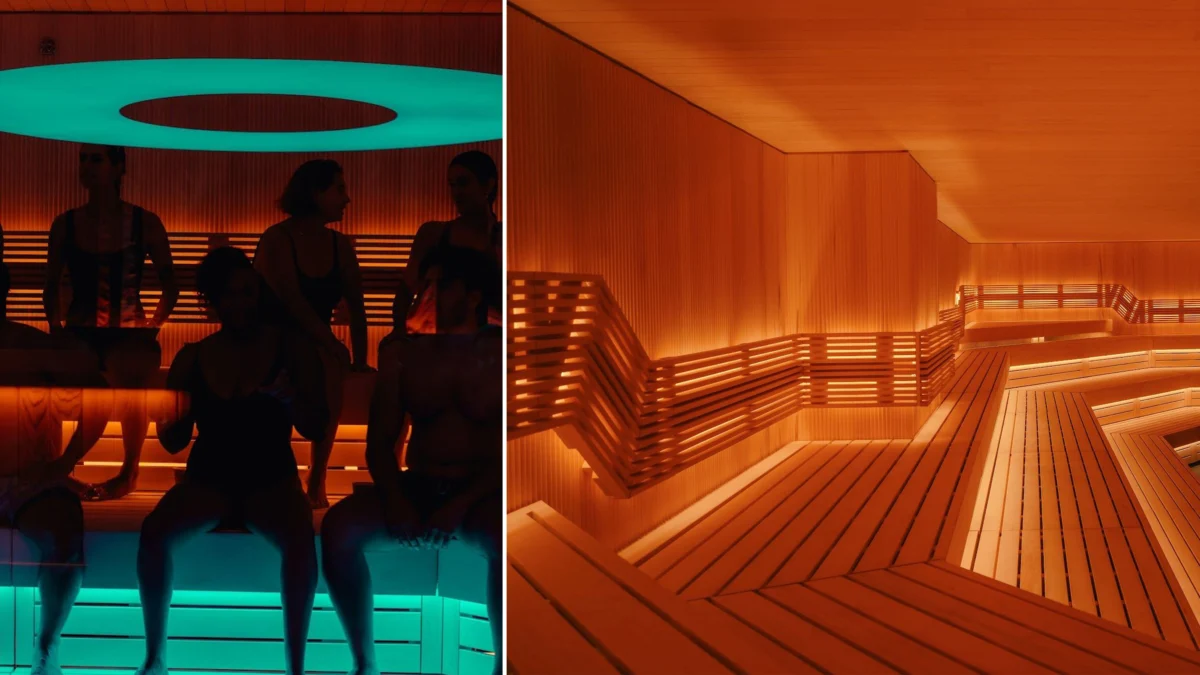
The traditional image of the North American sauna—a quiet, wood-paneled room in a gym where solitary patrons stare at sand timers in silence—is undergoing a radical transformation as a new wave of social thermal bathing takes hold across the continent. This shift is epitomized by the recent opening of the BASIN Glacial Waters spa at the Fairmont Chateau Lake Louise in September 2025, where the ancient practice of the sauna is being reimagined as a high-energy, communal event. At the heart of this movement is the "Aufguss" ceremony, a sensory-driven ritual led by "Aufgussmeisters" or sauna masters. These trained professionals utilize choreographed towel movements, aromatic oils, and curated soundtracks to turn a standard sweat session into a theatrical performance. At the Fairmont’s new facility, guests now gather in a spacious 185-degree Fahrenheit sauna to watch performers like Kyan, a Dutch-trained sauna master, who rhythmically fans hot steam toward participants while popular music blares and snowballs infused with Siberian fir and forest berries melt over scorching stones. This evolution reflects a broader trend in the wellness industry: the move away from isolated recovery toward "social wellness," where physical health benefits are inextricably linked to community engagement.
The Cultural Heritage of Communal Heat
While the concept of social sweating may seem like a modern novelty to North Americans, it is deeply rooted in global history. For millennia, thermal bathing has served as a cornerstone of social fabric in various cultures. The Roman Empire’s thermae were centers of political and social life, while the Japanese onsen and Korean jjimjilbang have long provided spaces for multi-generational bonding. In Nordic countries, particularly Finland, the sauna is considered a "holy" place for conversation and connection, often serving as a site for business negotiations and family gatherings. Similarly, Native American sweat lodges have historically functioned as spiritual and communal hubs for purification and prayer.

The North American adoption of the sauna, however, initially stripped away these social elements, focusing almost exclusively on the individualistic, utilitarian aspects of heat exposure. For decades, the etiquette in Western saunas dictated silence and minimal interaction. Dr. Christopher Minson, a professor of human physiology at the University of Oregon, notes that this isolation may have actually limited the long-term efficacy of the practice. According to Minson, engagement with others in a sauna environment develops social bonds and a sense of belonging, which can improve both physical and psychological health outcomes by increasing long-term adherence to wellness routines.
The Physiological and Psychological Benefits of Collective Sweating
The resurgence of the sauna is backed by a growing body of medical research highlighting the benefits of regular heat exposure. Clinical studies have consistently shown that sauna use can improve cardiovascular health by lowering blood pressure and improving cholesterol profiles. The heat induces a state of "hormetic stress," which triggers the body to repair cells and reduce inflammation. Research published in various medical journals suggests that frequent sauna bathing—typically four to seven times per week—is associated with a significantly lower risk of sudden cardiac death, coronary heart disease, and all-cause mortality.
However, recent data suggests that the social component of these new bathhouses adds a layer of psychological benefit that solitary sessions lack. A landmark 2026 study focused on collective sauna rituals found that these experiences significantly improve mental well-being by fostering social connection and a deep sense of community belonging. In an era often defined by an "epidemic of loneliness" and digital overstimulation, these spaces offer a rare opportunity for real-life presence. Amanda Laine, co-founder of Othership—a popular bathhouse brand with locations in Toronto and New York—emphasizes that the "social sauna" addresses the isolation many feel in modern urban environments. By removing phones and distractions, participants are forced to be present with themselves and those around them, leading to what many describe as an emotional release.

Regional Hubs of Thermal Innovation: From Las Vegas to the Canadian Rockies
The rapid expansion of social sauna venues across North America demonstrates the commercial viability of this trend. Beyond the Fairmont Chateau Lake Louise, several other key players are defining the landscape:
The High-Energy Rituals of Las Vegas
At the Fontainebleau Las Vegas, the resort has integrated the Aufguss ceremony into the city’s high-octane entertainment culture. The property features a 350-square-foot event sauna capable of holding 40 people. Employing ten certified Aufgussmeisters, the spa hosts eight daily 15-minute shows that combine aromatherapy with 110-inch screens projecting vivid imagery. Ashley Tullo, the wellness activations specialist at Fontainebleau, reports that these ceremonies are consistently at capacity, serving as a primary draw for guests seeking a "Vegas-style" wellness experience.
The Nordic Expansion in Alberta
Everwild Nordic Spas & Hotels has become a major force in the Canadian market. Their facility at the Everwild Canmore hotel, which debuted in November 2024, centers on a 42-person event sauna. The venue offers signature rituals such as the "Fire Chinook," a high-energy group movement session, and the "Silent Chinook," a meditative aromatherapy experience. Geoff McLean, co-founder of Everwild, has announced plans for further expansion into Fernie, Banff, and Harmony. The Banff location is slated to feature a rooftop event sauna with 360-degree views of the national park, while the Harmony project will include a floating sauna on a private dock.
6745-Final.jpg)
Urban Social Hubs and "Sober Socials"
In cities like Montreal, New York, and Toronto, venues like Recess Thermal Station and Othership have positioned themselves as alternatives to traditional nightlife. These establishments host events ranging from comedy nights and singles mixers to "sauna raves" and sound baths. By offering a space where people can gather without the presence of alcohol, these bathhouses are tapping into the "sober curious" movement, providing a venue for deep conversation and shared experience that mimics the social atmosphere of a bar but with a focus on health.
The Americanization of the Aufguss: Entertainment as a Wellness Tool
As the Aufguss moves from its European roots to North America, it is taking on a distinctly Western flair. Traditionalists in Europe often prefer a more quiet, meditative approach to the ritual, but American and Canadian operators are increasingly leaning into "edutainment." This includes the integration of advanced audio-visual technology, live DJs, and even helicopter-assisted excursions.
Tordrillo Mountain Lodge in Alaska has taken the concept to the extreme by transporting its "AlpenSauna" via helicopter to remote glacial locations. Guests can sweat in a portable sauna positioned next to crystal-clear pools on the Triumvirate Glacier, alternating between intense heat and cold plunges in glacial water, accompanied by chef-prepared snacks and cocktail service. Robert Hammond, president of Therme US, argues that this evolution is a natural progression. He suggests that North Americans are creating new rituals that feel distinctively modern, using entertainment to push participants toward a state of euphoria that makes social connection easier.

This was evidenced at the "Culture of Bathe-ing" festival in Brooklyn, where the Therme Group organized a day-to-night program featuring aromatherapy sessions led by herbalists and live dance performances within the saunas. Hammond notes that even listening to public talks in a sauna changes the way information is processed; the physical intensity of the heat creates a shared energy that transcends the spoken word.
Economic Drivers and Broader Implications
The rise of the social sauna is not merely a lifestyle trend but a significant economic shift in the wellness sector. The Global Wellness Institute has identified thermal and mineral springs as one of the fastest-growing sectors of the $5.6 trillion wellness economy. The demand for communal wellness spaces is driven by several converging factors:
- The Decline of the "Third Place": As traditional community spaces like libraries and local clubs decline, bathhouses are emerging as new "third places"—environments outside of home and work where people can congregate.
- Corporate Wellness: Companies are increasingly booking event saunas for team-building off-sites, moving away from the standard happy hour in favor of shared health experiences.
- Real Estate Development: Large-scale projects like "Submersive" in Austin—a 20,000-square-foot bathhouse set to open in 2026—are integrating immersive art (influenced by companies like Meow Wolf) with neuroscience-backed thermal circuits. These projects represent massive capital investments in the future of social infrastructure.
Future Outlook: A New Standard for Wellness
The transition from solitary to social saunas marks a significant turning point in how North Americans perceive health. No longer viewed strictly as a private act of recovery, thermal bathing is becoming a public act of community. The success of venues from the remote peaks of Alaska to the urban centers of Texas suggests that the desire for "sweating together" is more than a passing fad.

As the industry moves toward 2026 and beyond, the focus will likely remain on creating multi-sensory environments that challenge the boundaries between health, art, and entertainment. While some purists may continue to favor the silent, traditional Finnish model, the overwhelming consumer response to the Aufguss and event-based saunas indicates that the future of North American wellness is loud, communal, and intensely theatrical. The waitlists for upcoming projects like Submersive prove that the market is eager for spaces that offer not just physical detoxification, but a profound sense of human connection in an increasingly digital world.