
 Reynand Wu
Migrant labor is the indispensable backbone of American agriculture, a constant and essential force that underpins the nation’s food supply. Yet, the millions of individuals who perform this arduous work often remain socially and spatially invisible. This invisibility is not accidental; it is a meticulously constructed reality, profoundly influenced by the housing arrangements provided by employers. These living quarters, frequently tucked away behind dense groves, far from public roads, or sequestered on private land behind locked gates, are deliberately hard to access and, crucially, hard for workers to leave, effectively creating a system of architectural control.
The arrangement of migrant housing is far more than a logistical detail; it represents a fundamental structural problem. For countless workers across the United States, from the fertile fields of California and the orchards of Michigan to the tobacco farms of North Carolina, the workday culminates not in a private sanctuary, but in shared dormitories or cabins situated remotely from towns and services. These residences are often characterized by a profound lack of privacy, comfort, and basic dignity. Workers frequently endure cramped quarters with shared beds, communal bathrooms, and often rudimentary, if any, kitchen facilities. This environment, described by many who have experienced it firsthand, speaks to a deliberate design that prioritizes control and economic efficiency over human welfare.
The Backbone of American Agriculture: A Vital Workforce
The United States agricultural sector relies heavily on a workforce estimated to be between 2 and 3 million individuals, a significant portion of whom are migrant or seasonal farmworkers. This labor force is overwhelmingly comprised of immigrants, both authorized and unauthorized, and increasingly, those participating in the H-2A temporary agricultural worker visa program. The H-2A program, which allows U.S. employers to bring foreign nationals to the U.S. to fill temporary agricultural jobs, has seen exponential growth in recent decades, from approximately 48,000 certified positions in 2005 to over 371,000 in fiscal year 2023. This surge underscores the critical role these workers play in sustaining the nation’s food production, from harvesting fruits and vegetables to tending livestock. Their labor contributes billions of dollars annually to the U.S. economy, yet their contributions often remain unrecognized, and their living conditions largely unseen by the wider public.
A History of Transience and Control: The Evolution of Migrant Housing
The current state of migrant worker housing is not a recent phenomenon but rather a legacy of historical labor practices and policies. The early 20th century, particularly during the Great Depression, saw the rise of transient labor camps as families displaced by economic hardship followed harvests across the country. Iconic photographs by Dorothea Lange from the 1930s, such as that of a migrant agricultural worker’s family in Nipomo, California, depict temporary shelters and the harsh realities of life on the move, underscoring a long-standing pattern of precarious housing.
The mid-20th century introduced the Bracero Program (1942-1964), a binational agreement between the U.S. and Mexico that brought millions of Mexican farmworkers to the U.S. While intended to address wartime labor shortages, the program institutionalized employer-provided housing as a standard. Workers were housed in barracks-style dormitories, often on the employer’s property, creating a direct link between employment and shelter. This model, while providing housing, also established a precedent for employer control over workers’ living environments, laying the groundwork for many of the issues observed today. Following the Bracero Program’s termination, the reliance on a largely immigrant workforce continued, and with it, the practice of employer-provided or controlled housing persisted, evolving to meet minimum legal standards that often fall short of humane conditions.
The Architecture of Invisibility and Subjugation
Contemporary migrant housing facilities, whether purpose-built dormitories, converted mobile homes, or rows of identical cabins, consistently exhibit characteristics that facilitate both invisibility and control. Located in remote rural areas, often behind natural barriers or private security measures, these sites are difficult for outside organizations, advocates, or even emergency services to access. This geographical isolation is compounded by physical design: narrow beds crammed into small rooms, inadequate ventilation, shared communal spaces lacking privacy, and often substandard sanitation. For instance, images from facilities in places like Rantoul, Illinois, and various sites across North Carolina and California, frequently reveal stark, utilitarian rooms with minimal personal space, small windows, and insufficient amenities, echoing the descriptions of shared spaces without privacy, comfort, or dignity.
The design is not merely poor; it is functional. These structures are often built to meet only the bare minimum legal standards for shelter, a benchmark that, in some cases, is scarcely more accommodating than a prison cell. This architectural minimalism, coupled with the remote placement, serves to dehumanize residents and subtly enforce control. Workers often report conditions where privacy is nonexistent, personal space is a luxury, and basic necessities like clean water or functional kitchens are compromised.
Beyond Shelter: Housing as a Tool of Labor Control
Sociological frameworks provide crucial insights into understanding these housing arrangements not as mere "bad housing structures," but as integral components of a strategic labor system. Conflict theory, which posits that societal development and change stem from struggles over power and resources, is particularly pertinent. In the context of migrant labor, the struggle for power is starkly visible in the organization of housing. Employers, as resource holders, leverage housing to maintain a compliant and readily available workforce.
Henri Lefebvre’s concept of the "production of space" further illuminates this dynamic. Lefebvre argued that space is not neutral but is socially produced, shaped by those with the authority to determine how people live. The design of migrant housing is therefore not driven by considerations of comfort, fairness, or optimal function for the residents. Instead, the arrangement and social production of this space reflect the interests of those who hold power and control. The layout of a building, the distance between living units, and the configuration of rooms are not arbitrary; they are deliberate reflections of power relationships, designed to manage and control labor.
Similarly, Michel Foucault’s analysis of how institutions use architecture to enforce discipline is highly relevant. In migrant housing, space itself signals control. These dormitories may not require bars or guards because the environment is inherently disciplinary. The architectural design limits individual autonomy, making collective action difficult and complaints risky. When an employer controls both the job and the housing, every complaint becomes a direct threat to a worker’s livelihood and shelter. Speaking up can mean not only losing employment but also being evicted, often with the looming threat of deportation for non-citizens. This dependency creates a powerful incentive for silence and compliance, effectively reducing choices and making individuals easier to control.
The Human Cost: Impact on Workers’ Lives and Health
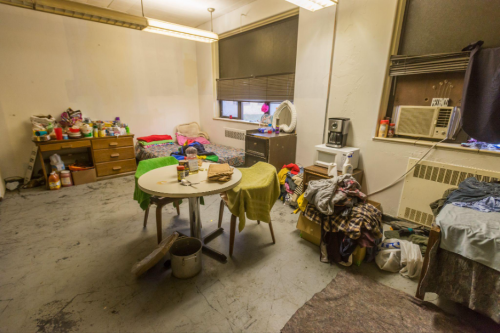
The implications of such controlled and often substandard housing extend far beyond discomfort; they profoundly impact workers’ physical and mental health, as well as their social well-being. Physically, workers exposed to extreme heat or cold in the fields return to inadequate shelter, exacerbating the risks of heatstroke, dehydration, and respiratory illnesses. Poor sanitation, crowded conditions, and lack of access to clean water or proper nutrition in these camps contribute to the spread of infectious diseases and other health problems. The lack of privacy and personal space can lead to chronic stress, anxiety, and depression. Many workers report feelings of constant surveillance, isolation, and fear, severely impacting their mental health.
Furthermore, the remote locations of these camps isolate workers from essential services, including healthcare, legal aid, and social support networks. Access to transportation is often limited or controlled by employers, further restricting workers’ ability to seek help or engage with the broader community. The inability for married couples to live together, a common rule in many dormitories, adds another layer of emotional distress and challenges family life. This systemic isolation and dependency contribute to a cycle of vulnerability, making it difficult for workers to advocate for their rights or improve their conditions.
Regulatory Frameworks and Enforcement Challenges
In the U.S., the Migrant and Seasonal Agricultural Worker Protection Act (MSPA) and regulations from the Occupational Safety and Health Administration (OSHA) and the Department of Labor (DOL) set minimum standards for agricultural worker housing. These standards cover aspects like space requirements, sanitation, ventilation, and safety. However, enforcement remains a significant challenge. Regulatory agencies are often understaffed and lack the resources to conduct frequent or thorough inspections of the vast number of remote agricultural housing sites.
Moreover, the fear of retaliation among workers makes them hesitant to report violations. Whistleblower protections exist, but the economic precarity and immigration status of many workers make exercising these rights a high-stakes gamble. The complex web of state and federal regulations, coupled with varying interpretations and enforcement priorities, creates loopholes that some employers exploit. Worker advocacy groups consistently highlight these enforcement gaps, calling for increased funding for inspections, stronger penalties for non-compliance, and more accessible reporting mechanisms that protect workers from retribution.
Voices from the Field: Advocacy and Industry Perspectives
Migrant worker advocacy organizations across the country are vocal critics of the current housing system, characterizing it as an inherent part of a broader exploitative labor model. "The housing provided to migrant workers is often less about shelter and more about control," states Maria Rodriguez, director of a leading migrant rights organization. "It’s a system designed to keep workers dependent and quiet, denying them the basic human dignity and autonomy that every person deserves. We need independent housing options, robust enforcement of labor laws, and pathways to permanent residency that empower workers to escape this cycle of vulnerability."
Conversely, representatives from the agricultural industry often articulate the challenges they face in providing housing. "Farmers are committed to providing safe and compliant housing for their workforce, especially for H-2A workers," explains Johnathan Greene, spokesperson for a national growers’ association. "However, the costs associated with building and maintaining housing, coupled with fluctuating market prices and a chronic labor shortage, present significant economic pressures. We strive to meet all federal and state regulations, and many growers invest significantly in improving conditions, but it’s a complex issue with no easy solutions."
Government officials, such as a spokesperson for the Department of Labor, typically affirm their commitment to protecting agricultural workers. "The Department of Labor is dedicated to ensuring fair labor practices and safe working conditions for all agricultural workers, including those in employer-provided housing," the spokesperson notes. "We conduct inspections and investigate complaints to uphold the Migrant and Seasonal Agricultural Worker Protection Act and other relevant regulations. We recognize the challenges and continuously work to enhance our enforcement capabilities and collaborate with stakeholders to improve worker welfare."
Economic Implications and Broader Societal Impact
The architecture of control embedded in migrant worker housing has profound economic and societal implications. It effectively functions as a hidden subsidy for the agricultural industry, allowing producers to externalize significant labor costs onto the workers themselves through reduced wages, lack of amenities, and the psychological burden of precarious living. This system contributes to the availability of cheaper produce for consumers but at a significant human cost.
Moreover, it perpetuates a two-tiered labor system where migrant workers, particularly those in employer-controlled housing, are denied the same rights, protections, and opportunities afforded to other segments of the workforce. This contributes to social inequality, entrenches cycles of poverty, and undermines the democratic principle of equal access to justice and dignity. The spatial invisibility of these communities also means their struggles remain largely hidden from public consciousness, making it easier for the status quo to persist.
Towards a More Equitable System: Policy Solutions and Future Outlook
Addressing this deeply entrenched issue requires a multi-faceted approach. Policy solutions should focus on disassociating housing from employment, encouraging the development of independent, affordable, and safe housing options for migrant workers. This could involve government subsidies for non-employer-provided housing, stricter oversight of employer-provided facilities with unannounced inspections, and enhanced legal aid services specifically for migrant workers. Strengthening whistleblower protections and providing clear, accessible channels for reporting abuses without fear of reprisal are also crucial.
Ultimately, recognizing that this is not merely a housing crisis but a deliberate labor strategy is the first step towards meaningful change. As scholars, policymakers, and citizens, we must bring these hidden designs to light, understand their historical and sociological roots, and advocate for systemic reforms that prioritize human dignity over economic control. Only by acknowledging and actively dismantling these architectures of invisibility and control can the United States truly uphold the values of fairness and justice for all who contribute to its prosperity.







