Reynand Wu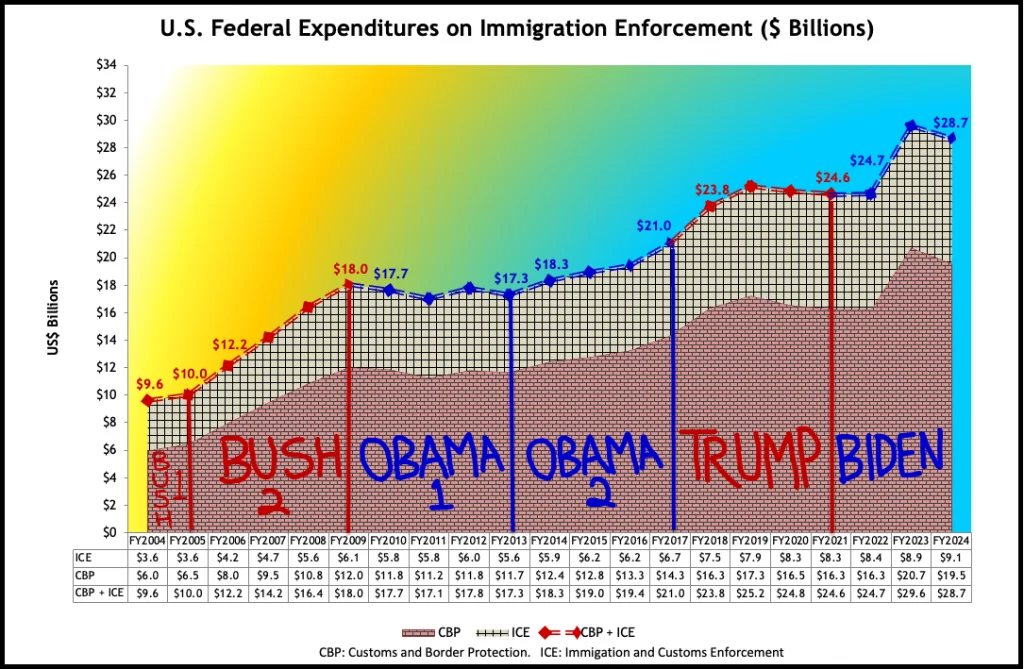
The Genesis of Modern Border Securitization
The systematic construction and upholding of state borders are underpinned by substantial allocations of public funds. In the United States, particularly in the aftermath of the September 11, 2001, terrorist attacks, there was a profound shift in how border management was framed. State officials skillfully juxtaposed the urgent discourse of anti-terrorism with that of stringent border regulation, leading directly to the accelerated securitization of the US-Mexico border. This period marked a dramatic escalation in federal commitment to border enforcement, moving it from a peripheral concern to a central pillar of national security strategy.
A pivotal moment in this transformation was the establishment of the Department of Homeland Security (DHS) by President George W. Bush’s administration through the Homeland Security Act of 2002. This monumental legislative act consolidated 22 disparate federal agencies into a single, cabinet-level department, signaling a comprehensive overhaul of the nation’s security apparatus. Under the expansive umbrella of DHS, two key agencies emerged as primary enforcers of border policy: Customs and Border Protection (CBP) and Immigration and Customs Enforcement (ICE). These agencies were specifically tasked with the apprehension, detention, and deportation of immigrants, fundamentally reshaping the landscape of immigration enforcement.
CBP, proudly proclaiming itself "one of the world’s largest law enforcement organizations" (CBP, 2020), articulates its primary mission as "to detect and prevent the illegal entry of individuals into the United States" and to "maintain borders that work" (CBP, 2021). Its mandate extends beyond human migration to include preventing the entry of illicit goods and combating drug trafficking. ICE, on the other hand, states its mission unequivocally: "to protect America from the cross-border crime and illegal immigration that threaten national security and public safety" (ICE, 2022). These mission statements underscore the explicit link forged between immigration control, national security, and public safety in the post-9/11 era.
A Chronology of Enhanced Enforcement and Legislative Milestones
The path to the current state of border securitization is marked by several significant legislative and policy milestones:
- 2001-2002: Post-9/11 Realignment: The immediate aftermath of 9/11 saw the concept of border security inextricably linked with national security. The creation of DHS in November 2002 was the direct outcome, fundamentally altering the structure of immigration enforcement. This move centralized authority and dramatically increased federal funding for border operations.
- 2005: The REAL ID Act: While primarily focused on federal identification standards, this act also included provisions that gave the Secretary of Homeland Security broad authority to waive environmental and other laws to expedite the construction of border barriers and roads. This provided a crucial legal tool for rapid infrastructure development along the border.
- 2006: The Secure Fence Act: Passed under the Bush administration, this act mandated the construction of approximately 700 miles of fencing along the U.S.-Mexico border. It represented a significant commitment to physical barriers as a primary method of enforcement and marked an early, large-scale federal investment in border wall infrastructure.
- Obama Administration (2009-2017): Despite a rhetorical stance often perceived as more progressive on immigration, the Obama administration oversaw a period of historically high deportations, earning him the moniker "deporter-in-chief" from some critics. While focusing on "smart enforcement" and prioritizing criminals, the sheer volume of deportations (over 2.5 million during his tenure) underscored the continuity of robust enforcement practices, even under Democratic leadership. Investment in border technology and personnel continued to grow.
- Trump Administration (2017-2021): President Donald Trump made border wall construction a signature promise. His administration implemented aggressive policies such as "zero tolerance" at the border, leading to widespread family separations, and expanded the use of expedited removals. Billions of dollars were allocated to extend and replace sections of the border wall, often by diverting funds from military projects.
- Biden Administration (2021-Present): President Joe Biden entered office promising a more humane approach to immigration, halting construction of the border wall on his first day. However, facing immense political pressure and rising migrant encounters, his administration has continued to rely heavily on enforcement measures. In October 2023, the Biden administration notably waived 26 federal laws to construct new border wall segments in Texas, citing an "acute and immediate need." This action, strikingly similar to his Republican predecessor’s approach, highlighted the enduring bipartisan consensus on physical border infrastructure in the face of perceived crises.
A Bipartisan Fiscal Commitment to Enforcement
The financial commitment to US border enforcement is staggering and represents a shared priority across partisan lines, despite often divergent public rhetoric. The chart visualizing these trends, using the image of a fenced border wall, starkly illustrates this reality. The brick wall symbolizing the annual budget of CBP, and the fence above it representing ICE’s budget, combine to form a compelling visual narrative of escalating expenditure. The red and blue barbed wire, denoting budgets approved by Republican and Democratic presidents respectively, provides a crucial insight: while the color changes, the upward trajectory of spending largely persists.
In a span of 21 years, both Democratic and Republican governments have collectively poured an astonishing total of $409.4 billion of public funds into immigration enforcement. Breaking down this colossal sum reveals that Republican Presidents authorized $178.9 billion, averaging $17.9 billion annually. Democratic Presidents, often articulating a more pro-immigrant stance, approved an even larger sum: $230.5 billion, averaging $21.0 billion annually. This demonstrates a significant, if not greater, financial commitment from Democratic administrations to border policing and immigration enforcement compared to their Republican counterparts.
Specifically, $275 billion has been allocated to CBP, the primary agency responsible for physical border security and port-of-entry operations, while $134.4 billion has gone to ICE, which handles interior enforcement, detention, and deportation. Overall, federal expenditures on immigration enforcement have nearly tripled in unadjusted dollars, soaring from $9.6 billion in Fiscal Year 2004 to an estimated $28.7 billion in Fiscal Year 2024. Even when adjusted for inflation to 2024 dollars, this still represents a substantial increase from approximately $17.5 billion to $28.7 billion, underscoring a consistent and accelerating investment in the border security apparatus.
Beyond the Rhetoric: Presidential Actions and Policy
The profound disconnect between the rhetorical differences in immigration policy articulated by Democrats and Republicans and their practical budgetary actions is a critical observation. Democrats frequently adopt a more pro-immigrant posture, emphasizing pathways to citizenship, humane treatment, and addressing root causes of migration. Republicans, conversely, often prioritize "border security first," advocating for stricter enforcement, increased deportations, and physical barriers. However, the budget figures "give the lie to the political performativity of partisan differences on immigration policy." In practice, the data suggests that Democratic presidents have been no less enthusiastic, and in some cases, even more robust, in funding the border policing apparatus.
This paradox points to fundamental contradictions within bourgeois liberal democracy. While elected representatives are ostensibly meant to champion the will of the working people, their actions often align more closely with the interests of dominant economic, political, and, at times, racial elites. The "border industrial complex"—a term analogous to the military-industrial complex—benefits immensely from continuous funding for surveillance technology, detention facilities, personnel, and infrastructure. Private contractors, technology companies, and security firms are significant beneficiaries of these billions, creating powerful lobbying forces that advocate for sustained or increased spending regardless of the party in power.
The implications of this bipartisan consensus are far-reaching. Substantive progress towards de-carcerating the United States and de-securitizing the US-Mexico border might have been possible if progressive factions within Congress wielded greater power and if Congress, as a whole, exercised more stringent oversight over the budget and immigration enforcement agencies. However, in the current political climate, such a shift remains unlikely. The Biden administration’s decision in October 2023 to waive 26 federal regulations to construct new border wall segments in Texas, directly echoing policies of his Republican predecessor, Donald Trump, illustrates this point clearly. This move, made in anticipation of the 2024 presidential election, suggests a strategic prioritization of perceived political expediency over previously stated progressive ideals. In the absence of a robust and consistently applied progressive ideological agenda within the Democratic Party, the void is often filled by a continuation of anti-immigrant enforcement and associated violence, albeit sometimes cloaked in more palatable rhetoric.
The Socio-Economic Ramifications of a Hardened Border
The sustained investment in border securitization has profound socio-economic ramifications that extend far beyond budgetary numbers.
Economically, the existence of hardened borders actively constructs and maintains economic differences. They facilitate unequal trade relations by controlling the flow of goods and labor, protect national currencies from external pressures, and uphold disparate value regimes across different states and regional zones. This creates a system where certain nations benefit disproportionately from global economic interactions, while others are kept in a state of relative disadvantage, often contributing to the very migration flows that borders seek to control. The formal economy along the border regions, particularly in industries like security, detention, and logistics, becomes deeply intertwined with the enforcement apparatus, creating powerful local and national constituencies invested in its continuation.
From a humanitarian perspective, the consequences are stark. Increased securitization often leads to more dangerous crossing routes for migrants and asylum seekers, pushing them into remote and treacherous terrains. This results in a tragic increase in deaths due to exposure, dehydration, and other hazards. The expansion of detention facilities, often operated by private corporations, raises significant human rights concerns regarding conditions, access to legal counsel, and due process for detained individuals, including families and children. Reports of abuse, neglect, and prolonged detention have been frequent, drawing condemnation from international bodies and human rights organizations.
Moreover, the militarization of border communities can erode civil liberties, foster an atmosphere of fear, and disproportionately impact residents of color. The pervasive presence of armed agents, surveillance technology, and checkpoints can transform everyday life, creating a sense of being constantly monitored and scrutinized. The focus on enforcement also often diverts attention and resources from addressing the root causes of migration, such as economic instability, political violence, and climate change in countries of origin.
Future Trajectories and the Political Economy of Control
Looking ahead, the trajectory of US border policy appears set to continue its emphasis on securitization and enforcement, irrespective of which party holds power. The political incentives to appear "tough on the border" remain powerful, particularly in an era of heightened geopolitical tensions and domestic political polarization. The established infrastructure, both physical and bureaucratic, alongside the vested interests of the border industrial complex, creates a formidable inertia that resists significant policy shifts.
For any genuine movement towards a more humane and less punitive immigration system, a fundamental re-evaluation of national priorities and a decoupling of immigration from national security narratives would be necessary. This would require not only a shift in political will but also a dismantling of the economic structures that profit from mass detention and deportation. Without such a paradigm shift, the cycle of escalating budgets, increased enforcement, and the associated human and social costs will likely persist, further entrenching the financially and politically constructed architecture of US border securitization. The enduring challenge lies in reconciling the nation’s stated values with the practical realities of its border policies, moving beyond rhetorical differences to address the systemic issues that perpetuate this costly and often inhumane status quo.