Jono Maryono
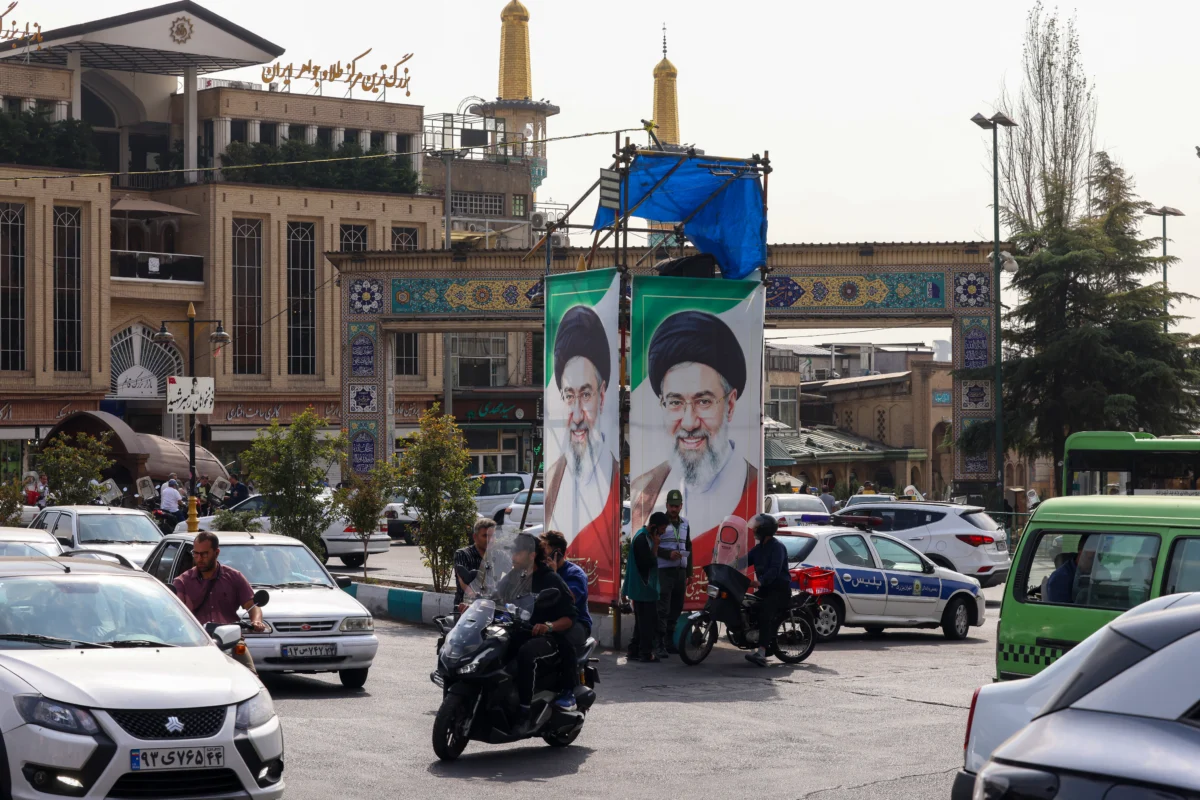
The political landscape of the Islamic Republic of Iran has entered a profound new chapter, marked by structural shifts in governance, ongoing regional volatility, and the persistent socioeconomic challenges facing its civilian population. In the bustling capital of Tehran, daily life unfolds against a backdrop of towering portraits bearing the likeness of Iran’s Supreme Leader, Ayatollah Mojtaba Khamenei, whose ascension to the highest office has reshaped domestic expectations and foreign policy calculations alike. October 2026 has proven to be a critical juncture, as citizens navigate the dual pressures of heightened geopolitical tensions and the implementation of new state directives under the current administration.
The image of Tehran’s streets—where vehicular traffic flows past prominent state iconography—encapsulates the visual and psychological atmosphere of a nation striving to project stability while managing the intricate ripple effects of external conflicts. As international observers monitor the shifting dynamics within the Middle East, the leadership in Tehran continues to cement its strategic posture, balancing internal security measures with regional diplomacy and defense readiness.
Background and Context of the Leadership Transition
The transition of supreme authority within Iran represents one of the most consequential political developments in the region in decades. Following a carefully managed succession process, Ayatollah Mojtaba Khamenei assumed the mantle of Supreme Leader, stepping into a role that wields ultimate authority over the judiciary, the armed forces, and the broad trajectory of domestic and foreign policy.
Historically, the office of the Supreme Leader has served as the anchor of the Islamic Republic’s political ideology, combining religious jurisprudence with strategic statecraft. The current administration has inherited a complex matrix of challenges, chief among them the long-term impact of international economic sanctions, domestic demands for economic reform, and a volatile security environment stretching from the Levant to the Persian Gulf.
Analysts note that the consolidation of power under the new leadership has been accompanied by a concerted effort to project institutional continuity. State media and official communications consistently emphasize national sovereignty, resilience in the face of external pressure, and adherence to the foundational principles of the 1979 revolution. However, beneath the official narrative lies a populace deeply affected by economic strains, inflation, and the psychological toll of chronic regional instability.
Chronology of Recent Events
To understand the current state of affairs in Iran, it is essential to examine the sequence of developments that have shaped the political and security landscape leading up to October 2026:
- Early 2025: Initial discussions and institutional preparations regarding succession planning gain momentum within the inner circles of Iran’s clerical and military establishment, notably involving the Assembly of Experts.
- Late 2025: Ayatollah Mojtaba Khamenei is formally designated as the new Supreme Leader following a transitional period characterized by high-level security protocols and strategic consultations with the Islamic Revolutionary Guard Corps (IRGC) and senior political figures.
- January – March 2026: The new administration initiates a series of administrative reforms aimed at streamlining state bureaucracy and tightening economic controls to mitigate the effects of persistent international trade restrictions.
- June – August 2026: Regional tensions escalate significantly, drawing Iran into intensified diplomatic standoffs and heightened military readiness drills across its western and southern borders.
- October 2026: Daily life in Tehran reflects the new normal under Supreme Leader Mojtaba Khamenei, with increased security visibility, extensive public messaging campaigns, and ongoing international scrutiny regarding Iran’s nuclear policy and regional alliances.
Economic Realities and Domestic Impact
The daily experience of ordinary Iranians remains inextricably linked to the broader macroeconomic indicators governing the country. Despite government initiatives aimed at fostering self-sufficiency and expanding trade ties with regional partners and major Asian economies, inflation and currency depreciation continue to erode household purchasing power.
According to recent economic assessments from regional financial monitors, Iran’s domestic market has had to adapt to a semi-isolated economic framework. Essential goods, pharmaceuticals, and industrial machinery are frequently subject to complex import channels, leading to fluctuating prices and supply chain bottlenecks.
In Tehran, these economic pressures manifest in the daily hustle of commuters, merchants, and civil servants. While state-subsidized programs provide a safety net for vulnerable segments of the population, the rising cost of living remains a primary concern for the urban middle class. Public infrastructure projects, though continuing at a measured pace, often contend with budget allocations prioritized toward defense and national security infrastructure.
Official Responses and State Strategy
In public addresses, representatives of the Supreme Leader’s office have consistently framed the nation’s current challenges as a test of collective endurance. State rhetoric emphasizes that Iran’s strategic patience and military deterrence capabilities are sufficient to safeguard its national interests against foreign coercion.
The administration has also intensified its diplomatic outreach, engaging with neighboring Gulf states, Central Asian republics, and strategic partners such as China and Russia to secure bilateral trade agreements and cooperative security frameworks. By diversifying its diplomatic partnerships, Tehran seeks to bypass Western-led financial isolation and integrate more firmly into alternative multilateral economic blocs.
Concurrently, domestic security measures have been reinforced. The state maintains a vigilant posture against perceived internal dissent or foreign intelligence operations, utilizing a combination of digital oversight, law enforcement presence, and ideological mobilization through public art and media.
Broader Implications and Regional Outlook
The trajectory of Iran under Ayatollah Mojtaba Khamenei carries significant implications for regional stability and international diplomacy. As diplomatic channels between Tehran and Western capitals remain strained—particularly concerning regional proxy dynamics and nuclear enrichment programs—the potential for miscalculation remains a persistent risk for international policymakers.
Neighboring nations in the Middle East have adopted a pragmatic approach, balancing concerns over regional security with the practical necessity of maintaining open communication lines with Tehran. Recent diplomatic exchanges between Iranian officials and counterparts in Saudi Arabia, the United Arab Emirates, and Qatar underscore a regional desire to manage conflicts through dialogue rather than confrontation, even as underlying geopolitical rivalries persist.
For international energy markets, Iranian policy regarding the Strait of Hormuz and regional maritime routes remains a critical variable. Any disruption in this vital transit corridor carries immediate consequences for global oil prices and shipping logistics, ensuring that foreign capitals maintain a close watch on military movements within the Persian Gulf.
Ultimately, the period defining October 2026 highlights a nation in transition. As Tehran moves forward under the leadership of Supreme Leader Ayatollah Mojtaba Khamenei, the interplay between domestic resilience, economic adaptation, and foreign policy assertiveness will continue to shape the destiny of the Islamic Republic and its role on the global stage.