
 Jono Maryono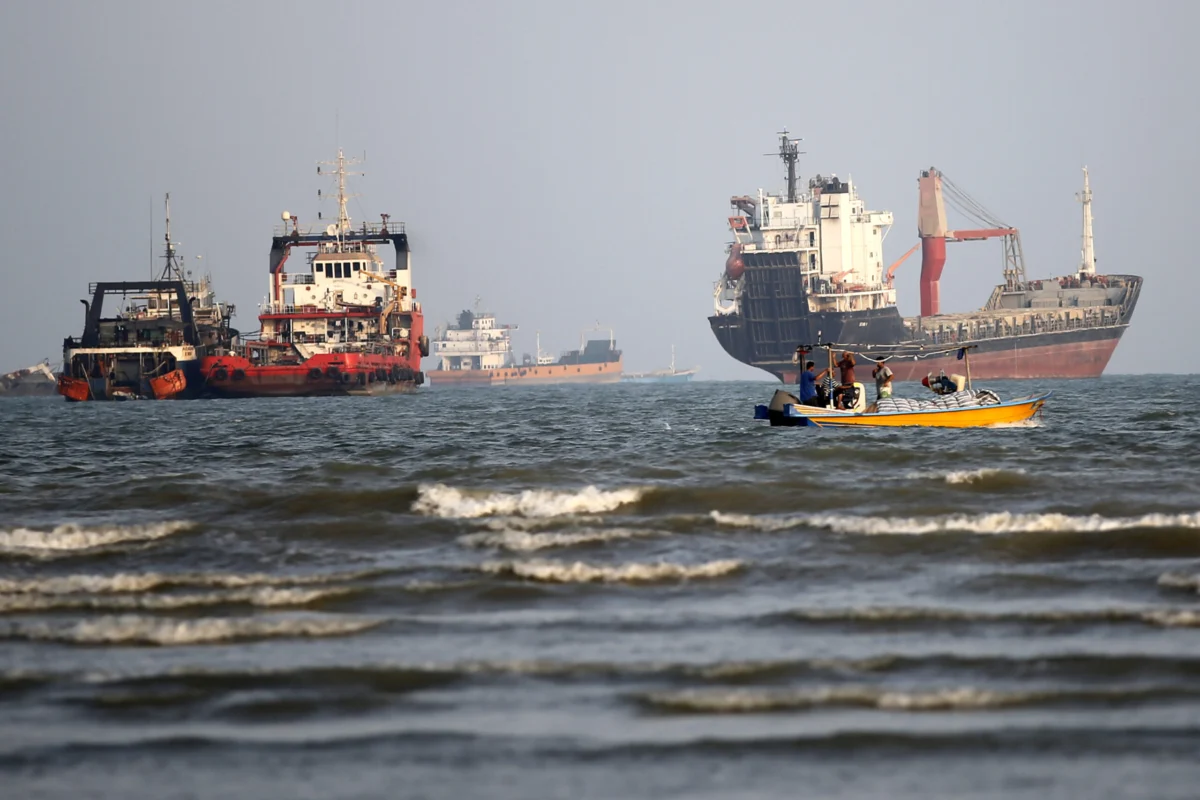
As diplomatic mediators work intensively to broker an end to seven months of intense hostilities, the strategic realities within the Strait of Hormuz are experiencing a notable transformation. This shifting maritime landscape threatens to fundamentally alter the balance of power in ongoing negotiations between Washington and Tehran.
According to the latest maritime tracking data and commodity analytics from firms such as Kpler, commercial traffic through the crucial Middle Eastern waterway has been steadily rebounding. Current estimates indicate that the flow of crude oil and petroleum products through the Strait of Hormuz has climbed to nearly 80 percent of pre-conflict levels. This resurgence in maritime transit arrives at a critical juncture, directly challenging Iran’s primary geopolitical and economic lever: its capacity to disrupt one of the world’s most vital energy transit chokepoints in response to the US-Israeli military campaign that commenced on February 28.
While the return of tankers to the waterway offers a measure of relief to global energy markets, experts caution that it would be premature to declare the crisis over or assume that Tehran is prepared to capitulate. Despite severe economic hardships—compounded by ongoing Western blockades and a tightening web of international sanctions—Iran maintains that its military posture in the region remains active and uncompromised.

Chronology of the Conflict and Maritime Disruption
The current confrontation represents an escalation of decades-long tensions, crystallizing into direct military action earlier this year. A comprehensive timeline highlights the trajectory of the crisis:
- Late February: The US-Israeli military campaign against Iran begins, prompting immediate and aggressive countermeasures from Tehran.
- March to May: In retaliation for coalition airstrikes and naval blockades, the Islamic Revolutionary Guard Corps (IRGC) effectively closes the Strait of Hormuz. Daily vessel traffic plummets from a pre-war average of 120 to 140 vessels down to as few as two tankers per day.
- August: The United States introduces an intensified economic pressure campaign, threatening comprehensive global sanctions targeting Iran’s remaining financial and petrochemical networks. Simultaneously, US diesel prices surge to record highs, impacting domestic consumer sentiment.
- Early September: Kpler data records a recovery in Middle East crude exports, reaching approximately 16.328 million barrels per day (bpd), with Hormuz flows hitting 9.719 million bpd. Concurrently, Iranian inflation reaches a 12-month average of 69.9 percent, and the national currency depreciates past 2.2 million rials to the US dollar.
- Late September: Indirect talks take place at the United Nations General Assembly in New York, where US special envoys Steve Witkoff and Jared Kushner meet with Iranian Foreign Minister Abbas Araghchi. Qatari mediators subsequently deliver US feedback on an Iranian seven-day reopening roadmap.
Empirical Data and Energy Market Dynamics
The statistical recovery of energy flows through the Strait of Hormuz provides a complex picture of regional stability. Kpler’s September reporting indicates that crude exports from the Middle East have climbed to their highest point since the outbreak of hostilities in February. Saudi Arabia has emerged as the primary driver of this increase, with its export volumes rebounding significantly from 2.446 million bpd in August to approximately 5.4 million bpd in September.
Despite this recovery, total regional exports remain roughly 3.2 million bpd below the 19.513 million bpd recorded in February. Furthermore, these figures exclude vessels operating with transponders deactivated, leaving the true volume of maritime traffic subject to ongoing estimation.
Global energy markets continue to price in considerable geopolitical risk. Although Brent crude experienced a 2.6 percent decline to $102.59 a barrel following reports of normalized flows, the commodity registered an overall monthly gain of approximately 13 percent in September. Analysts point out that elevated tanker insurance premiums, ongoing threats to maritime navigation, and constrained supplies of refined fuels—particularly gasoline and diesel—continue to exert upward pressure on prices. Additionally, the significant depletion of strategic petroleum reserves by consumer nations has reduced the global cushion against potential future supply disruptions.

Official Responses and Strategic Positions
The confrontation in the Gulf continues to generate sharp rhetorical and tactical divergences between Washington and Tehran.
Iranian authorities vehemently reject the premise that their strategic leverage over the strait has been permanently eroded. Addressing the situation, Islamic Revolutionary Guard Corps spokesperson Hossein Mohebbi asserted that a state of active military conflict persists within the waterway. "We have been hitting small ships and preventing them from passing for a long time, but America does not respond," Mohebbi stated in an interview with the semi-official Fars news agency. Reinforcing these claims, the United Kingdom Maritime Trade Operations (UKMTO) center reported that unknown projectiles struck three vessels in the strait, including a crude oil tanker.
Domestically, Iran faces severe macroeconomic headwinds. Official figures released by the Statistical Center of Iran indicate that the nation’s gross domestic product (GDP) contracted by 10.1 percent year-on-year between March 21 and June 20, while the critical oil and gas sector plummeted by 26.4 percent. Mohammad Eslami, a research fellow at the University of Tehran, acknowledged the severity of what he termed an "economic war" waged through naval blockades and financial isolation. However, Eslami cautioned against interpreting currency depreciation and inflation as sole indicators of state resilience, noting that Iran has navigated decades of external economic coercion.
Conversely, the economic fallout has not been confined to Tehran. In the United States, retail diesel prices reached an unprecedented $6.53 per gallon—representing a more than 70 percent increase compared to pre-war figures. This inflationary spike contributed to the Federal Reserve’s decision to implement a 25-basis-point interest rate increase, its first in three years. The resulting cost-of-living crisis has created acute political challenges for the administration of President Donald Trump ahead of critical midterm congressional elections, with national approval ratings reflecting public dissatisfaction over economic management.

Diplomatic Pathways and Implications
Despite ongoing kinetic engagements and economic warfare, diplomatic channels remain active. Indirect negotiations held at the United Nations General Assembly marked a notable step forward, described by President Trump as "very good" and "very productive."
The diplomatic core of the current impasse centers on a sequencing dispute. Tehran previously introduced a seven-day roadmap proposing the full reopening of the Strait of Hormuz in exchange for the lifting of the naval blockade, the suspension of specific sanctions, and the release of frozen foreign assets—terms that Washington initially dismissed. However, subsequent diplomatic engagement facilitated by Qatari intermediaries has narrowed the focus of discussions. According to officials briefed on the matter, the primary obstacle to a formal agreement is no longer the fundamental components of the proposal, but rather the precise sequencing and verification of reciprocal measures.
As maritime traffic through the Strait of Hormuz continues its gradual ascent toward pre-conflict norms, both administrations face mounting domestic and international imperatives to secure a lasting diplomatic resolution. Whether the convergence of recovering energy flows and severe economic pressure will compel a final breakthrough remains one of the defining geopolitical questions of the region.









