Reynand Wu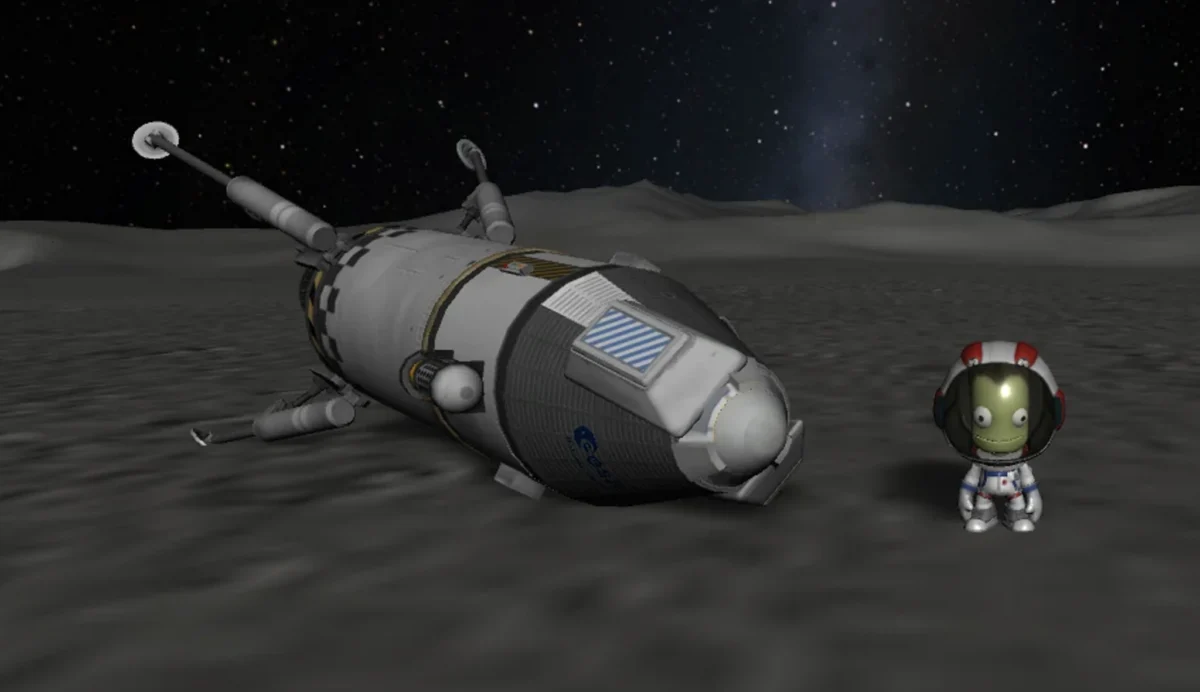
For decades, the cultural conversation surrounding video games in the United States has been dominated by skepticism. During the 1990s, the medium was frequently scrutinized for its depictions of violence, with critics arguing that interactive simulations could cultivate aggressive behavior. As the gaming industry matured through the 2010s, public discourse expanded to address the societal impacts of hyper-realistic franchises like Call of Duty and Grand Theft Auto. Yet, this persistent focus on the "moral panic" surrounding gaming has often obscured a more significant, positive phenomenon: the capacity for digital environments to foster intellectual curiosity, community collaboration, and genuine scientific literacy.
A primary example of this shift is the sustained success of Kerbal Space Program (KSP), a physics-based simulation that balances whimsical, cartoon-like aesthetics with the brutal, unforgiving reality of orbital mechanics. While many titles experience temporary spikes in engagement tied to promotional discounts, KSP has demonstrated a rare, sustained increase in its player base, quintupling its active users during the spring of 2026. This surge suggests that digital play is increasingly serving as a proxy for broader public interest in aerospace exploration, effectively bridging the gap between passive consumption of science media and active, simulated engagement with complex engineering challenges.
A Chronology of Renewed Cosmic Interest
The resurgence of KSP in the first half of 2026 did not occur in a vacuum. It coincided with a "perfect storm" of space-related milestones that captured the collective imagination. The timeline of this engagement spike correlates precisely with major developments in the aerospace sector and the entertainment industry:
- February 2026: Initial public anticipation for the Artemis II mission begins to gain significant momentum, with NASA ramping up media briefings regarding the crewed lunar flyby.
- March 2026: The cinematic release of Project Hail Mary, based on Andy Weir’s 2021 novel, achieves massive commercial success. By providing a scientifically grounded and optimistic portrayal of human cooperation in space, the film sets the tone for a renewed cultural focus on extraterrestrial exploration.
- April 2026: The successful launch and completion of the Artemis II mission mark a historic return to deep-space human flight. Public interest in space, already primed by the success of Project Hail Mary, reaches a fever pitch.
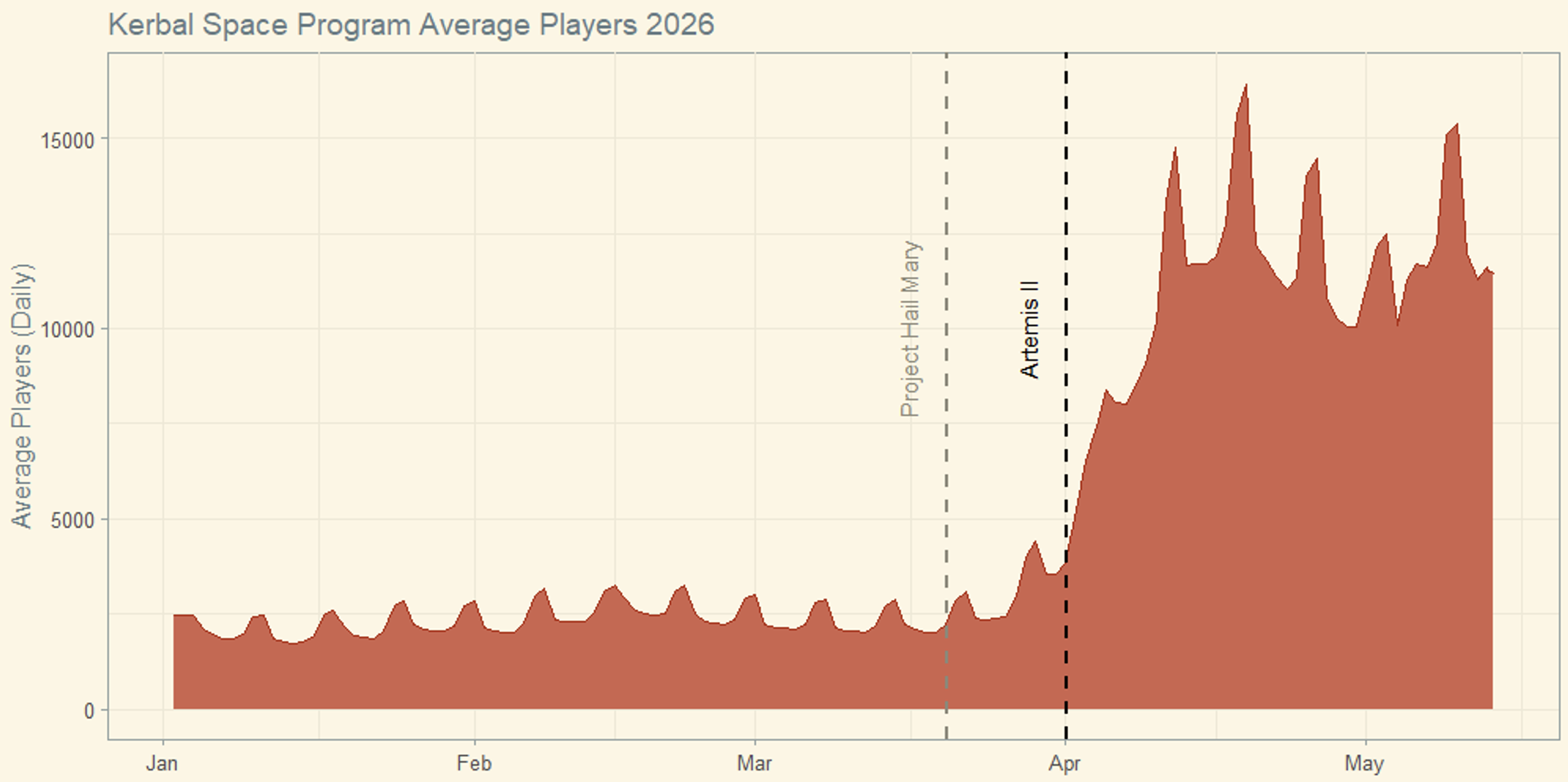
- Spring 2026: SteamDB records indicate a five-fold increase in the concurrent player count for KSP, reflecting a demographic shift toward users seeking to replicate or understand the orbital maneuvers seen in real-world news reports.
This alignment of real-world events with digital simulation underscores a recurring trend in human behavior: the desire to internalize complex external phenomena through play.
The Sociological Foundation of Play
The role of play in human development is a cornerstone of sociological theory. While early thinkers such as Georg Simmel and Erving Goffman framed play as a form of social interaction defined by specific, understood rules—akin to the "presentation of self" in everyday scenarios—later scholars have argued that play is a primary architect of culture itself.
In his foundational work Homo Ludens, historian Johan Huizinga posited that play is not merely a distraction, but a necessary "testing ground" where individuals can experiment with reality in a consequence-free environment. This theory finds modern application in the work of Thomas S. Hendricks. In Selves, Societies, and Emotions, Hendricks argues that play allows for a focus on process rather than outcome. For the KSP player, the "end goal" of reaching the Mun (the game’s equivalent of the Moon) is secondary to the iterative process of rocket design, flight failure, and technical refinement. In this context, the digital simulation serves as a space to cultivate an awareness of one’s own capabilities and an understanding of the laws of physics.
Data-Driven Engagement and Public Literacy
The data provided by SteamDB confirms that KSP’s current trajectory is an outlier in the gaming market. While most titles follow a decay curve—starting high at launch and tapering off over time—KSP has maintained a high baseline, with the 2026 spike indicating a persistent influx of new players. This engagement is characterized by high levels of community support, with forums like the KSP subreddit serving as repositories for "lessons learned" from catastrophic mission failures.
When users share their experiences—often with self-deprecating humor regarding their inability to land a craft with sufficient fuel—they are engaging in a communal scientific process. This collaborative troubleshooting is distinct from the competitive nature of traditional gaming. Instead of seeking to defeat an opponent, the player seeks to defeat the constraints of gravity and thermodynamics.
Implications for Aerospace and Public Policy
The economic contrast between institutional space programs and digital simulation is stark. The Artemis II mission required a multi-billion-dollar investment, representing the absolute pinnacle of state-sponsored engineering. In contrast, KSP provides an accessible, $40 entry point for millions of people to engage with the principles of aerospace engineering.
While the simulation cannot replace the rigorous training and physical infrastructure of NASA, it serves as a vital pedagogical tool. It lowers the barrier to entry for scientific literacy, allowing a middle-schooler or an adult enthusiast to intuitively understand why a rocket requires multi-stage boosters or why orbital insertion requires precise velocity changes.
Industry analysts suggest that this "digital apprenticeship" may have long-term implications for the workforce. While not every KSP player will pursue a career in aerospace engineering, the widespread exposure to the challenges of spaceflight cultivates a more informed citizenry. As public funding for space exploration continues to be debated in legislative chambers, a population that understands the technical realities—and the immense satisfaction—of successful orbital mechanics is more likely to support sustained, long-term investment in space programs.
Looking Toward the Future
The "moral panic" that once defined the conversation around video games appears to be waning, replaced by a more nuanced understanding of how virtual worlds can reflect and enhance real-world interests. The sustained popularity of KSP demonstrates that when provided with the right tools, the public is eager to engage with complex, "serious" topics through the lens of play.
Whether the current interest in KSP persists or eventually returns to a baseline level, the 2026 data serves as a compelling case study. It proves that video games are not merely passive entertainment; they are dynamic, social, and educational platforms that can amplify public enthusiasm for the next great frontier. By enabling millions of people to "launch Jebediah Kerman to the stars," the game has done more than provide hours of entertainment—it has provided a meaningful, accessible window into the future of humanity among the stars. As the aerospace sector prepares for more ambitious missions, it is worth acknowledging that the next generation of engineers, policymakers, and space enthusiasts may be getting their start not in a traditional classroom, but within the simulated, gravity-bound constraints of a digital sandbox.