
 Jono Maryono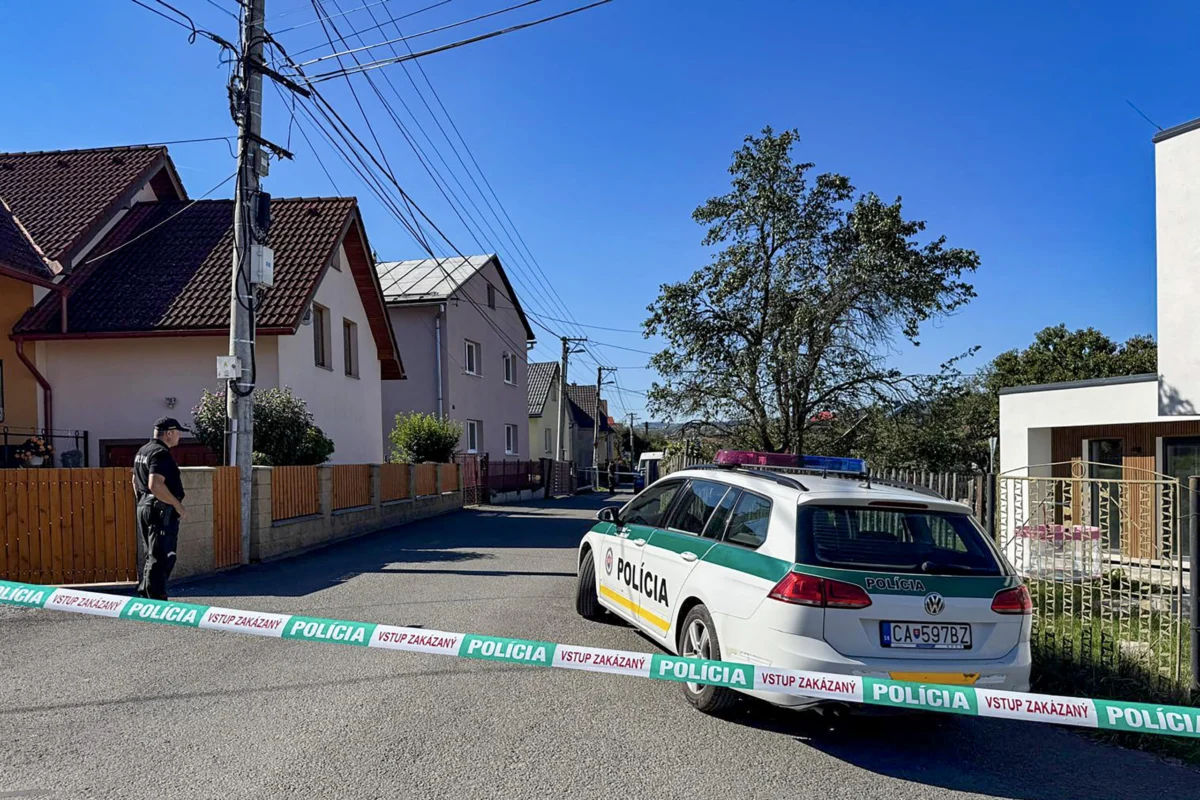
A profound sense of shock and mourning has enveloped the small northwestern Slovak village of Staškov following a horrific act of school violence on Tuesday. A 13-year-old elementary schoolboy launched a sudden and brutal knife attack within the educational facility, resulting in the death of a 61-year-old female teacher and leaving a fellow female educator and a young schoolgirl with severe, life-threatening injuries. The incident has sent immediate shockwaves through the local community of approximately 2,750 residents, while prompting an urgent, high-level national response regarding school safety, youth mental health, and the rising tide of societal aggression across Slovakia.
Law enforcement authorities, emergency medical responders, and government ministers quickly mobilized to address the unfolding crisis near the Czech border. As the community struggles to comprehend the incomprehensible, investigators from specialized anti-organized crime units have launched a formal inquiry into the classification of premeditated murder, casting a harsh spotlight on the legal, ethical, and practical implications of juvenile violent crime in the Central European nation.
Chronology and Details of the Attack
The sequence of events on Tuesday morning unfolded with terrifying speed in what is ordinarily a quiet, tightly knit rural educational environment. According to preliminary reports released by regional emergency services and law enforcement officials, the 13-year-old male student initiated the rampage inside the Staškov elementary school. Armed with a blade, the minor targeted three individuals in quick succession.
The primary victim, a 61-year-old female teacher, sustained critical stab wounds from which she could not be saved, succumbing to her injuries at the scene despite the rapid intervention of first responders. Two other individuals—a 44-year-old female teacher and a young female student—were severely wounded in the chaotic moments of the assault.
Emergency service spokeswoman Petra Klimesová confirmed the gravity of the injuries sustained by the survivors. The 44-year-old teacher suffered a serious chest wound, though Ministry of Interior officials later clarified that her condition had stabilized and her life was no longer in danger. Conversely, the young schoolgirl was rushed to a medical facility in a critically compromised state. Health Minister Kamil Sasko addressed reporters shortly after the incident, confirming that the child remained hospitalized in a serious, critical condition as medical teams fought tirelessly to save her life.
Law enforcement officers secured the perimeter swiftly. The 13-year-old assailant was detained at the scene without further loss of life. Because of the severity and planning apparent in the assault, the Office for Combating Organized Crime (UBOK) took charge of the investigation, pursuing formal charges associated with premeditated murder.
Quick-Thinking Leadership Prevents Further Loss
While the tragedy devastated the school community, local and national authorities were quick to commend the extraordinary composure and adherence to safety protocols demonstrated by the institution’s leadership. Interior Minister Matúš Šutaj Eštok, speaking at an emergency press conference held in Staškov, drew attention to the pivotal actions of the school’s head teacher during the crisis.
According to the interior minister, the principal was present when the violence erupted and systematically executed every established emergency procedure outlined in national security manuals. Eštok praised her calm under immense pressure, noting that her adherence to protocol effectively prevented the horrific incident from escalating into an even greater catastrophe. Law enforcement agencies subsequently confirmed that the overall situation in the village was brought under control within hours, though the emotional fallout within the community remains profound.
National Reactions and Political Upheaval
The Staškov attack immediately reverberated through the highest echelons of the Slovak government, triggering stark warnings from national leaders regarding public discourse, digital polarization, and the mental well-being of the younger generation.
Prime Minister Robert Fico issued an official statement expressing his deepest and most sincere condolences to the grieving family of the slain teacher and the entire Staškov community. Fico remarked that he was following the developments with profound concern, emphasizing the personal sorrow the incident caused him.
President Peter Pellegrini adopted a sharper, more analytical tone, voicing profound dismay over the recurring nature of violent attacks directed at educational staff and students across the country. Pellegrini pointedly connected the school violence to broader societal trends, identifying a toxic cocktail of unbridled aggression and systemic intolerance as a root cause of such tragedies.
In a strongly worded address, the president argued that toxic behaviors propagated extensively across social media platforms—and, regrettably, amplified by certain political figures—are actively poisoning the public sphere. He warned that this toxic socio-political climate inevitably trickles down, molding and radicalizing the behavior of children within academic environments. Pellegrini issued a public appeal to all citizens, urging a concerted effort to dial back inflammatory rhetoric and foster an atmosphere of calm rather than contributing to further societal polarization.
Broader Context: A Troubling Pattern of School Violence in Slovakia
While school-based violence involving lethal weapons remains statistically rare in Slovakia compared to some other nations, the Staškov attack marks the latest in a troubling series of violent incidents to plague Slovak educational institutions over recent years. This recurring pattern has forced educators, policymakers, and security experts to reevaluate the vulnerabilities of schools that were once viewed as safe havens.
Just last year, the country reeled from an analogous high-school tragedy in northern Slovakia, where an 18-year-old student fatally stabbed a 51-year-old deputy principal alongside a fellow 18-year-old schoolmate. That incident prompted widespread calls for increased psychological support services within academic institutions and enhanced physical security measures.
Going back further, the year 2020 saw a violent intrusion at a high school in the town of Vrútky. In that instance, a 22-year-old former student breached the facility, killing the deputy principal and leaving five other individuals—including two students—seriously wounded before police neutralized the threat. Additionally, a 2022 incident at a high school in Nováky involved a student launching a physical assault that resulted in injuries to a female pupil.
These repeated incidents underscore a persistent vulnerability in how institutions manage acute behavioral crises, mental health interventions, and campus security. criminologists and child psychologists point out that the involvement of increasingly younger perpetrators—such as the 13-year-old suspect in Staškov—complicates standard legal and rehabilitative frameworks, which must balance accountability with the developmental realities of minors.
Implications and Future Policy Directions
The murder of the 61-year-old teacher in Staškov is expected to catalyze rigorous policy debates within the Slovak National Council. Lawmakers are under mounting pressure to move beyond rhetorical condemnations and implement substantive structural reforms.
Key areas requiring immediate attention include the expansion of accessible mental health resources for children and adolescents, many of whom exhibit signs of acute alienation, anxiety, or radicalization facilitated by unregulated online environments. Educational experts argue that schools are chronically under-resourced when it comes to professional psychological staffing, leaving educators ill-equipped to identify and de-escalate severe behavioral red flags before they manifest in physical violence.
Furthermore, security infrastructure within rural and regional schools is likely to undergo comprehensive auditing. While urban centers have occasionally integrated controlled access points or heightened surveillance, smaller village schools like the one in Staškov often operate on open, community-accessible models that prioritize an inviting environment over fortress-like security. Balancing the need for a nurturing educational atmosphere with the harsh modern reality of campus threat management presents an immense logistical and philosophical challenge for Slovak authorities.
As the village of Staškov begins the agonizing process of healing, counseling services have been deployed to support traumatized students, teachers, and family members. Meanwhile, the legal system prepares to navigate the complex proceedings involving a minor accused of the ultimate crime—a proceeding that will test the resilience, empathy, and institutional competence of a nation searching for answers in the wake of an unthinkable tragedy.









