Jono Maryono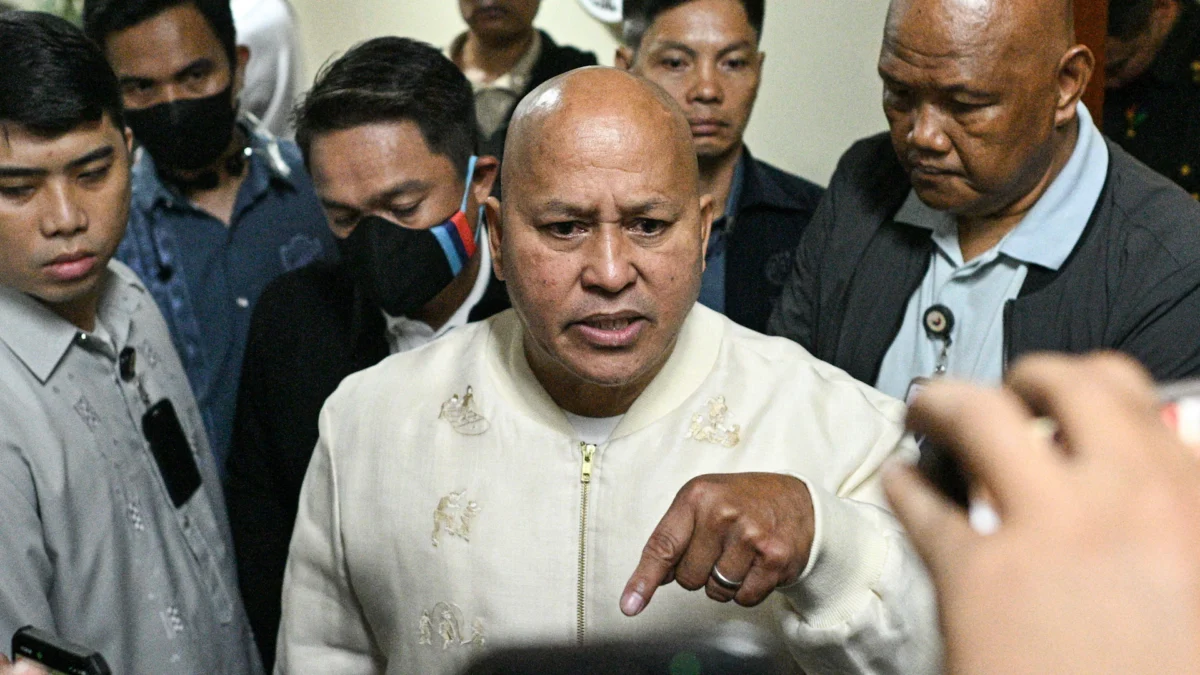
Philippines Senator Ronald Dela Rosa has sought refuge within the hallowed halls of the country’s parliament, a dramatic move occurring on Monday as law enforcement agencies moved to execute an arrest warrant issued by the International Criminal Court (ICC). The warrant is directly linked to Senator Dela Rosa’s pivotal role in the controversial "war on drugs" spearheaded by former President Rodrigo Duterte, a campaign that prosecutors allege resulted in the deaths of tens of thousands of Filipinos. This unprecedented situation marks a significant escalation in the international legal scrutiny of the Duterte administration’s policies and raises profound questions about accountability and justice in the Philippines.
Background: The Genesis of the War on Drugs
The Philippines’ "war on drugs" was a cornerstone of Rodrigo Duterte’s presidency, which began in June 2016. Promising a swift and decisive crackdown on crime and illegal narcotics, Duterte campaigned on a platform of zero tolerance. Upon taking office, his administration launched a sweeping campaign characterized by aggressive police operations, often resulting in extrajudicial killings. The stated objective was to eradicate the drug menace that Duterte claimed was destroying the nation. However, the methods employed quickly drew widespread condemnation from human rights organizations, international bodies, and a significant segment of the Philippine population.
The campaign’s brutality was well-documented. Reports from various human rights watchdogs, including Human Rights Watch and Amnesty International, detailed thousands of killings attributed to police operations and vigilante groups. While the Philippine National Police (PNP) maintained that these deaths occurred during legitimate anti-drug operations where suspects resisted arrest, the sheer volume and the alleged impunity with which these killings were carried out fueled accusations of systematic human rights abuses. The "Tokhang" operations, a portmanteau of the Cebuano words "toktok" (to knock) and "hangyo" (to plead), initially involved police visiting the homes of suspected drug users and pushers, urging them to surrender. This evolved into more forceful raids and, as noted by critics, often ended in fatalities.
Senator Dela Rosa, a former chief of the Philippine National Police (PNP) from July 2016 to October 2018, was at the helm of the PNP during the most intense period of the drug war. His leadership coincided with the implementation of the aggressive strategies that became synonymous with the campaign. As PNP chief, he was the public face of the operations, often defending the police’s actions and reiterating the government’s commitment to eradicating illegal drugs. His tenure was marked by a dramatic surge in reported drug-related deaths, making him a central figure in both the prosecution and defense of the drug war’s legacy.
The International Criminal Court’s Involvement
The ICC’s interest in the Philippines’ drug war began long before the issuance of this arrest warrant. In February 2018, the ICC prosecutor initiated a preliminary examination into the alleged crimes against humanity committed during the campaign. This examination is a fact-finding stage to determine if there is a reasonable basis to believe that crimes within the ICC’s jurisdiction have occurred. Over several years, the ICC gathered evidence, interviewed witnesses, and reviewed reports from various sources.
In September 2021, the ICC prosecutor announced the decision to seek authorization to open a full investigation into the situation in the Philippines. This request was granted by the ICC’s Pre-Trial Chamber in January 2022, allowing for a formal investigation into alleged crimes against humanity. The investigation focused on the period from November 1, 2009, to June 24, 2016, covering the period when Duterte was mayor of Davao City and the initial months of his presidency, as well as the broader period of his presidency up to March 2017. While the initial focus was on the earlier period, the scope has evidently broadened to encompass actions taken under his presidency, including those directly overseen by then-PNP chief Dela Rosa.
The ICC’s jurisdiction extends to the most serious international crimes: genocide, crimes against humanity, war crimes, and the crime of aggression. Crimes against humanity are defined as widespread or systematic attacks directed against any civilian population, with knowledge of the attack. The alleged extrajudicial killings in the Philippines, characterized by their scale and alleged state-sanctioned nature, fall under this definition.
Timeline of Key Events Leading to the Arrest Warrant
- June 30, 2016: Rodrigo Duterte assumes the presidency of the Philippines and immediately launches his "war on drugs."
- July 2016 – October 2018: Ronald Dela Rosa serves as the Chief of the Philippine National Police, overseeing the implementation of the drug war’s aggressive operations. This period witnesses a significant spike in reported drug-related killings.
- February 2018: The ICC prosecutor announces the initiation of a preliminary examination into the alleged crimes against humanity in the Philippines.
- September 2021: The ICC prosecutor announces the decision to seek authorization to open a full investigation into the situation in the Philippines.
- January 2022: The ICC Pre-Trial Chamber authorizes the opening of a formal investigation into alleged crimes against humanity.
- Undisclosed Date (prior to May 12, 2026): The ICC Pre-Trial Chamber issues an arrest warrant for Senator Ronald Dela Rosa, among other individuals, related to their alleged involvement in the drug war.
- May 12, 2026: Law enforcement agencies in the Philippines prepare to execute the ICC arrest warrant for Senator Dela Rosa. He takes refuge in the country’s parliament.
Senator Dela Rosa’s Role and Defense
Senator Ronald Dela Rosa has consistently defended his actions and the drug war itself, portraying it as a necessary measure to combat a pervasive societal problem. During his tenure as PNP chief, he often emphasized the efforts made to apprehend drug offenders and the challenges faced by law enforcement. He has previously stated that the police acted within the bounds of the law and that any deaths were a result of suspects resisting arrest.
In the face of the ICC’s scrutiny, Dela Rosa has maintained a defiant stance. He has previously argued that the ICC has no jurisdiction over him and that the proceedings are politically motivated. He has also pointed to the Philippine government’s withdrawal from the Rome Statute, the treaty that established the ICC, as a reason for the court’s lack of authority. The Philippines officially withdrew from the Rome Statute in March 2019. However, the ICC maintains that its jurisdiction applies to crimes committed before the withdrawal.
The specific allegations against Senator Dela Rosa are not fully detailed in the public domain of the arrest warrant itself, but it is understood to relate to his command responsibility as PNP Chief during a period where widespread and systematic killings were occurring as part of the state-sponsored drug war. Prosecutors at the ICC would need to demonstrate that he either committed these acts himself or failed to prevent or punish them when he had the authority and duty to do so.
Official Responses and International Reactions
The Philippine government’s stance on the ICC’s actions has been largely one of non-cooperation and defiance. President Duterte himself had been a vocal critic of the ICC, accusing the court of interfering in the Philippines’ internal affairs. The government has previously stated that it is capable of investigating and prosecuting any alleged abuses committed by its own officials and that domestic remedies should be exhausted before any international intervention.
Following reports of the arrest warrant and Senator Dela Rosa’s actions, various reactions have emerged. Human rights organizations have largely welcomed the ICC’s move as a crucial step towards accountability for the victims of the drug war. They have urged the Philippine government to cooperate with the ICC and to ensure that justice is served.
"This is a critical moment for justice in the Philippines," stated a representative from a prominent local human rights NGO, speaking on condition of anonymity due to the sensitive nature of the situation. "For too long, the victims and their families have been denied justice. The ICC’s action is a beacon of hope that those responsible for the atrocities of the drug war will finally be held accountable."
Conversely, allies of former President Duterte and Senator Dela Rosa have condemned the arrest warrant, reiterating claims of foreign interference and a lack of due process. They argue that the drug war, despite its controversial methods, brought a sense of order and security to the country.
Broader Implications and Analysis
The implications of Senator Dela Rosa seeking refuge in parliament are far-reaching. Firstly, it highlights the deep divisions within Philippine society regarding the legacy of the drug war. It also underscores the challenges faced by international justice mechanisms when dealing with sovereign states that are unwilling to cooperate.
The act of seeking sanctuary in the parliament, while a legal maneuver to potentially leverage parliamentary immunity, also carries significant symbolic weight. It positions the legislative branch as a potential shield against international legal processes, raising questions about the separation of powers and the rule of law.
The ICC’s arrest warrant, regardless of whether it is successfully executed, serves as a potent reminder of the international community’s commitment to upholding human rights and holding perpetrators of mass atrocities accountable. It also puts pressure on the Philippines to address the unresolved issues of the drug war through credible domestic mechanisms.
The legal battle that may ensue will likely involve complex arguments concerning jurisdiction, immunity, and the admissibility of evidence. The outcome could set precedents for future international criminal justice cases and influence the trajectory of human rights advocacy in the Philippines and beyond. The fate of Senator Dela Rosa and the broader implications for accountability in the Philippines will be closely watched by the international community, human rights advocates, and the victims’ families who have long awaited justice. This development signifies a critical juncture in the ongoing struggle for accountability for one of the most controversial campaigns of the 21st century.