Jono Maryono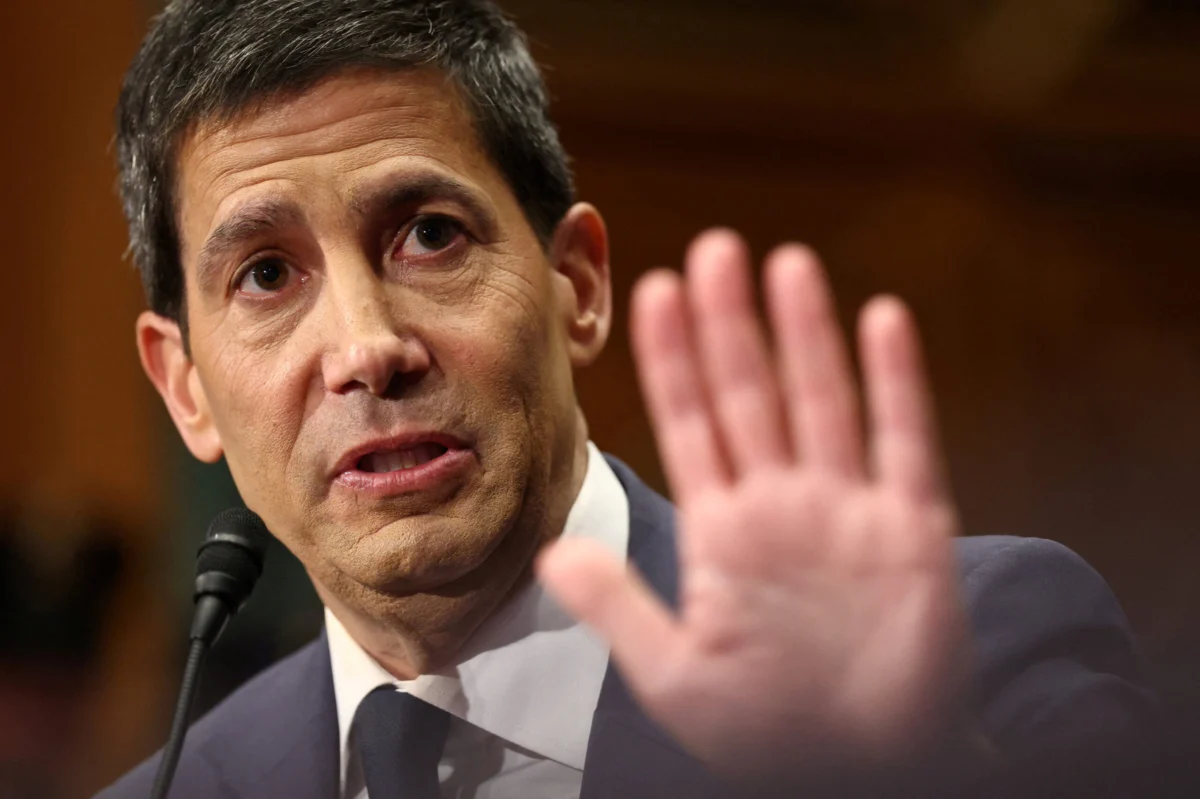
The United States Senate has confirmed Kevin Warsh for a position on the Federal Reserve’s Board of Governors, a pivotal decision that could reshape the trajectory of American monetary policy. The vote, which concluded with a 51-45 tally, saw an unexpected alignment as Democratic Senator John Fetterman of Pennsylvania joined the Republican majority in supporting Warsh’s nomination. This confirmation precedes an anticipated vote that may see President Donald Trump’s appointee ascend to the leadership of the nation’s central bank.
Warsh’s initial confirmation secures him a 14-year term on the powerful Federal Reserve Board. The next critical step in the confirmation process is the Senate’s vote on his potential leadership as Chair of the Federal Reserve, a decision expected as early as Wednesday. This vote comes with a looming deadline, as the term of the current Chair, Jerome Powell, is set to expire on Friday. The impending leadership transition at the Federal Reserve has amplified discussions surrounding the institution’s autonomy and its susceptibility to political pressures.
Scrutiny Over Independence: Warsh’s Past and Present Challenges
The confirmation of Kevin Warsh has been shadowed by persistent questions regarding the Federal Reserve’s independence, particularly in light of President Trump’s vocal advocacy for lower interest rates. During his appearance before the Senate Banking Committee, Warsh, who previously served on the Federal Reserve’s Board of Governors from 2006 to 2011, faced sharp criticism. Senator Elizabeth Warren, a prominent voice on economic policy, characterized Warsh as a "sock puppet" for President Trump, a designation Warsh has vehemently denied.
These accusations stem, in part, from President Trump’s public pronouncements. In December, the President explicitly stated that he would only appoint an individual to lead the central bank who aligned with his views on interest rate policy. Such statements have fueled anxieties among economists and market participants about the potential for political interference in monetary policy decisions, which are traditionally insulated from short-term political considerations.
However, the influence of the Federal Reserve Chair, while significant, is not absolute. The Chair is one of twelve voting members of the Federal Open Market Committee (FOMC), the body responsible for setting interest rates. Furthermore, the Chair is one of nineteen voices contributing to the broader policy-setting discussions within the Federal Reserve system. This distributed decision-making structure is designed to foster deliberation and prevent the concentration of power.
Warsh’s confirmation occurs within a broader context of intensified efforts by the Trump administration to exert influence over the Federal Reserve. These efforts have manifested in several high-profile instances. Notably, the administration reportedly attempted to remove Fed Governor Lisa Cook from her position, a case currently under review by the Supreme Court. Additionally, there was support for a Department of Justice investigation into Federal Reserve Chair Jerome Powell’s management of a building renovation project. A federal judge later ruled that this investigation might have been a pretext for pressuring Powell to either lower interest rates or resign. While the Department of Justice ultimately dropped its investigation, the lead prosecutor indicated the possibility of its reopening, underscoring the persistent scrutiny.
In response to what he described as a "series of legal attacks on the Fed which threaten our ability to conduct monetary policy without considering political factors," Jerome Powell announced last month his intention to remain on the Board of Governors as a regular member after his term as Chair concludes. This unusual decision reflects the profound challenges to the Fed’s operational autonomy.
A New Direction: Warsh’s Proposed "Regime Change"
Kevin Warsh has articulated his vision for the Federal Reserve, which he describes as a plan for "regime change." This ambitious agenda includes a recalibration of the central bank’s coordination with the Treasury Department and the broader Trump administration on non-monetary policy matters. Furthermore, Warsh has indicated a desire to steer the Fed towards a smaller balance sheet. He contends that such a reduction in the Fed’s assets could pave the way for lower policy rates, a stance that aligns with President Trump’s expressed preferences.
The current economic landscape presents a complex backdrop for these potential policy shifts. A recent surge in oil prices, exacerbated by the ongoing conflict between the United States and Iran, has contributed to an uptick in inflation. This inflationary pressure, in turn, has tempered investor expectations for an interest rate cut this year. Current market sentiment suggests approximately a one-in-three probability of a rate hike by December. The Federal Reserve’s current target range for short-term borrowing costs stands between 3.5 percent and 3.75 percent.
The Federal Reserve’s next scheduled meeting, which could potentially be the first chaired by Warsh, is slated for June 16-17. This meeting will be closely watched for any early indications of the policy direction Warsh intends to pursue.
Historical Context of Federal Reserve Appointments and Independence
The Federal Reserve System, established by Congress in 1913, was designed to provide the nation with a stable and flexible monetary and financial system. A cornerstone of its design has been its independence from direct political control. Governors are appointed for staggered 14-year terms, a duration intended to insulate them from the pressures of short-term political cycles and allow for long-term economic planning. The Chair and Vice Chair are appointed for four-year terms, renewable at the discretion of the President, but these appointments are subject to Senate confirmation.
Throughout its history, the Federal Reserve has navigated periods of both close cooperation and significant tension with the executive branch and Congress. Landmark moments include the Fed’s role in financing World War II, its independence in setting monetary policy during the inflationary 1970s, and its aggressive actions to stabilize the financial system during the 2008 global financial crisis. Each of these periods has seen debates about the appropriate balance between the Fed’s mandate for price stability and maximum employment and the political objectives of the administration in power.
President Trump’s presidency marked a notable increase in public criticism of the Federal Reserve and its leadership. His frequent public statements, often delivered via social media, questioning the Fed’s decisions and urging specific policy actions, were seen by many as an unprecedented challenge to the institution’s traditional independence. This has led to a broader conversation about the legal and practical boundaries of presidential influence over the central bank.
The Mechanics of Monetary Policy and the Fed’s Structure
Understanding the Federal Reserve’s structure is crucial to assessing the implications of Warsh’s appointment. The Board of Governors, based in Washington D.C., is the central governing body of the Federal Reserve System. It consists of seven members, appointed by the President and confirmed by the Senate. The Board oversees the twelve Federal Reserve Banks, which are the operating arms of the system.
The Federal Open Market Committee (FOMC) is the principal body responsible for formulating monetary policy. It is composed of the seven members of the Board of Governors, plus five of the Reserve Bank presidents. The President of the Federal Reserve Bank of New York serves as a permanent member, while the other four Reserve Bank presidents serve one-year terms on a rotating basis. The FOMC meets approximately eight times a year to discuss economic conditions and set the target range for the federal funds rate, the primary tool used to influence short-term interest rates throughout the economy.
The Federal Reserve also influences the economy through other means, including open market operations (buying and selling government securities), setting reserve requirements for banks, and adjusting the discount rate. The Fed’s mandate, as set by Congress, is to promote maximum employment, stable prices, and moderate long-term interest rates.
Broader Implications and Market Reactions
Kevin Warsh’s confirmation and potential chairmanship of the Federal Reserve carry significant implications for both domestic and international financial markets. His past affiliations and stated policy preferences suggest a potential shift in the Fed’s approach to monetary policy. A focus on a smaller balance sheet, for instance, could signal a move away from the quantitative easing programs that have been a feature of monetary policy in recent years. Such a shift could have ripple effects on asset prices, bond yields, and the availability of credit.
Furthermore, the ongoing debate surrounding the Fed’s independence could influence investor confidence. A perception of diminished independence might lead to increased market volatility as investors attempt to anticipate political influences on policy decisions. Conversely, a strong and decisive leader who can effectively navigate political pressures while adhering to the Fed’s mandate could foster greater stability.
The reactions from various stakeholders have been mixed. While some business groups have welcomed the potential for a more accommodative monetary policy, others have expressed concern about the erosion of the Fed’s independence. Economists remain divided on the optimal path for monetary policy, with differing views on the appropriate response to current inflation levels and economic growth prospects.
The confirmation of Kevin Warsh is more than just a personnel decision; it is a development that will be closely scrutinized as it unfolds. The coming months will reveal the extent to which his stated intentions translate into policy actions and how the Federal Reserve navigates the complex interplay of economic imperatives and political realities. The commitment to maintaining price stability and fostering maximum employment, while upholding the hard-won independence of the central bank, will be paramount.