Jono Maryono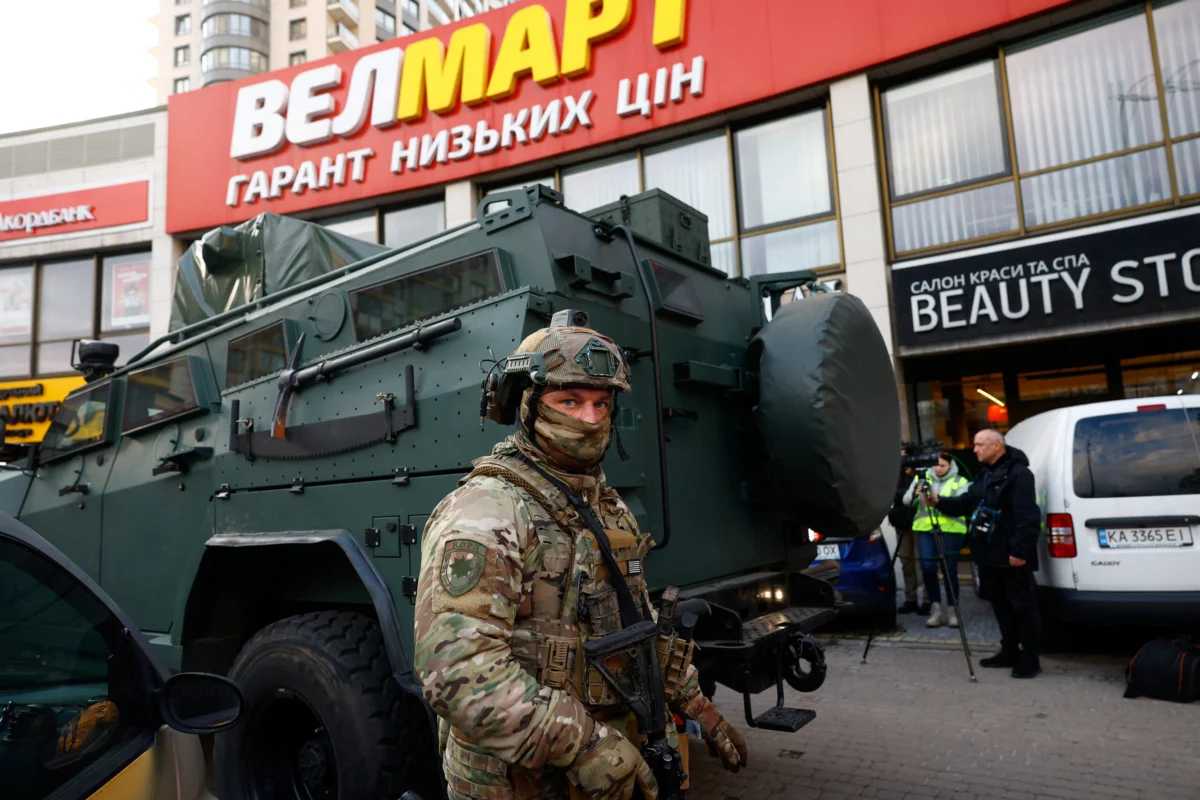
A deadly shooting incident in Kyiv’s Holosiivskyi district on Saturday resulted in the deaths of at least six civilians and left over ten others injured, culminating in the neutralization of the armed assailant by Ukrainian police after a tense standoff. The attacker, identified as a 58-year-old man born in Moscow, barricaded himself inside a supermarket after opening fire on individuals in the street, sparking a significant law enforcement response. While authorities have established the identity of the perpetrator, the motive behind this violent act remains under investigation, leaving a community shaken and seeking answers.
The Day’s Tragic Events Unfold
The violence erupted on Saturday afternoon in the bustling Holosiivskyi district, a densely populated area of the Ukrainian capital. Initial reports indicated that the gunman indiscriminately fired upon civilians in a public space, sowing panic and chaos. Following the street-level assault, the assailant retreated to a nearby supermarket, where he took hostages and fortified his position, initiating a protracted siege.
Kyiv Mayor Vitali Klitschko, a former world heavyweight boxing champion, was among the first high-ranking officials to confirm the unfolding crisis via his Telegram channel. His statements painted a grim picture of the initial moments, detailing the shooter’s actions and his subsequent entrenchment within the commercial establishment. The mayor’s early reports underscored the immediate danger to public safety and the critical need for a swift and decisive police intervention.
A Standoff and a Calculated Resolution
The situation quickly escalated into a hostage crisis, prompting the deployment of specialized tactical police units. For approximately 40 minutes, law enforcement engaged in negotiation attempts with the gunman, aiming to de-escalate the situation and secure the release of any individuals held captive. Interior Minister Ihor Klymenko, also communicating through Telegram, provided a detailed account of these efforts.
"We tried to persuade him, knowing that there was likely a wounded person inside," Klymenko stated, as later reported by The Associated Press. He elaborated on the attempts to offer medical assistance, including the provision of tourniquets to address potential bleeding, but these overtures were met with silence and continued hostility from the perpetrator. The lack of response and the escalating threat posed by the armed individual ultimately led to a difficult decision by the authorities.
Facing an impasse and a clear and present danger to lives, officials gave the order to "neutralise" the attacker. This directive initiated a tactical operation by the special forces units, which entered the supermarket to apprehend or incapacitate the gunman. During this forceful entry, the assailant reportedly fired upon the police officers, further complicating the operation and underscoring the risks involved. The successful neutralization of the attacker brought an end to the immediate threat, but the human cost of the incident was already significant.
The Human Toll and Official Accounts
The devastating impact of the attack was further detailed by President Volodymyr Zelenskyy in a post on the social media platform X. He confirmed that at least six people had lost their lives and that a minimum of ten others were hospitalized with injuries. Among the injured was a child, highlighting the indiscriminate nature of the violence. President Zelenskyy also reported the successful rescue of four hostages who had been held by the gunman.
The Prosecutor General, Ruslan Kravchenko, provided crucial details regarding the attacker’s identity. He confirmed that the perpetrator was a 58-year-old male, born in Moscow. This piece of information immediately raised questions about potential connections to Russia, a nation currently engaged in an ongoing war with Ukraine. However, officials were careful to state that no motive had yet been established, indicating that the investigation into the underlying reasons for the attack was in its nascent stages.

Further complicating the narrative was the information provided by Interior Minister Klymenko regarding the legality of the firearm used. He revealed that the man possessed a legally registered gun and had actively sought to renew his weapons permit as recently as December 2025. His renewal process included the submission of a valid medical certificate. This detail suggests that the attacker had, at least on paper, met the requirements for firearm ownership, prompting an inquiry into the medical institution that issued the certificate and the integrity of the licensing process. Investigators are expected to thoroughly examine the provenance of this medical document.
Broader Context and Emerging Questions
The incident in Kyiv, while seemingly an isolated act of violence, occurs against a backdrop of heightened security concerns in Ukraine, particularly in the context of the protracted war with Russia. While no direct link has been established, the perpetrator’s origin from Moscow will undoubtedly be a focal point of the investigation, especially in terms of potential foreign influence or extremist ideologies.
The legal acquisition of a firearm by an individual who subsequently perpetrated such a violent act also raises pertinent questions about the efficacy of Ukraine’s gun control and mental health screening protocols for firearm permit holders. The fact that the attacker had recently renewed his license and provided a medical certificate, yet was capable of such a violent outburst, suggests a potential gap in the system that warrants thorough review.
Official Reactions and Calls for Swift Justice
President Zelenskyy expressed profound condolences to the families of the victims, acknowledging the immense suffering caused by the attack. He emphasized the government’s commitment to transparency and accountability, stating that he had instructed officials to make all verified information publicly available. "We expect a swift investigation," he remarked, underscoring the urgency with which authorities are approaching the case.
The Ukrainian authorities have pledged a comprehensive and transparent investigation to uncover the motive, method, and any potential accomplices or external influences that may have contributed to this tragedy. The findings of this investigation will be crucial not only for bringing closure to the victims’ families but also for informing future security measures and policy adjustments aimed at preventing similar incidents.
Analysis of Implications
The Kyiv shooting incident, regardless of its specific motive, carries significant implications for public safety and societal well-being. Firstly, it underscores the persistent threat of lone-wolf attacks and the challenges faced by law enforcement in predicting and preventing such acts, especially when perpetrators are legally armed. The seemingly random nature of the violence, targeting civilians in a public space, instills fear and erodes the sense of security within communities.
Secondly, the perpetrator’s origin from Moscow, while not yet linked to a motive, highlights the ongoing geopolitical tensions and the potential for Russia to exploit any instability or internal grievances within Ukraine. The investigation will need to meticulously examine this aspect to rule out any state-sponsored or ideologically motivated actions.
Thirdly, the case brings into sharp focus the effectiveness of existing regulations surrounding firearms. The fact that the attacker possessed a legally registered weapon and had recently renewed his permit suggests a need for a critical re-evaluation of the screening processes, including mental health assessments and background checks, to ensure that such weapons do not fall into the hands of individuals who pose a danger to themselves or others.
Finally, the swift and decisive action by Ukrainian police in neutralizing the threat and rescuing hostages demonstrates the professionalism and bravery of law enforcement agencies operating under immense pressure. However, the incident serves as a stark reminder of the evolving nature of security threats and the continuous need for vigilance, robust intelligence gathering, and effective counter-terrorism strategies. The investigation’s outcome will be closely watched, both domestically and internationally, as Ukraine continues to navigate the complexities of its current geopolitical landscape and strives to ensure the safety and security of its citizens.