
 Reynand Wu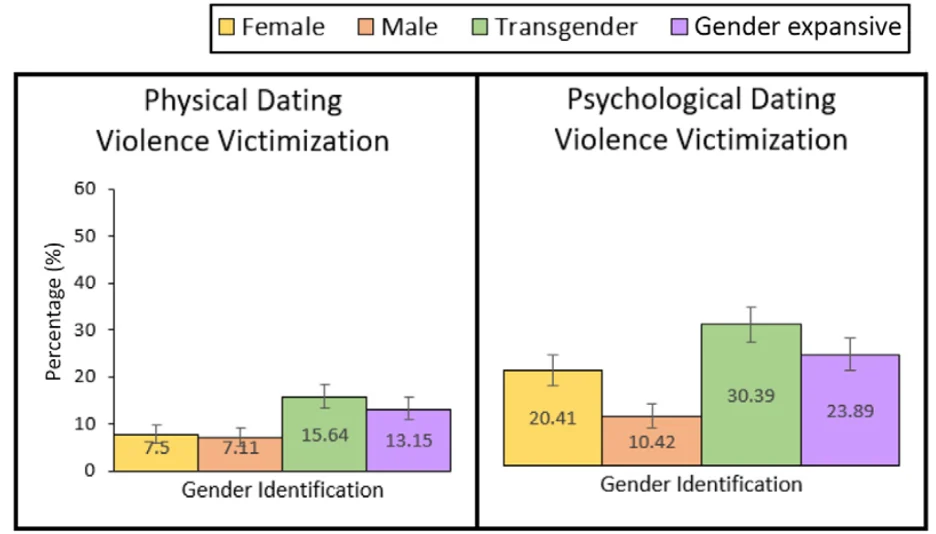
In recent years, sociologists have increasingly turned their attention to the evolving landscape of modern romance, focusing heavily on the rise of hookup culture and the ubiquitous influence of dating applications. However, this academic and public discourse often suffers from a significant oversight: it frequently centers on the experiences of cisgender individuals and remains confined to the narrow scope of college campus social dynamics. By ignoring the realities faced by transgender and gender-nonconforming people, current sociological research and dating platforms fail to address a pervasive crisis of safety, fetishization, and psychological distress. As dating apps replace traditional social avenues across all age groups, the need to examine the unique, often dangerous, romantic experiences of the trans community has become an urgent matter of public health and human rights.
A Statistical Reality: The Prevalence of Dating Violence
The vulnerability of transgender individuals in the dating market is not merely a matter of anecdotal concern; it is backed by sobering data. A 2021 study published in the journal Pediatrics found that transgender youth are twice as likely as their cisgender female peers to experience physical dating violence. Furthermore, these individuals are 50% more likely to suffer from psychological abuse within the context of romantic or sexual relationships.
These statistics represent a systemic failure to protect one of society’s most marginalized groups. The trauma associated with these experiences is compounded by the fact that many trans people report being consistently objectified. A 2023 study published in the Journal of Sex Research highlighted that trans individuals often feel their partners are not engaging with them as people, but rather as caricatures or "ideas" of trans identity. One participant in the study, a trans woman, noted the frustration of being pigeonholed, stating, "Because I’m a trans woman, people instantly assume that I must be this massive bottom." A trans man echoed this sentiment, explaining that he felt as though his partners were communicating with a preconceived stereotype rather than his actual personality. This dehumanization is a hallmark of the fetishization that often precedes or accompanies abusive behavior.
The Geography of Fear: Disclosure and Safety
For many transgender people, the digital dating sphere is not just a place to find connection; it is a minefield of potential threats. Research into how trans individuals navigate the disclosure of their identity on apps like Tinder, Hinge, or Grindr reveals a profound, ever-present fear of violence.
The decision to disclose one’s trans identity is rarely a simple matter of honesty; it is a calculated survival strategy. Many users feel forced to disclose their status early to avoid the risk of a violent reaction once a meet-up occurs. This is especially true for those living in rural areas or regions with historically high rates of anti-trans hate crimes. A gender-fluid individual participating in a recent study articulated this dread, admitting that when arranging a face-to-face date, the persistent thought remains: "that person could be the person that kills me."
This atmosphere of hypervigilance has led to a variety of "soft disclosure" methods. Some users choose to showcase different facets of their identity through multiple profile photos or subtle bio changes, testing the waters before explicitly stating their gender history. While these strategies are designed to filter out potential threats, they do not alleviate the underlying risk, nor do they address the systemic nature of the danger.
Vulnerability Intersections: BIPOC and Transfeminine Experiences
The risks associated with dating are not evenly distributed across the trans community. Data from a 2021 study in Social Sciences suggests that the intersection of race, gender expression, and sexual identity significantly heightens an individual’s vulnerability. Specifically, Black, Indigenous, and People of Color (BIPOC) who identify as queer or transfeminine report the highest incidence of dating violence.
A 2022 study exploring the dating lives of BIPOC trans women revealed a disturbing pattern: many cisgender male partners actively conceal their relationships to maintain social standing or protect their own heteronormative status. This secrecy often leads to catastrophic consequences. When these relationships are kept in the shadows, the trans partner is denied the protection of public acknowledgment and is frequently subjected to physical violence if the partner fears being "outed." One woman interviewed for the research noted, "We’re getting killed just because the guys here were scared that their secret would come out."
In response to this, many trans women have developed sophisticated survival strategies. These include constant situational awareness, dressing in ways that avoid being "found out" by casual observers, and proactively screening or avoiding certain types of men. These defensive measures, while essential for survival, impose a significant psychological tax, forcing trans people to navigate their personal lives with the vigilance of a security professional.
Policy and Practical Remedies
Sociologists and activists have identified several concrete steps to mitigate these risks, ranging from institutional policy changes to technological interventions.
- Comprehensive Education: There is a consensus that trans-inclusive education—integrated into school curricula and sexual health training—is essential. By normalizing trans existence and fostering empathy, society can begin to dismantle the ignorance that fuels violence. Violence prevention training, specifically tailored to the risks faced by trans women and non-binary individuals, has also proven effective in empowering individuals and their partners.
- Platform Accountability: Dating applications have been criticized for their lack of safety features. Users have repeatedly called for more robust filtering options that allow trans people to curate their interactions more effectively. As one user put it, "The majority of the interactions I have with cis men on dating apps are just [negative], full stop… can I have less of them pop up?" Providing users with the ability to opt-out of certain demographics could drastically reduce the frequency of harassment and fetishization.
- Legal Reform: On a legislative level, the advocacy community is pushing for the total abolition of the "trans panic" defense. This legal strategy, which has historically allowed perpetrators of violent crimes to claim a "temporary loss of self-control" upon discovering a victim’s transgender status, effectively blames the victim for their own assault or murder. While several jurisdictions have moved to ban this defense, its continued existence in some areas serves as a tacit endorsement of violence against trans people.
Looking Toward the Future
The current climate for transgender people is paradoxical. While there is more visibility for trans individuals in mainstream media and culture than at any previous time in history, this visibility has also triggered a record-breaking surge in anti-trans legislation and rhetoric across the United States.
As we look toward the future, the integration of technology into our social lives means that dating apps will remain a primary gateway for romance. If these platforms, and the society that informs them, do not prioritize the safety and dignity of trans people, they will continue to facilitate environments of fear rather than connection.
Social science research acts as a mirror, reflecting not only the prejudices inherent in our dating culture but also the resilience of those navigating it. The implications are clear: the path to a safer, less anxious future for trans people requires more than just individual caution. It demands a collective commitment to legal reform, platform accountability, and a fundamental shift in how we educate society about gender and identity. Only by addressing these structural issues can we begin to ensure that the pursuit of romance is a safe endeavor for everyone, regardless of their gender identity.
The work of researchers like those at Macalester College and other institutions remains vital. By documenting these experiences and highlighting the systemic nature of the violence, they provide the necessary data to push for a cultural shift. The safety of the trans community in the dating world is not a niche concern; it is a litmus test for the progress of our society as a whole. As the digital and physical worlds continue to blur, the lessons learned from the lived experiences of trans individuals must be used to build a more equitable, inclusive, and fundamentally safer landscape for all.







