Kang Muslim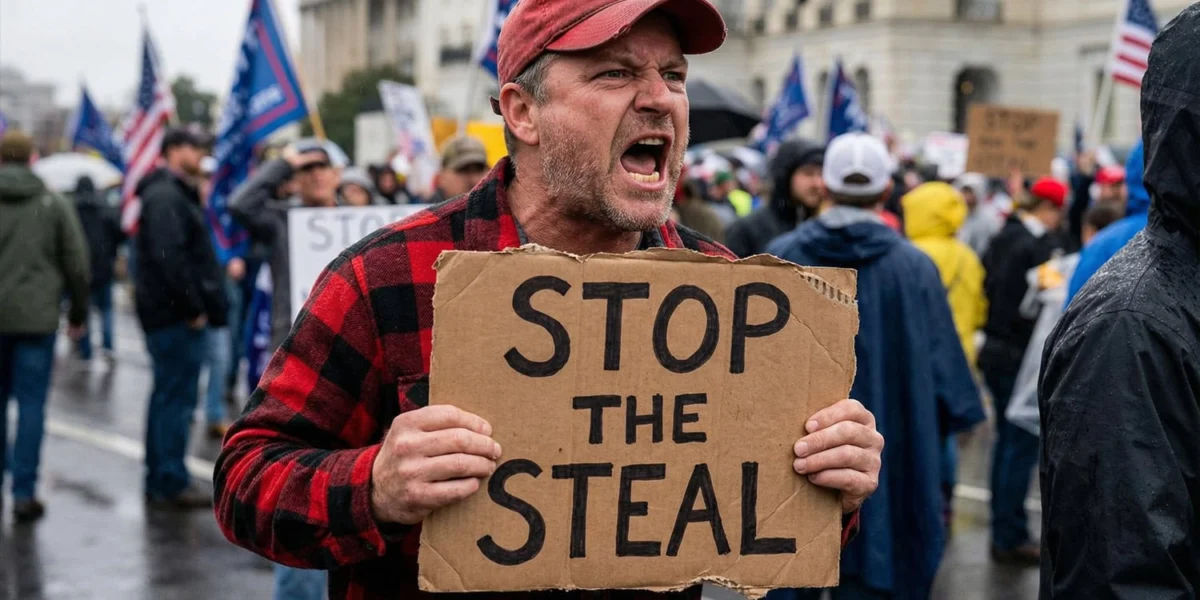
A comprehensive study published in the peer-reviewed journal Party Politics has revealed a significant divergence in how liberal and conservative voters respond to doubts regarding election integrity. The research, conducted by political scientists Erin B. Fitz and Kyle L. Saunders of Colorado State University, suggests that for conservative-leaning individuals, a lack of trust in the electoral process acts as a potent catalyst for political engagement outside of the ballot box. Conversely, liberal voters tend to maintain high levels of political participation regardless of whether they view the electoral system as reliable or flawed.
This research arrives at a critical juncture in American history, following two consecutive presidential election cycles defined by intense scrutiny of voting procedures and the peaceful transfer of power. By analyzing data from both the 2020 and 2024 election cycles, Fitz and Saunders have identified a stable pattern: while trust is generally viewed as a cornerstone of democratic stability, for a specific segment of the population, "distrust" has become a primary engine for civic action.
Understanding Operational Ideology and Political Behavior
To conduct their analysis, the researchers moved beyond simple partisan labels—such as "Republican" or "Democrat"—and focused instead on what political scientists call "operational ideology." While symbolic ideology refers to the labels individuals adopt to describe themselves, operational ideology measures a person’s actual preferences on specific government policies, including taxation, healthcare, environmental regulation, and social spending.
By focusing on operational ideology, the researchers were able to capture a more accurate "foundational anchor" of a person’s worldview. The study utilized data from the American National Election Study (ANES), a long-running and highly respected survey that provides a granular look at the American electorate’s psyche. The researchers measured operational ideology by averaging self-reported preferences across seven distinct policy domains, creating a spectrum from operationally liberal to operationally conservative.
The primary focus of the study was "non-voting political participation." While voting is the most common form of civic engagement, non-voting activities often require more effort, resources, and emotional investment. These activities include:
- Attending political rallies or protests.
- Donating money to candidates or political parties.
- Signing petitions.
- Attending local political meetings or town halls.
- Working for a campaign or political organization.
- Displaying campaign materials, such as yard signs or bumper stickers.
- Contacting elected officials to express an opinion.
The Chronology of Distrust: 2020 to 2024
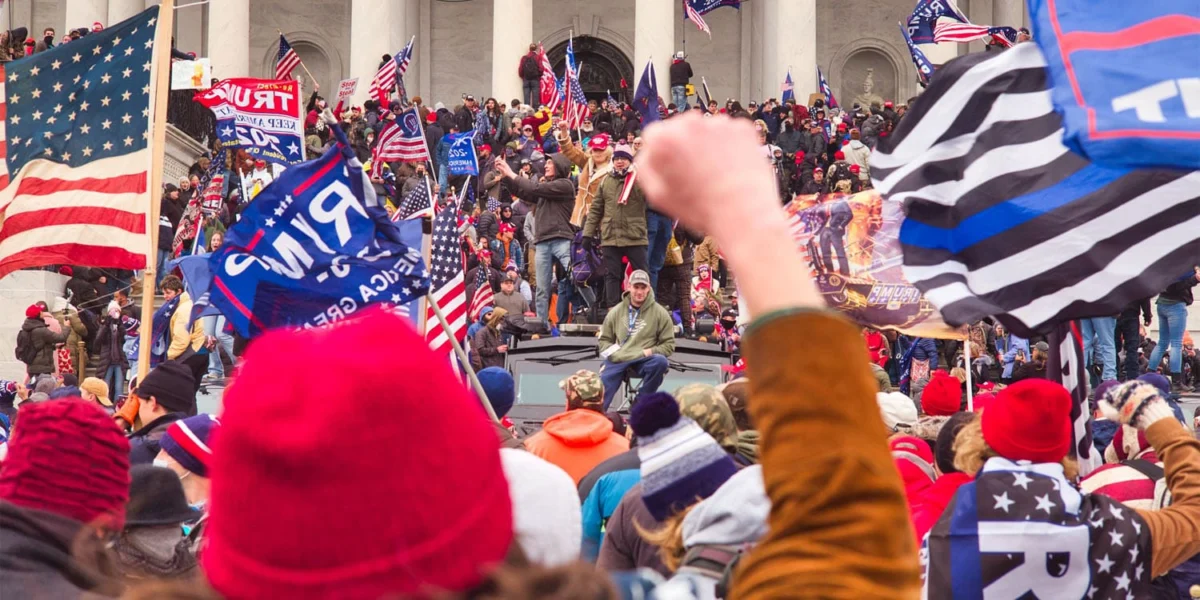
The period between the 2020 and 2024 elections provided a unique laboratory for studying political trust. The 2020 election was held under the unprecedented shadow of the COVID-19 pandemic, which necessitated rapid changes to voting laws, including the widespread expansion of mail-in ballots and early voting. Following the election, the "Stop the Steal" movement and the subsequent events of January 6, 2021, at the U.S. Capitol, brought the issue of election integrity to the forefront of the national conversation.
Between 2021 and 2023, the American legal and legislative landscape underwent significant shifts:
- Legal Resolutions: Dozens of lawsuits challenging the 2020 election results were dismissed by state and federal courts, including the Supreme Court.
- Accountability Measures: Federal prosecutors secured hundreds of convictions related to the January 6 Capitol breach, while several states conducted exhaustive audits that reaffirmed the original results.
- Legislative Changes: In response to the 2020 controversies, many state legislatures passed new laws. Some states moved to restrict mail-in voting and strengthen voter ID requirements, while others sought to codify and expand access to the ballot.
- Institutional Messaging: Election officials from both parties launched public information campaigns to restore confidence in the "black box" of vote counting and certification.
Fitz and Saunders sought to determine if the link between conservative distrust and high participation was a fleeting reaction to the 2020 results or a more permanent shift in the American political fabric. Their analysis of 4,256 respondents from the 2024 ANES data confirmed that the pattern remained remarkably consistent across both cycles.
Supporting Data: The Mobilization of the Skeptical
The statistical models employed by the researchers adjusted for a variety of demographic and social factors, including age, income, education, race, and the intensity of a person’s party identification. This ensured that the findings were specifically linked to ideology and trust, rather than other socioeconomic variables.
The data revealed a striking "asymmetry":
- Operational Liberals: This group displayed consistently high levels of non-voting participation. Whether they trusted the election system "a great deal" or "not at all," their likelihood of attending rallies or donating money remained relatively stable. For liberals, participation appears to be a baseline civic habit.
- Operational Conservatives: For this group, trust was the decisive variable. Conservatives who expressed high trust in the election system reported the lowest levels of non-voting participation in the entire study. However, as trust levels dropped, participation levels spiked. Conservatives who distrusted the system were significantly more likely to engage in the 12 tracked political activities than their trusting counterparts.
This suggests that for conservative voters, a sense of "systemic threat" or unfairness serves as a powerful mobilizer. When the rules of the game are perceived as rigged, the motivation to fight back through rallies, donations, and grassroots organizing increases exponentially.
Ideology as a Stable Foundation
One of the most significant contributions of the study is its longitudinal analysis. Fitz and Saunders tracked a subset of 1,857 individuals who participated in the ANES in both 2020 and 2024. This allowed the researchers to observe how attitudes evolved over a four-year window.
The findings indicate that operational ideology is a "stable foundation" that dictates how voters interpret new information. A person’s policy preferences in 2020 were a strong predictor of their trust levels and participation rates in 2024. Crucially, the researchers found that the reverse was not true: a person’s level of trust or their participation in 2020 did not fundamentally change their underlying policy preferences by 2024.
This suggests that ideology acts as a lens through which political events are filtered. For a conservative voter, the belief in limited government or traditional social policies may predispose them to view centralized electoral changes with skepticism. This skepticism, once triggered by elite cues—such as rhetoric from political leaders regarding "stolen elections"—transforms into a drive for political action.
Broader Impact and Implications for Democracy
The implications of this research are profound for the health of democratic institutions. Traditionally, political science has viewed high participation and high trust as the "twin pillars" of a healthy democracy. If citizens trust the system, they participate; if they participate, they feel a greater stake in the system, which further builds trust.
The Fitz and Saunders study complicates this "virtuous cycle." It suggests that in the current American context, high participation can actually be a symptom of a lack of trust. If a significant portion of the electorate is only mobilized when they believe the democratic process is failing, the resulting political energy may be more confrontational and less focused on consensus-building.
The Role of Elite Cues
The researchers noted that the continuous presence of Donald Trump on the political stage likely played a role in these findings. Trump’s consistent emphasis on narratives of voter fraud provided a "cue" for conservative voters. In political science, elite cues are the signals sent by leaders to their followers to help them interpret complex issues. If leaders suggest that the only way to "save" the country is to participate because the elections are under threat, it creates a powerful incentive for non-voting engagement.
Strategic Campaigning
For campaign strategists, these findings offer a blueprint for mobilization. If conservative voters are naturally less inclined toward non-voting participation when they are satisfied with the status quo, campaigns may feel incentivized to manufacture or highlight "threats" to the election process to stir their base into action. This creates a strategic paradox where undermining institutional trust becomes a viable path to increasing campaign donations and rally attendance.
Limitations and Future Directions
The authors caution against viewing these findings as a universal law of politics. The study is based on self-reported data, which can be subject to "social desirability bias," where respondents report higher levels of participation than they actually practiced. Furthermore, the study is rooted in a specific era of American politics characterized by high polarization and a singular political figure (Trump) who centered election integrity in his platform.
Future research will need to examine:
- State and Local Elections: Does this same asymmetry exist in local races where national rhetoric is less prevalent?
- Post-Trump Era: Will these patterns persist if the leadership of the Republican Party shifts toward figures who do not emphasize election skepticism?
- Psychological Drivers: Are there deeper psychological traits, such as "need for closure" or "loss aversion," that link conservative policy preferences to election distrust?
As the United States moves beyond the 2024 cycle, the findings of Fitz and Saunders serve as a reminder that the "health" of a democracy cannot be measured by participation rates alone. If the engine of civic engagement is fueled by a fundamental disbelief in the system’s fairness, the stability of the democratic framework may be more fragile than participation numbers suggest. The challenge for future leaders will be to find ways to mobilize voters through a shared belief in the integrity of the process, rather than a shared fear of its collapse.