Ferry Irwandi
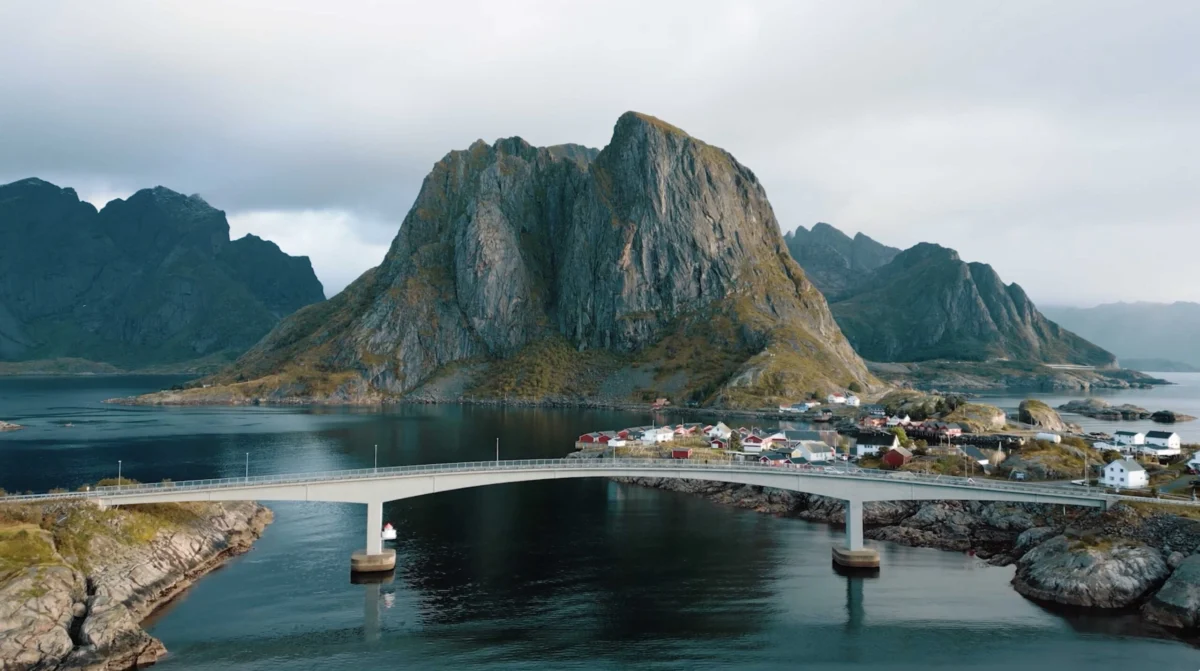
The weather in the Norwegian archipelago of Lofoten can shift from tranquil to tempestuous within minutes, offering travelers an unfiltered encounter with subarctic elements nearly 2,000 feet above sea level. Located 68 degrees north of the Arctic Circle, this dramatic landscape of Jurassic-era mountain faces, deep fjords, and nutrient-dense marine ecosystems draws close to one million visitors annually. While millions traditionally arrive during the peak summer months for hiking, camping, and climbing under endless daylight, a distinct shift toward sustainable, food-focused exploration is redefining the region’s shoulder seasons. At the southwestern tip of Moskenes island in the village of Sørvågen, the culinary hotel and destination Holmen Lofoten is at the vanguard of this movement, anchoring its hospitality in the preservation of local foodways and environmental stewardship.

The Evolution of Holmen Lofoten and Kitchen on the Edge
Originally functioning as a traditional cod processing facility, the property comprising Holmen Lofoten features a cluster of mustard-colored rorbuer—historic fishermen’s cabins built on stilts with corrugated and grass-topped roofs. Acquired in October 2001 by Ingunn Rasmussen and now operated alongside her son, Håvar Holmen, the site underwent a meticulous, multi-year restoration designed to preserve its original architectural details while incorporating modern minimalist suites.

In 2018, the property launched Kitchen on the Edge of the World, an episodic culinary gathering held four times annually. The initiative invites internationally acclaimed chefs to collaborate with local producers, sourcing ingredients directly from the surrounding land and sea. The 30th edition of the event, hosted in late September, was helmed by California-born, Copenhagen-based chef Matt Orlando, renowned for his work at elite kitchens including The Fat Duck, Per Se, and his former zero-waste restaurant, Amass. Orlando’s participation underscored the event’s core philosophy: merging high-end gastronomy with absolute circularity and zero-waste kitchen practices.

Chronology and Collaborative Gastronomy
The four-day culinary program followed a structured chronology designed to immerse guests in the environmental realities of the Arctic.

Day One served as an intensive orientation to the local palate. Resident mixologist Mia Hjorth Hansen of Aarhus cocktail bar Gedulgt curated welcome drinks featuring vermouth infused with foraged blackcurrant leaves and Campari steeped with wild yarrow flowers. Dinner was executed by Holmen’s resident chefs—an international cohort hailing from Sicily and northeastern Brazil—featuring shrimp croustades and locally foraged flora, culminating in desserts finished with charred Japanese binchotan charcoal.

Day Two shifted focus to collaborative foraging and live-fire cooking. Chef Orlando, working alongside sous chef Tom Siebeler, utilized sustainable reindeer ribs sourced from Sánmi herders north of Lofoten, alongside specialty items such as pressure-cooked fishbone noodles designed to maximize collagen utilization and eliminate kitchen waste. The evening meal featured communal dining on potato bread with allium butter, grilled hedgehog mushrooms, and regional lamb, accompanied by bespoke tableware created by local ceramicist Gunvor Tangrand, whose organic designs incorporate recycled fishing yarn.

Day Three expanded the investigative scope beyond the immediate kitchen to the broader regional economy. Excursions to neighboring villages highlighted the micro-economies sustaining the archipelago.

Supporting Data and Regional Economic Implications
The tourism sector in Northern Norway has experienced unprecedented growth, with inbound visitor numbers outpacing the national average. According to regional tourism metrics, this surge has generated critical economic momentum for small-scale producers while simultaneously straining local infrastructure. The influx of unprepared mountaineers and unregulated camping prompted local municipalities to restrict wild camping to designated zones and led mountain guides like Audun Rasmussen to withhold specific trail coordinates to prevent environmental degradation and mitigate rescue risks.

In response to these pressures, regional agricultural advocates are actively steering tourism away from purely recreational foot traffic toward an integrated agro-tourism model. Bjørg-Elin Kærn, a food and agriculture specialist with the organization Love Food, emphasizes that sustainable preservation of Lofoten’s ecosystem relies entirely on the economic viability of its small-scale producers. By prioritizing regionally sourced items such as Lofotlam (a Geographical Indication-protected local lamb), wild-harvested seaweed, and wind-dried stockfish (tørrfisk), visiting consumers directly support the preservation of centuries-old coastal economies.

Industry Perspectives and Broader Impact
The integration of tourism and sustainable agriculture is exemplified by enterprises such as Lofoten Seaweed Company, based in the nearby village of Napp. Co-founded by Angelita Eriksen and Tamara Singer, the women-led operation hand-harvests seven varieties of seaweed, including sugar kelp and nori, from strong tidal currents like the Nappstraumen strait. Processed within a historic rorbu, their products supply elite Nordic kitchens, demonstrating how traditional spaces can be repurposed for high-value, low-impact modern commerce.

"Our hope is that people come to Lofoten for the right reasons," Ingunn Rasmussen noted regarding the delicate balance between tourism expansion and ecological preservation. "Ultimately, that will be what helps us protect the islands and our way of life."

By bridging the gap between high gastronomy and environmental education, initiatives like Kitchen on the Edge of the World offer a scalable framework for remote destinations grappling with the pressures of modern global travel. Through intentional placemaking, zero-waste kitchen integration, and direct collaboration with indigenous herders, seaweed harvesters, and ceramicists, Holmen Lofoten demonstrates that contemporary hospitality can function as both an economic engine and a formidable tool for environmental conservation.