Kang Muslim
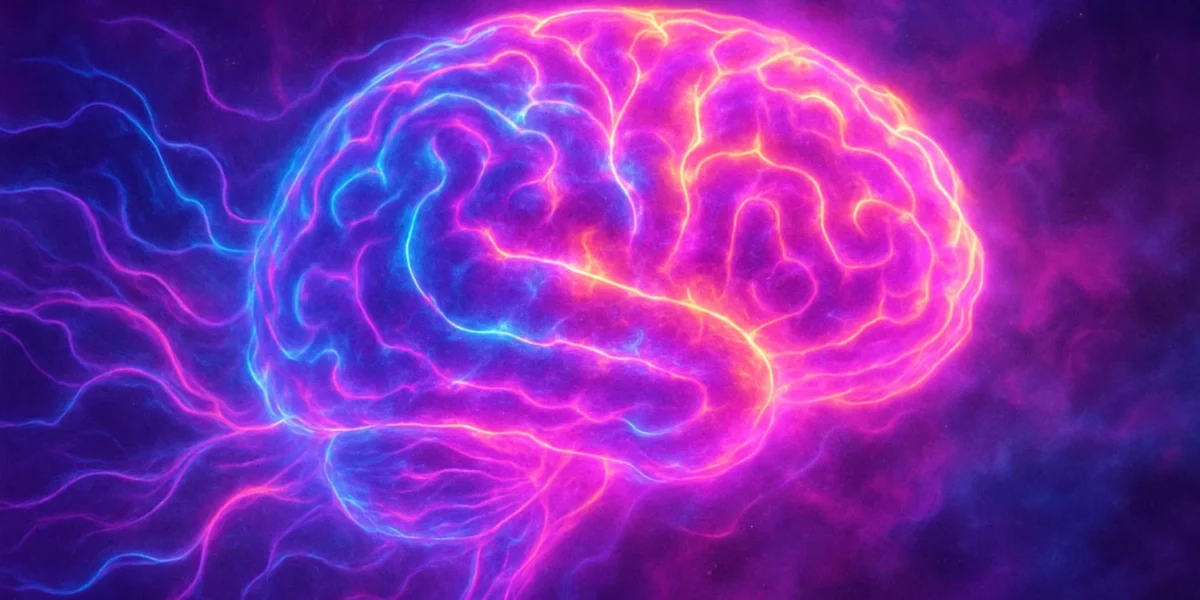
The architecture of the mammalian brain represents one of the most sophisticated biological puzzles ever encountered by modern science. Comprising billions of neurons interconnected through a labyrinthine network of axons and synapses, the brain’s functional capacity is entirely dependent on the precision of its wiring. Recently, a collaborative research team from Hiroshima University and Nagoya University has made a significant stride in decoding the blueprints of this biological circuitry. By leveraging advanced machine learning and comprehensive genetic atlases, the researchers have provided substantial evidence that the brain’s global wiring is guided by a "chemical GPS"—a series of overlapping gene activity gradients that direct nerve fibers to their precise destinations.
The study, published in the Proceedings of the National Academy of Sciences (PNAS), effectively bridges a sixty-year-old biological hypothesis with 21st-century computational power. Led by Jigen Koike and Naoki Honda, the team developed a framework called SPERRFY (Spatial Positional Encoding for Reconstructing Rules of axonal Fiber connectivity) to demonstrate that the same molecular principles governing simple sensory circuits also dictate the complex, long-range connections across the entire brain.
The Historical Foundation: Roger Sperry’s Chemoaffinity Theory
To appreciate the magnitude of this discovery, one must look back to 1963. Neurobiologist Roger Sperry, who would later win a Nobel Prize for his work on the "split-brain," proposed the chemoaffinity theory. Sperry posited that neurons carry individual "identification tags" and that their axons are guided to their targets by chemical concentration gradients. In this model, growing nerve fibers do not wander aimlessly; rather, they navigate through the brain by sensing the varying concentrations of specific molecules, much like a traveler following the strength of a radio signal to find its source.
For decades, this theory was the gold standard for explaining how specific systems, such as the retinotectal projection (the connection from the eye to the brain’s visual centers), were organized. However, scaling this theory to the entire brain proved difficult. While it was clear that gradients guided axons over short distances in localized systems, the sheer density of the whole-brain connectome led many to wonder if other factors—such as physical proximity or random growth—played a larger role in global organization.
Methodology: Mining the Allen Mouse Brain Atlas
The research team turned to the Allen Mouse Brain Atlas, a monumental public resource that provides high-resolution data on both the connectome (the map of neural connections) and the transcriptome (the map of gene expression). By synthesizing these two massive datasets, the researchers aimed to see if they could find a mathematical "handshake" between where a neuron starts and where it ends, based purely on the genetic signature of those locations.
The study focused on long-range connections within the adult mouse brain, specifically analyzing 213 distinct brain regions. To ensure the results reflected the brain’s underlying structural logic rather than local clusters, the team filtered out short-range, local connections. This left them with 2,213 major neural pathways. On the genetic side, they examined the expression patterns of 763 genes across these same regions. Each region was characterized by its unique "molecular identity"—a specific combination of gene activities that creates a distinct chemical landscape.
SPERRFY: A Machine Learning Approach to Biological Wiring
The core innovation of the study was the SPERRFY algorithm. SPERRFY was designed to search for hidden matching patterns between the gene activity at a nerve fiber’s origin and its destination. The machine learning tool was tasked with identifying which specific gene gradients could best predict the presence or absence of a connection between any two regions.
The algorithm functioned by assigning "gradient values" to different areas of the brain based on their gene expression. It then tested the hypothesis that connections are formed based on these values. The results were remarkably robust. The SPERRFY model achieved a predictive accuracy score of 0.88 (on a scale where 1.0 is a perfect prediction). This high correlation suggests that the "GPS" coordinates provided by gene expression are almost entirely sufficient to describe the brain’s structural network.
To validate that these results were not merely a byproduct of physical distance—the simple fact that regions closer together are more likely to connect—the researchers ran a control test. They attempted to predict connections using only the physical distance between regions. This distance-based model yielded a score of only 0.70, significantly lower than the genetic model. This gap of 0.18 points represents the "biological instruction" contained within the genes that cannot be explained by geography alone.
Identifying the Molecular Navigators
The SPERRFY framework did more than just confirm a theory; it identified the specific "molecular tags" Sperry had hypothesized. The model highlighted several candidate genes that have long been suspected of playing roles in neural guidance, as well as several new ones.
Key among these were genes from the Ephrin family, such as Ephb6 and Efnb2. In developmental biology, Ephrins are known to act as either attractants or repellents for growing axons. The fact that SPERRFY identified these genes in an unbiased, brain-wide analysis of adult data provides powerful validation of the tool’s accuracy. Additionally, the model highlighted Robo2, a gene that encodes a receptor for "Slit" proteins, which are crucial for preventing axons from crossing the midline of the brain in error.
Interestingly, the model also identified genes involved in synaptic transmission and the maintenance of neural health. This suggests that the genetic gradients used for initial wiring during development may be "repurposed" or maintained in the adult brain to help stabilize these connections or manage neuroplasticity.
Chronology of Development and the Study’s Context
The timeline of brain wiring is a critical factor in interpreting these findings. In a typical mammal, the vast majority of the connectome is established during embryonic development and early postnatal life. During these windows, "growth cones" at the tips of axons actively sniff out the chemical gradients described by the Hiroshima and Nagoya team.
- Embryonic Stage: Initial chemical gradients are established by "morphogens," signaling molecules that tell cells where they are in the body.
- Axonal Pathfinding: Neurons send out axons that follow these gradients to reach distant target regions.
- Synaptogenesis: Once the target is reached, the axon forms synapses with the target cells.
- Pruning and Refinement: Throughout early childhood, excess connections are removed based on activity and chemical signals.
- Adulthood: The structural connectome remains relatively stable, though the genetic "map" remains visible in the transcriptome.
The researchers acknowledged that using adult mouse data is a limitation, as the chemical gradients might have been more pronounced or different during the actual period of wiring. However, the fact that the signatures remain strong enough in adult mice to allow for 88% predictive accuracy is a testament to the permanence of the brain’s underlying molecular architecture.
Analysis of Implications: Developmental Disorders and Future Medicine
The implications of this study extend far beyond basic anatomy. By defining the "normal" rules of brain wiring, scientists can now better investigate what happens when these rules are violated. Many neurodevelopmental disorders, such as Autism Spectrum Disorder (ASD) and Schizophrenia, are increasingly viewed as "connectopathies"—conditions where the brain’s wiring is fundamentally altered.
If a specific gene gradient is responsible for a major pathway, a mutation in that gene or a disruption in its expression during pregnancy could lead to a "miswiring" event. For example, if the Robo2 or Ephrin gradients are distorted, axons might fail to reach their targets, leading to the sensory sensitivities or cognitive challenges associated with developmental disorders.
"This computational framework provides a new lens through which we can view the brain’s development," noted a hypothetical expert in the field of neurogenomics. "By identifying the specific genes that act as the GPS for different regions, we may eventually be able to develop interventions that help stabilize or even guide neural repair after injury or in the context of disease."
Future Directions: From Mice to Humans
The research team at Hiroshima and Nagoya Universities has expressed intent to expand this framework to other species. While the mouse brain is a vital model, the human brain is significantly more complex, with a much higher degree of cortical folding and long-range connectivity.
Applying SPERRFY to the Human Brain Atlas could reveal whether the same 763 genes are responsible for our neural architecture or if humans have evolved unique genetic gradients to support higher-order functions like language and abstract reasoning. Furthermore, applying the tool to marmoset and macaque data could provide a phylogenetic map of how brain-wiring rules have evolved across primates.
Another critical next step is the transition from correlation to causation. While SPERRFY shows a strong statistical link between gene gradients and connections, laboratory experiments—such as using CRISPR to alter gene gradients in developing mouse embryos—will be necessary to prove that these specific genes are the "drivers" of the wiring.
Conclusion
The study by Koike et al. represents a landmark integration of classical biology and modern data science. By proving that the chemoaffinity theory holds true on a brain-wide scale, the researchers have moved neuroscience one step closer to a complete "operating manual" for the mammalian brain. The SPERRFY framework stands as a powerful new tool in the quest to understand how the most complex organ in the known universe builds itself from a set of genetic instructions, offering hope for new insights into the nature of human cognition and the origins of neurological health.