Kang Muslim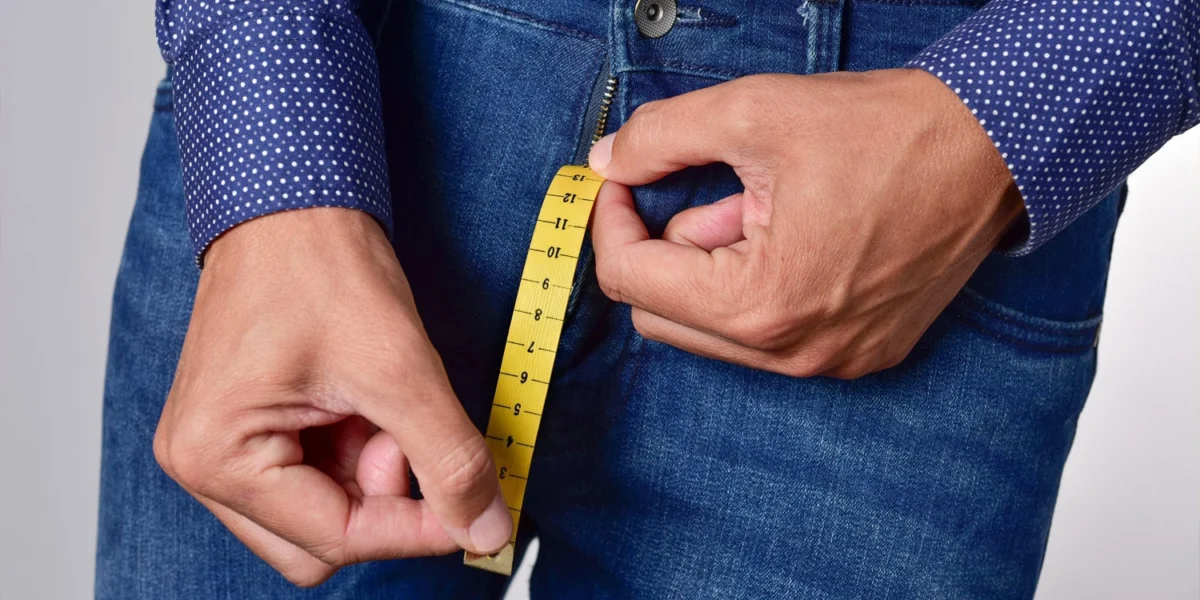
The Psychological Framework of Male Body Image
Body image is a multidimensional construct encompassing how individuals perceive, think about, and feel regarding their physical selves. While much of the historical discourse surrounding body image has focused on female populations, recent years have seen a surge in interest regarding male-specific concerns. For many men, the mental representation of their genitalia is a cornerstone of their sexual identity and psychological comfort.
The phenomenon known as "small penis anxiety" (SPA) serves as a primary driver for psychological distress among men, even when their anatomical dimensions fall within the normal physiological range. This anxiety is not merely a matter of vanity; it is often rooted in deep-seated societal expectations and the perceived link between masculinity and physical proportions. In extreme cases, this preoccupation can manifest as body dysmorphic disorder (BDD), a psychiatric condition characterized by an obsessive focus on a perceived flaw in appearance that is either non-existent or slight to others. When this fixation targets the genitalia, the resulting distress can lead to avoidance of intimacy, relationship strain, and a persistent desire for surgical intervention.
Methodology and Study Design in the Brazilian Context
The study was spearheaded by João Dias de Andrade Filho from the Bahiana School of Medicine and Public Health, in collaboration with Gilberto Dauricio Silva Leite and colleagues from the Federal University of Bahia. Brazil provides a unique backdrop for such research, as the nation is globally recognized for its robust culture of aesthetic medicine and high rates of cosmetic procedures.
To gather data, the research team employed a modern, observational approach. They recruited 106 male participants from a major Brazilian city with a population of approximately three million. Recruitment was conducted through the placement of posters in high-traffic public areas, including shopping malls and subway stations. These posters featured QR codes, allowing interested individuals to anonymously access a secure online questionnaire via their mobile devices. This method was chosen to mitigate the potential embarrassment associated with discussing sexual health in person, thereby encouraging more honest self-reporting.
The questionnaire was comprehensive, requiring participants to answer all sections to ensure a complete dataset. To measure the various psychological and physiological facets of the study, the investigators utilized several validated instruments:
- The International Index of Erectile Function (IIEF): A standard medical tool used to assess the presence and severity of erectile dysfunction. It asks respondents to rate their confidence in achieving and maintaining an erection during sexual activity.
- The Rosenberg Self-Esteem Scale: A 10-item scale that measures global self-worth by measuring both positive and negative feelings about the self.
- Genital Self-Perception Survey: A custom-designed survey where participants classified their penis size as "smaller than average," "average," or "larger than average." For reference, the survey defined the average length as 13 centimeters (approximately 5.1 inches), a figure frequently cited in urological literature.
Additionally, the researchers collected demographic data, including age, race, educational background, body mass index (BMI), and history of urological surgeries or anabolic steroid use.
Analysis of the Findings: Perception vs. Performance
The participant pool was relatively young, with a median age of 25. Most identified as mixed-race and had achieved some level of higher education. Upon analyzing the data, the researchers applied the Bonferroni correction, a rigorous statistical adjustment used to prevent "false positives" when multiple variables are compared within the same dataset. This ensured that the observed trends were mathematically significant and not merely the result of chance.
The results showed a clear positive association between perceiving one’s penis size as "larger than average" and reporting higher scores on the IIEF. Men who viewed themselves as well-endowed reported fewer difficulties with erectile function and higher confidence in their sexual capabilities. Conversely, men who perceived their size as "average" or "smaller than average" reported lower functional scores.
Interestingly, the study found that men who believed their size and girth were important to their partner’s satisfaction also reported better erectile function. This suggests that sexual performance is heavily influenced by "sexual self-efficacy"—the belief in one’s ability to perform successfully in a sexual context. When a man feels physically "adequate" or "superior," his psychological state may facilitate the neurological and vascular pathways necessary for maintaining an erection, effectively acting as a self-fulfilling prophecy.
The Self-Esteem Paradox: A Compartmentalized Identity
One of the most significant findings of the study was the lack of correlation between genital self-perception and global self-esteem. While a man’s view of his size directly impacted his confidence in the bedroom, it did not appear to influence his overall sense of personal value or his resilience against life’s broader stresses.
This suggests that male self-worth is segmented. An individual may harbor insecurities regarding specific physical attributes—such as genital size—without allowing those insecurities to erode his general identity as a competent professional, friend, or member of society. This "localization" of insecurity is a crucial insight for mental health professionals, as it indicates that "small penis anxiety" may be a specific sexual health issue rather than a symptom of a broader personality-wide deficiency in self-esteem.
Surgical Aspirations and Functional Realities
The study also delved into the desire for cosmetic genital surgery, a growing trend in the field of urology. Approximately 22.6% of the total sample expressed a desire to undergo procedures to alter the size or shape of their genitalia.
This desire was sharply divided based on self-perception. Among men who perceived themselves as "smaller than average," nearly two-thirds (roughly 66%) expressed interest in surgery. In contrast, only 18% of those who felt "larger than average" desired such interventions. While the statistical significance of this specific gap was limited by the small number of men in the "smaller" category, the trend highlights a significant psychological burden on men who feel they fall below the medical norm.
Furthermore, the prevalence of functional erectile difficulties varied across categories. Among men who perceived themselves as "smaller than average," 33% met the criteria for erectile dysfunction. In the "average" category, this number was surprisingly higher at 50%, while only 22% of the "larger than average" group reported functional issues. This distribution underscores the complex relationship between perception, anxiety, and physiological response.
Limitations and Future Directions
The researchers were transparent regarding the limitations of their study. The sample size of 106 men is relatively small and was a "convenience sample," meaning it may not represent the broader global population. Furthermore, there was a notable "self-selection bias." Approximately 63% of the participants perceived themselves as "larger than average," suggesting that men who are already confident in their bodies were more likely to volunteer for a study on sexual health.
Another limitation is the reliance on self-reported data. The participants’ actual anatomical dimensions were not clinically measured. Therefore, the study measures perception of size rather than actual size. While perception is the primary driver of psychological health, future studies combining clinical measurements with psychological surveys would provide a more nuanced understanding of the gap between physical reality and mental representation.
The observational nature of the study also means that causality cannot be definitively proven. It remains unclear whether high erectile function leads to a better perception of size, or if a better perception of size facilitates better erectile function.
Implications for Clinical Practice and Society
The findings from "Male genital self-perception: a population based study" have significant implications for urologists, psychologists, and sexual health educators. For clinicians, the study reinforces the importance of addressing the psychological components of erectile dysfunction. If a patient’s functional issues are rooted in "small penis anxiety" or poor genital self-image, surgical or pharmacological interventions may only address the symptoms rather than the underlying cause.
Moreover, the study contributes to the evolving conversation around male vulnerability. By identifying that genital insecurity is often localized to sexual performance and does not necessarily indicate a lack of general self-worth, counselors can better tailor their approach to help men navigate these specific anxieties.
As societal standards for male physical appearance continue to be influenced by media and pornography, research into the internal perceptions of the male body becomes increasingly vital. Understanding the delicate balance between the mind and the body in the context of sexual health is essential for promoting a more holistic and healthy approach to male well-being. Future research, utilizing larger and more diverse demographics, will be necessary to further unravel the intricacies of how men view themselves and how those views shape their physical lives.