Layla Zulfa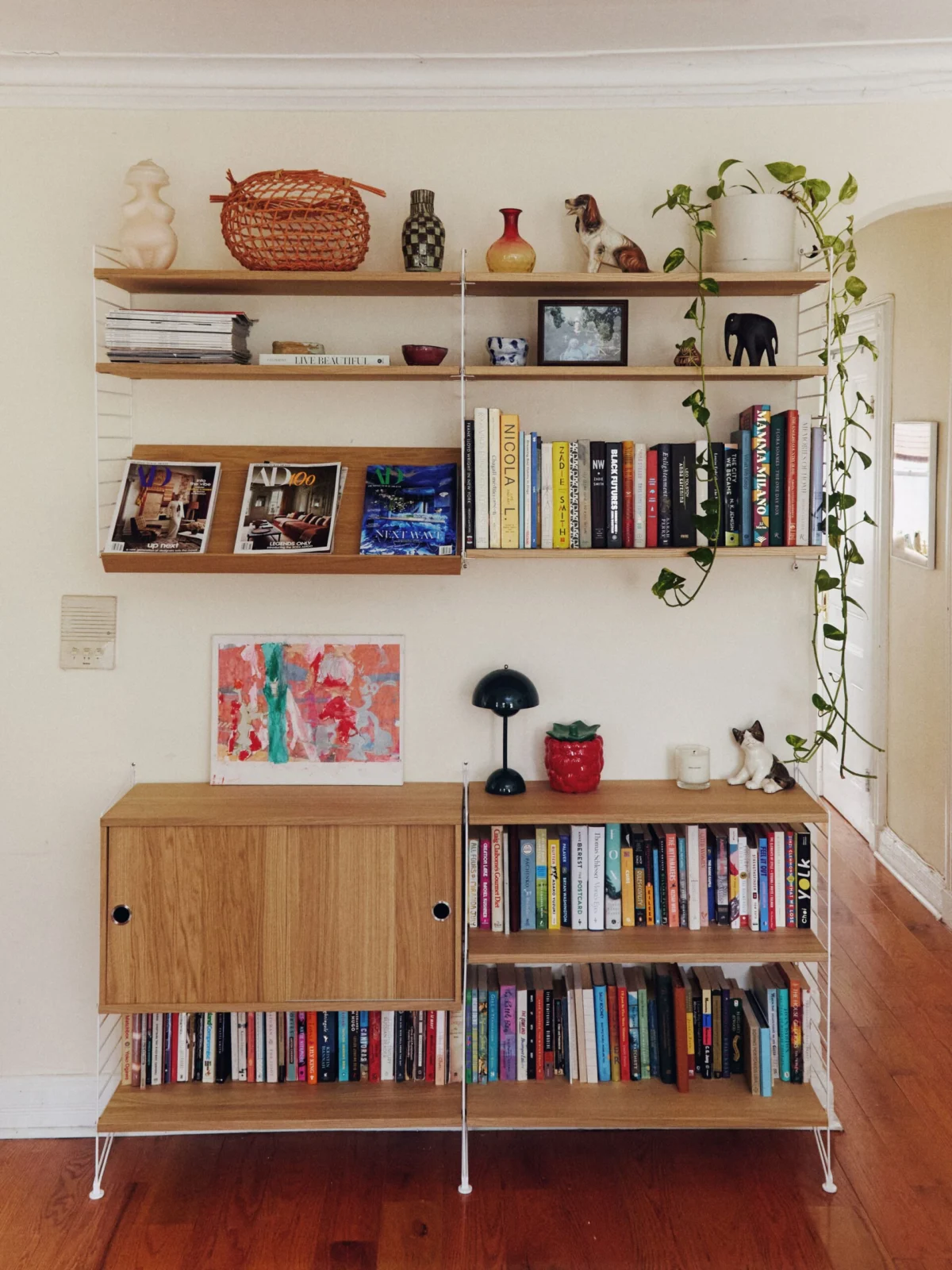
The String Shelving System, a modular storage solution that has defined Scandinavian interior design for over seven decades, continues to serve as a benchmark for functionalist furniture in the modern era. Originally conceived in 1949 by the Swedish architect and designer duo Kajsa and Nisse Strinning, the system was the winning entry in a design competition initiated by the Swedish publishing house Bonniers folkbibliotek. The competition sought a bookshelf that was affordable, easy to ship, and simple to assemble. Today, the String system remains a staple in Stockholm apartments and international design circles alike, often cited alongside Dieter Rams’s Vitsoe system as a pinnacle of minimalist engineering.

The enduring relevance of the String system is rooted in its modularity—a design philosophy that allows furniture to adapt to the changing needs of the user. In a contemporary urban context, where living spaces are often restricted and rental agreements discourage permanent alterations, the system offers a paradoxical blend of permanence and flexibility. Recent market analysis suggests that the global home organization and storage furniture market is expected to continue its upward trajectory, driven by a consumer shift toward "investment furniture" that can be disassembled and transported between residences.
The Genesis of a Design Icon: 1949 to Present
The history of the String Shelving System is inextricably linked to the post-war design movement in Sweden, characterized by "Swedish Grace" and a focus on democratic design. In 1949, Bonniers folkbibliotek recognized that as Swedes began purchasing more books, they lacked a standardized, space-efficient way to store them. The Strinnings’ solution was revolutionary: a system of wire "ladders" that mounted to the wall, supporting lightweight yet sturdy shelves.

Following its debut, the String system achieved rapid international acclaim, winning the gold medal at the Milan Triennale in 1954. By the 1960s, it was a common fixture in European offices and homes. However, the brand faced a period of dormancy in the late 20th century until it was revitalized in 2004 under the leadership of Peter Cohen and Nils Strinning. This relaunch expanded the product line to include the "String Pocket"—a smaller, fixed-size version—and various specialized components such as slanted magazine shelves, cabinets with sliding doors, and integrated desks.
Technical Specifications and Materiality
The String system’s structural integrity is derived from its signature powder-coated steel wire panels. These panels are available in floor-standing or wall-mounted configurations, providing the framework for various shelving inserts. The shelves themselves are typically constructed from dense particleboard finished with high-quality wood veneers, such as oak, walnut, or ash, as well as lacquered options in white, grey, or black.

According to technical data from String Furniture, the system is designed for high load-bearing capacity despite its delicate appearance. A standard 60-centimeter-wide shelf can support up to 25 kilograms (approximately 55 pounds) when the weight is distributed evenly. This capacity makes it suitable for extensive book collections, audio-visual equipment, and kitchenware. The use of FSC-certified wood and sustainable manufacturing processes in Sweden further aligns the product with modern environmental standards, a factor increasingly prioritized by high-end furniture consumers.
The Logistics of Modern Assembly
The acquisition and installation of a modular system of this scale involve a multi-stage logistical process. In the United States, the system is primarily distributed through retailers such as Design Within Reach (DWR). Due to the modular nature of the product, components are often shipped in separate units to prevent damage and facilitate easier handling.

For a comprehensive wall unit, the delivery typically includes:
- Wire Side Panels: Available in heights ranging from 50 cm to 200 cm.
- Shelving Units: Available in depths of 20 cm or 30 cm.
- Specialized Inserts: These include slanted magazine shelves for display, cabinets with sliding doors for concealed storage, and chest of drawers.
While the design is marketed as user-friendly, the installation process requires a degree of precision. Each wire bracket is secured to the wall via visible screws at each corner. In older "pre-war" buildings where walls may not be perfectly level, the installation often requires professional expertise or a "handyman" to ensure the brackets are perfectly parallel. Failure to align the panels accurately can result in shelves that do not sit flush or a compromised structural integrity.
.png)
Economic Analysis: Investment Value vs. Initial Cost
The String system occupies the "premium-functional" segment of the furniture market. A single wall shelf unit from a licensed retailer like DWR starts at approximately $350. However, for a multi-bay configuration that includes a mix of open shelving and closed cabinets, the price point can exceed $2,800.
Market analysts suggest that the high initial cost is offset by the system’s "life-cycle value." Unlike flat-pack furniture from mass-market retailers, modular systems like String are designed for disassembly and reconfiguration. This allows the furniture to "grow" with the owner, moving from a small apartment bedroom to a larger living room or a dedicated home office in a different residence. This adaptability reduces the "fast furniture" cycle, where low-quality items are discarded during relocations, contributing to environmental waste.

Comparative Market Position
In the competitive landscape of modular shelving, String is frequently compared to the Vitsoe 606 Universal Shelving System, designed by Dieter Rams in 1960, and the Elfa system, a more utilitarian storage solution often found in closets.
| Feature | String Shelving System | Vitsoe 606 System | Elfa Shelving |
|---|---|---|---|
| Origin | Sweden (1949) | Germany/UK (1960) | Sweden (1948) |
| Aesthetic | Scandinavian Minimalist | Industrial Functionalist | Utilitarian/Closet |
| Primary Material | Steel wire & Wood veneer | Aluminum & Steel | Epoxy-bonded steel |
| Customization | High (Colors/Woods) | Moderate (Neutral tones) | High (Utility focused) |
| Price Point | Premium ($$$) | Luxury ($$$$) | Mid-range ($$) |
While Vitsoe is often viewed as a "pure" design object for enthusiasts of the Ramsian "Less, but better" philosophy, String offers a warmer, more residential aesthetic through its use of wood veneers and varied color palettes. Elfa, conversely, prioritizes maximum storage density at a lower price point, often sacrificing the high-design finish found in the String system.

The Broader Impact on Interior Design Trends
The resurgence of the String system reflects a broader trend toward "curated maximalism" within a minimalist framework. As remote work becomes a permanent fixture for many professionals, the demand for "aesthetic" home backgrounds—often referred to as "shelfies"—has increased. The String system’s slanted magazine shelves and glass-front cabinets allow users to display personal artifacts, professional journals, and art pieces, turning a storage unit into a focal point of personal expression.
Furthermore, the system addresses the "fear of commitment" often associated with permanent interior renovations. Because the system is wall-mounted and modular, it provides the visual impact of built-in cabinetry without the permanence. For renters in major metropolitan areas like New York, London, or Stockholm, this provides a way to customize a space significantly while maintaining the ability to restore the walls to their original state upon the conclusion of a lease.

Official Responses and Industry Outlook
Representatives from String Furniture have noted that the brand’s expansion into the "String Outdoor" and "String Works" (office) lines is a direct response to the evolving needs of the modern consumer. "The goal has always been to provide a system that never becomes obsolete," a brand spokesperson stated in a recent design forum. This sentiment is echoed by retailers who report that modular shelving is currently one of the most resilient categories in the luxury furniture sector.
Looking ahead, the industry expects a continued focus on sustainable materials and "smart" integration. While the core design of the String system is unlikely to change—given its status as a protected work of applied art—innovations in recycled plastics for shelving or integrated lighting systems are anticipated.

In conclusion, the String Shelving System represents more than mere storage; it is a historical artifact that has successfully transitioned into a modern necessity. Its success lies in its ability to balance the rigid requirements of engineering with the fluid needs of human lifestyle. For the consumer, it offers a rare opportunity to invest in a product that is both a recognized piece of design history and a highly practical tool for organizing the complexities of modern life.