Jono Maryono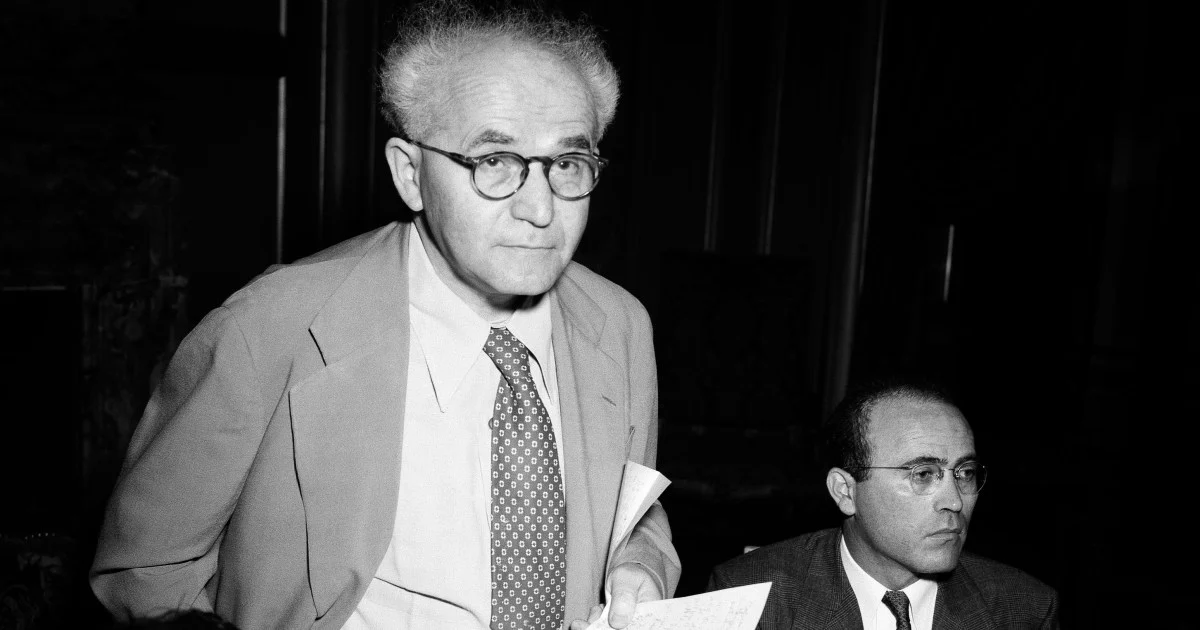
In 1948, as European Jewish settlers embarked on the establishment of Israel, a deeply ingrained belief permeated Zionist leadership: the Palestinian population would pose the least significant obstacle. Figures like David Ben-Gurion, a central architect of the nascent state, projected that the "refugee problem would resolve itself." This conviction was rooted in a perception of Palestinians as lacking a distinct national identity, expected to readily flee to neighboring Arab countries and assimilate, thereby relinquishing any claim to their ancestral lands. The narrative projected was one of a transient population, their displacement marking the finality of their historical presence.
However, the trajectory of events proved to be the diametric opposite of these Zionist calculations. Instead of fading into obscurity, the Palestinian national cause has, decade after decade, gained an undeniable strength and cohesion. While the direct survivors of the 1948 Nakba, or "catastrophe," are now a dwindling generation, the commitment to Palestinian rights and historical justice remains as potent as ever. This enduring resolve is not merely a matter of passive remembrance; it is a testament to a deliberate intergenerational transmission of memory and a steadfast refusal to forget the trauma. Older generations, rather than encouraging their descendants to move past the dispossession, actively instilled in them the imperative to remember, to preserve the intangible keys to their ancestral homes within their collective consciousness.
The prophecy of the "refugee problem" resolving itself failed not only due to the indomitable determination and resilience of the Palestinian people but also because of the counterproductive nature of Israeli policies characterized by persistent violence and dispossession. Each instance of land and resource appropriation, each act of violent displacement, served as a potent catalyst for subsequent generations of Palestinians to reject and resist the ongoing occupation. While Israel succeeded in incrementally usurping Palestinian territory, it demonstrably failed in its attempts to control or suppress Palestinian consciousness.
Despite sustained Israeli efforts to isolate refugee camps, transforming them into segregated enclaves, and to undermine Palestinian unity through the recruitment of collaborators, as well as the introduction of international bodies aimed at reframing the refugee issue as purely humanitarian, these strategies proved incapable of dismantling the fundamental Palestinian national cause. Paradoxically, those who were dispossessed and subjected to violation – the Palestinian refugees – emerged as the most fervent custodians of the resistance ideology. Refugee camps, far from being marginalized settlements, became vibrant centers of both peaceful and armed struggle. These camps nurtured generations of prominent Palestinian thinkers, medical professionals, educators, and political leaders, all united by a singular message: the unequivocal rejection of Israeli occupation and an unwavering insistence on the realization of Palestinian rights.
The profound impact of Palestinian refugees on the national struggle is evident in their pivotal role during the first Intifada in 1987 and the second Intifada in 2000. They have consistently been at the forefront of any significant mobilization aimed at resisting Israeli occupation. The inherent logic of the colonial project, facing such persistent resistance, often resorted to escalating brutality. However, repeated massacres, mass imprisonment, and relentless attempts to uproot communities have failed to achieve subjugation. The Gaza Strip, where an estimated 80 percent of the population consists of refugees, stands as a stark and undeniable testament to the strategic failure of this approach.
The Israeli government’s characterization of the war launched on Gaza in October 2023 as "existential" provides a significant admission of this long-term strategic failure. The acknowledgment that the fourth generation of Palestinians, descendants of the Nakba survivors, now poses a perceived threat to Israel’s existence, directly contradicts Ben-Gurion’s initial prediction. This indicates a profound collapse of the Israeli project’s objective to effectively eliminate the Palestinian people as a political and national force.
Israel’s failure extends beyond merely an inability to achieve its objectives; it has also become ensnared in a self-defeating paradox. The state finds itself trapped by the futility of its own brutal application of power. The more violence, mass killings, and displacement Israel perpetrates, the more it effectively reproduces the conditions of the Nakba, thereby fueling an even greater determination among the Palestinian people to resist. This cycle demonstrates that repression, rather than uprooting the Palestinian cause, serves only to help it take deeper root.
The current events in Gaza offer perhaps the most poignant illustration of this destructive paradox. The scale of the devastation is staggering: over 72,000 Palestinians have been killed, more than 170,000 injured, and an estimated 1.9 million displaced. The majority of homes have suffered damage or complete destruction. The resultant human cost is immeasurable. For a Palestinian child born today in a tent, growing up amidst such widespread loss and deprivation – without family, without a school, a playground, adequate healthcare, or a home – the narrative of responsibility and the imperative for justice are not abstract concepts requiring complex historical exposition. The reality of their existence provides an immediate and profound understanding of who is accountable for their plight and what must be done to achieve a just resolution.
The self-defeating repercussions of Israeli brutality are not confined to the Palestinian territories alone. The ongoing conflict has backfired on a global scale, transforming the Palestinian cause from a marginalized issue, often relegated to left-wing discourse, into one that increasingly captures attention across a broader political spectrum, particularly in the West and beyond. Activists and ordinary citizens from diverse political convictions are now expressing solidarity with the Palestinian cause, often in the face of significant personal retribution, including arrest and prosecution for their advocacy of Palestinian rights.
The Palestinian issue has also emerged as a significant factor in local electoral contests in numerous countries, including the United States and the United Kingdom. In these contexts, overt support for the Israeli occupation and its current actions can carry substantial electoral costs for candidates. Consequently, the Palestinian struggle has transcended its regional origins to become a defining moral question for individuals worldwide.
This global resonance has left the occupation locked in a perpetual confrontation with an intangible yet unconquerable force: memory. The more Israel attempts to erase the Palestinian narrative and cause, the more deeply it becomes etched into the Palestinian and global consciousness.
Historical Context and the Genesis of the Nakba
The establishment of Israel in 1948 was not an isolated event but the culmination of decades of Zionist aspirations and actions. The Balfour Declaration of 1917, issued by the British government, expressed support for the establishment of a "national home for the Jewish people" in Palestine, a territory then under Ottoman and later British mandate rule. This declaration, made without consultation with the indigenous Palestinian population, laid the groundwork for future conflict.
The period of the British Mandate (1920-1948) saw increasing Jewish immigration, fueled by rising anti-Semitism in Europe and the Zionist movement’s organizational efforts. Tensions between the burgeoning Jewish population and the Arab inhabitants, who constituted the vast majority, escalated, leading to periods of unrest and violence.
The United Nations Partition Plan for Palestine in 1947 proposed dividing the territory into separate Arab and Jewish states, with Jerusalem designated as an international city. While the Zionist leadership accepted the plan, Arab leaders and Palestinian representatives rejected it, arguing it was unjust and disproportionately favored the Jewish minority.
Following the UN resolution and the end of the British Mandate, Zionist paramilitary forces, such as the Haganah, Irgun, and Lehi, launched Plan Dalet, a military operation aimed at securing territory for the envisioned Jewish state. This plan involved the systematic expulsion and displacement of Palestinian Arabs from their villages and towns. This period, known as the Nakba, resulted in the displacement of approximately 750,000 Palestinians and the destruction of hundreds of villages.
Chronology of Resistance and Resilience
- 1948: The Nakba. Approximately 750,000 Palestinians are displaced, and hundreds of villages are destroyed. Zionist forces establish the State of Israel.
- 1950s-1960s: Palestinian refugees, living in camps in neighboring countries and within occupied territories, begin to organize and articulate their demands for return and justice. Early forms of resistance emerge.
- 1964: The Palestine Liberation Organization (PLO) is founded, aiming to liberate Palestine through armed struggle.
- 1967: The Six-Day War. Israel occupies the West Bank, East Jerusalem, the Gaza Strip, the Golan Heights, and the Sinai Peninsula. This further entrenches the Palestinian refugee issue and intensifies resistance.
- 1987-1993: The First Intifada. A widespread Palestinian uprising against Israeli occupation, characterized by mass protests, civil disobedience, and stone-throwing. Refugee camps play a significant role in organizing and sustaining the Intifada.
- 1993: The Oslo Accords are signed between Israel and the PLO, establishing the Palestinian Authority and outlining a framework for a two-state solution. However, the core issues of refugees, settlements, and Jerusalem remain unresolved.
- 2000-2005: The Second Intifada. A more violent uprising following the collapse of peace talks and a visit by Ariel Sharon to the Temple Mount/Haram al-Sharif. This period sees increased suicide bombings and Israeli military operations.
- 2005: Israel unilaterally withdraws its troops and settlers from the Gaza Strip.
- 2007: Hamas takes control of Gaza, leading to a political division between Gaza and the West Bank, which is administered by the Palestinian Authority.
- 2008-2009, 2012, 2014, 2021, 2023-Present: Repeated escalations of violence and military operations in Gaza, often involving significant Palestinian casualties and destruction. The 2023-present conflict, characterized by Israel’s extensive military response to Hamas attacks, has led to unprecedented humanitarian catastrophe in Gaza.
Supporting Data and Analysis
The persistent failure of Israeli policies to quell Palestinian resistance is underscored by demographic and political realities. Despite decades of efforts to control Palestinian populations and narratives, the Palestinian population has continued to grow and organize.
- Demographics of Displacement: As of 2023, the United Nations Relief and Works Agency for Palestine Refugees in the Near East (UNRWA) provides assistance to over 5.9 million registered Palestinian refugees across Jordan, Lebanon, Syria, the West Bank, and Gaza. This figure represents descendants of those displaced in 1948 and 1967, demonstrating the enduring intergenerational impact of dispossession.
- Growth of Resistance Movements: The political landscape of Palestine has consistently evolved, with various factions and ideologies emerging to advocate for Palestinian rights. The persistence of these movements, despite severe repression, highlights their deep roots within the Palestinian community.
- International Legal Framework: Numerous UN resolutions, such as Resolution 194 (III) of 1948, have affirmed the right of Palestinian refugees to return to their homes. The consistent international recognition of these rights, despite Israeli opposition, provides a legal and moral basis for the Palestinian cause.
- Economic and Social Impact: The ongoing occupation and blockade of Gaza have had devastating economic and social consequences. According to UN reports, Gaza faces one of the highest unemployment rates globally and severe shortages of essential resources, including clean water and electricity. These conditions, rather than fostering subjugation, have often fueled further resistance.
Reactions and International Implications
The international community’s response to the ongoing conflict and the Palestinian plight has been varied, yet a growing consensus highlights the unsustainable nature of the current situation.
- United Nations: The UN has consistently called for a two-state solution and adherence to international law. However, divisions within the Security Council have often hampered effective action.
- Human Rights Organizations: Numerous international human rights organizations, such as Amnesty International and Human Rights Watch, have documented extensive human rights abuses and called for accountability for violations committed by all parties.
- Global Protests and Advocacy: The recent events in Gaza have triggered widespread global protests and advocacy campaigns, demonstrating a significant shift in public opinion and a growing demand for justice and an end to the occupation. These movements have put pressure on governments worldwide to reconsider their policies.
The strategic failure of the Israeli project, as evidenced by the enduring Palestinian resistance and the internationalization of the cause, suggests a profound miscalculation. The attempt to suppress a national identity and aspiration through force has instead galvanized it. The ongoing conflict is not merely a regional dispute but a stark reminder of the enduring power of a people’s will to assert their rights and reclaim their narrative, a testament to the fact that memory, when nurtured across generations, can indeed become an unconquerable force. The consequences of this enduring confrontation with memory continue to unfold, shaping regional dynamics and posing critical moral questions for the global community. The trajectory of Zionism, as predicted by its own founding figures, appears to be inextricably linked to the unforeseen resilience of the Palestinian people.