Ferry Irwandi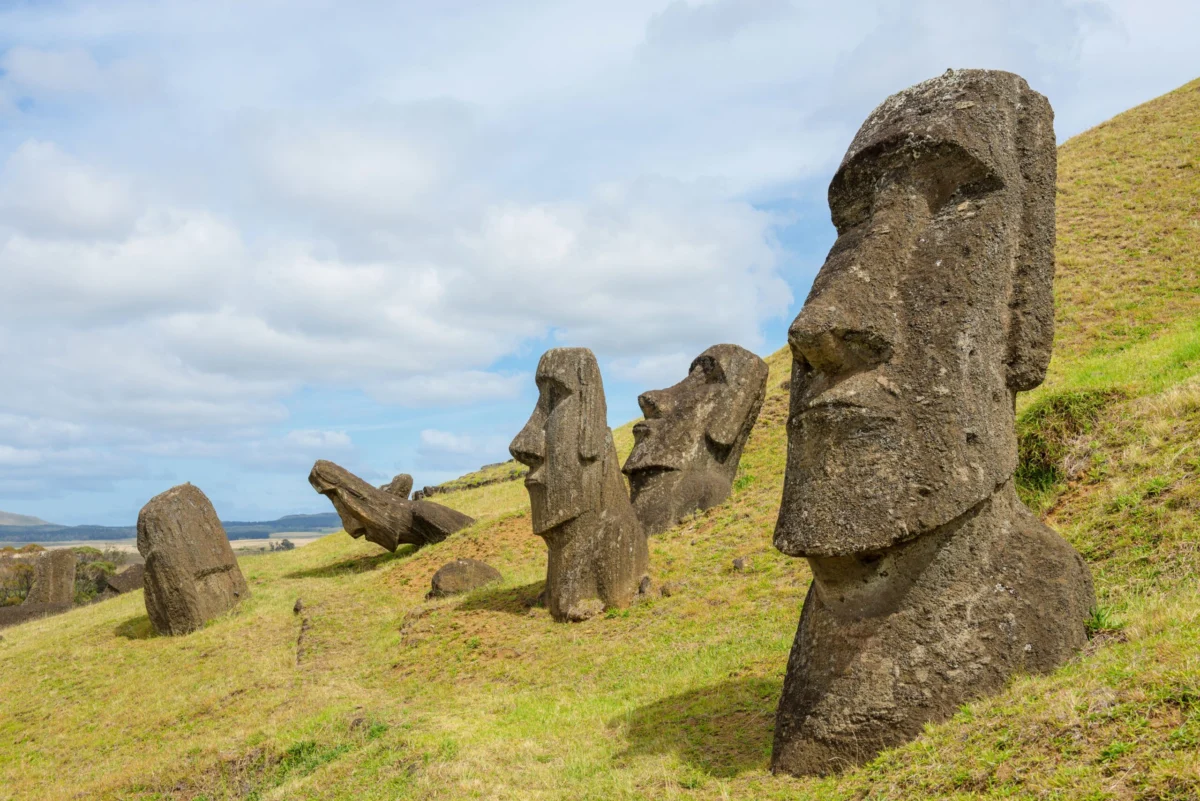
South America remains a continent defined by its rejection of subtlety, characterized by a geographical profile that features the world’s longest continental mountain range, its largest tropical rainforest, and a hydrological system of unparalleled volume. As global travel trends shift toward experiential and "slow" tourism, the 2026 outlook for South American travel highlights a transition from traditional bucket-list destinations to sites that require greater logistical commitment but offer significant cultural and ecological rewards. This evolution in traveler preference coincides with new archaeological findings and infrastructure developments across the region, positioning seven specific sites as the "wonders" of the upcoming year. These locations—ranging from the misty peaks of the Colombian Sierra Nevada to the remote rainforests of Guyana—represent the continent’s enduring capacity for discovery.
1. Ciudad Perdida: The Archaeological Anchor of the Sierra Nevada
Located deep within the Sierra Nevada de Santa Marta in northern Colombia, Ciudad Perdida, or "The Lost City" (known indigenously as Teyuna), represents one of the most significant archaeological complexes in the Americas. Research indicates the city was founded approximately in 800 C.E. by the Tairona people, predating the construction of Machu Picchu by more than six centuries. The site consists of 169 stone terraces carved into the mountainside, connected by a network of tiled roads and small circular plazas.

The logistical requirements to reach Ciudad Perdida remain a primary factor in its preservation and its status as a "wonder" for the adventurous. Travelers must commit to a four-to-six-day guided trek through dense jungle, crossing the Buritaca River multiple times before ascending a final 1,200-step stone staircase. Unlike more accessible ruins, Ciudad Perdida is managed in close coordination with the local Kogi, Wiwa, and Arhuaco indigenous communities, who view the site as a sacred ancestral heartland. As Colombia continues to stabilize and expand its tourism infrastructure, the Sierra Nevada de Santa Marta is seeing a 15% year-over-year increase in trekking permits, though authorities maintain strict daily caps to prevent the ecological degradation seen in other global heritage sites.
2. Jalapão State Park: Brazil’s Savanna Frontier
In the heart of the Brazilian state of Tocantins lies Jalapão State Park, a 34,000-square-kilometer region within the Cerrado—South America’s largest tropical savanna. Jalapão is distinguished by its "fervedouros," unique karst springs where high-pressure underground water prevents swimmers from sinking, creating a sensation of weightlessness. These turquoise pools are set against a backdrop of golden dunes, such as those in Mateiros, and massive sandstone formations like Pedra Furada.
The region’s inclusion in the 2026 wonders list is driven by a significant shift in accessibility. Historically, Jalapão was reachable only by self-sufficient 4×4 expeditions over treacherous dirt tracks. However, the Brazilian government has initiated a series of infrastructure updates, including the paving of key access roads and the expansion of eco-lodges that prioritize low-impact tourism. Environmental analysts note that the Cerrado is a critical carbon sink, and the promotion of Jalapão as a major tourism destination is part of a broader federal strategy to provide economic incentives for the preservation of the savanna, which faces ongoing threats from agricultural expansion.

3. Lake Titicaca: The High-Altitude Cradle of Andean Civilization
Straddling the border between Peru and Bolivia at an elevation of 3,812 meters (12,507 feet), Lake Titicaca is the highest navigable lake in the world. Formed by tectonic shifts millions of years ago, the lake serves as a vital cultural symbol, identified in Incan mythology as the birthplace of the sun and the first Incan monarchs. The lake’s 2026 appeal lies in the growing infrastructure for "overnight immersion" rather than the traditional day-trips from Puno or Copacabana.
On the Peruvian side, the Uros people continue to maintain artificial islands woven from totora reeds, a tradition that has persisted for centuries. Further into the lake, islands such as Amantaní and Taquile offer homestays where the lifestyle remains dictated by agricultural cycles and traditional weaving practices, the latter of which is recognized by UNESCO as Intangible Cultural Heritage. On the Bolivian side, the Isla del Sol (Island of the Sun) contains over 80 ruins dating back to the Inca period. Regional tourism boards report that visitors are increasingly seeking the "Bolivian side" for its more rugged, less commercialized atmosphere, reflecting a continent-wide trend toward authenticity over convenience.
4. Rapa Nui: New Discoveries on the World’s Most Isolated Island
Rapa Nui, or Easter Island, situated 3,700 kilometers off the coast of Chile, remains a pinnacle of archaeological mystery. The island is home to nearly 1,000 moai—monolithic statues carved from volcanic tuff. Recent years have seen a resurgence of global interest following the 2023 discovery of a previously unknown moai in the dried lakebed of the Rano Raraku volcanic crater. This find suggests that the island’s archaeological record is far from complete, providing fresh impetus for researchers and travelers alike.

The management of Rapa Nui National Park has transitioned toward a model of strict sustainability to protect the fragile volcanic stone from erosion and the impacts of climate change. For 2026, the island is emphasizing its dual identity: a world-class archaeological site and a pristine maritime environment. Anakena Beach, with its white coral sands and standing moai, serves as a reminder that the Rapa Nui people were master navigators as well as sculptors. The Chilean government has implemented a digital entry system (SUI) to monitor visitor flow, ensuring that the island’s remote charm is not compromised by the increase in trans-Pacific flights.
5. Galápagos Islands: A Benchmark for Ecological Restoration
The Galápagos Islands of Ecuador continue to serve as the world’s premier living laboratory of evolution. While the archipelago has been a tourism staple for decades, 2026 marks a significant milestone in conservation-led travel. The "Floreana Ecological Restoration Project" has recently celebrated the successful reintroduction of several endemic species, including the Galápagos rail, a bird species that had not been recorded on the island for nearly two centuries.
The tourism model in the Galápagos is shifting away from purely vessel-based itineraries toward land-based "eco-luxury" stays. This shift allows for greater economic benefit to local communities on Santa Cruz, San Cristóbal, and Isabela. Tortuga Bay remains a focal point for visitors, offering a protected lagoon where kayaking alongside marine iguanas and white-tip reef sharks is a standard experience. Data from the Galápagos National Park Directorate indicates that 97% of the archipelago remains a strictly regulated wilderness, with new regulations in 2025 further limiting the use of single-use plastics and tightening biosecurity protocols to protect the islands’ unique biodiversity.

6. Quebrada de Humahuaca: The Intersection of History and Viticulture
In Argentina’s northwest province of Jujuy, the Quebrada de Humahuaca offers a landscape of polychromatic mountains and deep canyons. A UNESCO World Heritage site since 2003, this 155-kilometer valley has functioned as a major cultural corridor for over 10,000 years, linking the high Andean plateau with the plains. The "Hill of Seven Colors" in Purmamarca is the region’s most famous landmark, but the 2026 focus is on the valley’s emerging status as a high-altitude wine destination.
Vineyards in Maimará and Uquía are producing Malbec and Syrah at altitudes exceeding 3,000 meters. The intense solar radiation and dramatic diurnal temperature shifts (often exceeding 20°C in a single day) result in wines with high concentrations of polyphenols and unique flavor profiles. This "viticulture of the extremes" has drawn a new demographic of culinary travelers to northern Argentina, balancing the region’s traditional folk music and adobe architecture with sophisticated boutique wineries. Economic analysts point to this diversification as a key driver for the region’s 12% growth in international tourism arrivals over the last biennial period.
7. Kaieteur Falls: The Power of Guyana’s Unspoiled Wilderness
Guyana, the only English-speaking nation in South America, is rapidly transitioning from a hidden gem to a major eco-tourism player. At the heart of this surge is Kaieteur Falls, a single-drop waterfall that is roughly four times the height of Niagara Falls and twice the height of Victoria Falls. Located on the Potaro River within Kaieteur National Park, the falls drop 226 meters (741 feet) from a sandstone plateau into a pristine rainforest basin.

Kaieteur is distinguished by its lack of commercial development. Unlike the heavily managed boardwalks of Iguazú Falls, Kaieteur offers a raw, unfiltered encounter with nature. There are no safety railings or luxury hotels at the site; access is primarily via small aircraft from the capital, Georgetown. Guyana’s tourism strategy for 2026 is centered on its "Low Carbon Development Strategy," which leverages the country’s vast rainforests (covering 87% of its landmass) as a sustainable resource. With the Caribbean Tourism Organization’s State of the Tourism Industry Conference scheduled to be held in Guyana in 2026, Kaieteur Falls stands as the primary symbol of the country’s emergence on the global stage.
Broader Impacts and the 2026 Tourism Outlook
The selection of these seven wonders reflects a broader shift in the South American tourism economy. As of late 2024, data from the World Tourism Organization (UNWTO) suggests that South America is recovering from global travel disruptions faster than other regions, driven by a 22% increase in "adventure" and "nature-based" bookings. The implications of this trend are twofold: economic revitalization for remote communities and increased pressure on fragile ecosystems.
Regional governments are responding with a mix of infrastructure investment and conservation mandates. Colombia’s "Tourism for Peace" initiative and Brazil’s Cerrado protection programs are examples of how these wonders are being used as anchors for sustainable development. For the 2026 traveler, the "discovery" of South America is no longer about finding a place that hasn’t been mapped, but about engaging with places that have been preserved through a combination of geographical isolation and intentional policy. The destination is indeed the reward, but the journey to these seven wonders serves as a testament to the continent’s enduring status as the ultimate frontier for natural and cultural exploration.