Ferry Irwandi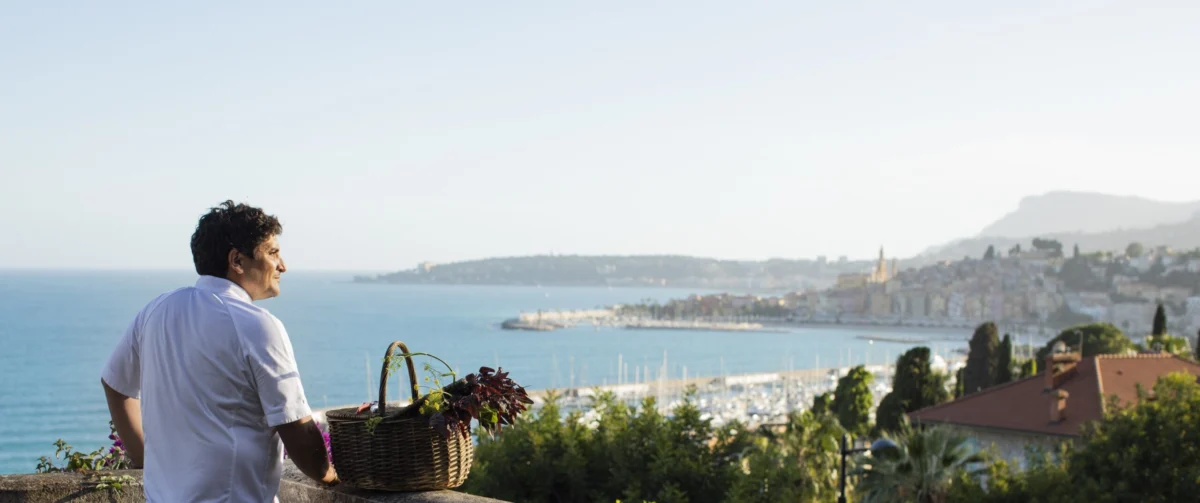
The year 2024 marks a defining milestone for Mirazur, the three-Michelin-starred establishment situated in the picturesque seaside town of Menton. Celebrating its 20th anniversary, the restaurant has evolved from a daring experimental project by Argentine chef Mauro Colagreco into a global beacon of haute cuisine. To commemorate two decades of culinary innovation, Colagreco has announced a landmark collaboration with Spanish visionary Ferran Adrià, the former head of the legendary El Bulli. Throughout April and May, the two titans of the gastronomic world are merging their distinct styles—Adrià’s revolutionary molecular techniques and Colagreco’s terroir-driven philosophy—to reinterpret Mirazur’s most iconic dishes.
For Colagreco, Mirazur is more than a restaurant; it is a manifestation of his journey as an immigrant chef who found a home on the border of France and Italy. "Mirazur was my first restaurant, and a place where I could experiment while also tapping into the region’s rich gastronomic tradition," Colagreco stated, reflecting on his twenty-year tenure. This anniversary serves as both a retrospective of his achievements and a forward-looking exploration of the French Riviera’s bounty, which continues to dictate the rhythm of his kitchen.
A Chronology of Excellence: The Rise of Mirazur
The trajectory of Mirazur is a study in steady, disciplined ascent. Mauro Colagreco arrived in France in 2001, training under legendary figures such as Bernard Loiseau, Alain Ducasse, and Alain Passard. In 2006, he opened Mirazur in a 1930s modernist building with sweeping views of the Mediterranean. The restaurant’s location—perched on a hillside just meters from the Italian border—became its defining characteristic.
The accolades followed in rapid succession. Mirazur earned its first Michelin star within its first year of operation in 2007. A second star followed in 2012, marking Colagreco as a rising star in the French culinary landscape. In 2019, the restaurant reached the pinnacle of the industry, receiving its third Michelin star and being named the "World’s Best Restaurant" by the World’s 50 Best Restaurants list. Colagreco holds the distinction of being the first non-French chef to receive three stars in France, a testament to his ability to translate the essence of the Riviera through a global lens.
In 2020, amidst the global pandemic, Colagreco further refined the restaurant’s identity by introducing a "Lunar Menu." This biodynamic approach aligns the kitchen’s offerings with the cycles of the moon, categorizing menus into "Root," "Leaf," "Flower," and "Fruit" days based on the restaurant’s extensive five-hectare gardens.
%204C%20PANO%20%C2%A9%20Matteo%20Carassale.jpg)
The 20th Anniversary Collaboration: Adrià and Colagreco
The decision to invite Ferran Adrià for the anniversary celebrations underscores the historical weight of the occasion. Adrià, often cited as the father of modern gastronomy, famously closed El Bulli in 2011 to focus on culinary research through the elBullifoundation. His appearance at Mirazur represents a rare return to a commercial kitchen.
The collaboration menu seeks to strike a balance between nostalgia and avant-garde exploration. Adrià is applying his signature "techno-emotional" approach to Mirazur’s repertoire, using deconstruction and spherification to provide new perspectives on Colagreco’s nature-centric dishes. Despite the high-concept techniques, the core of the menu remains anchored in the local ecosystem. Seafood harvested from the Mediterranean and herbs foraged from the hinterlands ensure that the elevated experience remains grounded in the physical reality of the Côte d’Azur.
Beyond the Three Stars: Colagreco’s Personal Gastronomic Map
While Mirazur represents the pinnacle of fine dining, Colagreco’s culinary worldview is shaped by the wider region’s "refined tradition." He notes that even the most rustic dishes in the French and Italian Rivieras possess an inherent elegance. To understand the chef’s perspective, one must look toward the establishments he frequents during his personal time—a mix of historic institutions and new ventures led by his former protégés.
La Merenda: The Preservation of Niçoise Tradition
In the heart of Nice, La Merenda stands as a testament to the enduring power of simplicity. The restaurant is helmed by Dominique Le Stanc, a chef who famously walked away from two Michelin stars at the legendary Le Negresco to open a tiny, 18-seat eatery. There are no telephones for reservations, and the menu is written on a chalkboard.
Colagreco identifies La Merenda as a crucial influence. "He does classic Niçoise food with high-quality products and incredible technique," Colagreco noted. He specifically recommends the pichade—a regional tart with a tomato base and olive oil dough—and the daube Niçoise, a slow-cooked beef stew. The seasonal cherry dessert, available only from May to early June, is cited by Colagreco as one of the best he has ever encountered, relying on the purity of macerated fruit and mint rather than complex pastry work.
Ristorante Trattoria Terme: Hand-Crafted Pasta in Pigna
Crossing the border into Italy, Colagreco points to the village of Pigna, where Ristorante Trattoria Terme continues to operate under the guidance of an 86-year-old matriarch. This establishment represents the soul of Ligurian cooking, where manual labor and generational knowledge take precedence over modern trends.
%2520NB%2520V%2520%25C2%25A9%2520Matteo%2520Carassale.jpg)
The "must-order" dish here is the artichoke ravioli, which Colagreco describes as exceptionally tender. The persistence of hand-rolled pasta in a world of industrial automation is, for Colagreco, a vital part of the region’s gastronomic identity. He suggests that visitors call ahead, as the restaurant operates on a traditional, local schedule.
The "Mirazur Effect": Casa Buono and Onice
A significant part of Mirazur’s legacy is the "school" of chefs it has produced. Colagreco has effectively created a matchmaking agency and a talent incubator, with several former staff members opening their own highly acclaimed restaurants in the vicinity.
Casa Buono (Ventimiglia, Italy): Founded by Antonio and Valentina Buono, both Mirazur alumni, this restaurant recently earned its first Michelin star. Antonio Buono served as the head chef at Mirazur during its 2019 ascent to the top of the world rankings. Located in the Nervia Valley, Casa Buono focuses on hyper-local ingredients. Colagreco highlights their calamari in ink sauce, a seasonal specialty available only during the spring and autumn months.
Onice (Nice, France): This venture is led by Florencia Abella and Lorenzo Ragni, another couple who met while working in the Mirazur kitchen. Florencia previously held the position of head chef at Mirazur. Their cooking style is a sophisticated blend of Argentine and Italian influences, mirroring the multicultural nature of the border region. Notable dishes include spiny artichoke with glazed veal sweetbreads and local fish served with a Champagne emulsion.
Le Paradis de la Glace: A Lesson in Lightness
Even in the realm of casual treats, Colagreco seeks refinement. At Le Paradis de la Glace in Roquebrune-Cap-Martin, the focus is on texture and digestibility. The chef expresses an obsession with their fior di latte (milk flower) gelato, praising its lightness. This preference for food that "doesn’t leave you ready for a nap" is a hallmark of Colagreco’s own culinary philosophy, which prioritizes clean flavors and balanced nutrition.
Socio-Economic Impact and Culinary Implications
The success of Mirazur has had a profound impact on the socio-economic fabric of Menton and the surrounding border towns. Before Mirazur’s global fame, Menton was primarily known as a quiet retirement destination and for its annual Lemon Festival. Today, it is a primary destination for "gastro-tourism," attracting high-net-worth travelers from across the globe.
.jpg)
This influx of culinary interest has supported local biodiversity. Colagreco’s commitment to permaculture and biodynamic farming has encouraged a network of small-scale producers in the region to maintain traditional agricultural practices. Furthermore, the "Mirazur diaspora"—exemplified by Casa Buono and Onice—is revitalizing the dining scenes in Ventimiglia and Nice, creating a competitive yet collaborative ecosystem that benefits the entire Riviera.
Conclusion: The Next Twenty Years
As Mirazur enters its third decade, Mauro Colagreco’s influence shows no signs of waning. By collaborating with Ferran Adrià, he bridges the gap between the revolutionary techniques of the early 2000s and the sustainability-focused demands of the modern era. The anniversary is not merely a celebration of past stars and rankings, but a reaffirmation of a philosophy that views the kitchen as an extension of the earth.
For the international culinary community, Mirazur serves as a model of how a restaurant can honor tradition without being bound by it. For the local community on the French-Italian border, it remains a vital engine of culture and commerce. As Colagreco continues to champion the "refined tradition" of the Riviera, his guide to the region’s eateries ensures that the next generation of diners and chefs remains connected to the authentic flavors of the Mediterranean.