Ronny Sianturi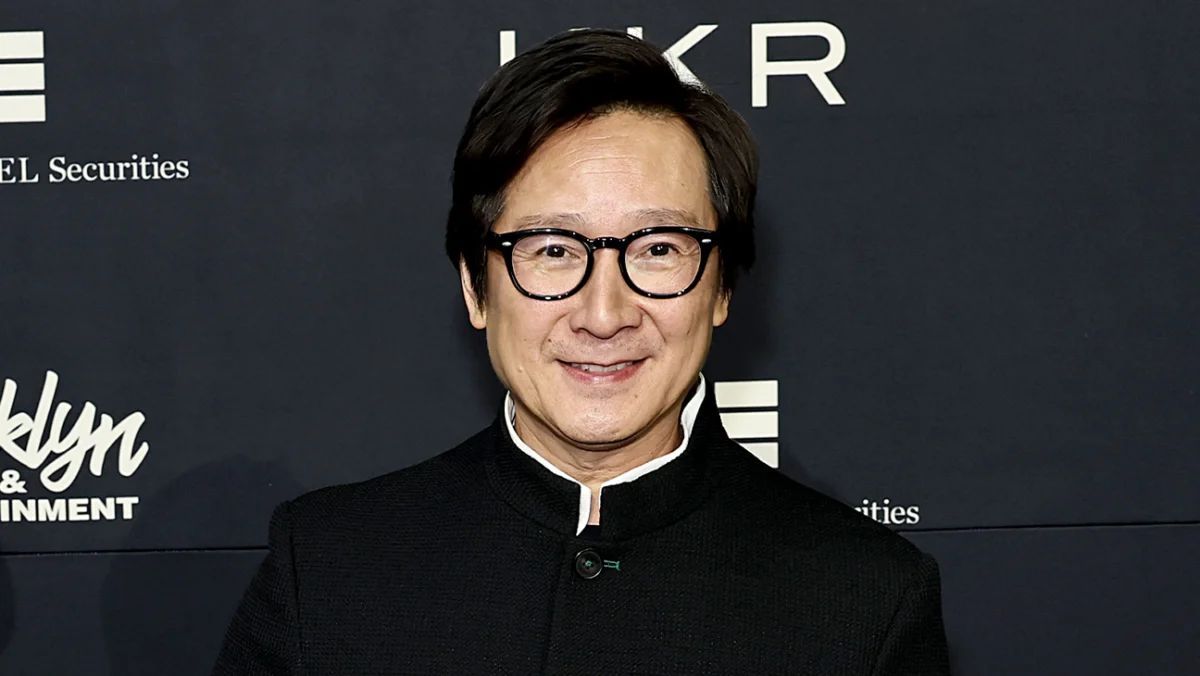
Academy Award winner Ke Huy Quan has shared a vivid childhood memory from the height of his early cinematic success, detailing the moment he discovered his first residual check for the 1984 blockbuster Indiana Jones and the Temple of Doom amounted to a staggering $100,000. This revelation forms part of his newly released memoir, Never Say Die, which officially hit bookstore shelves on Tuesday. The book provides an intimate look into the extraordinary highs, profound challenges, and eventual resurgence of a career that spans over four decades in the entertainment industry.
At just 12 years old, Quan captured the hearts of global audiences with his portrayal of the resourceful sidekick Short Round in Steven Spielberg’s sequel to 1981’s Raiders of the Lost Ark. Stepping onto a major Hollywood set with no prior professional acting experience, the young performer was focused solely on the immediate mechanics of filmmaking rather than the complex financial structures underpinning the industry. Consequently, the concept of receiving ongoing compensation long after principal photography had wrapped was entirely foreign to him.
The Genesis of a Financial Milestone
In an excerpt from Never Say Die, Quan paints a vivid picture of the afternoon the unexpected windfall arrived at his family home. Walking into the kitchen, he encountered his parents standing by the table in quiet astonishment. His mother held an envelope bearing his name, while his father reviewed the paperwork enclosed within.
They were both smiling, the kind of smile that comes from surprise and disbelief mixed together, Quan wrote. Handing the documents to the young actor, they revealed a check issued directly from Lucasfilm. The total face value approached $100,000, an astronomical figure that defied comprehension for a child who had previously understood compensation only in terms of a standard weekly salary.
Quan admitted that he fundamentally failed to grasp how additional funds could materialize after he had already completed his contractual duties for the production. Once the financial reality was explained to him, the actor came to view the residuals clause not merely as a standard payout, but as a deliberate and quiet gesture of profound generosity orchestrated by director Steven Spielberg and producer George Lucas.
Unprecedented Industry Terms for a Novice Actor
Reflecting on the milestone from an adult perspective, Quan emphasized how rare such financial arrangements were during the era, particularly for an unproven child actor making his feature film debut. In his memoir, he noted that back in the 1980s, profit participation and backend residuals were almost exclusively reserved for elite, established box-office draws.
The notion that a newcomer, let alone a 12-year-old child actor, would be written into a profit-sharing or residual structure was essentially unheard of in the standard studio practices of the period. Temple of Doom was not an independent venture or an experimental indie project with modest expectations; it was the highly anticipated sequel to one of the most successful adventure films in cinema history. Knowing that the studio and its principal architects ensured a young supporting player shared in that massive commercial success elevated the gesture far beyond standard business operations.
For Quan and his immigrant family, the financial injection was nothing short of transformative. The funds provided a foundational layer of economic stability during a critical developmental period, easing the pressures that many immigrant families navigate upon settling in the United States.
A Career Defined by Early Triumphs and Long Hiatuses
The journey of Ke Huy Quan into the annals of Hollywood history remains one of the most compelling narratives in modern entertainment. Discovered through an open casting call for Temple of Doom, Quan subsequently secured another iconic role as Data in the 1985 Richard Donner-directed adventure film The Goonies. These back-to-back successes cemented his status as one of the most recognizable child actors of the decade.
However, the transition from successful child star to adult actor proved exceptionally difficult. As the 1980s gave way to the 1990s, the landscape of American cinema shifted, offering increasingly limited and often stereotypical roles for Asian American performers. Faced with a shrinking market of viable acting opportunities and persistent industry barriers, Quan eventually stepped away from acting in front of the camera entirely.
For decades, he worked behind the scenes as a stunt coordinator, assistant director, and production crew member, collaborating with visionary filmmakers like Wong Kar-wai on 2046. Despite working successfully behind the camera, the lingering doubt of whether his childhood success was merely an isolated stroke of luck remained a constant presence in his psychological landscape. As he openly acknowledged during his award season run, he spent many years paralyzed by the fear that he had already peaked before reaching adulthood.
The Triumphant Return to the Global Stage
The trajectory of Quan’s professional life altered dramatically when directors Daniel Kwan and Daniel Scheinert cast him in the absurdist sci-fi comedy Everything Everywhere All at Once. Released in 2022, the film became a cultural phenomenon and a critical darling, sweeping the awards circuit and redefining cinematic storytelling.
Portraying the multifaceted character of Waymond Wang, Quan delivered a performance characterized by warmth, physical dexterity, and deep emotional resonance. The role not only reintroduced him to global audiences but also validated decades of perseverance.
During his acceptance speech for the Academy Award for Best Supporting Actor in 2023—as well as his prior victory at the Golden Globes—Quan made a point of publicly acknowledging the foundational role Steven Spielberg played in launching his career. Standing on the global stage clutching his Oscar, Quan expressed profound gratitude to the legendary director who had cast him as Short Round nearly forty years prior, bringing his professional narrative full circle.
Broader Economic Implications and Industry Evolution
The revelation in Never Say Die sheds light on the evolving nature of compensation structures within the entertainment industry, particularly concerning the treatment of minor actors and supporting cast members. In the decades following the release of Temple of Doom, the landscape of residual payments has undergone significant transformation, largely driven by union negotiations, the rise of home video, and the modern transition to streaming distribution models.
During the 1980s, theatrical residuals were calculated based on distinct windows of exploitation, including home video sales, television syndication, and international distribution. The inclusion of a young supporting actor in profit-sharing streams reflects a progressive approach by Lucasfilm leadership at the time—one that recognized the enduring value contributed by every tier of the cast.
Labor unions such as SAG-AFTRA have continuously fought to protect and expand residual structures to ensure that performers share in the long-term economic success of their creative output. Recent high-profile strikes and negotiations underscore how vital residuals remain to the livelihood of working actors, making historical accounts like Quan’s particularly poignant within ongoing discussions about fair compensation in the digital age.
The publication of Never Say Die adds a permanent literary record to Quan’s extraordinary life story, bridging the gap between his childhood days on the set of an Indiana Jones adventure and his current status as an Academy Award-winning industry veteran. Through candid reflections on financial milestones, industry hurdles, and personal resilience, Quan continues to inspire audiences and peers alike, ensuring his legacy extends far beyond the iconic roles of his youth.