Layla Zulfa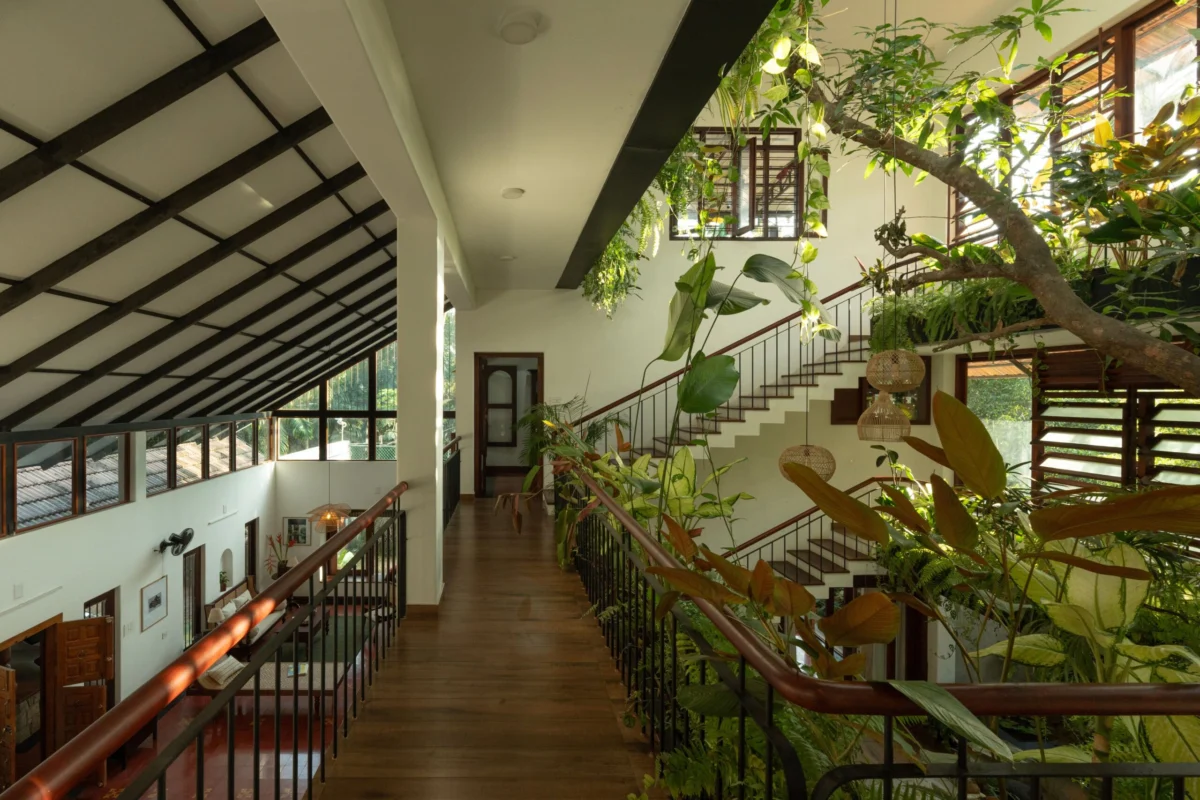
In the cultural capital of Kerala, Thrissur, a residential project has emerged as a significant example of how modern architectural practices can reconcile the demands of multi-generational living with the preservation of local ecology. Designed by architect Arjun Joshy of the firm Naked Volume, the residence—commissioned by software engineer Sharan—serves as a testament to the "reverse migration" trend observed in India’s technology sector following the global COVID-19 pandemic. The project, which centers on the preservation of a mature mango tree, highlights a growing shift toward biophilic design and the use of indigenous materials in the Indian residential sector.

The Socio-Economic Context: Pandemic-Driven Urban Exodus
The genesis of the Thrissur residence is rooted in the shifting priorities of India’s professional class during the early 2020s. Sharan, the homeowner, represents a demographic of highly skilled workers who transitioned from high-density urban centers back to their ancestral hometowns. This movement, often cited by urban planners as a "recalibration of pace," necessitated the creation of living spaces that could accommodate remote work while fostering familial bonds.
Sharan’s family of six, comprising three generations—his parents, his wife (a teacher), and their two young sons—required a structure that balanced communal interaction with individual privacy. The decision to move back to Kerala was not merely a logistical change but a pursuit of a "breathable and meaningful" lifestyle, according to the homeowner. This requirement formed the foundational brief for Arjun Joshy, whose practice, Naked Volume, is known for its minimalist and site-specific interventions.

Site Analysis and the Preservation of Natural Assets
Upon surveying the site, the architectural team identified a pre-existing, dilapidated structure and a large, centrally located mango tree. While traditional development often prioritizes maximum floor area ratio (FAR) by clearing site vegetation, Joshy and his client opted for a conservationist approach. The decision to save the mango tree dictated the entire spatial configuration of the new home.
The logistical challenges of this choice were significant. To accommodate the tree’s canopy and root system, the team had to map the site with precision, ensuring that the foundation did not impede the tree’s health. This required a creative approach to circulation; the stairs and upper-floor access had to be designed "on-site" to adapt to the tree’s branching patterns. This iterative design process reflects a departure from rigid, pre-planned blueprints in favor of organic, responsive architecture.

Materiality and Traditional Craftsmanship
The Thrissur residence is a study in regional materiality, utilizing a palette that honors Kerala’s architectural heritage while providing modern thermal comfort. The building’s envelope is characterized by several key materials:
- Rubble Cladding and Mud Brick: The facade utilizes rubble and mud bricks, materials chosen for their high thermal mass. In the tropical climate of Kerala, where temperatures and humidity can be oppressive, these materials help regulate internal temperatures naturally, reducing the reliance on mechanical cooling systems.
- Salvaged Timber: Demonstrating a commitment to the circular economy, the design team demolished the original "stooping" house on the property but salvaged its high-quality timber. This wood was repurposed into the new structure, preserving the history of the site and reducing the carbon footprint associated with new lumber.
- Mangalore Tiles: The silhouette of the home is defined by a sloping roof clad in Mangalore tiles. This is a functional necessity in a region that experiences heavy monsoon rainfall, ensuring efficient water runoff while maintaining a regionally rooted aesthetic.
- Athangudi Tiles: For the interior flooring, particularly in the bedrooms, the team employed Athangudi tiles. These handmade tiles from the Chettinad region are known for their durability and eco-friendly manufacturing process, which involves no firing, only sun-drying.
The Central Atrium: An Orchestral Core
The architectural centerpiece of the home is a large, open-air atrium or courtyard that houses the mango tree. This space functions as the "heart" of the residence, facilitating natural cross-ventilation and light penetration into every room. In traditional Kerala architecture, this is reminiscent of the Nalukettu (four-sided) layout, where a central courtyard (Anganam) serves as the primary social and environmental regulator.

A sculptural staircase coils around the perimeter of the courtyard. This feature serves a dual purpose: it provides a dramatic visual focal point and serves as a practical pathway for the family to harvest ripe fruit from the tree. The integration of the tree into the living space blurs the boundary between the indoors and outdoors, a hallmark of biophilic design that has been shown to improve mental well-being and productivity.
Spiritual Integration and Contemporary Interventions
Beyond its ecological and functional attributes, the house incorporates a spiritual dimension essential to the family’s daily life. A dedicated Pooja space—a sanctuary for prayer and meditation—was situated near the base of the mango tree. This placement creates a symbolic link between the divine and the natural world, reinforcing the home’s identity as a place of reflection.

To ensure the home remains functional for the elderly members of the family, Joshy integrated modern interventions such as a glass roof over certain sections to provide weather protection without sacrificing light, and a lift to ensure accessibility across floors. These features are handled with restraint, ensuring they do not clash with the home’s overall "restrained palette" of wood, stone, and earth.
Technical Analysis of Thermal Performance and Sustainability
The Thrissur residence serves as a model for sustainable tropical architecture. By utilizing mud bricks and rubble, the building achieves a lower embodied energy compared to standard concrete and glass structures. Furthermore, the central courtyard acts as a thermal chimney; as warm air rises and exits through the open top, cooler air is drawn in from the surrounding shaded areas, creating a constant, gentle airflow.

According to climate data for the Thrissur region, which sees average highs of 32°C (90°F), the use of traditional sloping roofs and high ceilings significantly reduces the "heat island" effect within the property. The choice of glass roofing in specific areas uses tempered and UV-coated panels to prevent excessive heat gain while maintaining the visual connection to the sky.
Broader Implications for the Indian Residential Sector
The success of the Thrissur project offers several insights for the future of residential design in India:

- The Value of Mature Landscapes: The project demonstrates that preserving existing trees can add significant aesthetic and psychological value to a property, often outweighing the costs of complex engineering.
- Cultural Continuity: By blending traditional elements like the Nalukettu courtyard with modern needs like elevators, the project shows that heritage is not a static concept but one that can evolve.
- Economic Impact of Local Materials: The use of local artisans for Athangudi tiling and mud-brick masonry supports the regional economy and preserves traditional crafts that are often threatened by industrial construction methods.
Conclusion: Architecture as an Enabler of Life
As the family settles into the rhythms of their new home, the architecture has transitioned from a construction project to a living environment. Sharan notes that the courtyard has become the natural gathering point for the family, fostering a sense of "openness and calmness" that was absent in their previous urban life.
The project by Arjun Joshy and Naked Volume suggests that the most successful contemporary homes are those that do not compete with their environment but rather facilitate a deeper connection to it. In Thrissur, this is achieved through a design that respects the past, accommodates the present, and preserves the natural world for the future. The house stands as a quiet but firm rebuttal to the trend of generic, climate-insensitive residential blocks, proving that the most sophisticated design is often the one that makes room for the soft thud of a falling mango.