Ferry Irwandi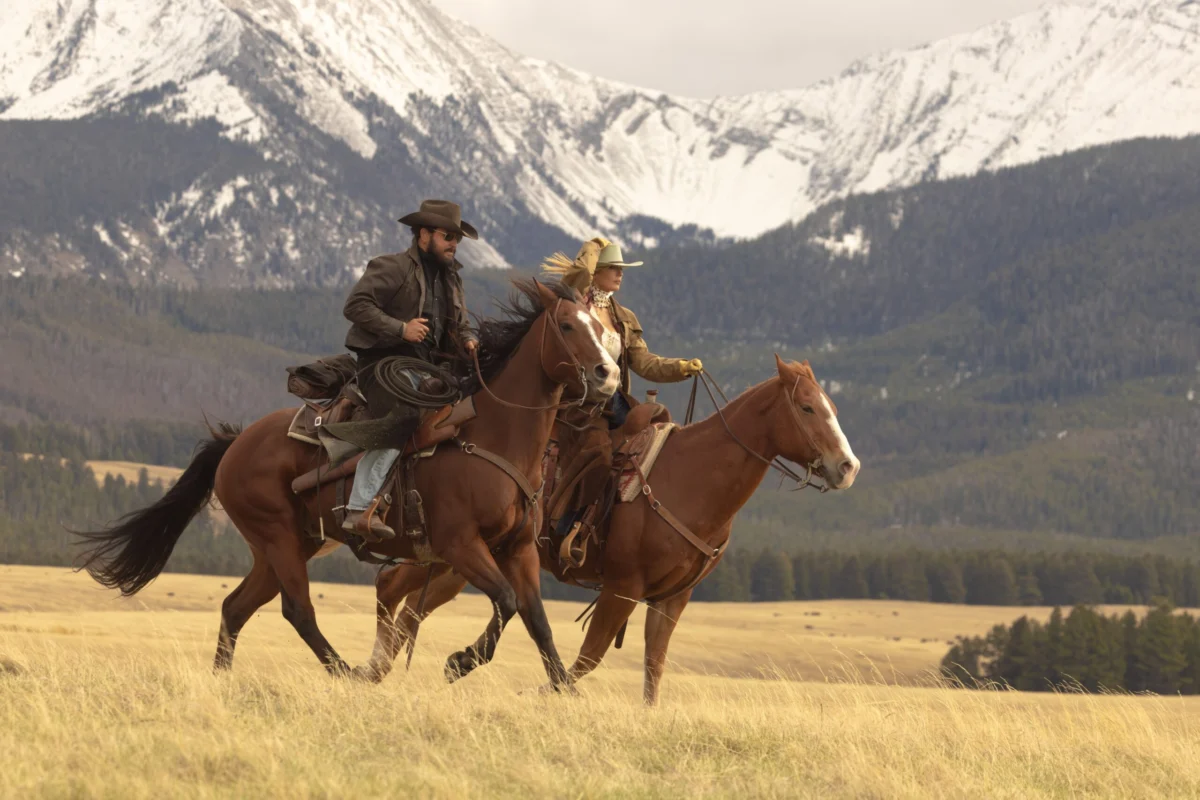
The series, which has already secured a renewal for a second season, explores the tension between the displaced Duttons and the established power structures of the Texas ranching community. Central to this conflict is Beulah Jackson, played by Academy Award winner Annette Bening, a fifth-generation matriarch whose 10 Petal Ranch represents the entrenched wealth and tradition of the region. As the production transitions from the "Aspenification" of modern Montana to the grittier reality of Texas, the show’s aesthetic and logistical choices highlight a commitment to regional authenticity and narrative depth.
Production Design and the Texas Aesthetic
The visual language of the spinoff is overseen by production designer Yvonne Boudreaux, whose personal history is deeply rooted in the American South. Born in Louisiana and a resident of Texas for over two decades, Boudreaux brought a specialized understanding of Texan culture to the set. Her objective was to maintain the core identity of Beth and Rip while adapting their surroundings to reflect their new environment. According to Boudreaux, the color palette for the couple was inspired by a "sunrise," utilizing earth tones, the muted greens of agave plants, and the pervasive dust of the Texas landscape.
This "grittier" aesthetic serves to differentiate the Duttons’ struggle from the established opulence of their rivals. While the Montana years were defined by wood-and-stone lodges and vast mountain ranges, the Texas setting emphasizes limestone walls, expansive cattle pastures, and the juxtaposition of rural ranching with the rising Dallas skyline. The production team prioritized "authenticity" in every location choice, seeking out sites that reflected the multi-generational history of Texan land ownership.
.jpg)
Weatherford: The Heart of the New Dutton Ranch
A significant portion of the series was filmed in and around Weatherford, Texas, located approximately 30 miles west of Fort Worth. The town’s historic character and agricultural heritage made it an ideal surrogate for the outskirts of the fictional Rio Paloma. The primary filming site for the new Dutton Ranch is a sixth-generation property that has been operated by the same family since 1934.
The production utilized 2,500 acres of this private ranch, collaborating closely with the owners to integrate modern ranching practices into the show’s narrative. Unlike the grandiose architecture of the original Yellowstone ranch, the Weatherford location offers a more modest, utilitarian aesthetic, reinforcing the theme of Beth and Rip attempting to build a legacy from the ground up. Beyond the ranch itself, Weatherford’s natural features were heavily utilized; for instance, a soulful dialogue scene between the characters Carter and Oreana in episode six was filmed on the expansive waters of Lake Weatherford.
Rio Vista and the Reconstruction of the Split Heart Bar
In the world of Taylor Sheridan, local watering holes often serve as the centers of community conflict and exposition. In this spinoff, that role is filled by The Split Heart Bar. Initial filming for the bar took place on location at Roughnecks Bar and Grill in Rio Vista, a small town south of Fort Worth.
To streamline production and minimize the logistical challenges of frequent travel, the production team took detailed measurements and photographs of the Rio Vista location. These were used to recreate the bar’s interior as a permanent set on a soundstage in Fort Worth. This approach allowed the crew to maintain the authentic "dive bar" atmosphere of rural Texas while benefiting from the controlled environment of a studio.

Granbury: Landscapes of Tragedy and Competition
The town of Granbury served as the primary location for the exteriors of the rival 10 Petal Ranch. The vast acreage available in the Granbury area allowed the production to film large-scale sequences, including the series’ early rodeo scenes.
One of the most harrowing moments of the first season occurs in episode four, when the Duttons’ herd is decimated by foot-and-mouth disease. The resulting sequence, involving the execution and burial of the cattle in a mass grave, was filmed across the thousands of acres of open land in Granbury. The starkness of the landscape in these scenes underscores the high stakes of Texas ranching, where environmental and biological factors can ruin a legacy in a matter of days.
Dallas: Urban Opulence and the Hotel Swexan
While much of the series focuses on rural life, the character of Beth Dutton remains a creature of corporate and social power. To reflect this, the production moved into the heart of Dallas for several key sequences. The Hotel Swexan, a luxury destination in the city’s Harwood District, served as a primary filming location for episode four.
The scenes featured Beth navigating the high-end environment of the hotel, including a confrontation in the kitchen where she interacts with the culinary staff. In a nod to authenticity, several of the hotel’s actual chefs remained on set during filming to ensure the kitchen operations appeared realistic. This urban setting provides a sharp contrast to the "dust and dirt" of the ranch, highlighting Beth’s versatility as a character who is equally comfortable in Louboutin pumps and cowboy boots.

Ferris: The Architectural Legacy of Beulah Jackson
The introduction of Beulah Jackson required a location that conveyed generational wealth and Southern sophistication. The production identified a 23,000-square-foot mansion in Ferris, Texas, just outside the Dallas metropolitan area, to serve as the 10 Petal Ranch headquarters.
Set decorator Suzanne Stover and Boudreaux remodeled nearly every room in the home to reflect the character’s heritage. The interior design incorporates elements sourced from San Antonio, including family archives, deer head mounts, and antler chandeliers. The mansion’s massive wooden doors and traditional gun displays are intended to signal to the viewer that Beulah Jackson is not merely a rancher, but the ruler of a "kingdom"—a theme that becomes central to the season finale’s political subtext.
Fort Worth: The Production Hub
While the series spans multiple counties, its operational heart remains in Fort Worth. The production is headquartered at the SGS soundstages, and several city landmarks appear on screen. The fictional Rio Paloma High School was filmed at E.M. Daggett Middle School, a historic institution in Fort Worth.
Additionally, the season finale features a pivotal meeting at the Landmark Lodge, a classic motel known for its vintage neon signage and blue cursive lettering. Located near the production’s main offices, the motel’s "frozen-in-time" aesthetic provided a cinematic backdrop for the high-stakes negotiations between the characters Mariano and Kino.

Chronology and the Sheridan Universe Expansion
The debut of Dutton Ranch represents a strategic expansion of the Yellowstone franchise, which began in 2018. The timeline of this spinoff places it in the immediate aftermath of the flagship series’ later seasons, bridging the gap between the Montana-based drama and the upcoming 250th anniversary of the United States.
The franchise has historically utilized its settings as characters in their own right. From the 1883 migration across the Great Plains to the 1923 struggle against prohibition and drought, Sheridan’s works have mapped the American experience through the lens of the Dutton family. The move to Texas in this latest series aligns with the real-world shift of the Western genre toward the "New West," where traditional ranching intersects with modern political and economic pressures.
Economic and Cultural Impact of Production
The relocation of a major television production to Texas has significant economic implications. The Texas Moving Image Industry Incentive Program (TMIIIP) has been instrumental in attracting large-scale projects like those of Taylor Sheridan. By filming in towns like Weatherford, Granbury, and Ferris, the production provides a direct infusion of capital into local economies through permits, hospitality services, and the employment of local crews.
Culturally, the show’s emphasis on "authenticity" has been met with positive responses from local communities. The inclusion of sixth-generation ranchers and local chefs in the production process ensures that the portrayal of Texas remains grounded in reality rather than cliché.

Thematic Implications: Kingdoms and Kings
The first season concludes with a provocative exchange between Mariano and Beulah Jackson, in which he observes that she has built a "kingdom in a country that hates kings." This dialogue serves as a thematic bridge to the broader political climate of the United States as it approaches its 250th anniversary.
The series explores the tension between the rugged individualism of the American mythos and the reality of concentrated land and political power. By placing the Duttons in the middle of this conflict, the show asks whether the "kingdoms" of the West can survive in a modern era defined by institutional scrutiny and social change.
Future Outlook for Season Two
With the series already renewed, the production is expected to delve deeper into the South Texas landscape. Future episodes are likely to feature more of the Dallas skyline and the limestone-heavy terrain of the Hill Country. As Beth and Rip continue to solidify their presence in Rio Paloma, the rivalry with the 10 Petal Ranch is poised to escalate, further exploring the intersection of family legacy and the unforgiving nature of the Texas frontier.
The second season will continue to leverage the expertise of Boudreaux and her team to ensure that the visual evolution of the show remains consistent with the "gritty, sunrise" palette established in the premiere. For fans of the Sheridan universe, the move to Texas is not just a change of scenery, but a fundamental shift in the narrative stakes of the Dutton saga.