Jono Maryono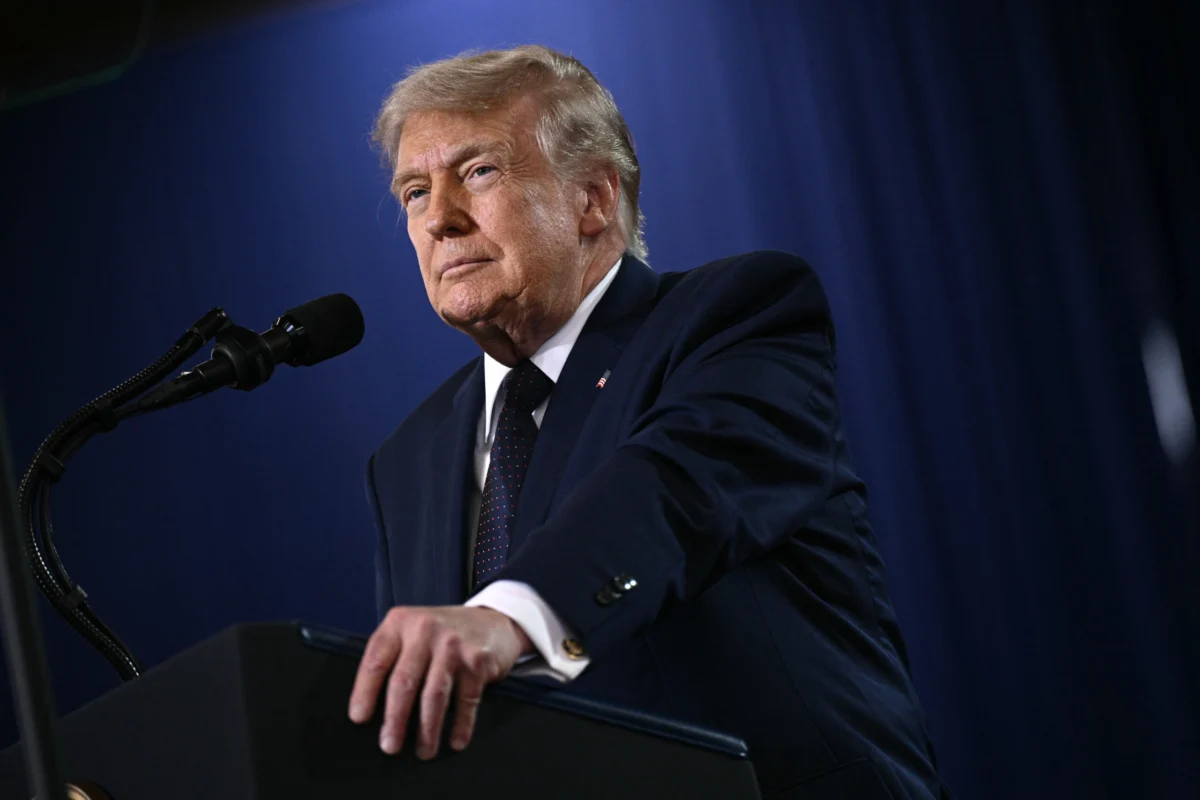
Washington D.C. – May 24, 2026 – In a significant development signaling a potential thaw in long-strained relations, United States President Donald Trump declared on Friday that any prospective agreement reached with Tehran would be characterized as "good and proper." This assertion comes as intense diplomatic mediation efforts continue behind the scenes, aiming to navigate the complex geopolitical landscape surrounding Iran’s nuclear program and regional influence. The President’s remarks, delivered during an economic address at Rockland Community College Fieldhouse in Suffern, New York, were carefully worded, offering a glimmer of optimism without detailing specific concessions or breakthroughs.
The ongoing mediation, reportedly involving several key international players, including European allies and regional intermediaries, seeks to address a multitude of issues that have fueled decades of mistrust and tension between the U.S. and Iran. At the forefront of these concerns is Iran’s nuclear program, which has been a source of international apprehension due to its potential to develop weapons-grade fissile material. Simultaneously, discussions are understood to encompass Iran’s ballistic missile development, its support for regional proxy groups, and the broader implications for Middle Eastern stability.
Background: A History of Escalation and Standoffs
The path to the current mediation efforts is paved with a history of escalating tensions and diplomatic impasses. The Joint Comprehensive Plan of Action (JCPOA), a landmark nuclear deal negotiated under the Obama administration in 2015, aimed to curb Iran’s nuclear activities in exchange for sanctions relief. However, the Trump administration withdrew the U.S. from the agreement in May 2018, citing concerns over its sunset clauses, Iran’s ballistic missile program, and its regional behavior. This withdrawal was followed by the reimposition of stringent sanctions, which severely impacted Iran’s economy.
Iran, in response to the U.S. withdrawal and subsequent sanctions, began gradually exceeding the limits set by the JCPOA on its nuclear activities, including enriching uranium to higher purities and increasing its stockpile. This rollback of commitments further intensified international scrutiny and led to a cycle of actions and reactions that brought the two nations to the brink on several occasions. Incidents such as the downing of a U.S. drone in the Strait of Hormuz in June 2019 and the U.S. drone strike that killed Iranian General Qasem Soleimani in January 2020 underscored the volatile nature of the relationship.
The current administration, while maintaining a firm stance on certain U.S. security interests, has also signaled an openness to diplomatic solutions. President Trump’s characterization of a potential deal as "good and proper" suggests a desire for an agreement that addresses core U.S. objectives while also being sustainable and verifiable. This could indicate a shift in strategy, moving away from a purely maximalist pressure campaign towards a more pragmatic engagement.
Timeline of Key Developments Leading to Current Mediation
- May 8, 2015: The JCPOA is agreed upon by Iran, the P5+1 (China, France, Russia, the United Kingdom, the United States, plus Germany), and the European Union.
- January 16, 2016: The JCPOA officially enters into force, with Iran commencing its nuclear commitments and sanctions relief being implemented.
- May 8, 2018: President Trump announces the U.S. withdrawal from the JCPOA and the re-imposition of sanctions on Iran.
- November 5, 2018: The U.S. re-imposes its most stringent sanctions on Iran, targeting its oil sector and financial institutions.
- April 8, 2019: Iran announces it will begin enriching uranium beyond the 3.67% limit set by the JCPOA.
- June 20, 2019: Iran shoots down a U.S. military drone over the Strait of Hormuz, leading to heightened tensions.
- January 3, 2020: U.S. forces conduct a drone strike in Baghdad, killing Iranian General Qasem Soleimani, head of the Quds Force of the Islamic Revolutionary Guard Corps.
- January 5, 2020: Iran announces it will abandon the last limits contained in its 2015 nuclear deal, effectively ending its commitments under the JCPOA.
- Early 2021 – Present: Reports of indirect talks and mediation efforts between the U.S. and Iran, facilitated by European and regional powers, begin to emerge, focusing on reviving aspects of the JCPOA or forging a new understanding.
Supporting Data and Iran’s Nuclear Capabilities
Understanding the context of the mediation requires an examination of Iran’s nuclear advancements since the U.S. withdrawal from the JCPOA. According to reports from the International Atomic Energy Agency (IAEA), Iran has significantly expanded its uranium enrichment activities.
- Enrichment Levels: While the JCPOA capped enrichment at 3.67%, Iran has publicly stated it is enriching uranium to higher levels, including up to 60%, which is a significant step towards weapons-grade material (around 90%). The IAEA has confirmed the presence of enriched uranium particles at higher purities in some of Iran’s facilities.
- Centrifuge Capacity: Iran has also been increasing its stockpile of centrifuges, the machines used for uranium enrichment, and has advanced its research and development of more efficient models. This includes the deployment of advanced centrifuges like the IR-2m and IR-4.
- Stockpile Size: Iran’s enriched uranium stockpile has grown considerably since 2018. While specific figures are subject to IAEA verification and reporting, estimates suggest a substantial increase, well beyond the limits previously agreed upon.
- Reduced Transparency: In parallel with its nuclear advancements, Iran has also reduced its cooperation with the IAEA in certain areas, including restricting access for inspectors and limiting the scope of inspections. This has made it more challenging for the international community to maintain a clear picture of Iran’s nuclear program.
These developments underscore the urgency and complexity of the current diplomatic push. The U.S. objective, as articulated by President Trump, is to ensure that any agreement effectively prevents Iran from acquiring nuclear weapons, a long-standing red line for the United States and its allies.
Reactions from Key Parties (Inferred and Contextual)
While official statements from all parties involved in the mediation are scarce, the general positions and concerns of key stakeholders can be inferred from past pronouncements and diplomatic signaling.
- United States: President Trump’s statement reflects an administration committed to achieving a deal that serves U.S. national interests. The emphasis on "good and proper" suggests a desire for a robust agreement that is verifiable, addresses all pathways to a nuclear weapon, and potentially includes provisions on Iran’s missile program and regional activities. U.S. officials have consistently stated that they will not allow Iran to obtain a nuclear weapon.
- Iran: Iranian leadership has expressed a willingness to return to negotiations but has also emphasized the need for sanctions relief and the lifting of all U.S. sanctions. Tehran has maintained that its nuclear program is peaceful and that its actions are a response to U.S. pressure. Any deal would likely need to provide tangible economic benefits to Iran to be considered domestically viable.
- European Allies: Countries like France, Germany, and the United Kingdom, who were signatories to the original JCPOA, have consistently advocated for diplomacy and a return to a verifiable nuclear agreement. They are likely playing a crucial role in mediating between the U.S. and Iran, seeking to bridge the gap between their respective positions. They have also expressed concerns about Iran’s ballistic missile program and regional destabilization.
- Regional Powers: Countries in the Middle East, such as Israel and Saudi Arabia, have voiced strong concerns about Iran’s nuclear ambitions and its regional activities. They are likely closely monitoring the mediation efforts, seeking assurances that any agreement will not compromise their security. Their perspectives, while not always directly involved in the U.S.-Iran talks, carry significant weight in the broader regional security calculus.
Analysis of Implications: A Path Forward or a Prolonged Stalemate?
The success of the current mediation efforts holds significant implications for regional and global security.
- De-escalation of Tensions: A successful agreement could lead to a significant de-escalation of tensions between the U.S. and Iran, reducing the risk of military conflict in the Middle East. This could also have a positive impact on oil markets, which are often sensitive to geopolitical instability in the region.
- Nuclear Non-Proliferation: A verifiable agreement that curbs Iran’s nuclear program would bolster the global non-proliferation regime and provide greater assurance that Iran will not develop nuclear weapons.
- Economic Recovery for Iran: The lifting of sanctions, a key demand for Iran, could lead to economic recovery and improved living standards for the Iranian population, potentially fostering greater internal stability.
- Regional Stability: While a U.S.-Iran agreement might address some security concerns, the broader regional issues, including proxy conflicts and the influence of various regional actors, will likely remain complex and require ongoing diplomatic engagement. The extent to which the mediation addresses these broader issues will be critical for long-term regional stability.
However, the path forward is fraught with challenges. The deep-seated mistrust, the complexity of the issues at hand, and the potential for spoilers on all sides mean that a successful resolution is far from guaranteed. The President’s cautious optimism suggests an awareness of these hurdles, while also signaling a genuine desire to find a diplomatic pathway. The coming weeks and months will be critical in determining whether these intensified mediation efforts will culminate in a "good and proper" agreement or whether the region will continue to navigate a precarious state of uncertainty. The world will be watching closely as these delicate diplomatic maneuvers unfold.