Jono Maryono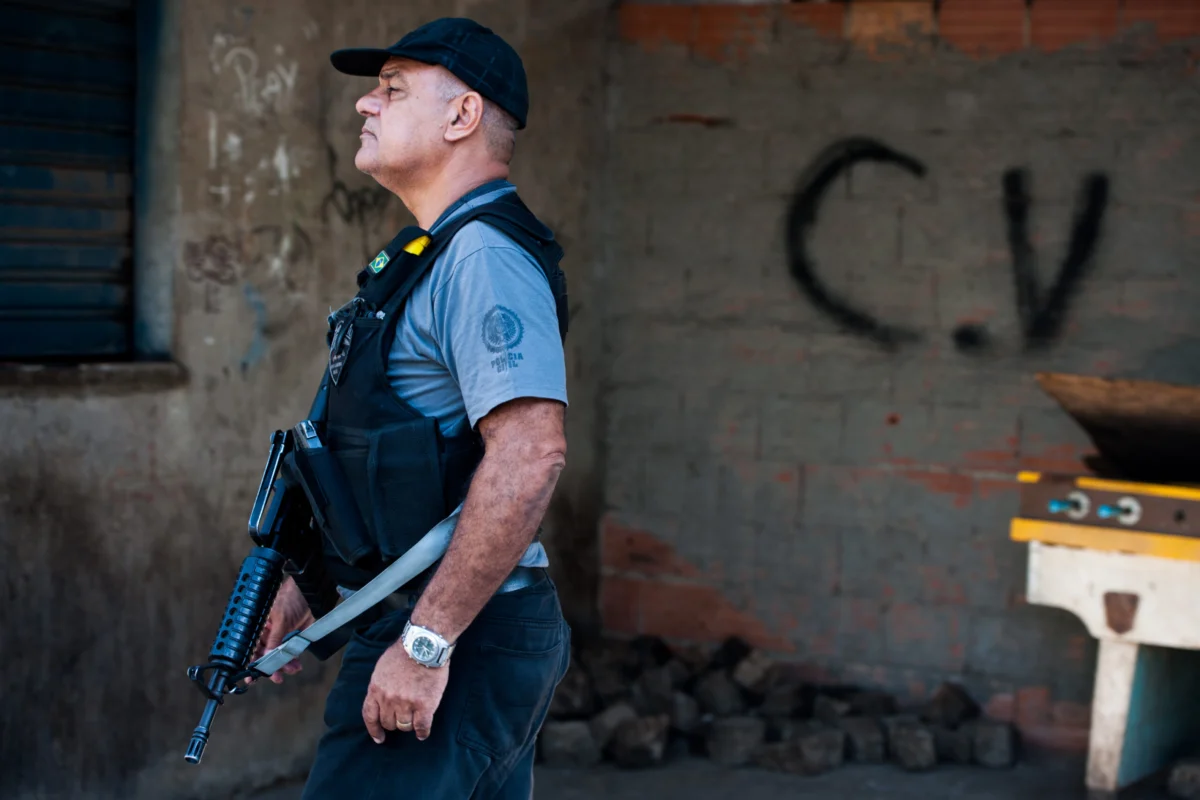
The United States has officially announced its intention to designate two of Brazil’s most powerful criminal organizations, the Primeiro Comando da Capital (PCC) and Comando Vermelho, as Foreign Terrorist Organizations (FTOs). This move, set to take effect on June 5, signifies a significant escalation in the Trump administration’s strategy to broaden the definition of terrorism to encompass transnational criminal enterprises. Secretary of State Marco Rubio confirmed the designations on Thursday, emphasizing the administration’s commitment to safeguarding national security interests and disrupting the financial lifelines of what it terms "violent narco-terrorists." While already categorized as Specially Designated Global Terrorists (SDGTs) under the International Emergency Economic Powers Act (IEEPA), the FTO designation carries more stringent sanctions, including a near-complete prohibition on financial transactions and travel for individuals associated with the groups.
A Strategic Shift in Counter-Terrorism Policy
The designation of the PCC and Comando Vermelho marks a continuation of a policy trend initiated during Donald Trump’s previous presidency, which sought to blur the lines between organized crime and terrorism. This approach, critics argue, serves as a pretext to expand American military and economic influence across the Western Hemisphere, echoing the historical tenets of the Monroe Doctrine, now re-envisioned by some as the "Donroe Doctrine." The stated rationale for these designations is to protect American citizens by impeding the flow of illicit drugs and dismantling the financial networks that fuel these operations. Secretary Rubio articulated this stance in a statement, asserting, "The Trump Administration will continue to use all available tools to protect our nation and our national security interests by keeping illicit drugs off our streets and disrupting the revenue streams funding violent narco-terrorists."
Background and Chronology of the Designations
The groundwork for this significant announcement was laid over a period of intensified engagement between the Trump administration and figures within Brazil’s political landscape. Prior to the official declaration, reports indicated that the Trump administration had been actively considering such measures. This culminated in a recent meeting at the White House where Senator Flavio Bolsonaro, a prominent political figure in Brazil and the son of former President Jair Bolsonaro, reportedly lobbied President Trump directly for the FTO designations. This meeting followed a series of diplomatic exchanges and public pronouncements from both sides regarding the threat posed by Brazilian criminal syndicates.
The designation process itself is not new to the Trump administration. Throughout his first term, and now in his second, there has been a consistent effort to label various Latin American criminal networks with terrorist designations. For instance, in early 2026, the administration had already placed the PCC and Comando Vermelho on the SDGT list, a precursor to the more restrictive FTO status. The move to an FTO designation signifies a more aggressive stance, implying a greater perceived threat to U.S. interests and potentially paving the way for more direct U.S. intervention in combating these groups.
The Growing Power of Brazilian Criminal Networks
The Primeiro Comando da Capital (PCC) and Comando Vermelho are not mere street gangs; they are sophisticated, transnational criminal organizations with a deeply entrenched presence across Brazil and extending into neighboring countries and beyond. The PCC, founded in the São Paulo prison system in the early 1990s, has evolved into one of the largest and most powerful criminal factions in Latin America. It controls a vast network of illicit activities, including drug trafficking, arms smuggling, extortion, and money laundering. Its influence extends to controlling segments of the prison system, dictating terms for inmates and coordinating criminal operations from behind bars.
Comando Vermelho, originating in Rio de Janeiro’s favelas in the 1970s, is another formidable force. It has a long history of violence and has been implicated in numerous high-profile criminal activities, including large-scale drug trafficking, armed robberies, and political corruption. Together, these two organizations are estimated to command tens of thousands of members and generate billions of dollars annually, posing a significant challenge to public safety and state authority in Brazil. Their operational reach includes sophisticated logistical capabilities, international money laundering schemes, and the ability to corrupt law enforcement and political officials.
Implications for Brazilian Politics and Sovereignty
The timing of this announcement is particularly sensitive, occurring amidst a fiercely contested presidential election in Brazil. The decision to label these powerful criminal entities as terrorist organizations is poised to send shockwaves through the nation’s political landscape. President Luiz Inácio Lula da Silva, currently seeking a fourth non-consecutive term, has reportedly expressed reservations about the FTO designation, fearing its potential repercussions. His administration has previously attempted to dissuade the Trump administration from pursuing this path, emphasizing the potential for unintended consequences.
A primary concern for President Lula’s government is that the FTO label could be weaponized, inadvertently penalizing legitimate businesses, financial institutions, and even victims of extortion who may have had any form of contact with the designated groups. This could lead to severe financial penalties and reputational damage, impacting Brazil’s economic stability. Furthermore, President Lula has voiced concerns about increasing foreign interference in Latin America, a sentiment amplified by recent events, including the U.S. abduction of Venezuelan President Nicolas Maduro in January 2026. The FTO designation could be perceived by some in Brazil as another manifestation of undue U.S. influence.
Conversely, Senator Flavio Bolsonaro, a staunch ally of former President Jair Bolsonaro and a close associate of the Trump administration, has actively championed the FTO designation. His meeting with President Trump shortly before the announcement underscores the political alignment on this issue. Flavio Bolsonaro’s campaign platform often emphasizes a tough stance on crime and security, and aligning with the U.S. on counter-terrorism could bolster his image among voters concerned about public safety. This dynamic highlights a clear division in Brazil’s political discourse regarding foreign policy and national security.
Economic and Security Ramifications
The FTO designation carries significant economic implications for Brazil. U.S. financial institutions will be required to conduct enhanced due diligence on any transactions involving individuals or entities that might be linked to the PCC or Comando Vermelho. This could lead to a chilling effect on foreign investment and international trade, as businesses become wary of inadvertently violating U.S. sanctions. The blocking of U.S. assets for these groups, while intended to cripple their operations, could also disrupt legitimate economic activities in regions where these organizations exert influence.
From a security perspective, the designation signals a potential for increased U.S. involvement in counter-narcotics and anti-crime operations in Brazil. While the extent of this involvement remains to be seen, it could range from enhanced intelligence sharing and training to more direct operational support. This aligns with the broader strategy of the Trump administration to project American power and influence in regions deemed strategically important. However, it also raises questions about Brazilian sovereignty and the potential for unintended consequences, such as escalating violence or the militarization of law enforcement.
Public Safety Concerns and Lula’s Strategy
The issue of public safety is a dominant concern in the upcoming Brazilian presidential election, with polls indicating a tight race between President Lula and Senator Flavio Bolsonaro. Recent violent clashes between law enforcement and criminal groups have intensified this debate. For instance, a police raid in Rio de Janeiro in October 2025 resulted in over 120 deaths, and another operation in March 2026 claimed at least eight lives. These incidents have drawn criticism from human rights advocates who argue that decades of militarized confrontations have exacerbated violence and led to widespread abuses.
Sociologist and public safety expert Luis Flavio Sapori of the Pontifical Catholic University of Minas Gerais criticized the prevailing approach, stating, "Armed confrontation with young drug traffickers from the outskirts is ineffective and fails to deal with the complexity of money laundering and its links to financial crime." In response to these challenges, President Lula’s administration launched a $2 billion initiative in March 2026 aimed at dismantling the financial infrastructure of criminal networks, disrupting arms trafficking, improving the prison system, and enhancing homicide investigations. This comprehensive approach seeks to address the root causes of crime and violence, rather than solely relying on punitive measures.
Reactions and Future Outlook
The designation has elicited varied reactions within Brazil. Celso Amorim, a key foreign affairs advisor to President Lula, issued a cautionary statement, warning that the U.S. should not leverage the FTO designation to infringe upon Brazilian sovereignty. "Organized crime is an evil that must be fought. International cooperation is welcome, especially in matters of money laundering and arms trade," Amorim stated. However, he unequivocally added that any "pretext for intervention" would be "unacceptable." This sentiment reflects a broader desire within Brazil for international cooperation on crime while maintaining firm control over national affairs.
The long-term implications of this designation remain to be seen. It represents a significant assertion of U.S. foreign policy in Latin America and a bold move to redefine the parameters of counter-terrorism. For Brazil, it presents a complex challenge, requiring a delicate balancing act between addressing domestic security concerns, navigating international relations, and safeguarding its sovereignty. The upcoming presidential election will likely be heavily influenced by these developments, as candidates grapple with the dual pressures of public safety and geopolitical sensitivities. The U.S. decision has undoubtedly injected a new layer of complexity into Brazil’s ongoing efforts to combat organized crime and ensure a stable future.