
 Reynand Wu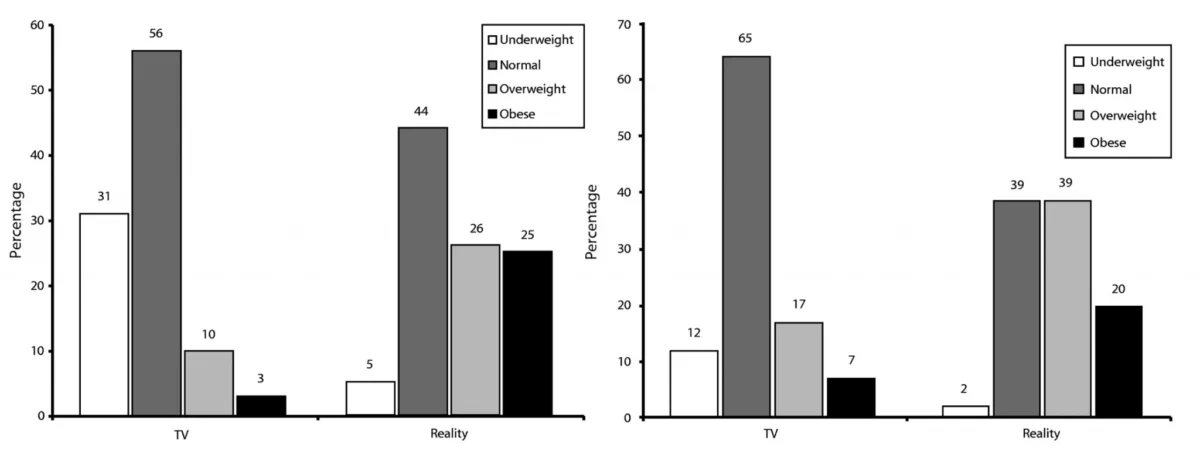
The landscape of modern media, particularly television, has long been critiqued for its disproportionate and often demeaning portrayal of individuals who do not conform to a singular, slender beauty standard. Research consistently demonstrates that fat characters are frequently relegated to one-dimensional roles, serving as punchlines, villains, or background figures whose stories and identities are rarely afforded depth or significance. A pivotal study by Tzoutzou et al. illuminated this stark reality, revealing that among 36 compliments related to appearance directed at women in televised content, every single one was bestowed upon thin women. No positive message was observed for women categorized as having an average or overweight body type. The pattern extended to male characters, with only one overweight individual receiving an affirmative message regarding their appearance, underscoring a systemic bias embedded within narrative structures and character development.
This selective affirmation on screen transmits a powerful, albeit often subconscious, message to audiences: external beauty is exclusively synonymous with thinness, effectively marginalizing anyone who deviates from this restrictive definition. Viewers, particularly impressionable young individuals, can internalize this "thin ideal," which can subsequently erode self-esteem and foster body dissatisfaction, especially if their physical appearance does not align with the celebrated standard. The consistent exposure to negative portrayals and the absence of positive reinforcement for diverse body types can significantly influence how individuals perceive their own bodies, contributing to a broader crisis of body image in society.
The Erasure of Depth: Caricatures and the Absence of Narrative Agency
Beyond the scarcity of positive representation, the fundamental issue lies in the reduction of fat characters to mere caricatures. Their roles often lack the complexity, emotional depth, and personal growth afforded to their thinner counterparts. This narrative shorthand deprives audiences of relatable, multifaceted characters, instead offering stereotypes that reinforce harmful societal prejudices. Such portrayals contribute to a dehumanizing effect, implying that the identity of a larger-bodied person is intrinsically tied to their weight, overshadowing any other character traits, aspirations, or relationships.
Historically, media representation of larger bodies has been problematic, often serving to reinforce prevailing social anxieties about weight and health. From the early days of cinema to the golden age of television, fat characters have frequently been cast in roles that either mock their physical appearance or attribute negative moral qualities to them. This long-standing tradition has created a cultural lexicon where certain body types are automatically associated with specific, often undesirable, characteristics.
The Stark Reality of Underrepresentation: A Decades-Long Disparity
The problem of negative portrayal is compounded by a significant issue of underrepresentation. Data consistently shows that larger bodies are considerably less prevalent on television compared to their actual proportion in the general population. A seminal study by Brownell et al. in 2003, comparing female and male body types on television to those in reality during 1999-2000, starkly illustrated this disparity. The research indicated a significant overrepresentation of thin characters and a dramatic underrepresentation of average and overweight individuals across both genders. While these statistics are decades old, subsequent research and anecdotal observation suggest that despite some incremental progress in recent years, the gap largely persists, albeit perhaps with more nuanced forms of exclusion. Modern studies continue to highlight that characters with higher body mass indexes (BMIs) are less likely to be central figures, receive romantic storylines, or be portrayed as competent and successful.
This persistent gap creates a skewed reality on screen, where the diversity of human bodies is largely invisible. For viewers, this can lead to feelings of alienation and invisibility, further solidifying the notion that their body type is not valued or worthy of representation in mainstream culture. The lack of diverse body types also limits the range of stories that can be told, perpetuating a narrow cultural imagination.
The Comic Relief and the Culpable Villain: Reinforcing Harmful Tropes
The dehumanization of fat individuals on television frequently manifests in two primary archetypes: the comedic sidekick and the malevolent villain. In comedy, characters with larger bodies are disproportionately subjected to jokes that derive humor from their physical size, eating habits, or perceived clumsiness. Research indicates that overweight women, for instance, are approximately twice as likely to be the subject of a joke compared to their thinner counterparts. These comedic portrayals often feature smaller roles, fewer romantic relationships, and a marked absence of positive interactions compared to thin characters. The humor often lands "at" them rather than "with" them, transforming their bodies into objects of ridicule rather than integral parts of a complex character. This constant stream of body-shaming humor normalizes derogatory attitudes towards larger individuals, making it acceptable to mock or dismiss them in real-life interactions.
Equally concerning is the prevalent use of fat characters as antagonists. A study by Himes and Thompson revealed a disturbing trend in children’s media, finding that "obesity was equated with negative traits (evil, unattractive, unfriendly, cruel) in 64% of the most popular children’s videos." Iconic examples abound in popular culture, such as Ursula from The Little Mermaid or the Queen of Hearts from Alice in Wonderland, whose physical dimensions are often visually linked to their villainy. This narrative strategy subtly, yet powerfully, connects larger body sizes with moral corruption, malevolence, and other undesirable qualities. By demonizing larger bodies, creators contribute to a dangerous cultural narrative that equates physical appearance with inherent goodness or badness, fostering prejudice from a young age. This trope denies fat characters the complexity of human experience, reducing them to visual shorthand for evil, thereby stripping them of their humanity.
Profound Psychological and Societal Repercussions for Viewers
The relentless stream of negative and underrepresented portrayals of larger bodies on television has profound psychological and societal consequences for audiences. The internalization of these harmful messages can begin remarkably quickly. A study by Fouts and Burggraf found that as little as 30 minutes of television viewing can negatively impact a young woman’s perception of her own body, potentially leading to a range of external struggles. This rapid internalization underscores the potency of media influence on self-image.
The Tzoutzou et al. study further highlighted that young girls frequently acknowledged the media’s significant role in shaping their desire to be thin and conform to prevailing beauty standards. This desire often translates into frequent dieting and, in more severe cases, can contribute to the development of disordered eating patterns. Many eating disorders are rooted in the pursuit of unrealistic body standards, an image relentlessly amplified and normalized by mass media. Health professionals and mental health experts consistently link media exposure to body dissatisfaction, anxiety, and depression among individuals struggling with body image issues. The pressure to conform to an unattainable ideal can lead to chronic self-criticism, avoidance of social situations, and a diminished quality of life.
Beyond self-esteem, these misrepresentations can instill a fear in viewers that they will face similar sexist or prejudiced treatment in their own lives if they do not fit the prescribed body norm. This anticipatory discrimination can lead to self-surveillance, attempts to alter one’s body, and a reluctance to engage fully in life for fear of judgment. The cumulative effect of these distorted depictions is to make female viewers, in particular, feel worse about their appearance and anticipate negative reactions from others, even when these fears are rooted in fictional and often exaggerated television narratives.
Calls for Change: A Collective Demand for Authentic Representation
The growing awareness of media’s impact on body image has spurred increasing calls for more authentic and inclusive representation. Academics, body positivity advocates, and health organizations are united in urging media producers to reconsider their approach to character development and casting. Scholars emphasize the ethical responsibility of media creators to reflect the diversity of the human population accurately and respectfully, moving beyond simplistic stereotypes.
Advocacy groups like the National Association to Advance Fat Acceptance (NAAFA) and the Body Positive movement have long championed the need for media to showcase a wider range of body types in positive, multi-dimensional roles. They argue that true inclusivity means not just showing more diverse bodies, but also allowing those bodies to be central to narratives, to experience love, success, failure, and growth, just like any other character. These organizations frequently highlight that positive representation can serve as a powerful counter-narrative to the prevailing thin ideal, fostering greater self-acceptance and reducing the psychological burden on viewers.
Some progress has been observed in recent years, with a handful of shows and films consciously striving for more diverse body representation. However, these instances often remain outliers rather than the norm. Media executives and creators are increasingly being challenged to move beyond tokenism and integrate body diversity organically into their storytelling. This involves conscious casting choices, writing characters with depth regardless of their physical appearance, and actively challenging entrenched stereotypes in writers’ rooms. The conversation is shifting from merely showing diverse bodies to celebrating them and granting them full narrative agency.
Forging an Inclusive Future for Television
Television, at its best, serves as a mirror reflecting society and a window into new possibilities. It is a space designed for entertainment, escapism, and connection. However, for a significant portion of the audience, the current media landscape can be a source of discomfort and judgment rather than enjoyment. When viewers feel that their bodies are being scrutinized, mocked, or simply rendered invisible by the very shows they consume, the fundamental purpose of entertainment is undermined.
The imperative is clear: all bodies deserve to feel seen, valued, and authentically represented within the expansive world of television. This means developing characters whose worth is not contingent on their size, whose romantic lives are not defined by societal prejudices, and whose comedic moments arise from their wit and personality, not their physical form. It requires a fundamental shift in how creators conceive of beauty, health, and desirability, moving away from monolithic ideals towards a celebration of genuine human diversity.
Creating an inclusive media environment is not merely an act of political correctness; it is a critical step towards fostering a healthier, more empathetic, and more representative society. When television embraces the full spectrum of human experience, including the vast array of body types, it provides a more authentic reflection of the world and empowers all viewers to feel good about themselves. The future of television must be one where every individual can sit back, relax, and truly enjoy the stories unfolding on screen, secure in the knowledge that their body, like all bodies, has a legitimate and valued place in the narrative.







