Jono Maryono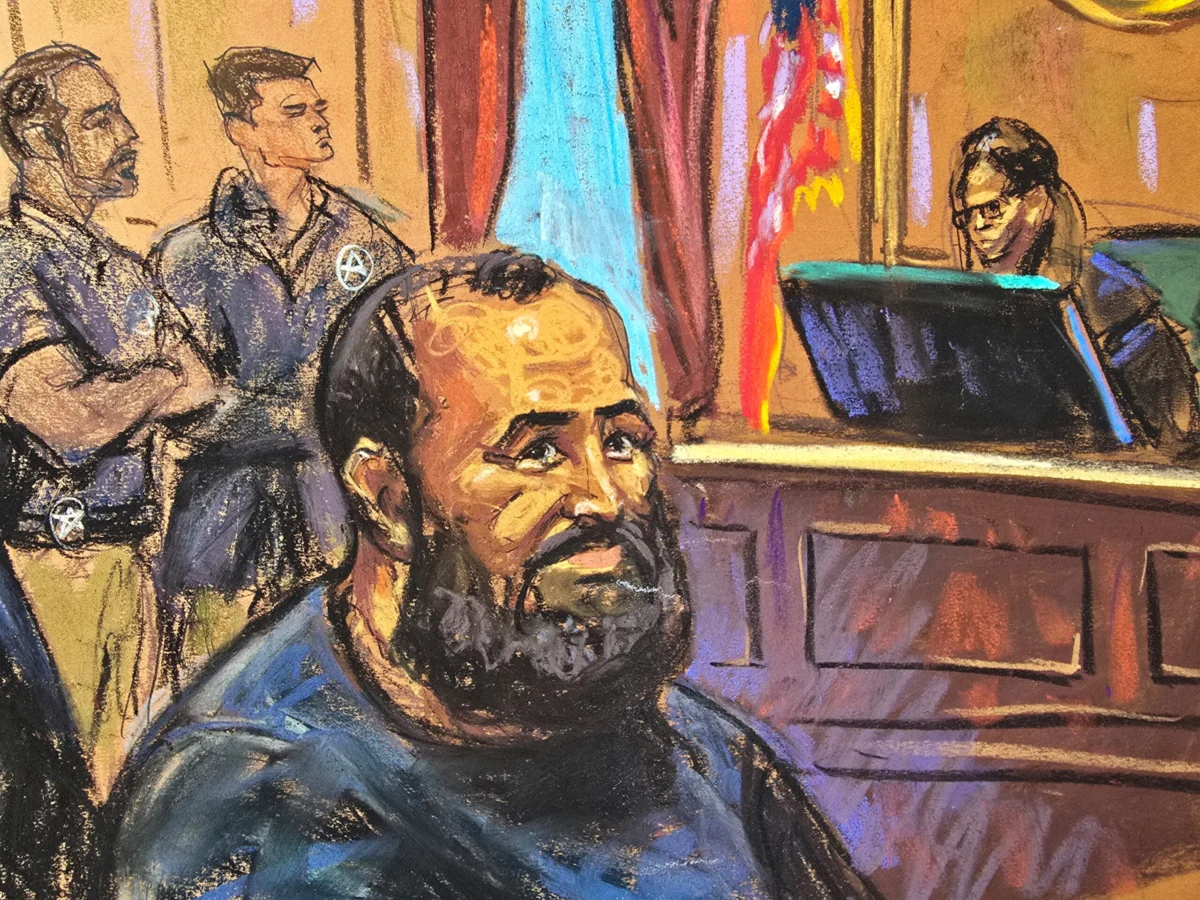
The United States Department of Justice has announced the arrest and charging of Mohammad Baqer Saad Dawood al-Saadi, a 32-year-old Iraqi national, who is alleged to be a senior commander within an Iran-backed armed group responsible for orchestrating a significant wave of international terror attacks. A criminal complaint unsealed on Friday in a Manhattan federal court details al-Saadi’s alleged involvement in at least 18 attacks and attempted attacks across the United States, Canada, and Europe. These actions, according to US court filings, were purportedly carried out with the objective of compelling the United States and Israel to cease their recent military operations against Iran.
FBI Director Kash Patel confirmed the arrest, describing al-Saadi as "another high-value target responsible for mass global terrorism." Al-Saadi was apprehended overseas and subsequently transported to the United States. Patel lauded the operation as the latest success in the administration’s "historic work to bring terrorists to justice." In a public statement on the social media platform X, Patel praised the meticulous tracking and apprehension as a "righteous mission executed brilliantly" by FBI agents and tactical units. He also extended specific commendation to US Ambassador Tom Barrack in Turkiye for his leadership in the joint international operation that facilitated the suspect’s return to American soil. New York City Police Commissioner Jessica Tisch echoed the sentiment, stating that the case "puts into stark relief the global threats posed by the Iranian regime and its proxies."
Who is Mohammad Baqer Saad Dawood al-Saadi?
Federal prosecutors have identified al-Saadi as a high-level leader within Kataib Hezbollah, an Iraq-based militant group officially designated by the U.S. government as a "foreign terrorist organization." The Federal Bureau of Investigation (FBI) asserts that al-Saadi has been an active operative within the group since at least 2017, working in close collaboration with Iran’s Islamic Revolutionary Guard Corps (IRGC) to advance its strategic objectives in the region.
Investigators allege that al-Saadi cultivated and maintained personal relationships with prominent military figures, including the late Qassem Soleimani, former commander of the IRGC’s Quds Force. Evidence suggests al-Saadi openly utilized social media platforms like Snapchat and Telegram to disseminate the group’s propaganda and to celebrate acts of violence, including bombings.
Following the commencement of intensified military conflict involving the U.S., Israel, and Iran in late February 2026, prosecutors contend that al-Saadi assumed a pivotal role in orchestrating international retaliatory actions. This coordination reportedly occurred through a designated front organization, which was tasked with activating cells—often utilizing impressionable teenage operatives—across Europe and Canada.
A Chronology of Alleged Terrorist Activities
The criminal complaint unsealed in Manhattan federal court outlines a disturbing pattern of alleged international plots directed by al-Saadi, demonstrating a calculated escalation of violence and a broad geographical reach.
- Mid-March 2026: The complaint details a firebombing incident targeting a Bank of New York Mellon building in Amsterdam. This attack is presented as a direct consequence of al-Saadi’s alleged directives.
- Concurrent with Amsterdam Attack: Simultaneously, an attack was carried out at the U.S. consulate in Toronto, Canada. While details are still emerging, this incident is linked to the same network and operational command attributed to al-Saadi.
- Early April 2026: A stabbing incident occurred in London, England, resulting in the wounding of an American citizen. This act of violence is also cited in the complaint as part of the coordinated campaign orchestrated by the defendant.
- Late April 2026: French authorities successfully thwarted a coordinated attack allegedly planned by al-Saadi against a Bank of America office in Paris. The discovery of a sophisticated homemade petrol and firework bomb, reportedly packed with 0.65 kilograms (approximately 23 ounces) of explosives, underscores the severity of the threat that was neutralized.
- May 2026 (prior to arrest): Al-Saadi reportedly shifted his focus to U.S. soil. Working in conjunction with an FBI informant and an undercover law enforcement officer, al-Saadi is accused of offering $10,000 in cryptocurrency to fund simultaneous attacks targeting a New York City synagogue and Jewish community centers located in California and Arizona.
Court documents further reveal chilling exchanges between al-Saadi and the informant. Al-Saadi allegedly stated his willingness "to kill people" and, after making an initial $3,000 cryptocurrency down-payment, sent a text message to the undercover officer that read, "I wanna see good news tonight… not tomorrow bro." This statement is interpreted as an urgent demand for immediate violent action.
The Charges and Legal Proceedings
Mohammad Baqer Saad Dawood al-Saadi appeared in a Manhattan federal court on Friday, facing a six-count criminal complaint. The federal charges levied against him include:

- Conspiracy to commit acts of terrorism transcending national boundaries.
- Use of explosive materials in furtherance of a crime of violence.
- Attempted use of a weapon of mass destruction.
- Destruction of property by means of fire and explosives.
- Conspiracy to commit offenses against the United States.
- Providing material support to a designated foreign terrorist organization.
According to reports from the Associated Press, al-Saadi displayed a calm demeanor, smiling throughout his initial court appearance, and did not make any verbal statements. He was not required to enter a plea during this preliminary hearing. He will remain in federal custody pending further legal proceedings, although he retains the right to request a bail hearing at a later date.
Through his defense attorney, Andrew Dalack, al-Saadi has asserted his status as a "political prisoner" and a "prisoner of war." Dalack argued that the U.S. government’s prosecution is motivated solely by his past association with Qassem Soleimani. Furthermore, Dalack highlighted that al-Saadi has been held in solitary confinement since his arrival at a federal jail in Brooklyn on Thursday night, characterizing this treatment as "unusual."
If convicted on the terrorism and explosives-related charges, al-Saadi faces a maximum potential penalty of life imprisonment in a federal penitentiary. The legal proceedings are expected to be complex, involving international cooperation and the presentation of extensive evidence detailing the alleged transnational criminal network.
Broader Implications and Geopolitical Context
The arrest of Mohammad Baqer Saad Dawood al-Saadi carries significant geopolitical weight, underscoring the persistent threat of state-sponsored terrorism and the intricate web of proxy warfare that characterizes the current international security landscape. The involvement of Iran-backed Kataib Hezbollah, an organization with deep ties to the Islamic Revolutionary Guard Corps (IRGC), directly implicates the Iranian regime in a campaign of international destabilization.
The alleged motive behind these attacks—to compel the U.S. and Israel to halt military actions against Iran—reflects a broader regional power struggle. The recent escalation of hostilities in the Middle East, particularly concerning Iran’s nuclear program and its support for various militant factions, has created a volatile environment. This arrest serves as a stark reminder of how these regional tensions can manifest as direct threats to civilian populations and infrastructure across the globe.
The utilization of front groups and the alleged recruitment of young individuals, including teenagers, as operatives highlights a disturbing tactic employed by terrorist organizations to obfuscate their command structures and exploit vulnerabilities. This modus operandi poses unique challenges for law enforcement and intelligence agencies, requiring sophisticated surveillance and interdiction strategies.
The successful international collaboration involved in al-Saadi’s apprehension—spanning multiple continents and involving various law enforcement and diplomatic bodies—demonstrates the critical importance of global cooperation in combating terrorism. The seamless transfer of intelligence and the coordinated operational execution, as evidenced by the involvement of U.S. Ambassador Barrack in Turkiye, are vital components in disrupting transnational terrorist networks.
The implications of this case extend beyond the immediate legal proceedings against al-Saadi. It is likely to intensify scrutiny on Iran’s activities and its network of proxy groups, potentially leading to increased diplomatic pressure, sanctions, and counter-terrorism measures. The U.S. Department of Justice’s public affirmation of its commitment to pursuing terrorists, regardless of their location, sends a clear message to hostile actors and reaffirms the nation’s resolve in safeguarding its citizens and allies from international threats.
The ongoing investigation will undoubtedly seek to uncover the full extent of al-Saadi’s network, identify other co-conspirators, and map the financial and logistical support mechanisms that enabled these alleged attacks. The prosecution of al-Saadi represents a significant victory for international counter-terrorism efforts, but it also underscores the persistent and evolving nature of the threats faced by democratic societies. The case serves as a critical case study in the ongoing battle against religiously and politically motivated violence, highlighting the complex interplay of state actors, non-state militant groups, and the devastating impact of their actions on global security.