Reynand Wu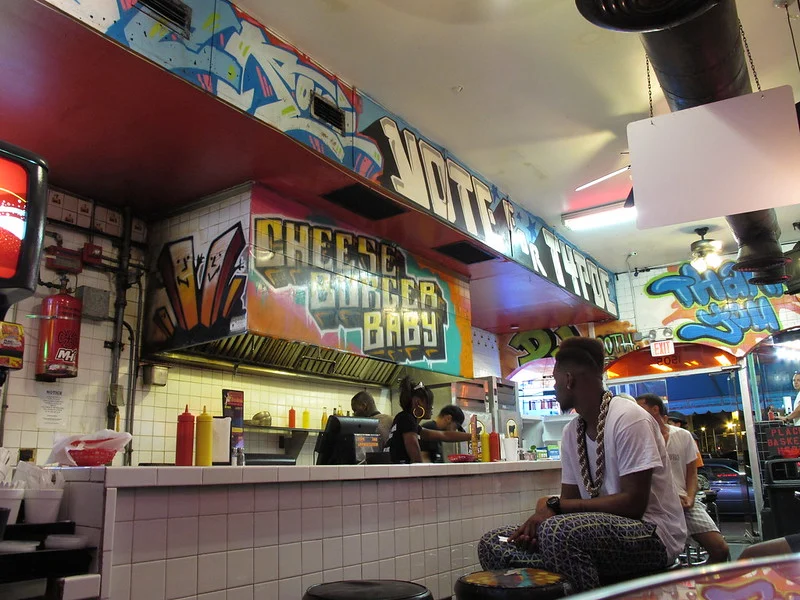
One of the biggest challenges and joys in teaching Introduction to Sociology lies in making abstract concepts such as social construction, cultural objects, or bureaucracy tangible and intuitive for students. The core value of sociology as a general education course is to equip students with the analytical frameworks necessary to understand and navigate the complexities of the world around them. For instance, drawing attention to the unique skills and challenges inherent in traversing a large bureaucratic system, such as a university, provides practical utility that transcends specific academic majors.
The Pedagogical Imperative: Unveiling the Invisible in Everyday Life
Sociology strives to demystify the social forces that shape human experience, often focusing on structures so ubiquitous they become invisible. Concepts like social construction, for example, posit that many aspects of our reality—from gender roles to national borders—are not inherent or natural but are products of human interaction and cultural agreement. Similarly, cultural objects are not merely inert items but repositories of meaning, reflecting the values, beliefs, and practices of a society. Bureaucracy, a concept extensively explored by Max Weber, describes a highly rationalized and hierarchical organizational structure characterized by rules, impersonality, and specialized divisions of labor. While these ideas are fundamental to sociological inquiry, their very omnipresence in modern life often makes them difficult for students to recognize and critically analyze.
Max Weber’s foundational work on bureaucracy, particularly his analysis of its efficiency and its potential to create an "iron cage" of rationalization, remains central to understanding modern institutions. However, the challenge in teaching his work is akin to what author David Foster Wallace termed the "This is Water" problem: fish are so steeped in water they cannot perceive it. Students, having grown up within highly bureaucratized educational systems, government agencies, and corporate structures, often find it difficult to discern the unique traits and implications of bureaucracy.
This pervasive immersion extends to nearly every aspect of daily life, including consumption. George Ritzer’s seminal work, The McDonaldization of Society (1993), articulates how the principles of the fast-food restaurant—efficiency, calculability, predictability, and control—have permeated vast sectors of modern life, from education to healthcare. The standardized point-of-sale system, the predictable menu, and the streamlined service process are now so normalized within the service industry that envisioning alternative organizational models can be genuinely difficult for many. This societal immersion underscores the need for innovative pedagogical tools that can disrupt conventional perceptions and highlight underlying social structures.
"Hamburger America": A Culinary Expedition as a Sociological Lens
It is precisely to address this pedagogical hurdle that the charming 2004 documentary Hamburger America, directed by George Motz, emerges as an unexpectedly powerful educational resource. Motz, often referred to as America’s "hamburger scholar," embarks on a cross-country journey to document unique, often family-owned, and historically significant hamburger establishments that predate or defy the standardized fast-food model. The film provides not only a fascinating glimpse into regional culinary traditions but also serves as a vivid illustration of how social arrangements can emerge and persist outside the homogenizing force of large-scale, franchised bureaucracy.
Consider the simple question: "How do you make a cheeseburger?" Ask a group of students, and the answers will likely converge around a fairly standardized image—a grilled patty, melted cheese, standard toppings, and a bun, likely reflecting the dominant fast-food paradigm. Hamburger America challenges this preconception by showcasing an astonishing array of preparation methods, ingredients, and serving styles. From steamed cheeseburgers in Connecticut to fried-onion burgers in Oklahoma, and butter burgers in Wisconsin, the documentary reveals a rich, unexpected variation in what constitutes this quintessential American dish. Each segment turns the students’ standardized answer on its head, demonstrating that even the most seemingly simple cultural objects are deeply embedded in specific social, historical, and economic contexts.
A Chronology of Culinary and Bureaucratic Evolution
To fully appreciate the sociological insights offered by Hamburger America, it is essential to contextualize the evolution of both the hamburger and the organizational structures that shape its production and consumption.
- Late 19th – Early 20th Century: Birth of the Burger and Independent Eateries. The exact origins of the hamburger are debated, but by the early 20th century, it was a common fixture at fairs, diners, and small independent eateries across the United States. These establishments were typically run by individuals or families, with unique recipes, local sourcing, and often idiosyncratic service styles.
- 1920s – 1940s: Weber’s Bureaucracy and Early Standardization. Max Weber’s comprehensive analysis of bureaucracy gained significant academic prominence during this period, offering a framework to understand the emerging rationalization of modern society. Concurrently, while independent diners thrived, early attempts at food standardization began to appear, hinting at future developments.
- Mid-20th Century: The Rise of Fast Food and McDonaldization. The post-World War II era witnessed an explosion in the fast-food industry. Innovators like McDonald’s (founded 1940, popularized with Ray Kroc’s franchising in the 1950s) pioneered the assembly-line approach to food preparation, emphasizing speed, consistency, and cost-efficiency. This period marked a profound shift towards the McDonaldization of the food service sector, profoundly altering consumer expectations and culinary landscapes.
- 1993: Ritzer’s The McDonaldization of Society. George Ritzer’s influential book formally articulated the pervasive influence of fast-food principles across society, providing a critical lens through which to examine the social costs and benefits of hyper-rationalization.
- 2004: Hamburger America Documents the Alternatives. Motz’s documentary emerged in an era where fast food had become the dominant paradigm, serving as a vital counter-narrative by showcasing the enduring resilience and unique character of independent burger joints that resist or operate outside this standardized system.
- Present Day: The Ongoing Tension. Today, the culinary landscape continues to be a battleground between the forces of global standardization and a growing consumer demand for authenticity, local sourcing, and unique dining experiences.
Beyond the Patty: Sociological Insights from the Grill
The documentary’s exploration of diverse burger styles offers a multitude of entry points for sociological discussion:
-
Regionalism and Local Culture: The variations in cheeseburger preparation are not arbitrary; they are deeply intertwined with regional identities, historical developments, and local tastes. An Oklahoma fried-onion burger, for example, emerged from the Great Depression when onions were cheap and abundant, allowing proprietors to stretch their ground beef. The "butter burger" of Wisconsin reflects the state’s dairy heritage. These distinct styles highlight how food traditions are cultural artifacts, shaped by local economies, available resources, and community preferences, serving as potent symbols of place and belonging.
-
Social Construction of Food: The documentary vividly illustrates that a "cheeseburger" is not a fixed, universal entity but a socially constructed concept. Its definition, preparation, and consumption are products of specific cultural contexts. What is considered "authentic" or "best" is entirely dependent on the social world one inhabits, challenging students to recognize the constructed nature of seemingly natural categories. This aligns perfectly with Wendy Griswold’s cultural diamond, where the cultural object (the burger) is understood in relation to its creators (the chefs, owners), receivers (the customers), and the broader social world (regional history, economy, local norms). The burger, in this framework, becomes a dynamic cultural object imbued with shared meanings.
-
Bureaucracy vs. Craftsmanship: The independent burger joints featured in Hamburger America stand in stark contrast to the bureaucratic efficiency of fast-food chains. These establishments often operate with minimal hierarchy, rely on the personal skill and intuition of the cook, and prioritize unique flavors and customer relationships over standardized processes and speed. This offers a concrete example of how social organization impacts product and service delivery, allowing students to intuitively grasp the differences between Weberian bureaucracy and alternative, more organic forms of social arrangement.
-
Segregation, De-industrialization, and Urban Planning: The film subtly touches upon the socio-economic backdrop of many of these establishments. Some burger joints have endured for generations in neighborhoods that have experienced significant demographic shifts, economic decline due to de-industrialization, or the impact of urban planning initiatives (e.g., highway construction diverting traffic). Their survival or decline often mirrors the broader economic and social health of their communities, offering insights into urban sociology and the dynamics of social inequality. The presence of long-standing establishments in historically marginalized areas can spark discussions about economic resilience, community anchors, and the legacy of segregation.
-
Food Systems and Economic Change: The documentary implicitly contrasts localized food systems with globalized supply chains. Many independent burger joints pride themselves on using local meat or specific regional ingredients, highlighting the connection between local businesses and their immediate economic environment. This provides a springboard for discussions on food sovereignty, the impact of large agricultural corporations, and the economic challenges faced by small businesses in an increasingly globalized market. The stories of multi-generational ownership also illustrate the transmission of tradition and the adaptation to economic shifts over time.
Supporting Data and Market Dynamics
The context provided by Hamburger America is particularly salient when juxtaposed with the immense scale of the modern fast-food industry. The U.S. fast-food market alone is estimated to be worth over $300 billion annually, employing millions of individuals across tens of thousands of locations. Chains like McDonald’s, Burger King, and Wendy’s have achieved unparalleled standardization, ensuring a consistent product regardless of geographic location. This massive bureaucratic apparatus stands in stark contrast to the handful of unique, independent establishments struggling to maintain their distinct identity. While fast food offers convenience and affordability, there is a growing consumer trend towards seeking out "authentic," locally sourced, and unique dining experiences—a testament to the enduring appeal of the very places Motz spotlights. The preservation of these unique culinary traditions, therefore, is not merely about food but about safeguarding local economies, cultural heritage, and diverse social arrangements against the homogenizing pressures of globalization.
Educator and Student Perspectives: An "Aha!" Moment
For sociology educators, Hamburger America provides a refreshing and engaging alternative to purely theoretical texts. The visceral experience of watching the documentary, coupled with the relatable subject matter of food, creates an immediate connection for students. Many instructors have noted the "Aha!" moment when students begin to see how abstract sociological theories manifest in concrete, everyday examples. This visual and narrative approach transforms complex ideas into intuitive understandings, making concepts like social construction palpable.
Students, initially unaware of the intricate social forces shaping their dining choices, frequently report a newfound appreciation for the diversity of American culture and the often-unseen structures that govern their lives. The documentary empowers them to critically analyze their own consumption habits and the broader implications of a society increasingly shaped by efficiency and standardization. George Motz, through his dedicated work, implicitly advocates for the value of these local establishments not just as purveyors of food but as living museums of American social history and cultural diversity. His passion underscores the importance of documenting and celebrating the unique social fabric tied to these disappearing culinary traditions.
Broader Implications for General Education and Societal Understanding
The use of Hamburger America in sociology classrooms carries significant broader implications for general education. It demonstrates that critical thinking skills can be honed through engagement with popular culture, making academic inquiry more accessible and relevant. By encouraging students to look beyond the surface of everyday phenomena like a cheeseburger, educators foster an ability to deconstruct complex social realities. This approach cultivates cultural appreciation, allowing students to recognize and value diversity within seemingly homogeneous national cultures. Furthermore, it enhances economic literacy by illustrating the distinct impacts of large corporations versus small businesses on local communities.
Ultimately, this pedagogical strategy reinforces the enduring relevance of sociology. It provides a powerful framework for understanding the intricate interplay of culture, history, economics, and social organization. In an increasingly standardized world, recognizing and appreciating the rich tapestry of human social arrangements—as beautifully exemplified by the humble, yet endlessly varied, cheeseburger—is not merely an academic exercise but a vital step towards fostering a more nuanced and critically engaged citizenry. It reminds us that even in the most ordinary objects, profound sociological truths can be found, waiting to be discovered.