
 Reynand Wu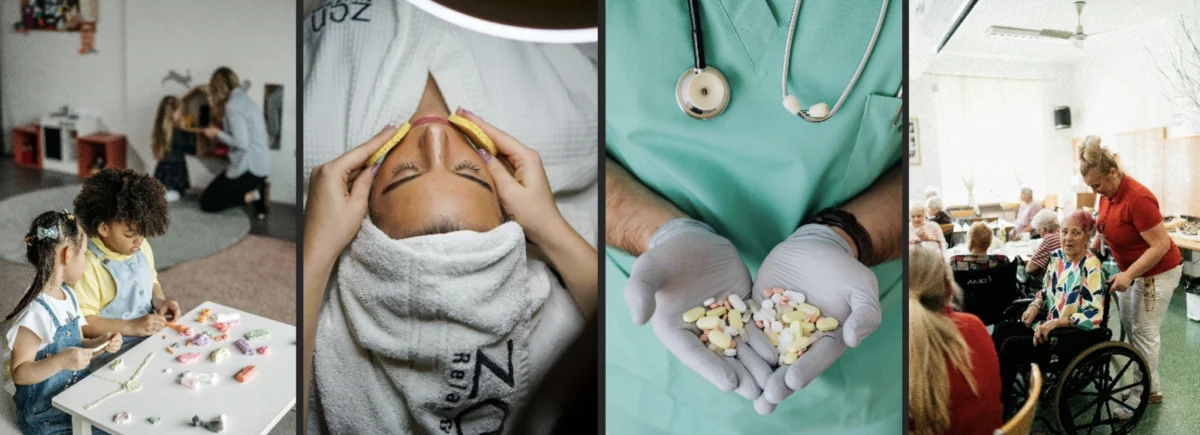
Contemporary relationships, from intimate partnerships to broader social contracts, are increasingly exhibiting distress signals often attributed to issues such as communication breakdowns, emotional distance, and financial pressures. However, a growing body of sociological and philosophical inquiry suggests these common problems are not root causes but rather symptoms of a deeper, systemic deficit: a profound societal forgetting, or even an unlearned capacity, for genuine "care." This perspective challenges the prevailing individualistic narratives promoted by the self-help industry and superficial digital interactions, advocating instead for a re-centering of care as a collective and relational imperative.
The Evolving Landscape of Modern Relationships
Observers across various demographics, particularly those navigating the complexities of middle age, frequently encounter individuals grappling with significant relationship commitments that are faltering. While the immediate concerns voiced typically revolve around a lack of effective communication, a perceived absence of emotional intimacy, and escalating financial stress, these issues have proven remarkably resistant to conventional remedies. Despite earnest efforts by individuals to consume self-help literature, engage with relationship podcasts, work through guided programs, and seek both spiritual and professional counseling, many find themselves trapped in a cycle of recurring problems. This widespread inefficacy of traditional interventions points to an underlying issue that these resources fail to address.
Statistical data underscores the pervasive nature of these challenges. According to a 2023 study by the American Psychological Association, financial disagreements are cited as a leading cause of conflict in relationships, with 7 out of 10 adults reporting money as a major source of stress. Concurrently, research from the Pew Research Center consistently highlights communication difficulties and a lack of shared interests as significant contributors to marital dissatisfaction and divorce rates, which, while fluctuating, remain substantial, with approximately 39% of marriages in the U.S. ending in divorce. Emotional intimacy, though harder to quantify, is frequently reported as a missing component in long-term relationships, contributing to feelings of loneliness even within partnerships. These figures suggest a pervasive vulnerability within the fabric of modern relationships that transcends individual failings.
Beyond Symptoms: The Core Deficit of Care
The metaphor of a struggling houseplant offers a compelling reframe for these relationship challenges. Just as a browning leaf on a plant signifies a deeper systemic problem rather than an isolated issue, communication, intimacy, and financial stress in relationships may be mere indicators of a fundamental lack of nourishment. The core realization, articulated by sociologists and philosophers examining this phenomenon, is that these problems are not truly about the superficial symptoms themselves, but rather about a forgotten or underdeveloped capacity for "care." This encompasses not only caring about someone, which often implies a basic commitment, but critically, caring for and with oneself and others. The distinction is crucial: caring about can be passive, a mere acknowledgment of another’s existence; caring for implies active support and provision; and caring with denotes mutual, collaborative engagement and empathy.
This conceptual shift moves the focus from individual deficiencies—"poor communicator," "emotionally unavailable"—to a broader understanding of care as a relational practice that must be actively learned, cultivated, and sustained. In many contemporary contexts, the nuances of care beyond rudimentary support at life’s beginnings and ends are rarely explicitly taught or reinforced. The concept of "self-care," for instance, has been largely co-opted by capitalist marketing, transforming it into a consumerist pursuit of spa days, luxury purchases, or fleeting indulgences, rather than a genuine practice of self-attunement and well-being. Similarly, the institutionalized "healthcare" system, particularly in market-driven economies, often prioritizes efficiency and profit over a holistic, empathetic approach to patient well-being, leading many to question its inherent "caring" nature.
A Historical Lens on Care: Feminist Foundations
The concept of care as a distinct ethical and social project has deep roots in feminist scholarship, which historically sought to elevate and analyze forms of labor and emotional engagement often devalued or rendered invisible in patriarchal societies. Philosophers like Nel Noddings and Carol Gilligan, writing in the 1980s and 1990s, were instrumental in shaping the "ethics of care."
Nel Noddings, in her seminal 1984 work Caring: A Feminine Approach to Ethics and Moral Education, posited care as fundamentally relational. For Noddings, care is not merely an intention or a feeling; it is a dynamic interaction where the person receiving care must feel it and be improved by it for care to have genuinely occurred. This perspective emphasizes reciprocity and responsiveness, challenging abstract, rule-based ethical systems that often overlook the specific needs and contexts of individuals. Noddings’s framework suggests that genuine care requires an empathetic engrossment in the other’s reality and a readiness to respond appropriately to their expressed needs.
Carol Gilligan, through her work on moral development, particularly In a Different Voice (1982), argued that traditional psychological theories of moral reasoning, largely based on studies of male subjects, emphasized justice and rights, neglecting a distinct "ethics of care" often more prevalent in women’s moral decision-making. Gilligan highlighted that an ethics of care prioritizes relationships, responsiveness, and the alleviation of suffering, offering a complementary perspective to the justice-oriented approach. Together, Noddings and Gilligan laid the intellectual groundwork for understanding care not as a weakness or a secondary concern, but as a foundational human activity with profound ethical and social implications. Their scholarship provides a critical historical context for understanding why care, particularly in its relational and empathetic dimensions, has often been marginalized in broader societal discourse.
The Rise and Limitations of the Self-Help Industry

The contemporary landscape is saturated with the self-help industry, a multi-billion dollar sector that largely operates on principles drawn from psychology, offering prescriptive, often one-size-fits-all solutions. This industry thrives on marketing checklists, habit-forming strategies, and behavioral "do this" commands, promising rapid transformation and personal optimization. However, its fundamental limitation, as scholars like Edgar Cabanas and Eva Illouz argue in their 2019 book Manufacturing Happy Citizens, lies in its diagnostic approach.
Cabanas and Illouz contend that the self-help industry, particularly its manifestations on social media, frequently misdiagnoses the user’s problems. By individualizing complex societal issues, it offers superficial "hacks" that fail to address the structural sources of distress. For example, advising an exhausted worker to "just practice mindfulness" while their workplace demands remain unsustainable does little to alleviate their condition. Instead, it traps the individual in a cyclical loop of self-blame when the prescribed solution inevitably fails to yield lasting change. This phenomenon aligns with Lauren Berlant’s concept of "cruel optimism" (2011), where an attachment to an object or ideal (like happiness or perfect relationships) actually hinders one’s flourishing, creating a constant pursuit that never quite delivers. Similarly, Jack Halberstam’s "toxic positivity" (2011) describes a cultural pressure to maintain a cheerful disposition, often suppressing legitimate negative emotions and preventing genuine engagement with difficult realities.
The self-help paradigm, by focusing on individual responsibility and quick fixes, inadvertently detracts from the collective development of care. It tells people what to do rather than helping them cultivate a deeper understanding of what care entails, how it functions relationally, and how it can be genuinely enacted. This constant treadmill of self-improvement, fueled by a culture that demands individual resilience above all else, often fosters an environment where genuine care, requiring vulnerability and mutual effort, struggles to take root. The market for self-help and personal development was valued at approximately $44.7 billion globally in 2023 and is projected to grow, indicating a significant demand for solutions that, ironically, often perpetuate the very problems they claim to solve by neglecting systemic issues.
Social Media’s Double-Edged Sword: Weak Ties and Cruel Optimism
Social media platforms represent another significant force shaping contemporary human connection, presenting both opportunities and profound challenges for the cultivation of care. While these platforms can undeniably be beneficial—facilitating the maintenance of "weak ties" as theorized by Mark Granovetter and explored by Mario Luis Small in Someone to Talk To (2017), allowing individuals to stay informed about acquaintances, share interests, and exchange ideas—they often fall short of providing the "connective labor" essential for robust emotional support and higher levels of care.
Sociologist Allison Pugh describes this vital connective labor as "engine grease for our relationships," emphasizing the mutual, collaborative effort required to truly see and be seen by another person in face-to-face interactions. Social media, despite its capacity for broad connection, frequently cultivates a transactional, performance-driven approach to relationships. Users often manage their online interactions with a logistical mindset, akin to business partners, rather than engaging with the nuanced human needs and feelings of others. The curated self-presentation prevalent on these platforms can foster a culture of comparison and superficiality, making authentic vulnerability and the deep empathy required for genuine care difficult to achieve.
Furthermore, social media amplifies the effects of "cruel optimism" and "toxic positivity." The constant stream of idealized lifestyles, filtered happiness, and simplistic advice creates an environment where individuals are perpetually striving for an unattainable perfection, often feeling inadequate when their own realities don’t align. This algorithmic treadmill, which constantly pulls users backward into a cycle of aspirational consumption and self-blame, is frequently accompanied by a cultural voice that tells them to "smile and enjoy the cardio," reinforcing a norm that emotional struggles should be privately managed or outwardly masked. While social media can offer glimpses of care through shared information or supportive groups, it often substitutes the depth of relational care with the breadth of superficial engagement, leaving a void where true emotional nourishment should be.
Reclaiming Care: A Societal Imperative
The implications of this societal neglect of care extend far beyond individual romantic relationships, touching upon community cohesion, civic engagement, and public health. When individuals struggle to practice care within their most intimate bonds, this deficit inevitably reverberates through broader social structures. A society that prioritizes individualistic solutions and capitalistic consumption over collective well-being and relational ethics risks fostering widespread loneliness, distrust, and social fragmentation.
Re-centering care demands a fundamental shift in perspective and action. It requires a conscious refusal to view ourselves merely as passive consumers of self-help narratives or algorithmic content. Instead, we must reclaim our roles as democratic citizens, asserting collective control over the industries, media, and economic systems that dictate how we understand and practice care. As Joan Tronto argued in Caring Democracy (2013), care is a political concept, and fostering a "caring democracy" involves actively structuring our institutions and policies to support and value caring practices across all societal domains. This means challenging economic models that externalize the costs of care, advocating for policies that support families and communities, and fostering educational systems that prioritize emotional intelligence and relational skills alongside academic achievement.
In practical terms, this necessitates moving beyond the limited lexicon of "communication issues," "emotional unavailability," and "financial problems" to explicitly integrate the concept of care into our discussions about relationship health and societal well-being. It means fostering environments where individuals are encouraged to learn and practice the multi-faceted dimensions of care—caring about, for, and with others—from an early age. It also implies a critical engagement with media and cultural narratives, questioning the superficial promises of instant happiness and individual fixes, and instead seeking out and supporting content that promotes deeper understanding, empathy, and collective responsibility.
Ultimately, the concern for care is not an abstract academic exercise; it is an inherent human necessity. As humans, we are fundamentally interdependent beings, and the quality of our lives is inextricably linked to the quality of our relationships and the health of our social fabric. We cannot afford to be distracted from the imperative of care, as its neglect poses a profound threat to individual well-being and collective flourishing. The task ahead is to consciously re-embed care at the heart of our personal lives, our communities, and our societal structures, recognizing it as the indispensable "engine grease" that enables all human connection to thrive.









