Reynand Wu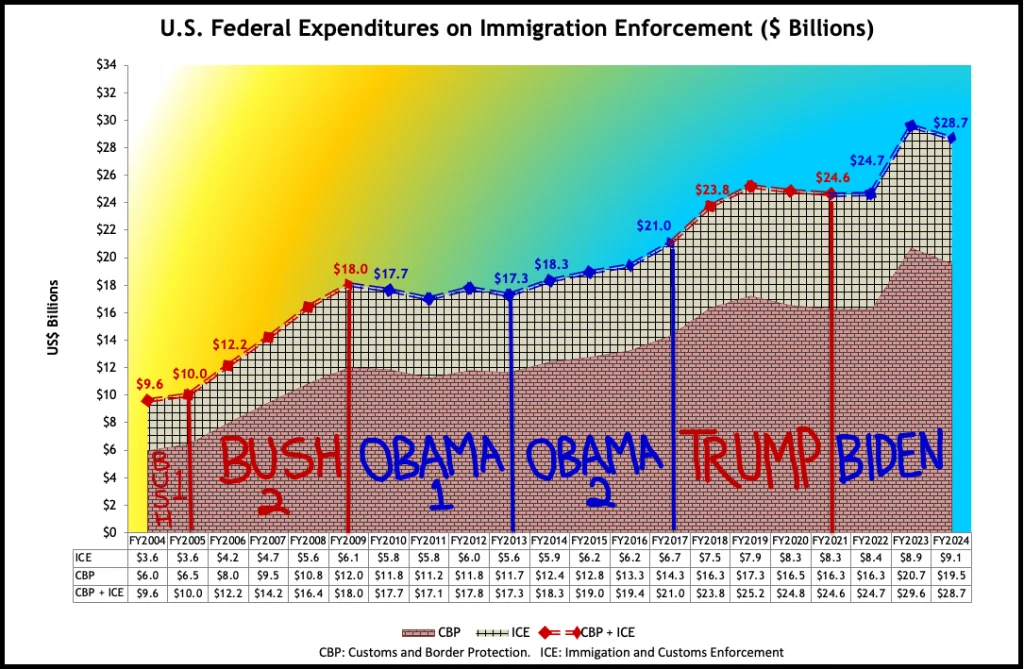
State borders, often presented as immutable lines on a map, are in reality dynamic constructs shaped by political conflict, nationalist narratives, unequal economic systems, and, crucially, immense public financial investment. This profound financial commitment, largely hidden beneath layers of policy and political discourse, frequently obscures the arbitrary and often violent origins of these divisions. Beyond simply demarcating territory after conflicts, borders perform critical social functions, maintaining distinct political systems, differentiating between "insiders" and "outsiders," and constructing economic disparities through varying trade relations, national currencies, and disparate value regimes across nations and regional blocs. The United States offers a compelling case study, particularly in the post-9/11 era, where the securitization of its southern border has evolved into a colossal, multi-billion-dollar enterprise, largely driven by a bipartisan consensus that belies rhetorical differences.
The Genesis of Modern Border Enforcement: A Post-9/11 Paradigm Shift
The modern architecture of U.S. border enforcement underwent a dramatic transformation following the September 11, 2001, terrorist attacks. Prior to 9/11, while immigration enforcement was a consistent feature of U.S. policy, it operated under a different paradigm, primarily focused on labor control and discrete enforcement actions. The attacks, however, catalyzed a profound shift, intertwining border regulation with national security and anti-terrorism discourse. This strategic re-framing effectively securitized the U.S.-Mexico border, transforming it from a zone primarily associated with economic migration into a perceived frontline against global threats.
In response to the perceived vulnerabilities, President George W. Bush’s administration moved swiftly to consolidate federal agencies responsible for homeland security. The Homeland Security Act of 2002 led to the creation of the Department of Homeland Security (DHS), a colossal new cabinet department designed to centralize and coordinate national security efforts. Within DHS, two key agencies emerged as pivotal to border enforcement: U.S. Customs and Border Protection (CBP) and U.S. Immigration and Customs Enforcement (ICE). These agencies were tasked with an expansive mission, encompassing the apprehension, detention, and deportation of individuals deemed to have entered or remained in the United States unlawfully.
CBP, often branding itself as "one of the world’s largest law enforcement organizations," explicitly states its primary mission as "to detect and prevent the illegal entry of individuals into the United States" and to "maintain borders that work." This mandate extends beyond physical borders to ports of entry and encompasses a wide range of activities from patrolling vast stretches of land and sea to inspecting cargo and travelers. ICE, on the other hand, focuses its mission on protecting "America from the cross-border crime and illegal immigration that threaten national security and public safety." Its operations include investigating financial crimes, cybercrime, human trafficking, and crucially, conducting interior enforcement to identify, arrest, and deport undocumented immigrants. The creation and expansion of these agencies marked a definitive shift towards a more militarized and expansive approach to border management, setting the stage for unprecedented financial investment.
A River of Funds: Decoding the Billions Behind Border Securitization
The financial commitment to this expanded border enforcement apparatus has been staggering. Over a 21-year period, from fiscal year 2004 to fiscal year 2024, Democratic and Republican administrations collectively allocated an astounding $409.4 billion of public funds to immigration enforcement and border security. This figure, unadjusted for inflation, underscores a relentless upward trajectory in spending, reflecting a sustained and escalating national priority.
Breaking down this monumental expenditure reveals significant contributions from both major political parties. Republican presidents, during their terms, approved $178.9 billion in spending, averaging approximately $17.9 billion annually. Democratic presidents, however, surpassed this, overseeing $230.5 billion in allocations, translating to an even higher average of $21.0 billion per year. This data starkly illustrates that despite frequently diverging rhetorical stances on immigration, both parties have consistently championed, or at least facilitated, substantial increases in border enforcement budgets.
The funds have been primarily directed towards the two principal agencies: CBP and ICE. CBP has received the lion’s share, with approximately $275 billion dedicated to its operations, reflecting its mandate over physical border control, port inspections, and the deployment of personnel and technology along thousands of miles of border. ICE, focusing on interior enforcement, investigations, and detention, has been allocated approximately $134.4 billion.
The overall federal expenditure on immigration enforcement has nearly tripled in unadjusted dollars, escalating from $9.6 billion in fiscal year 2004 to an estimated $28.7 billion in fiscal year 2024. Even when adjusting these figures for inflation to 2024 dollars, the increase remains substantial, rising from approximately $17.5 billion to $28.7 billion. This growth is not merely incremental; it represents a systemic expansion of resources, personnel, and infrastructure dedicated to border control.
What does this colossal investment buy? It funds the salaries and benefits of tens of thousands of border patrol agents, immigration officers, and support staff. It pays for advanced surveillance technologies, including drones, ground sensors, remote video surveillance systems, and high-tech command centers. It finances the construction and maintenance of physical barriers, such as border walls and fences, along critical sections of the border. Furthermore, a significant portion goes towards operating a vast network of immigrant detention centers, transportation services for detainees, and the complex legal processes associated with deportation. The "border industrial complex" has thus become a significant economic sector, creating jobs and contracts that further entrench its existence.
The Partisan Paradox: Rhetoric Versus Reality
A critical examination of these spending trends reveals a profound disconnect between political rhetoric and policy outcomes. Democratic presidents and their party often articulate a more progressive, pro-immigrant stance, emphasizing pathways to citizenship, humane treatment of migrants, and addressing the root causes of migration. Republican counterparts, conversely, typically emphasize "border security," "rule of law," and stricter enforcement measures, often framing immigration as a national security threat.
However, the budgetary data "gives the lie to the political performativity of partisan differences on immigration policy." In practice, Democratic administrations have proven no less enthusiastic, and in some metrics even more so, in funding the very mechanisms of border policing and immigration enforcement they sometimes criticize. For instance, the Obama administration, while enacting some reforms and advocating for comprehensive immigration reform, oversaw significant increases in deportations and continued the expansion of border infrastructure initiated by his Republican predecessors. Similarly, the Biden administration, despite pledges to reform immigration policy and address humanitarian concerns, has continued the upward trend in spending.
This paradox can be attributed to several factors. First, the political climate surrounding immigration is often highly charged, making it difficult for any administration to appear "soft" on border control without incurring significant political cost, particularly in an election cycle. Second, the institutional inertia of the DHS and its agencies means that established budgets and operational frameworks are difficult to dismantle or significantly reduce. Third, the "national security" framing of border issues, particularly post-9/11, provides a powerful justification for continued funding, often bypassing more nuanced debates about immigration policy. Finally, the "fundamental contradictions of bourgeois liberal democracy," as suggested by the original analysis, imply that elected representatives, while ostensibly representing the will of the populace, often ultimately serve the interests of powerful economic, political, and racial elites who benefit from or demand strict border controls for various reasons, including labor market dynamics and perceived social order.
Broader Implications and Socioeconomic Impacts
The escalating investment in border securitization carries far-reaching implications beyond mere budgetary figures.
- Humanitarian Cost: The militarization of the border has pushed migrants into more dangerous routes, leading to increased deaths and injuries. The detention system, often operated by private contractors, has faced widespread criticism for its conditions, lack of oversight, and impact on mental health, particularly for vulnerable populations like children and asylum seekers. Family separations, though officially curtailed, continue to haunt past and present policies.
- Economic Diversion: The billions spent on enforcement represent resources diverted from other pressing public needs, such as education, healthcare, infrastructure development, or even programs aimed at integrating immigrant communities. The cost-benefit analysis of such massive spending on enforcement often overlooks the potential economic contributions of immigrants and the inefficiencies of a system focused solely on deterrence.
- Erosion of Rights: The expansive powers granted to border enforcement agencies have raised concerns about civil liberties, due process, and racial profiling, not just for non-citizens but also for citizens residing in border regions or those perceived to be "foreign."
- International Relations: U.S. border policies have significant impacts on relations with neighboring countries, particularly Mexico and Central American nations, influencing trade, diplomacy, and regional stability.
- The "Border Industrial Complex": The continuous demand for personnel, technology, and infrastructure has fostered a powerful industry comprising defense contractors, surveillance technology firms, and private detention companies. These entities often lobby extensively for continued or increased border funding, creating a self-perpetuating cycle of investment and perceived necessity.
Recent Developments and Future Trajectories
The bipartisan consensus on robust border enforcement was starkly highlighted in October 2023, when President Joe Biden’s administration waived no fewer than 26 federal regulations to construct a border wall between the U.S. and Mexico in Texas. This move, which bypassed environmental reviews and other protections, drew immediate comparisons to his Republican predecessor, Donald Trump, who had made border wall construction a centerpiece of his presidency.
Biden’s action, coming in advance of the 2024 presidential election, underscored the intense political pressure surrounding immigration. Despite having campaigned on a platform that criticized Trump’s wall and promised a more humane approach, the administration reverted to a policy previously condemned. This suggests that the political imperative to demonstrate "toughness" on the border, regardless of party affiliation, often outweighs ideological commitments or progressive policy agendas. The "gaping void left by the abandonment of any commitment to a progressive ideological agenda in the Democratic Party," as observed by some analysts, appears to be readily filled by anti-immigrant enforcement measures, often framed as necessary for national security or humanitarian crisis management.
Looking ahead, the trajectory of U.S. border policy seems firmly entrenched in an enforcement-first approach. Substantive progress towards de-carcerating the United States and de-securitizing the U.S.-Mexico border appears increasingly unlikely in the current political climate. Even if progressive voices within Congress were to gain greater power, the institutional momentum, the economic interests tied to the border industrial complex, and the deeply ingrained national security narrative present formidable obstacles to any significant shift. The multi-billion-dollar border, a product of sustained bipartisan investment, stands as a testament to a complex interplay of political fear, economic interests, and the enduring power of constructed divisions.