Johny Marice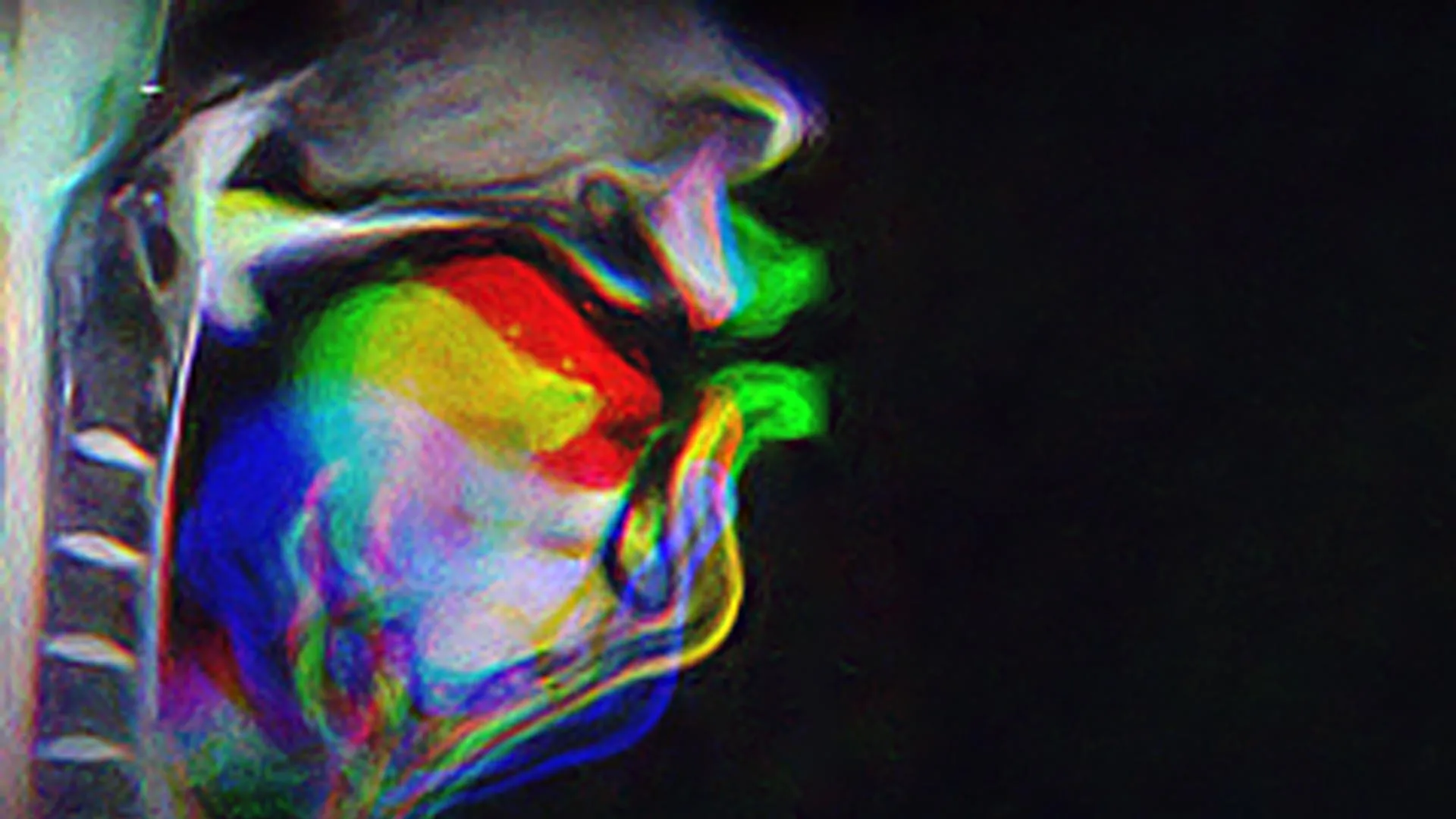
Learning a new language or recovering the ability to speak may rely less on the brain’s movement centers than scientists once believed. New research suggests that regions involved in processing sound and physical sensations play a much larger role in speech learning and memory. This groundbreaking study, conducted by researchers at McGill University and the Yale School of Medicine, has the potential to significantly reshape our understanding of how speech is acquired and retained, with profound implications for the design of future speech recognition systems and brain-based communication technologies.
Rethinking Speech Acquisition: Sensory Input Takes the Lead
For decades, the prevailing scientific consensus posited that the intricate and coordinated movements of the face, mouth, and vocal tract essential for speech were primarily orchestrated by the brain’s motor areas. These frontal lobe regions have long been considered the principal architects of motor control, responsible for executing the precise physical actions required for articulation. However, the latest findings from McGill and Yale challenge this long-held assumption, shifting the focus from motor execution to sensory processing.
The new research indicates that the auditory system, which processes sound, and the somatosensory system, which processes touch and bodily sensations, are far more critical for both learning new speech patterns and consolidating them into long-term memory. This paradigm shift suggests that the brain’s ability to adapt and refine speech is deeply rooted in its capacity to perceive and interpret sensory feedback.
"Sensorimotor neuroscience has traditionally focused on frontal motor areas as the principal drivers of movement," stated David Ostry, a Professor of Psychology at McGill University and a senior author on the study. "This study changes that understanding by showing that human speech learning is extensively sensory in nature. It suggests that the brain learns to produce speech by actively listening to its own output and feeling the physical sensations of articulation, rather than solely relying on pre-programmed motor commands."
This insight is particularly relevant in the context of individuals who have lost the ability to speak due to conditions like stroke or neurodegenerative diseases. The findings could guide the development of more effective rehabilitation strategies and the creation of advanced brain-computer interfaces designed to restore communication. By incorporating a deeper understanding of sensory feedback mechanisms, these emerging technologies could potentially offer more intuitive and efficient ways for individuals to regain their voice.
Experimental Design: Probing the Brain’s Role in Speech Learning
To empirically test their hypothesis, the researchers devised an innovative experimental protocol. Participants were subjected to real-time alterations of their own speech, which was fed back to them through headphones. This auditory manipulation created a scenario where participants had to actively adjust their vocalizations to compensate for the perceived changes, thereby engaging in a form of speech motor learning. The goal was to observe how the brain adapted to this altered sensory feedback.
Following this learning phase, the researchers employed transcranial magnetic stimulation (TMS), a non-invasive technique that uses magnetic pulses to temporarily disrupt or enhance activity in specific brain regions. This allowed them to selectively interfere with the functioning of three key areas implicated in speech production and processing: the auditory cortex, the somatosensory cortex, and the motor cortex.
The critical phase of the experiment involved assessing the retention of the newly learned speech patterns 24 hours later. The underlying principle was that if a particular brain region was indispensable for encoding and storing new speech-related memories, then transiently disrupting its activity would lead to a significant impairment in recall and performance. Conversely, if a region was not central to the learning or memory consolidation process, its temporary inactivation would have little to no impact on the learned speech patterns.
Unveiling the Dominance of Sensory Systems
The results of the TMS intervention provided compelling evidence for the crucial role of sensory processing in speech learning and memory. When participants’ auditory cortex or somatosensory cortex activity was disrupted, their retention of the learned speech patterns was significantly compromised. This indicated that the brain’s ability to accurately reproduce the modified speech was heavily dependent on its capacity to process auditory and tactile information related to speech.
In stark contrast, temporarily disrupting the motor cortex had a negligible effect on the participants’ ability to retain the newly acquired speech patterns. This finding directly challenged the long-standing emphasis on motor areas as the primary drivers of speech learning.
"Our study challenges the assumption that new speech memories are solely reliant on changes in motor areas of the brain," explained Nishant Rao, an Associate Research Scientist at Yale University and a co-author of the study. "Instead, it underscores the importance of changes in auditory and somatosensory brain areas in shaping how we learn to speak. This suggests a more dynamic interplay where sensory perception guides motor adaptation, rather than motor commands being the sole determinant of learning."
This empirical validation provides a robust foundation for a revised understanding of sensorimotor integration in speech. It suggests that the brain might be continuously calibrating its motor output based on the sensory consequences, much like a musician adjusts their playing based on the sound they produce.
Historical Context and Broader Implications
The current research builds upon a legacy of studies investigating motor learning and brain plasticity. Previous work by the same research group, involving arm and hand movements, had also revealed that disrupting sensory regions of the brain interfered with the ability to learn and retain new motor skills. This consistency across different motor domains suggests a fundamental principle of sensory-driven learning that extends beyond speech.
The concept of brain plasticity – the brain’s remarkable ability to reorganize itself by forming new neural connections throughout life – is central to these findings. This research highlights that plasticity is not confined to motor circuits but is also profoundly active within sensory pathways, playing a vital role in skill acquisition and memory formation.
The implications of this study extend far beyond fundamental neuroscience. For individuals who have suffered strokes, traumatic brain injuries, or are affected by neurodegenerative conditions that impair speech, these findings offer a glimmer of hope. Current speech rehabilitation often focuses on repetitive motor exercises. However, if sensory processing is indeed the lynchpin of speech learning, then therapeutic interventions could be significantly enhanced by incorporating strategies that specifically target and stimulate auditory and somatosensory feedback mechanisms.
"Future work will focus on identifying the specific cortical circuits involved in learning and investigating sensory-based treatments for movement disorders," said Ostry. "We are particularly interested in applications for stroke rehabilitation and speech recovery. Imagine therapies that leverage auditory or tactile cues to retrain the brain’s speech pathways more effectively."
This could translate into new therapeutic tools such as advanced auditory feedback devices that provide subtle, real-time adjustments to speech, or haptic feedback systems that guide articulation. The potential for these advancements to improve the quality of life for millions of people worldwide is substantial.
Technological Advancements and Future Directions
The insights gained from this research are also poised to influence the development of artificial intelligence and human-computer interaction. Current speech recognition technologies, while sophisticated, often struggle with nuances in accent, speech impediments, or noisy environments. A deeper understanding of how the human brain learns and processes speech, particularly its reliance on sensory feedback, could lead to the creation of more robust and adaptable AI systems.
For instance, future AI models might be designed to incorporate simulated sensory feedback loops, mirroring the human brain’s learning process. This could lead to breakthroughs in voice assistants, automated transcription services, and even personalized speech training applications for language learners.
Furthermore, the study’s findings could inform the design of brain-computer interfaces (BCIs) for individuals with severe communication impairments. By focusing on sensory pathways, BCIs might be developed that allow users to control communication devices with greater precision and ease, potentially by interpreting signals related to intended speech movements and their associated sensory consequences.
The research team plans to delve deeper into the specific neural mechanisms underlying sensory-driven speech learning. This includes mapping the precise neural pathways involved and investigating how different types of sensory information – such as the feel of air passing through the vocal tract or the vibrations of the vocal cords – contribute to the overall learning process.
The study, titled "Sensory Basis of Speech Motor Learning and Memory," was authored by Nishan Rao, Rosalie Gendron, Timothy Manning, and David Ostry. Its publication in the prestigious journal Proceedings of the National Academy of Sciences of the United States of America signifies the scientific community’s recognition of its importance. The research received crucial funding from the National Institute on Deafness and Other Communication Disorders, a testament to its potential impact on communication health.
In conclusion, this pioneering research marks a significant turning point in our understanding of speech acquisition and recovery. By highlighting the pivotal role of sensory processing, it opens up new avenues for therapeutic interventions, technological innovation, and a more profound appreciation of the intricate workings of the human brain. The journey from understanding to application is ongoing, but the implications of this sensory-centric view of speech learning are undeniably profound.