Ferry Irwandi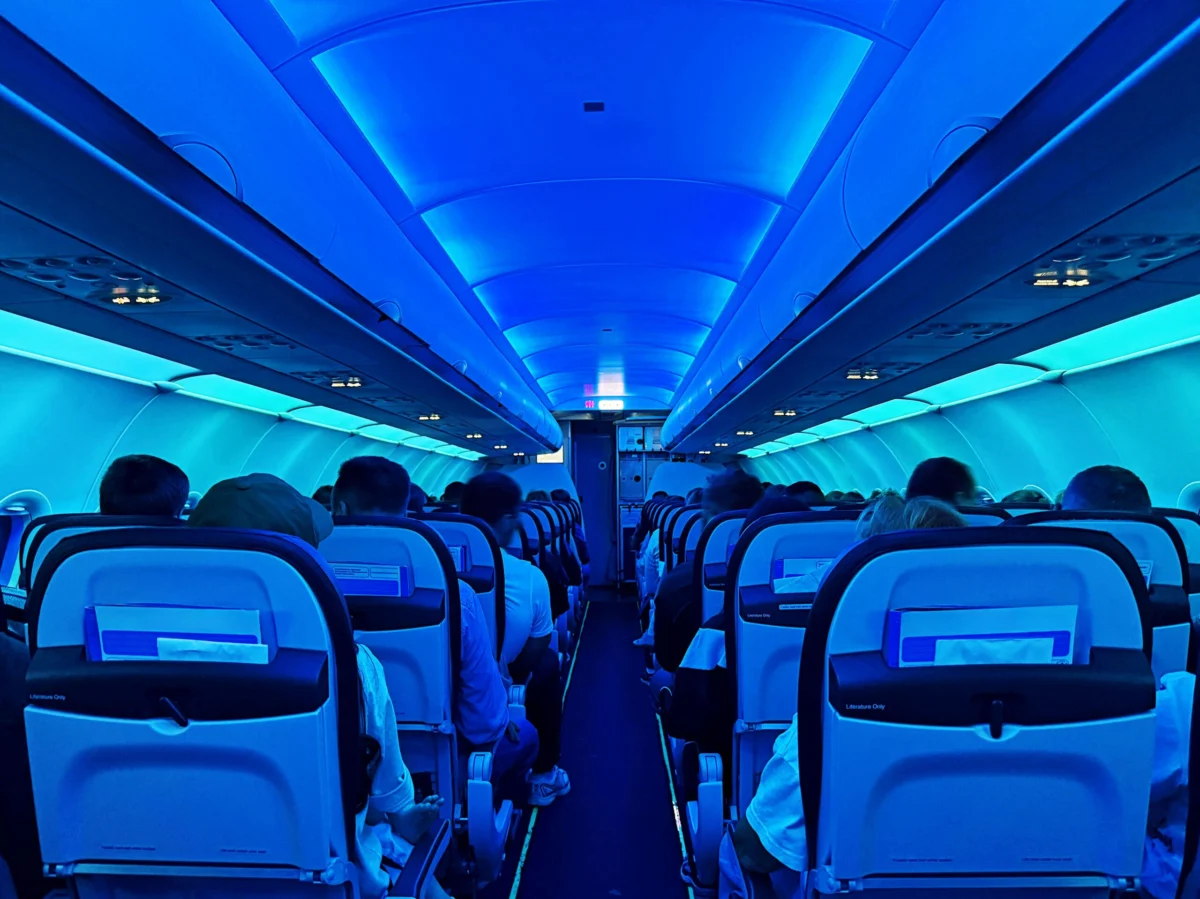
The transition of an aircraft from the terminal to the runway and its eventual ascent into the clouds is a sequence of highly choreographed events, many of which occur behind the scenes or are so routine that passengers barely register them. Among these standard operating procedures is the dimming of cabin lights during takeoff and landing, particularly during night operations or low-light conditions. While some travelers may view this as an attempt to create a relaxing atmosphere or "set the mood" for the journey ahead, the practice is rooted in rigorous safety protocols and the fundamental principles of human physiology. This protocol is a critical component of aviation safety, designed to optimize passenger and crew reaction times during the most vulnerable segments of a flight.
The Physiology of Vision and Dark Adaptation
The primary reason for dimming cabin lights during the critical phases of flight—takeoff and landing—is to facilitate "dark adaptation" for the human eye. Human biology dictates that the eyes require a specific amount of time to adjust when moving from a brightly lit environment to a dark one. This process involves the regeneration of rhodopsin, a biological pigment in the photoreceptor cells of the retina, which is essential for vision in low-light conditions.
According to ophthalmological data, while the initial adjustment to darkness can happen within seconds, reaching full "scotopic vision" (the ability to see in near-total darkness) can take anywhere from 20 to 30 minutes. However, the first few seconds of adjustment are the most critical in an emergency. If an aircraft cabin is brightly illuminated and a sudden power failure or emergency occurs at night, passengers would be momentarily blinded by the contrast, suffering from a "bleaching" effect of the retina. By dimming the lights prior to takeoff and landing, the airline ensures that the passengers’ eyes are already partially adjusted to the ambient outside light.
In the event of an emergency evacuation, every second is vital. If the cabin remains bright and an evacuation is ordered into a dark environment, the delay caused by the eyes struggling to adjust could lead to confusion, tripping, or an inability to locate emergency exits. Anubha Jaiswal, a senior cabin attendant with IndiGo, notes that this preparation is essential because it eliminates the "sudden adjustment delay," allowing passengers to see emergency exit signs, floor-path lighting, and crew instructions with immediate clarity.
The Critical Phases of Flight: The Plus Three, Minus Eight Rule
In aviation industry parlance, takeoff and landing are referred to as the "critical phases" of flight. Statistical analysis of aviation history reveals that a significant majority of accidents occur during these windows. Safety experts often refer to the "Plus Three, Minus Eight" rule, which highlights that the first three minutes after takeoff and the last eight minutes before landing are the periods where the aircraft is at its highest risk.
Data from Boeing’s annual "Statistical Summary of Commercial Jet Airplane Accidents" consistently shows that while the cruise phase accounts for the majority of flight time, it accounts for a relatively small percentage of fatal accidents. Conversely, the takeoff, initial climb, final approach, and landing phases—which represent a fraction of the total flight time—account for nearly 50% of all hull loss accidents and fatalities.
Because the margin for error is so slim during these phases, airlines implement "silent cockpit" rules and cabin safety protocols like dimming the lights. The goal is to minimize distractions and maximize the readiness of everyone on board. By dimming the lights, the crew is not just preparing the passengers’ eyes; they are also signaling a transition to a state of heightened awareness.
Enhancing External Situational Awareness
Beyond the physiological benefits for those inside the cabin, dimming the lights serves a crucial function for external situational awareness. During takeoff and landing, both the flight crew and the passengers serve as extra sets of eyes for the aircraft. If the cabin is brightly lit, the glare on the windows makes it nearly impossible to see outside, especially at night.
By reducing internal glare, passengers and crew are better able to spot external hazards. This includes seeing sparks or flames from an engine, identifying debris on the runway, or noticing an unusual pitch or roll of the aircraft relative to the horizon. There have been numerous historical instances where passengers were the first to notice mechanical issues by looking out the window; dimming the lights ensures that their view of the wing and the surrounding environment is unobstructed by internal reflections.
This is also why flight attendants request that window shades be kept open during these phases. The combination of dimmed lights and open shades ensures that if the aircraft needs to be evacuated, the crew can look outside to determine which side of the aircraft is safe. For instance, if there is a fire on the left side of the fuselage, the crew must see it clearly to direct passengers to the exits on the right.
Regulatory Framework and Global Standards
The practice of dimming cabin lights is not merely a recommendation but is often a regulatory requirement. The Federal Aviation Administration (FAA) in the United States and the European Union Aviation Safety Agency (EASA) have established specific mandates regarding cabin illumination.
Under FAA Part 25 regulations, aircraft manufacturers must demonstrate that a full load of passengers can be evacuated from the aircraft in 90 seconds or less, even with half of the available emergency exits blocked. This 90-second benchmark is the industry standard for survivability in a post-crash fire scenario. To meet this rigorous standard, every possible advantage must be utilized, including the pre-adjustment of passenger vision.
While specific rules may vary slightly between jurisdictions, most international airlines adopt these procedures as part of their Standard Operating Procedures (SOPs) regardless of whether they are flying in U.S., European, or Asian airspace. Many airlines choose to dim the lights even during daytime flights if the weather is overcast or if the aircraft is transitioning through different light levels, ensuring a consistent safety environment for all passengers.
Evolution of Aircraft Lighting Technology
The transition from incandescent bulbs to Light Emitting Diode (LED) technology in modern aircraft, such as the Boeing 787 Dreamliner and the Airbus A350, has changed how these safety protocols are implemented. Older aircraft used fluorescent tubes that were often difficult to dim smoothly, frequently flickering or requiring a binary "on/off" setting.
Modern LED "mood lighting" systems allow for a much more gradual and sophisticated transition. Flight crews can now program specific lighting "scenes" that slowly transition the cabin from a warm sunset glow to a dimmed "safety" setting. This reduces the psychological jarring of a sudden dark cabin while still achieving the necessary physiological effects for dark adaptation. Furthermore, modern LED systems are integrated with the aircraft’s emergency lighting system, ensuring that if the main power fails, the floor-path markings and exit signs illuminate with high-contrast clarity that is immediately visible to eyes already adjusted to a dim cabin.
The Role of the Flight Crew and Passenger Cooperation
While the technical and biological aspects of dimming lights are paramount, the human element remains the most significant factor in aviation safety. Flight attendants undergo rigorous training to manage the cabin during the critical 90-second evacuation window. Their ability to command a cabin and direct passengers is significantly aided when the environment is optimized for visibility.
Industry analysts point out that passenger cooperation is a vital, yet sometimes overlooked, component of this safety ecosystem. When passengers understand that dimming lights and opening window shades are not inconveniences but life-saving measures, compliance rates increase. The "safety briefing" provided at the start of every flight is designed to reinforce these behaviors, creating a shared responsibility between the crew and the travelers.
Broader Implications for Aviation Safety Culture
The dimming of lights is a testament to the "safety first" culture that defines modern commercial aviation. It represents a philosophy of "redundant safety," where multiple small measures—none of which may seem significant on their own—combine to create a highly resilient system.
In the context of broader aviation trends, the industry continues to move toward increased automation and enhanced sensory assists for pilots. However, the requirement for human eyes to be ready for an emergency remains a constant. As long as human beings are required to evacuate a physical structure in a time-sensitive manner, the biological limitations of the human eye will dictate cabin lighting protocols.
In conclusion, the next time the cabin lights flicker and dim as an aircraft lines up on the runway, it should be viewed not as a loss of light, but as a gain in safety. This simple adjustment is a sophisticated intersection of human biology, historical accident data, and strict international regulation. It serves as a silent reminder that in the world of aviation, every detail—no matter how small—is meticulously engineered to ensure that in the rare event of an emergency, every passenger has the best possible chance of a safe exit. The 90-second rule is a narrow window, and by dimming the lights, the aviation industry ensures that no one spends those precious seconds waiting for their eyes to see the way out.