Reynand Wu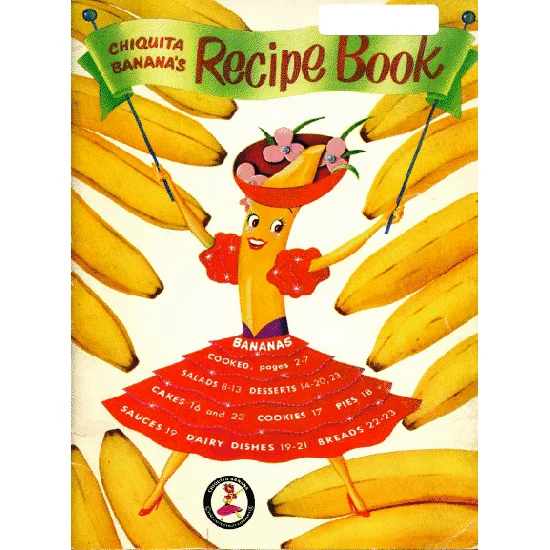
Over the past year, the iconic M&M’s mascots have become an unlikely flashpoint in the ongoing cultural discourse, dominating news cycles, social media feeds, and even Super Bowl commercial slots. What began as Mars Wrigley’s strategic move toward more inclusive marketing ignited a fervent backlash, leading to a temporary suspension of the beloved spokescandies and a broader examination of gender representation in advertising. This article delves into the chronology of the controversy, the motivations behind the brand’s decisions, the intense public and media reactions, and the deeper sociological implications regarding the sexualization of women and the dynamics of emphasized femininity in contemporary society.
The Genesis of the Rebrand: A Push for Inclusivity (January 2022)
The saga commenced in January 2022 when Mars Wrigley, the confectionery giant behind M&M’s, announced a global refresh of its brand identity, including subtle but significant alterations to its cherished anthropomorphic candy characters. The stated aim was to create a "more dynamic, progressive world" where everyone feels they belong. Central to these changes were the female M&M’s characters. The brown M&M, known for her sophisticated demeanor, had her stiletto heels subtly shortened, transitioning to a more sensible block heel. More notably, the green M&M, historically portrayed with go-go boots and often perceived as overtly sensual, saw her footwear replaced with casual, comfortable sneakers. The company’s press release at the time emphasized that the redesign aimed to highlight the personalities of the characters, moving away from stereotypes and fostering a sense of community and acceptance. Mars Wrigley stated its intention to make all characters "more current and representative of our consumer world," underscoring a broader corporate trend towards aligning brand values with social progress. This initiative was part of a wider commitment by Mars, Incorporated, to "create a world where everyone feels they belong and society is inclusive."
Immediate Backlash and the Rise of the Culture War Narrative
Despite Mars Wrigley’s intentions, the minor aesthetic adjustments to the female M&M’s were met with disproportionate outrage, particularly from conservative media personalities. The changes quickly became a prominent talking point in what has been dubbed the "culture war." Tucker Carlson, then a prominent host on Fox News, emerged as a leading voice of the backlash. He lambasted the redesign, famously stating, "M&M’s will not be satisfied until every last cartoon character is deeply unappealing and totally androgynous." Carlson’s commentary framed the brand’s move as an attack on traditional gender norms and an unwelcome imposition of "woke" ideology into popular culture.
The criticism was not confined to political commentators. Cultural critics and entertainment writers also weighed in, albeit from different perspectives. EJ Dickson, a senior writer for Rolling Stone, penned an article provocatively titled, "Let the Green M&M Be a Nasty Little Slut." Dickson articulated a viewpoint that the green M&M had cultivated a distinct, sexually confident persona over decades, questioning why her "creators" felt compelled to "give her Larry David footwear in the name of feminism." This perspective, while differing in its political alignment from Carlson’s, also expressed a sense of loss over the perceived desexualization of the character, highlighting the complex and often contradictory expectations placed on female representations in media. The controversy rapidly spiraled beyond a simple marketing decision, becoming a proxy battleground for broader societal debates about gender, identity, and corporate social responsibility.
The Debut of Purple and Renewed Fervor (September 2022)
The cultural conversation around M&M’s intensified in September 2022 with the introduction of a new character: the purple M&M. Designed to represent "acceptance and inclusivity," Purple was unveiled as the brand’s first new character in a decade. Her debut was accompanied by a musical anthem titled "I’m Just Gonna Be Me," which explicitly addressed themes of self-acceptance and embracing one’s true self. Mars Wrigley positioned Purple as a symbol of self-love and authenticity, further cementing the brand’s commitment to diverse representation.
However, Purple’s introduction did little to quell the existing discontent; instead, it reignited the "M&M’s war." Tucker Carlson once again seized on the development, his commentary growing more pointed. On Fox News, he remarked, "The green M&M got her boots back, but apparently is now a lesbian maybe? And now there’s a plus-sized, obese purple M&M." These remarks, while widely condemned as nonsensical and discriminatory, starkly illustrated the pressure placed on female characters—and by extension, women in society—to conform to narrow gender norms and accommodate specific male sexual desires. The conflation of character design with sexual orientation, body size, and political correctness underscored the depth of the ideological divide the controversy had tapped into. The brand, initially seeking to broaden its appeal, found itself at the epicenter of a highly politicized debate.
Mars Wrigley’s Response: A Temporary Pause and a "Chief Fun Officer" (January 2023)
Facing sustained criticism and an increasingly polarized public discourse, Mars Wrigley announced in January 2023 a "temporary pause" in using its spokescandies as brand ambassadors. The company acknowledged the intensity of the debate, stating, "We weren’t sure if anyone would even notice. And we definitely didn’t think it would break the internet. But now we get it — even a candy’s shoes can be polarizing." In a strategic pivot, Mars Wrigley announced that the brand would instead be represented by a human spokesperson: comedian and actress Maya Rudolph, appointed as the "Chief Fun Officer." This move was widely interpreted as an attempt to de-escalate the culture war surrounding the mascots and return the brand’s focus to its core message of fun and enjoyment, away from contentious social commentary. The appointment of a universally liked public figure like Rudolph aimed to re-center the brand on lightheartedness, sidestepping the controversies that had overshadowed its inclusive marketing efforts.
A Historical Lens: The Sexualization of Women in Advertising
The M&M’s controversy, while seemingly trivial on the surface, highlights a long-standing pattern of the sexualization of women in advertising. This phenomenon is not new, nor is it exclusive to confectionery. Decades before the M&M’s characters graced screens, other food products utilized gendered and often sexualized imagery to appeal to consumers. A prime example is the Chiquita Banana. Debuting in the 1940s, Miss Chiquita Banana was the world’s first branded fruit, designed to personify the exotic appeal of bananas to the American market. The original Miss Chiquita was explicitly racialized and sexualized, employing flirtatious winks, eye-rolling, frilly dresses, and prominent lipstick to convey an image of alluring femininity. Her persona was crafted to be overtly sensual, leveraging stereotypical notions of beauty and desire to sell a product.
M&M’s has historically employed a similar strategy with its female spokescandies. The hypersexualization of characters like the green M&M was not limited to their attire but extended to the erotic nature of the commercials in which they featured. The green M&M has been depicted in suggestive scenarios, including pole dancing, stripping, and provocatively interacting with chocolate. Crucially, these commercials often included male M&M’s characters ogling her in the background, a clear reinforcement of the "male gaze." This sociological concept describes how women are frequently depicted in visual arts and media from a masculine, heterosexual perspective, presenting women as passive "objects" of male sexual desire. The M&M’s campaign, prior to its rebrand, inadvertently contributed to this pervasive cultural dynamic, normalizing the objectification of female figures even in the context of children’s candy.
Sociological Frameworks: Emphasized Femininity and the Male Gaze
The intense reaction to the M&M’s redesign can be understood through the lens of sociological concepts like "emphasized femininity." This term refers to a set of traditional feminine norms that encourage women to accommodate men’s sexual appetites and desire for control. It actively legitimizes the gender hierarchy, where men hold dominant positions, and consequently upholds various forms of oppression. When women, or female characters, deviate from these "stereotypical cultural notions" of emphasized femininity—for instance, by becoming less conventionally attractive or "sexy" in the traditional sense—it can be perceived as a threat by those who adhere to ideals of hegemonic masculinity.
The outrage expressed by figures like Tucker Carlson, and indeed by some consumers, reflects a discomfort with female characters stepping away from roles designed to satisfy male sexual desires. The perceived "desexualization" of the M&M’s characters was interpreted by some as a challenge to established gender roles, leading to anger that their expectations were not being met, even in the realm of animated candy mascots. This phenomenon reveals a societal expectation that women, even fictional ones, face the prospect of being labeled "socially undesirable" when they exhibit characteristics deemed "masculine" or independent of male approval. Carlson’s cynical remark, "When you’re totally turned off, we’ve achieved equity," inadvertently underscores this point. In a patriarchal society, defiance or authority from women can be perceived as threatening by some men, leading to attempts to stigmatize and "feminize" their behavior through labels such as "bitch," "lesbian," or "slut." This suggests that for women to be "valued" by certain segments of society, they are expected to remain subservient to the male gaze and conventional gendered expectations.
The Broader Impact of Hypersexualization on Youth and Society
The hypersexualization of women in media, whether through human models or cartoon mascots, carries significant and well-documented harmful implications for young people. Adolescents, particularly girls, who are exposed to a consistently sexualized media environment are more likely to internalize the idea that their primary value lies in their physical appearance and their capacity to be sex objects. This can lead to body dissatisfaction, self-objectification, and a heightened awareness of being perceived as "sexual playthings waiting to please men’s sexual desires." Consequently, young individuals may develop feelings of unworthiness if they do not meet prevailing societal standards of attractiveness or sexuality. The fact that even beloved children’s candy mascots can become subjects of such intense sexualized debate sends a confusing and potentially damaging message to impressionable minds.
The M&M’s controversy, while at first glance appearing ludicrous as a "culture war" waged against candy, has profound real-world implications that demand critical attention. The public discourse surrounding these seemingly minor changes exposes deep-seated anxieties about gender roles, power dynamics, and societal expectations. The vicious cycle of sexualizing women, whether they are mascots or real individuals, for commercial profit or ideological leverage, must be critically examined and ultimately brought to an end. Prominent public figures and media outlets bear a responsibility to recognize that using the oppression or sexualization of others as a punchline or a political weapon is not only irresponsible but actively harmful to the fabric of an inclusive society. The M&M’s saga serves as a stark reminder that even the most seemingly innocuous elements of popular culture can become battlegrounds for broader societal struggles over identity, representation, and the future of gender equality.