
 Reynand Wu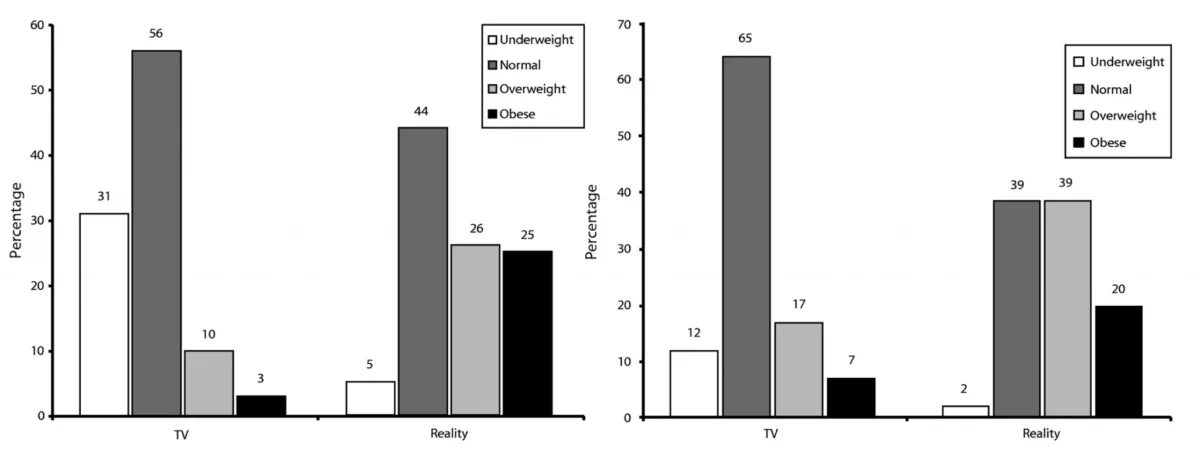
Television, a ubiquitous mirror reflecting and shaping societal norms, has long been a battleground for body image, consistently distorting, mocking, and marginalizing individuals with larger body types. Far from offering diverse and authentic portrayals, fat characters are frequently reduced to one-dimensional caricatures, their stories and identities underdeveloped, and their inherent worth diminished. This systemic bias is not merely an oversight but a deeply entrenched practice with significant ramifications for audience self-perception and broader societal attitudes towards weight. Research consistently underscores this disparity; a study by Tzoutzou et al., for instance, revealed a striking imbalance in appearance-based compliments on screen. Across a significant sample, all 36 positive remarks concerning women’s appearances were directed exclusively at thin women, with not a single positive message extended to a woman of average or overweight body type. A similar pattern emerged for men, where only one overweight character received a positive appearance-related comment. These findings illuminate a media landscape where external beauty is rigidly defined by thinness, actively excluding anyone who deviates from this narrow and often unrealistic standard. Viewers, particularly those who do not conform to this idealized body type, are thus left to internalize a damaging message that can profoundly impact their self-esteem and body image.
The narrative crafted by television often dictates that worth and desirability are inextricably linked to a specific physical form, predominantly the "thin ideal." This pervasive messaging fosters an environment where audience members, especially young and impressionable individuals, may struggle to cultivate a healthy self-image. The constant exposure to the negative treatment of larger bodies on screen can insidiously influence how viewers perceive their own bodies, leading to feelings of inadequacy, self-consciousness, and dissatisfaction if their physique does not align with the celebrated standard. The consequences extend beyond personal feelings, contributing to a broader culture of weight stigma and discrimination.
The Historical Reinforcement of the Thin Ideal
The media’s obsession with thinness is not a recent phenomenon but a deeply rooted aspect of Western culture, amplified significantly by the advent of mass media. From the early days of Hollywood to the golden age of television, a slender physique has often been equated with glamour, success, and moral rectitude. This ideal gained considerable traction post-World War II, propelled by fashion trends, advertising, and the growing influence of celebrity culture. The 1950s and 60s saw the rise of iconic figures whose slender frames became aspirational. By the 1980s and 90s, with the proliferation of cable television and the rise of fitness culture, the thin ideal became even more entrenched, often conflated with health and discipline, despite a growing understanding that body size is complex and influenced by a myriad of factors beyond individual control. Television, being a powerful storytelling medium, has played a critical role in disseminating and reinforcing these narrow beauty standards, often failing to adapt its portrayals to reflect the diversity of human bodies or the evolving understanding of health and wellness. This chronological reinforcement has built a formidable barrier against inclusive representation, making any deviation from the norm appear abnormal or undesirable.
Underrepresentation and Diminished Roles
Beyond the overwhelmingly negative tone, a significant problem lies in the sheer underrepresentation of larger body types on television. While a substantial portion of the population lives in bodies categorized as average or overweight, their presence on screen pales in comparison to their real-world prevalence. Data from studies like Brownell et al. (2003), comparing female and male body types on television versus reality in the late 1990s and early 2000s, vividly illustrated this chasm. While these statistics are decades old, subsequent analyses and anecdotal observations suggest that this disparity, while showing minor improvements in niche programming, largely persists across mainstream television. This quantitative imbalance sends a powerful message: if you are not thin, you are not central to the narrative.
When larger characters do appear, their roles are often significantly limited and rarely afforded the depth or complexity granted to their thinner counterparts. They are routinely relegated to secondary positions, serving primarily as comedic relief or, disturbingly, as antagonists. This pattern of dehumanization through underdeveloped characters means that their identities and stories are rarely explored with the nuance and empathy they deserve. Instead, their body size often becomes their defining characteristic, overshadowing any potential for a rich inner life, complex relationships, or meaningful contributions to the plot. This practice effectively silences a significant demographic, denying viewers the opportunity to see themselves or others with larger bodies portrayed as multifaceted, capable, and desirable individuals.
The Punchline and the Villain: Dehumanizing Tropes
The reduction of fat characters to specific, often harmful, tropes is particularly pronounced in comedy and children’s programming. In the realm of comedy, the laughter generated often comes at the expense of larger women, rather than with them. Research indicates that overweight women are approximately twice as likely to be the subject of a joke compared to thinner women. These jokes frequently revolve around their appearance, eating habits, or perceived lack of physical agility, reinforcing negative stereotypes. Such characters are typically afforded smaller roles, fewer romantic interests, and participate in significantly fewer positive interactions than their thin counterparts. This comedic exploitation not only strips these characters of their dignity but also normalizes the idea that larger bodies are inherently funny or deserving of ridicule, thereby legitimizing real-world bullying and stigma.
Equally concerning is the prevalent portrayal of fat characters as villains. A study by Himes and Thompson found that in 64% of the most popular children’s videos, obesity was explicitly equated with negative traits such as evil, unattractiveness, and cruelty. Classic examples abound in children’s media, from the formidable, corpulent Ursula in The Little Mermaid to the tyrannical Queen of Hearts in Alice In Wonderland. These iconic antagonists often feature exaggerated body sizes that visually amplify their malevolence, implicitly connecting physical largeness with moral failing, greed, or a threatening nature. This insidious link, particularly in formative years, can embed a deep-seated bias in young audiences, teaching them to associate certain body types with inherent negativity. Such portrayals actively demonize fatness, transforming it from a mere physical attribute into a symbol of moral corruption, further stripping these characters of their humanity and fostering fear and prejudice rather than understanding.
Profound Effects on the Audience: Internalization and Self-Perception
The relentless barrage of negative and stereotypical portrayals of larger bodies on television has profound and measurable effects on audiences. One of the most immediate impacts is the internalization of negative perceptions surrounding weight. Studies like that by Fouts and Burggraf revealed how quickly this internalization can occur, finding that as little as 30 minutes of television viewing can significantly alter a young woman’s view of her own body. This rapid absorption of media messages contributes to a pervasive sense of body dissatisfaction, which can manifest in various external struggles.
The Tzoutzou et al. study, for instance, showed that young girls explicitly acknowledged media’s influence on their desire to be thin and conform to prevailing beauty standards. This desire often translates into frequent dieting, a practice strongly linked to the development of eating disorders. Unrealistic body standards, constantly transmitted through mass media, are a significant causal factor in the proliferation of conditions such as anorexia nervosa, bulimia nervosa, and binge eating disorder. These disorders are not merely physical ailments but complex psychological battles often rooted in a distorted self-image and an unrelenting pressure to achieve an impossible aesthetic.
Beyond body image and eating disorders, these misrepresentations can lead to significantly diminished self-esteem. Viewers, particularly women, may internalize the belief that they will be subjected to the same sexist and demeaning treatment they witness on screen if they do not conform to the "body norm." This fear can lead to a constant state of anxiety about their appearance, impacting their social interactions, career aspirations, and overall mental well-being. The constant judgment, even if fictional, can erode a person’s sense of self-worth, making them feel less desirable, less capable, and less deserving of respect and happiness. All these aspects collectively contribute to a female viewer, and indeed any viewer, feeling worse about themselves based on their appearance and the perceived negative reactions from others, all rooted in distorted and fictional depictions on television.
Broader Societal and Public Health Implications
The television industry’s perpetuation of weight stigma extends its reach far beyond individual psychological distress, contributing significantly to systemic discrimination and public health challenges. Weight stigma, defined as prejudice or discrimination against people based on their weight, is a pervasive issue that manifests in various societal domains. In healthcare, individuals with larger bodies often report experiencing bias from medical professionals, leading to delayed diagnoses, inadequate treatment, and a reluctance to seek medical care due to anticipated judgment. This can result in poorer health outcomes, ironically for a group often stigmatized under the guise of "health concerns."
In employment, studies have shown that individuals with higher body mass indexes (BMIs) face discrimination in hiring, promotion, and even salary. They are often perceived as less competent, less disciplined, or less professional, irrespective of their actual qualifications or performance. Similar biases exist in educational settings, where larger children and adolescents may experience bullying and social exclusion, impacting their academic performance and mental health. This societal prejudice, largely reinforced by media portrayals, creates a hostile environment where individuals are judged not by their character or abilities, but by their size.
Furthermore, the emphasis on the "thin ideal" and the demonization of fatness can paradoxically hinder genuine health efforts. Rather than promoting sustainable, health-promoting behaviors, the focus shifts to weight loss at all costs, often through restrictive dieting that is ultimately ineffective and harmful. This approach neglects the complex interplay of genetics, socioeconomic factors, mental health, and environmental influences on body size. Advocacy groups, such as those promoting the "Health at Every Size" (HAES) paradigm, argue for a shift in focus from weight to well-being, emphasizing intuitive eating, joyful movement, and body acceptance, regardless of size. The media’s current narrative often obstructs these more holistic and compassionate approaches to health.
Calls for Change and the Path Towards Inclusive Storytelling
Recognizing the profound impact of media on public perception, there is a growing imperative for the television industry to address its role in perpetuating weight stigma. Media creators, network executives, and advertisers bear an ethical responsibility to move beyond harmful stereotypes and embrace genuinely inclusive storytelling. Advocacy groups like the National Association to Advance Fat Acceptance (NAAFA) and various body positivity movements have long championed for diverse and respectful representation, highlighting the need for characters who are complex, multi-dimensional, and whose narratives are not defined solely by their body size.
While progress has been slow, there are nascent signs of change. Shows like Shrill and My Big Fat Fabulous Life (though the latter has also faced criticism for its portrayal) have attempted to center stories around larger protagonists, exploring their lives, relationships, and challenges with greater nuance. However, these examples remain relatively few and far between, often confined to specific genres or streaming platforms. The challenge lies in integrating diverse body types seamlessly into mainstream narratives across all genres – dramas, comedies, news, and reality television – without tokenism or fetishization. This means depicting characters of all sizes in positions of power, as romantic leads, as intelligent professionals, and as simply ordinary people living extraordinary lives.
Industry leaders must actively engage with researchers, body image experts, and diverse audiences to understand the harm caused by current portrayals and to develop strategies for authentic representation. This includes investing in writers’ rooms that reflect diverse perspectives, training casting directors to look beyond conventional beauty standards, and challenging ingrained biases throughout the production process. The goal should not merely be to avoid negative portrayals, but to actively create positive and affirming ones that contribute to a more inclusive and empathetic society.
Conclusion: TV Should be Enjoyable for Everyone
Ultimately, television is a powerful medium meant for entertainment, education, and connection. However, its capacity to fulfill these roles is severely undermined when a significant portion of its audience feels judged, misrepresented, or invisible. Viewers cannot truly sit back and relax with television if they feel their body type is being scrutinized or ridiculed by the very shows they choose to watch. True enjoyment and engagement stem from recognition, empathy, and the opportunity to see a diverse world reflected on screen.
All bodies deserve to feel they have a legitimate space within the narratives presented on television. They deserve to be seen by a wide audience, not as caricatures or villains, but as full, complex human beings whose stories matter. By embracing authentic and diverse representation, the television industry has the potential to move beyond perpetuating harmful stereotypes and instead become a force for positive social change, fostering a more accepting, empathetic, and inclusive society where everyone can see themselves reflected with dignity and respect. The time for demonizing fatness is over; the era of authentic human stories, in all their varied forms, must begin.









