Ana Megawati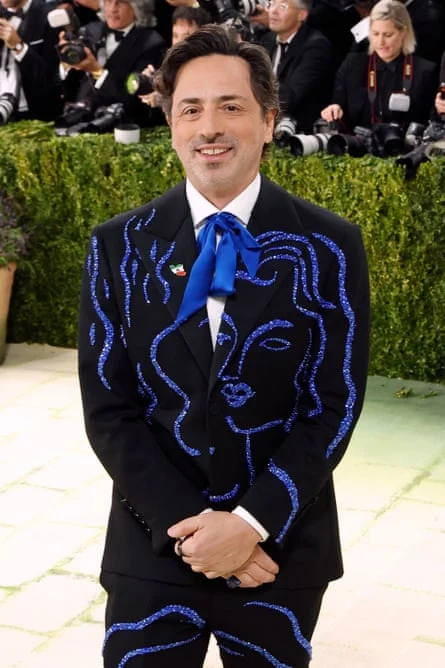
The annual press conference for the Metropolitan Museum of Art’s Costume Institute spring exhibition, typically an event of refined elegance, this year assumed an unsettling air reminiscent of historical class divides. Within the grandeur of the museum’s American wing, surrounded by spectacular marble sculptures, a beaming Lauren Sánchez Bezos was introduced by Anna Wintour as a “force for joy,” with Wintour further emphasizing that Sánchez Bezos and her husband, Jeff Bezos, had “genuinely, genuinely care[d] about giving back” through their involvement. This pronouncement, however, stood in stark contrast to the fervent protests that had been raging for days outside the institution, underscoring a profound disconnect between the opulent world within and the palpable discontent beyond its walls. The juxtaposition of official deference and public outcry created a dizzying sense of societal tension, laying bare the complexities of modern philanthropy, corporate ethics, and cultural patronage.
The Genesis of Controversy: Billionaire Benefactors and Escalating Inequality
The Met Gala, long a pinnacle of fashion and fundraising, has in recent years become an increasingly visible target for anti-excess movements. The 2026 iteration, however, marked its most controversial chapter yet, largely due to the substantial $10 million patronage provided by honorary co-chairs, centibillionaires Jeff Bezos and Lauren Sánchez Bezos. While Amazon, under Bezos’s leadership, had previously served as a lead sponsor in 2012, this year’s sponsorship unfolded against a backdrop of unprecedented global economic disparity. Bezos’s personal wealth has seen an astronomical increase, with his net worth estimated to have surged by tens of billions in recent years, reaching figures that place him among the wealthiest individuals globally. Concurrently, Amazon, the e-commerce giant he founded, reported record revenues exceeding $575 billion in 2025, solidifying its dominant position in the global economy. This burgeoning wealth, coupled with widely publicized controversies regarding Amazon’s labor practices and Bezos’s perceived political alignment, particularly "Donald Trump-appeasing decisions" related to media ownership, has rendered him an increasingly unpopular figure among New York City’s predominantly left-leaning fashion and arts communities.
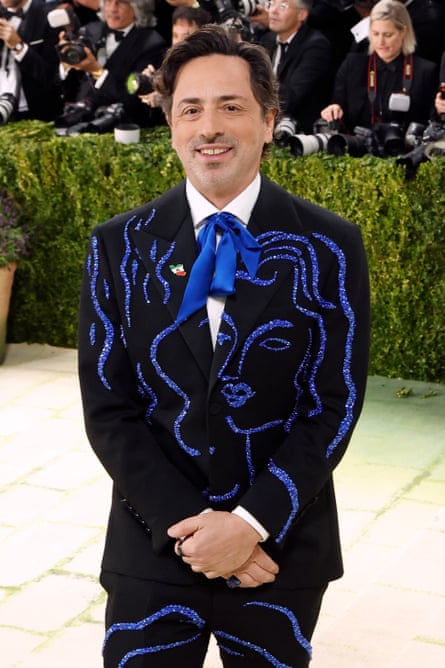
The Met Gala itself, an exclusive event with tickets reaching an astounding $100,000 per person in 2026—a significant jump from $35,000 in 2022—raised a total of $42 million this year. These funds are critical for the Costume Institute, which houses one of the world’s most extensive collections of historical clothing and textiles, enabling its conservation efforts and groundbreaking exhibitions. However, the escalating price point and an increasingly tech-oriented guestlist, which included prominent figures such as Google co-founder Sergey Brin, Meta CEO Mark Zuckerberg, and executives from OpenAI, intensified scrutiny. Critics argued that the presence of these tech magnates, many of whom have historically shown limited public engagement with traditional arts funding, particularly during periods when political administrations have sought to defund cultural institutions, made any suggestion of their genuine care for archival garment preservation appear disingenuous. The perception was that cultural cachet, rather than genuine philanthropic interest, was the primary driver for their participation.
Waves of Dissent: Protests and Alternative Narratives

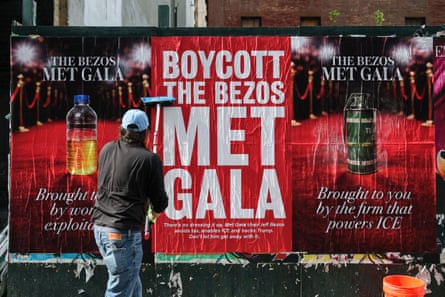
The public backlash against the Bezos sponsorship manifested in various forms, extending beyond mere online commentary. The activist group "Everyone Hates Elon" initiated a highly visible protest, projecting interviews with disgruntled Amazon workers onto the facade of Bezos’s Manhattan penthouse. These projections served as a stark reminder of long-standing allegations concerning Amazon’s demanding work environment, including reports from drivers who claimed they were forced to urinate in bottles due to relentless delivery schedules—a practice the group highlighted by circulating 300 containers of fake urine within the museum itself. This direct action aimed to disrupt the narrative of benevolence surrounding the gala and bring the plight of frontline workers into the opulent heart of high society.
Further amplifying the dissent was Gabriella Karefa-Johnson, a former US Vogue editor and influential voice in fashion. Karefa-Johnson not only publicly boycotted the Met Gala, turning down a coveted opportunity with a dream client, but also co-hosted a rival event titled "Ball Without Billionaires." This alternative gala deliberately placed Amazon workers on its catwalk, using fashion as a platform to center the very individuals whose labor practices were at the core of the controversy. In a powerful statement published on her Substack, Karefa-Johnson articulated her disillusionment: “Fashion has always had a talent for laundering. In these moments, it wraps the most sinister individuals in silk, under the warm glow of flashing lights, and manages to convince us it’s culture. This is not new. But I have my limits.” Her actions provided a significant internal critique, demonstrating that the discomfort was not confined to external activist groups but resonated within the fashion industry itself.
A Cinematic Reflection: "The Devil Wears Prada 2"
Adding an unexpected layer to the unfolding drama was the release of "The Devil Wears Prada 2" just days before the gala. The sequel to the iconic film, which famously featured Meryl Streep as Miranda Priestly, a character widely believed to be inspired by Anna Wintour, presented a plot eerily congruent with real-world speculation. The movie centered on a fictional tech baron, Benji Barnes, attempting to acquire the struggling Runway magazine for his girlfriend, Emily. Barnes, a character exhibiting distinct Bezos-like traits, including a post-divorce physical transformation fueled by cosmetic procedures and hormone treatments, paralleled unsubstantiated rumors circulating about Bezos’s alleged interest in acquiring Vogue for Lauren Sánchez Bezos.
Barnes’s chilling monologue in the film, predicting a future where AI would enable magazines to publish without human involvement, resonated with contemporary anxieties about technological disruption and corporate control over creative industries. In a compelling twist, Miranda Priestly, the formidable antagonist of the first film, emerged as a heroic figure pushing back against Barnes’s vision. Her scathing retort to Emily, "You’re not a visionary, you’re a vendor," underscored the film’s commentary on the commodification of culture and the erosion of artistic integrity by raw financial power. Screenwriter Aline Brosh McKenna stated the plot’s similarities to real-world events were coincidental, yet the decision to cast a rapacious Silicon Valley oligarch as a looming threat to the fashion world in a major cinematic release undeniably captured the prevailing zeitgeist and intensified the cultural conversation around tech’s burgeoning influence.
The Tech Barons’ Pursuit of Cultural Cachet
The increasing integration of tech billionaires into high fashion appears to be a calculated pursuit of cultural cachet. For Jeff Bezos and Lauren Sánchez Bezos, their prominent role at the Met Gala is but the latest maneuver in an ongoing campaign to cultivate fashion credibility, a process significantly facilitated by US Vogue. The magazine’s role has been pivotal, from a glowing profile of Sánchez Bezos in 2023 to a digital wedding cover in 2025. Over the past six months, the couple has been a fixture in the front rows of Paris Fashion Week shows and has announced multi-million dollar grants and scholarships aimed at promoting sustainable fabrics, signaling a concerted effort to embed themselves within the industry’s elite.
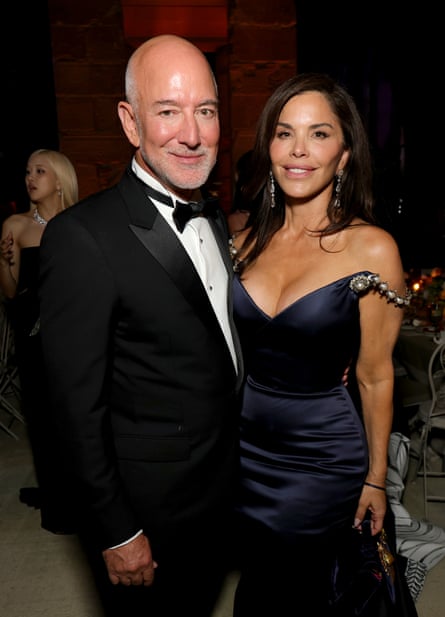
Anna Wintour, who transitioned from her role as US Vogue editor in 2025 to assume a broader leadership position at Condé Nast, continues to wield immense influence over the Met Gala. Her established track record involves integrating individuals she deems culturally and commercially significant into the fashion fold, even when their legitimacy is questioned by purists, as seen with figures like Kim Kardashian. Historically, the industry has largely aligned with Wintour’s directives. Indeed, several prominent designers have collaborated with Sánchez Bezos, including "image architect" Law Roach and Schiaparelli, which dressed her for the Met Gala in her signature cleavage-centric, hourglass aesthetic. However, a telling detail emerged: neither Roach nor Schiaparelli chose to feature images of their work with Sánchez Bezos on their respective Instagram grids, hinting at a subtle, underlying discomfort or strategic distance.
Industry Insiders’ Unease and Silence
In the aftermath of the gala, conversations with fashion insiders revealed a pervasive sense of unease regarding the Bezos sponsorship. Many expressed deep disappointment, viewing it as emblematic of a concerning trajectory at Condé Nast, which had recently shuttered its most progressive outlet, Teen Vogue, in November 2025, amidst broader industry challenges. The decision of numerous politically vocal celebrities—including Anne Hathaway, Bad Bunny, Rihanna, Margot Robbie, Beyoncé, Nicole Kidman, and Venus Williams—to attend the gala despite the significant public outcry also drew criticism. While a few, such as Taraji P. Henson and Mark Ruffalo, posted anti-Amazon videos, and unconfirmed reports suggested boycotts from Meryl Streep and Zendaya, the majority of A-list attendees appeared undeterred by the controversy.
The reluctance to speak out extended to the insiders themselves. One creative within the fashion world described the event as "horrific" and "naff," lamenting, "If it was up to me, it would be the end of the Met Gala." Yet, he admitted to his inability to publicly criticize, citing personal relationships with designers and stylists who had dedicated their efforts to creating the red carpet looks. An emerging designer, whose work was featured in the Costume Institute’s spring exhibition, confessed to a deep conflict upon learning of the Bezos involvement, which she discovered long after her engagement with the show had begun. She expressed concern about being "tokenized," believing that "the Jeff Bezoses of this world don’t care what broke people have to say." Ultimately, she concluded she could not forgo the invaluable exposure, highlighting the difficult position many creatives find themselves in: "It’s so hard to try to fight it before you have any power to make change."
Condé Nast’s Strategic Alignments and Economic Pressures
The fashion industry’s increasing reliance on tech billionaires is symptomatic of broader economic challenges facing luxury brands and media conglomerates like Condé Nast. Many traditional luxury sponsors of major cultural exhibitions are struggling financially. In 2025, Burberry announced plans to eliminate 1,700 jobs globally to reduce costs following a decline in profits, while Kering, the luxury group behind Gucci, Saint Laurent, and Balenciaga, closed 133 stores amidst a slowdown in the luxury market. This precarious financial landscape means that deep-pocketed tech patrons often become the sole viable funders for significant cultural initiatives. As the unnamed designer noted, "It’s hard to watch: people who have been working for years in the industry that should be protected and have given so much of their creativity, are getting laid off, losing work. And, at the moment, people like the Bezoses are the only ones funding this stuff."
Condé Nast, under the leadership of CEO Roger Lynch, appears to view tech billionaires not just as donors but as strategic allies. Beyond direct donations like the Met Gala sponsorship, collaborations such as a recent agreement allowing Amazon to license content from Condé Nast publications for AI-generated podcasts illustrate a deeper integration. This partnership reflects a pragmatic adaptation to a rapidly evolving media landscape, where content monetization and technological innovation are paramount.
The Future of the Met Gala and the Costume Institute
Amidst the growing complexities and incendiary nature of the Met Gala, there are indications that the Costume Institute itself is contemplating a shift in its long-term financial strategy. Andrew Bolton, the institute’s lead curator, disclosed to The New York Times that by 2028 or 2030, the institute aims to accumulate sufficient funds in a "quasi endowment" to diminish its annual reliance on the gala. Bolton acknowledged the event’s extraordinary success but also its overwhelming presence: "The Met Gala is extraordinary, but sometimes it dwarfs everything." He articulated concerns about the precariousness of the department’s current funding model, questioning, "What if there was another global disaster, and people were like, ‘I can’t come to a party?’" He further observed that the gala’s escalating scale and profile each year signal that "there will be a point where that’s not sustainable." This suggests an institutional awareness of the current model’s vulnerabilities and a desire for greater financial autonomy.
The Broader Implications: Normalization or Rupture?
Amy Odell, a fashion journalist and author of the "Back Row" newsletter, posited that the influence of tech billionaires in fashion is unlikely to wane. While she expressed skepticism about the rumors of Bezos acquiring Vogue, she highlighted numerous other motivations for his and other tech moguls’ engagement with the fashion industry. Amazon has long sought to penetrate the luxury fashion market, often encountering resistance from established brands like LVMH, whose CFO Jean-Jacques Guiony famously stated in 2016 that "the business of Amazon does not fit with LVMH full stop." The allure of glamour and public visibility also plays a significant role. Odell speculated that for the Bezoses, this involvement might simply be "fun," a component of Jeff Bezos’s "midlife crisis" transformation and Lauren Sánchez Bezos’s desire for the spotlight. In the current "oligarch attention economy," Odell theorized, "the tech people you can name" are effectively becoming the new Kardashians, commanding massive public interest and generating publicity that fashion brands readily embrace. "I think fashion is going to continue to embrace them," she asserted. "The question is whether they become normalized the way the Kardashians did."
For those at the pinnacle of the fashion industry, this normalization offers tangible benefits. Sánchez Bezos, for instance, represents what Odell terms a "VIC" or "very important client"—one of the approximately "2% of luxury buyers who account for 40% of sales." These high-net-worth individuals are the core clientele sustaining luxury brands, far more than aspirational customers. Condé Nast, as demonstrated by its partnership with Amazon for AI-generated podcasts, views Bezos as a crucial ally, whether for philanthropic donations or broader commercial agreements that align with its digital transformation strategy.
The reaction from Condé Nast’s CEO, Roger Lynch, following the gala’s controversy was particularly revealing. In a post-gala podcast interview, Lynch remarked that the uproar was "good… the intrigue around this event just seems to grow!" Odell interpreted this statement as indicative of a leadership that either relies on the short public memory of the internet or is simply detached from the criticisms of "normal people." If those at the industry’s apex are indeed insulated from public sentiment, the Met Gala and the broader luxury sector it represents risk drifting further into "oligarchland," where tech barons assume increasingly central roles. In such a scenario, the very creatives whose ingenuity and distinct vision have historically propelled the fashion industry forward may eventually find themselves not cheering on these new patrons, but rather contemplating a more radical response to reclaim its soul.