
 Reynand Wu
Migrant labor is the indispensable backbone of American agriculture, a constant and essential force that ensures the nation’s food supply. Despite their critical role, the individuals performing this grueling work often exist in a state of profound invisibility, a condition that extends beyond social marginalization to encompass a deliberate spatial concealment. Employer-provided housing, a common feature of this labor system, is frequently situated far from public view – tucked behind vast groves, remote from main roads, or secured on private land behind locked gates. These locations are not merely inconvenient; they are strategically designed to be hard to reach and, crucially, hard to leave, creating an isolated and controlled environment for the workforce.
The implications of this spatial isolation are profound, contributing to a system where workers, despite their vital contributions, often experience conditions that strip them of privacy, comfort, and dignity. Testimonies from migrant workers across the United States paint a consistent picture: long days spent toiling in fields or orchards, frequently six or seven days a week under extreme conditions, followed by a return to communal dormitories built in remote areas. These shared living spaces often feature cramped quarters, shared beds, and communal bathrooms, with kitchens that are frequently bare or inadequate. The lack of personal space and basic amenities is not merely an oversight; it is, as observers and legal advocates suggest, a feature of a system designed to minimize costs and maximize control over a vulnerable workforce.
The Architecture of Control: A Historical and Structural Overview
The reliance on migrant labor in U.S. agriculture has deep historical roots, evolving from seasonal domestic labor to a significant dependence on foreign workers, particularly under programs like the H-2A temporary agricultural visa program. Established under the Immigration and Nationality Act, the H-2A program allows agricultural employers to bring foreign nationals to the U.S. to fill temporary agricultural jobs for which U.S. workers are unavailable. A key component of this program mandates that employers provide housing for their H-2A workers, or a housing allowance if workers secure their own. While intended as a benefit, this employer-controlled housing often becomes a primary mechanism for control and isolation.
Historically, the practice of housing farmworkers on-site or in designated camps dates back to the early 20th century, notably during the Great Depression when photographs by Dorothea Lange depicted families living in makeshift shelters in places like Nipomo, California. While the visual conditions may have evolved, the underlying principle of employer-provided, isolated housing persists. Modern images from various states, including North Carolina, California, and Illinois, reveal uniform cabins or dormitory-style rooms, often arranged in rows. Inside, the spaces are stark: narrow beds, minimal furnishings, small windows, and barely enough room to move. Such visual evidence, far from mere documentation, serves as a powerful testament to a system that, while dependent on human labor, often diminishes the humanity of its workers. It highlights how physical space is engineered to facilitate a particular labor dynamic, effectively erasing the individuality and autonomy of those who keep the agricultural machinery running.
The Economic Imperative and Worker Vulnerability
The economic pressures driving the agricultural sector play a significant role in perpetuating these housing conditions. Farmers face tight margins, fluctuating market prices, and increasing competition, leading to a constant search for cost-saving measures. Providing housing, even if substandard, is often seen as more economical than offering wages that would allow workers to secure independent, market-rate accommodation, particularly in rural areas where affordable housing is scarce.
This economic reality intertwines with the inherent vulnerability of migrant workers. Many H-2A visa holders, for instance, are tied to a specific employer, meaning their legal status and ability to remain in the U.S. are directly contingent on their employment. This dependency extends to their housing, which is often provided by the same employer. In such a scenario, any complaint about working conditions, wages, or housing quality becomes a direct threat to their employment, their housing, and potentially their immigration status, risking forcible deportation. This design significantly limits worker autonomy and fosters a climate of fear, effectively silencing dissent. The fewer choices a person has, the easier it is for those in power to exert control.
Sociological Perspectives on Space and Control
Sociological frameworks offer critical insights into understanding this phenomenon not merely as an issue of "bad housing" but as a systemic, structural problem embedded within the labor economy. Conflict theory, for example, posits that societal structures and changes are fundamentally driven by struggles over power and resources. In the context of migrant labor, this struggle is overtly manifest in the very organization of living spaces. The control over housing by employers represents a significant power imbalance, reinforcing their dominance over the labor force.
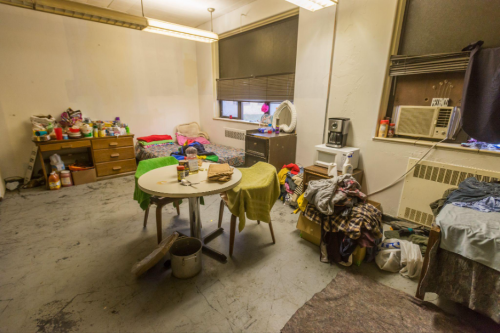
Building on this, the work of urban theorist Henri Lefebvre, who argued that space is "socially produced," is particularly relevant. Lefebvre contended that space is not a neutral backdrop but is actively shaped and organized by those in authority to reflect their interests and control. The arrangement of migrant housing—the remote locations, the standardized, cramped rooms, the communal facilities—is not driven by considerations of comfort, fairness, or optimal function for the inhabitants. Instead, it reflects the economic and power interests of those who control the production of that space. The shape of a room, the distance between residential units, and the overall layout of a facility are not random; they are deliberate choices that reinforce existing power relationships.
Similarly, Michel Foucault’s analysis of how institutions use architecture to enforce discipline provides another lens. In migrant housing, the physical space itself functions as a silent, yet powerful, instrument of control. These dormitories do not necessarily require overt bars or guards; the architecture itself serves to regulate behavior and limit freedom. Often designed to meet only the minimum legal standards for shelter—standards that can be distressingly close to those for carceral facilities—the architecture can implicitly dehumanize, and in doing so, it exerts control. The lack of privacy, the shared facilities, and the constant proximity to others, as recounted by workers, creates an environment where individuals feel perpetually monitored and are afraid to speak out. The pervasive sense that "these homes were not theirs" underscores how the system effectively denies workers a fundamental sense of belonging and ownership, further entrenching their subservience.
Data and Enforcement Challenges
The scale of migrant agricultural labor in the U.S. is substantial. While precise figures are challenging to ascertain due to the transient nature of the work and the presence of undocumented workers, the Department of Labor (DOL) reported certifying hundreds of thousands of H-2A positions annually in recent years, with over 370,000 certifications in fiscal year 2023 alone. These numbers represent only a portion of the total migrant farmworker population.
Enforcement of housing standards for these workers falls largely under the purview of the DOL and state agencies. Federal regulations (29 CFR Part 500) outline specific requirements for housing provided to H-2A workers, covering aspects like space, ventilation, sanitation, and kitchen facilities. However, consistent oversight and robust enforcement remain significant challenges. Inspections are often reactive rather than proactive, and resources for comprehensive monitoring are limited. Labor advocates frequently report that violations are widespread, ranging from overcrowding and unsanitary conditions to lack of potable water, heating, or cooling. Data from DOL Wage and Hour Division investigations consistently reveal violations related to housing, wages, and working conditions, leading to millions of dollars in back wages and penalties annually. Yet, many violations likely go unreported due to the workers’ fear of retaliation.
Perspectives from Stakeholders
The issue of migrant housing elicits varied responses from different stakeholders:
- Agricultural Industry Representatives: Often argue that they strive to comply with all federal and state housing regulations. They emphasize the logistical and financial burden of providing housing, particularly in remote areas, and assert that it is necessary to secure a reliable workforce. They may point to the costs involved in building and maintaining housing, suggesting that overly stringent regulations could make farming economically unfeasible.
- Labor Advocates and Human Rights Organizations: Consistently highlight the exploitative nature of the system, arguing that current regulations are insufficient, poorly enforced, and do not adequately protect workers’ rights or dignity. They call for stronger oversight, increased worker protections (including the right to organize and live independently), and pathways to permanent residency that would decouple housing from employment. Organizations like the Farmworker Justice Legal Institute and the Southern Poverty Law Center have documented numerous cases of substandard housing and abuse.
- Government Agencies (e.g., Department of Labor, Department of Homeland Security): Acknowledge their role in enforcing labor and immigration laws. The DOL conducts investigations and levies penalties for violations, while DHS oversees immigration enforcement. However, critics argue that these agencies often operate with insufficient resources and that current policies, particularly those linking visas to specific employers, inadvertently contribute to worker vulnerability.
Broader Implications and the Path Forward
The systemic issues surrounding migrant labor housing have far-reaching implications. Beyond the direct impact on workers’ health and well-being, these conditions raise fundamental questions about human rights, labor ethics, and the integrity of the U.S. food supply chain. A workforce living in conditions of spatial and social isolation, often under duress, affects not only their individual lives but also the broader societal fabric. It perpetuates a two-tiered system where essential workers are treated as disposable commodities rather than valued contributors.
Addressing this complex problem requires a multi-faceted approach. It necessitates not just stricter enforcement of existing housing standards but a fundamental re-evaluation of policies that create and sustain worker vulnerability. This includes exploring reforms to the H-2A program that would provide workers with greater autonomy, such as portable visas or enhanced protections against retaliation. Investment in independent, affordable housing options for agricultural workers, decoupled from employer control, could significantly empower individuals. Furthermore, increased public awareness and scrutiny are crucial. As scholars and citizens, bringing these often-hidden designs and their human cost to light is the first step toward meaningful change. We cannot effectively change what remains unseen or unacknowledged. The current state of migrant labor housing is not a temporary accident or an unavoidable housing crisis; it is, at its core, a deeply entrenched labor strategy that demands urgent and comprehensive reform.







