Kang Muslim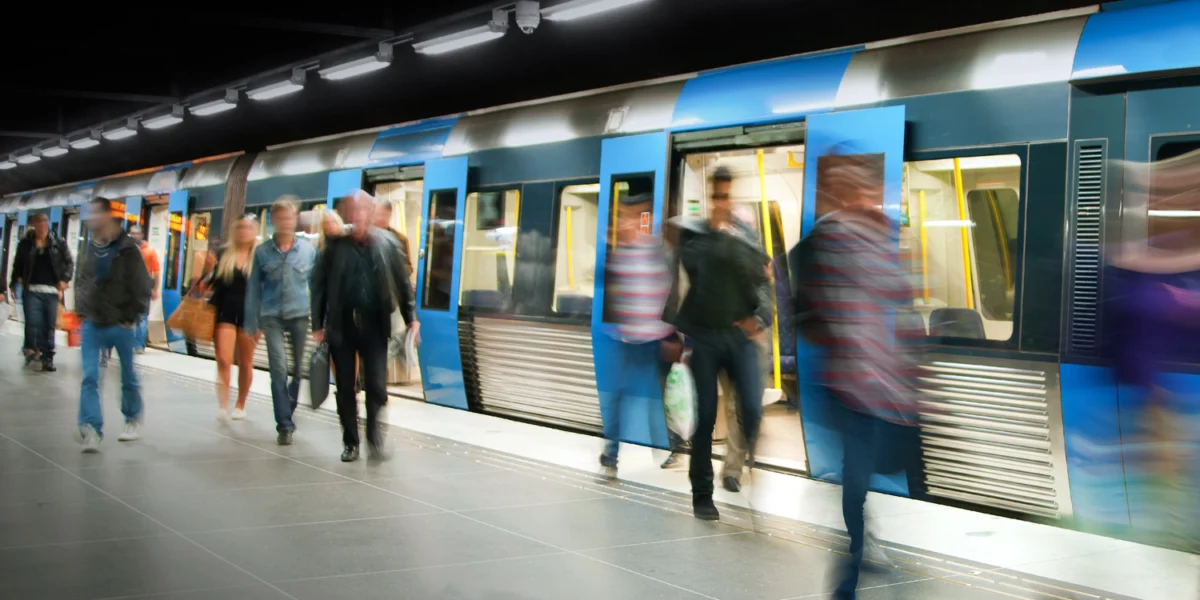
A comprehensive study conducted at the Eindhoven Centraal Railway Station in the Netherlands has revealed that human walking patterns in high-density environments are governed by a "stranger-following effect," where individuals instinctively mimic the route choices of the person directly ahead of them. This behavioral phenomenon, documented by researchers from the Eindhoven University of Technology and published in the Proceedings of the National Academy of Sciences (PNAS), suggests that local, low-level interactions between unfamiliar individuals are the primary drivers of large-scale crowd movement. The findings indicate that pedestrians will often prioritize following a predecessor over choosing the most efficient or shortest path to their destination, creating a ripple effect that researchers have termed "avalanches of choice."
The research, led by Ziqi Wang, Alessandro Gabbana, and Federico Toschi, utilized an unprecedented dataset spanning three years of pedestrian movement. By analyzing the trajectories of millions of travelers, the team demonstrated that when a pedestrian exits a train and faces a choice between a direct route and a slightly longer one, their decision is significantly influenced by the immediate "leader" in their visual field. This discovery challenges traditional models of pedestrian dynamics, which often assume that individuals act as rational agents seeking to minimize travel time or physical effort. Instead, the study highlights a profound social-imitation mechanism that operates even in the absence of established social ties or verbal communication.
The Technological Infrastructure of the Eindhoven Living Lab
The study was made possible through a sophisticated, large-scale pedestrian tracking system installed at tracks 3 and 4 of Eindhoven Centraal, one of the busiest transit hubs in the Netherlands. This "living lab" environment allowed researchers to observe natural human behavior without the artificial constraints of a laboratory setting. The tracking system utilized advanced overhead 3D stereoscopic imaging technology, which provides a high degree of accuracy while maintaining the anonymity of the subjects.
Covering an area of approximately 1,400 square meters, the sensors captured data at a frequency of 10 frames per second. Unlike traditional CCTV systems that record identifiable visual images, this depth-sensing technology creates a three-dimensional map of moving objects, allowing for a spatial resolution of approximately 1 millimeter. This level of precision enabled the researchers to detect even the most minute adjustments in speed and direction. Between March 2021 and March 2024, the system recorded over 30 million individual pedestrian trajectories, representing one of the most extensive datasets ever compiled in the field of crowd science.
The data collection period was particularly significant as it captured the transition of public movement patterns during the post-pandemic recovery phase. As rail travel returned to pre-pandemic levels, the researchers were able to observe how increasing crowd density affected individual decision-making processes. The focus remained on passengers disembarking from trains and navigating the platform toward the station exits, a scenario that provides a clear "origin-to-destination" flow for analysis.
Methodology: Distinguishing Strangers from Social Groups
One of the primary challenges in studying crowd dynamics is distinguishing between people who are traveling together and those who are moving independently. To isolate the "stranger-following effect," the research team developed a rigorous mathematical algorithm designed to identify and filter out social groups, such as families, friends, or colleagues.
The algorithm analyzed three primary variables: physical proximity, velocity synchronization, and directional alignment. If two or more individuals maintained a consistent distance from each other while matching their walking speed and heading over a sustained period, they were classified as a social group and excluded from the primary analysis. By removing these "pre-existing" social influences, the researchers could focus exclusively on how independent pedestrians interact with strangers.
The study narrowed its focus to a subset of approximately 100,000 passengers who exited trains from three specific door zones. These passengers were presented with a specific environmental choice: they could either take a direct, shorter path toward the exit or a longer path that required them to navigate around a large kiosk situated in the middle of the platform. By recording the relative order in which passengers exited the train and the specific route they chose, the researchers could quantify the probability of an individual following the person in front of them versus making an independent directional choice.
The "Avalanche of Choice" and Local Imitation
The core finding of the study is that the choice of the first few pedestrians in a "discharge wave"—the group of people exiting a train at once—exerts a disproportionate influence on those who follow. When the first person chooses a specific side of the kiosk, the second person is statistically more likely to follow that same path, regardless of whether it is the most efficient route. This creates a sequence of identical decisions that the authors describe as an "avalanche."
This behavior persists even when the chosen path becomes congested or when it is objectively longer than the alternative. The researchers posit that this is a form of cognitive offloading; in a complex, crowded environment, following the person in front reduces the mental effort required to scan for obstacles and navigate. By following a predecessor, a pedestrian effectively uses that person as a "pathfinder" who has already proven the viability of a specific route.
To validate these observations, the team constructed a theoretical routing model to simulate pedestrian behavior under various conditions. They tested the model against different hypotheses, including "herding" (following the majority) and "random walk" (stochastic movement based on speed variations). However, the simulations only matched the real-world data from Eindhoven Centraal when the "stranger-following effect" was integrated as the dominant variable. This confirms that local, one-on-one imitation is a more powerful driver of crowd flow than general environmental awareness or a desire for efficiency.
Chronology of the Research and Environmental Context
The timeline of the study reflects a long-term commitment to understanding urban mobility:
- March 2021: Installation and calibration of the 3D stereoscopic sensors at Eindhoven Centraal.
- 2021–2023: Continuous data collection, capturing millions of trajectories across various times of day, weather conditions, and train schedules.
- Late 2023: Implementation of the social group filtering algorithm and focus on the kiosk bottleneck scenario.
- Early 2024: Completion of the theoretical model and final data analysis.
- May 2024: Publication of the findings in the Proceedings of the National Academy of Sciences.
The environmental context of Eindhoven Centraal is critical to the study’s relevance. As a major intersection for the Dutch railway network (Nederlandse Spoorwegen), the station handles a diverse demographic of commuters, tourists, and students. The platform layout, featuring fixed obstacles like kiosks and stairs, represents a standard architectural challenge found in transit hubs worldwide. This makes the findings highly generalizable to other urban environments, such as airports, stadiums, and shopping malls.
Implications for Urban Design and Public Safety
The discovery of the stranger-following effect has significant implications for architects, urban planners, and safety officials. Traditional crowd management strategies often rely on the assumption that people will follow signs or move toward the widest available space. However, if pedestrians are naturally inclined to follow the person in front of them, designers must account for the potential for "unbalanced" flows, where one exit or corridor becomes dangerously overcrowded while another remains underutilized simply because the first few people chose the former.
In the context of emergency evacuations, this behavior could be both a risk and an opportunity. If a "leader" makes a wrong turn or heads toward a blocked exit, a large "avalanche" of people may follow them into a hazardous situation. Conversely, if emergency personnel or "trained leaders" can influence the first few individuals in a crowd, they may be able to guide the entire group more effectively.
Furthermore, the study suggests that the placement of "kiosks" or other physical obstacles should be carefully considered. If an obstacle is placed in a way that forces a split in the crowd, planners must recognize that the resulting flow will not necessarily be 50/50, but will be dictated by the initial "avalanche" of choices. This could lead to the redesign of platform furniture and the optimization of signage to break these imitation loops when they lead to inefficiency or congestion.
Fact-Based Analysis and Future Research Directions
While the study provides robust evidence for the stranger-following effect, the authors acknowledge certain limitations. The data was collected from three relatively fixed positions on a platform where the end goal (the exit) was clearly defined. In more open environments, such as public squares or parks where pedestrians have multiple goals and wider routing options, the influence of stranger-to-stranger imitation may be less pronounced.
Moreover, the study does not account for the psychological state of the pedestrians—whether they were in a rush, distracted by mobile devices, or familiar with the station layout. Future research may involve integrating these variables to see if "station experts" are less likely to follow strangers than occasional travelers.
The research conducted by Wang and his colleagues represents a shift toward "micro-sociology" in crowd dynamics. By focusing on the brief, almost invisible interactions between strangers, science is beginning to understand how individual impulses scale up into the massive, complex movements that define modern urban life. As cities become more crowded and transit hubs more complex, understanding the "avalanche of choice" will be essential for creating safer, more efficient, and more comfortable public spaces.