
 Johny Marice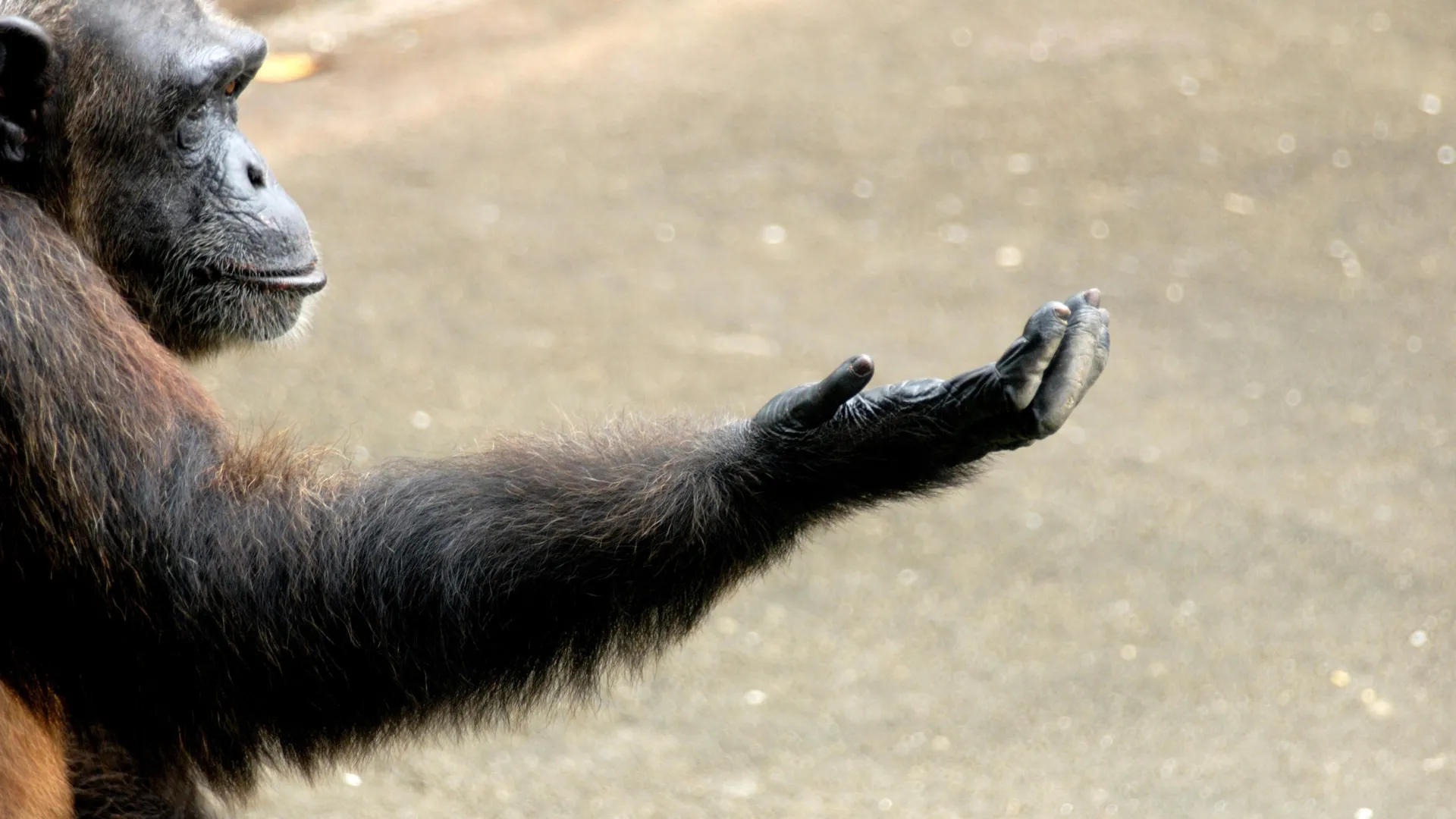
One of the most enduring puzzles in the study of human evolution has long captivated scientists: the overwhelming prevalence of right-handedness in our species. Across diverse cultures and geographical locations, approximately 90% of individuals exhibit a preference for their right hand, a degree of manual dominance unparalleled in the primate order. For decades, researchers have delved into the intricate interplay of brain structure, genetic predispositions, and developmental processes that shape handedness. Despite extensive investigation, the precise evolutionary trajectory that led to this distinctive human trait has remained largely elusive, a persistent enigma in our understanding of what makes us uniquely human.
Now, a groundbreaking new study, spearheaded by researchers at the esteemed University of Oxford, offers a compelling new perspective, pointing to two pivotal evolutionary milestones as the likely architects of our right-hand bias: the profound shift to obligate upright walking and the dramatic expansion of the human brain. This research, meticulously detailed in the latest issue of the scientific journal PLOS Biology, represents a significant leap forward in deciphering the origins of this fundamental human characteristic.
A Deep Dive into Primate Handedness
The extensive research project was led by Dr. Thomas A. Püschel, a Wendy James Associate Professor in Evolutionary Anthropology at Oxford’s School of Anthropology and Museum Ethnography, and Rachel M. Hurwitz, also from Oxford. They collaborated with Professor Chris Venditti from the University of Reading, bringing together a formidable expertise in evolutionary biology and anthropology. The team’s ambitious undertaking involved a comprehensive analysis of data meticulously collected from 2,025 monkeys and apes, encompassing a remarkable diversity of 41 distinct primate species. This broad comparative approach was crucial for establishing a baseline understanding of handedness across the primate family tree, allowing for the identification of uniquely human traits.
Unraveling Evolutionary Hypotheses
At the heart of the study was the application of sophisticated Bayesian modeling techniques. This advanced statistical framework enabled the researchers to account for the intricate evolutionary relationships between different primate species, ensuring that their analyses were grounded in a robust understanding of phylogenetic history. By carefully considering how species have diverged over millions of years, the team could more accurately pinpoint the evolutionary pressures and innovations that might have influenced handedness.
The researchers systematically tested a range of prominent hypotheses that have been proposed to explain the origins of handedness. These included examining the potential roles of factors such as tool use, dietary habits, preferred habitats, variations in body size, the complexity of social structures, the size and organization of the brain, and diverse patterns of movement and locomotion. Each of these elements was scrutinized for its potential correlation with observed patterns of hand preference across the primate species studied.
The Pivotal Role of Bipedalism and Brain Growth
Crucially, the initial analysis revealed that humans stood out significantly from all other primate species in their distinct handedness patterns. However, this unique human characteristic began to align more closely with the broader primate evolutionary narrative once two key anatomical and behavioral traits were incorporated into the models: brain size and the ratio between arm length and leg length. This latter metric is widely recognized by anthropologists as a reliable indicator of bipedal locomotion – the ability to walk on two legs.
The inclusion of these two features in the evolutionary models had a profound impact. After accounting for the influence of upright walking and increased brain size, the distinctiveness of humans in terms of handedness diminished considerably. This convergence in the data strongly suggests that the evolutionary combination of adopting a bipedal gait and the subsequent development of larger, more complex brains is the primary explanation for why humans evolved such a pronounced and consistent preference for using their right hand.
Tracing Handedness Through Hominin Ancestry
Beyond explaining current human handedness, the study’s sophisticated modeling capabilities allowed the researchers to make informed estimations about the likely handedness of our extinct hominin ancestors. Their findings indicate that early hominins, such as the critically important genera Ardipithecus and Australopithecus, probably exhibited only a mild preference for the right hand. This estimated level of handedness closely mirrors the patterns observed in modern great apes, which often display a more balanced distribution between right- and left-handed individuals, or a less pronounced bias than seen in humans.
This subtle right-hand bias appears to have undergone a significant intensification with the emergence of the genus Homo. Species within this genus, including Homo ergaster, Homo erectus, and the Neanderthals (Homo neanderthalensis), are predicted by the study to have possessed increasingly strong right-hand preferences. This evolutionary trend ultimately culminated in the extreme and widespread right-hand dominance that characterizes modern Homo sapiens. The timeline of these evolutionary developments, stretching from early bipedal hominins to our direct ancestors, provides a crucial chronological framework for understanding the gradual consolidation of right-hand preference.
The Anomaly of Homo floresiensis
Interestingly, the study identified one particular hominin species that deviated from this general evolutionary trend: Homo floresiensis. This diminutive species, often nicknamed the "hobbit" due to its exceptionally small stature, presented a unique case. The researchers’ predictions indicated that Homo floresiensis likely possessed a considerably weaker right-hand bias compared to its contemporaries.
According to the research team, this finding is entirely consistent with the broader evolutionary narrative they have outlined. Homo floresiensis is characterized by a relatively small brain size and retained physical adaptations that facilitated both climbing and upright walking, rather than being fully specialized for efficient bipedal locomotion. This suggests that the evolutionary pressures that drove strong right-hand dominance in other Homo species were either less influential or absent in the ecological niche occupied by Homo floresiensis.
A Two-Stage Evolutionary Process
The collective evidence from the study strongly supports a compelling two-stage evolutionary process that shaped human handedness. The initial stage involved the transition to obligate bipedalism. By freeing the hands from their role in locomotion, upright walking created novel opportunities and pressures that favored the development of more specialized and asymmetric hand use. This could have involved tasks like foraging, carrying objects, or early forms of tool manipulation, where a dominant hand could offer efficiency advantages.
The second, critical stage occurred as human brains underwent a significant expansion and increased in complexity. This period of encephalization, coinciding with advancements in tool technology and social behavior, appears to have solidified and amplified the nascent right-hand preference, making it a far more pronounced and universally distributed trait within the species. This synergy between freeing the hands and enhancing cognitive capabilities likely provided a powerful selective advantage for coordinated, specialized hand movements, with the right hand emerging as the preferred tool for fine motor skills and complex tasks.
Expert Commentary and Future Directions
Dr. Thomas A. Püschel, commenting on the significance of the findings, stated, "This is the first study to test several of the major hypotheses for human handedness in a single framework. Our results suggest it is probably tied to some of the key features that make us human, especially walking upright and the evolution of larger brains. By looking across many primate species, we can begin to understand which aspects of handedness are ancient and shared, and which are uniquely human."
The implications of this research are far-reaching, offering a robust framework for understanding a fundamental aspect of human biology. However, the study also opens up new avenues for future inquiry. Scientists still grapple with the persistent existence of left-handedness throughout human evolution. Understanding the evolutionary forces that have maintained this minority preference, and exploring the potential genetic or developmental factors that contribute to it, remains a critical area of research.
Furthermore, the role of human culture in reinforcing right-handedness over millennia warrants deeper investigation. It is plausible that cultural practices, educational systems, and the design of tools and environments have played a significant role in solidifying and perpetuating the dominance of the right hand, creating a feedback loop that further entrenches this asymmetry.
Beyond the primate realm, the researchers are also keen to explore whether similar limb preferences observed in other animal groups, such as parrots using one foot predominantly for manipulation or kangaroos favoring one limb for certain tasks, might indicate even deeper, shared evolutionary patterns. Such cross-species comparisons could reveal fundamental principles governing the evolution of motor asymmetry across the animal kingdom, shedding light on the deep evolutionary roots of handedness.
The University of Oxford’s School of Anthropology and Museum Ethnography, along with the University of Reading, have once again demonstrated their leadership in the field of evolutionary science. This study, with its comprehensive data analysis and innovative modeling, provides a significant breakthrough in unraveling one of humanity’s most enduring evolutionary mysteries, offering a clearer picture of how our ancestors’ journeys on two legs and the expansion of their minds shaped the very way we interact with the world.








