Danny Garick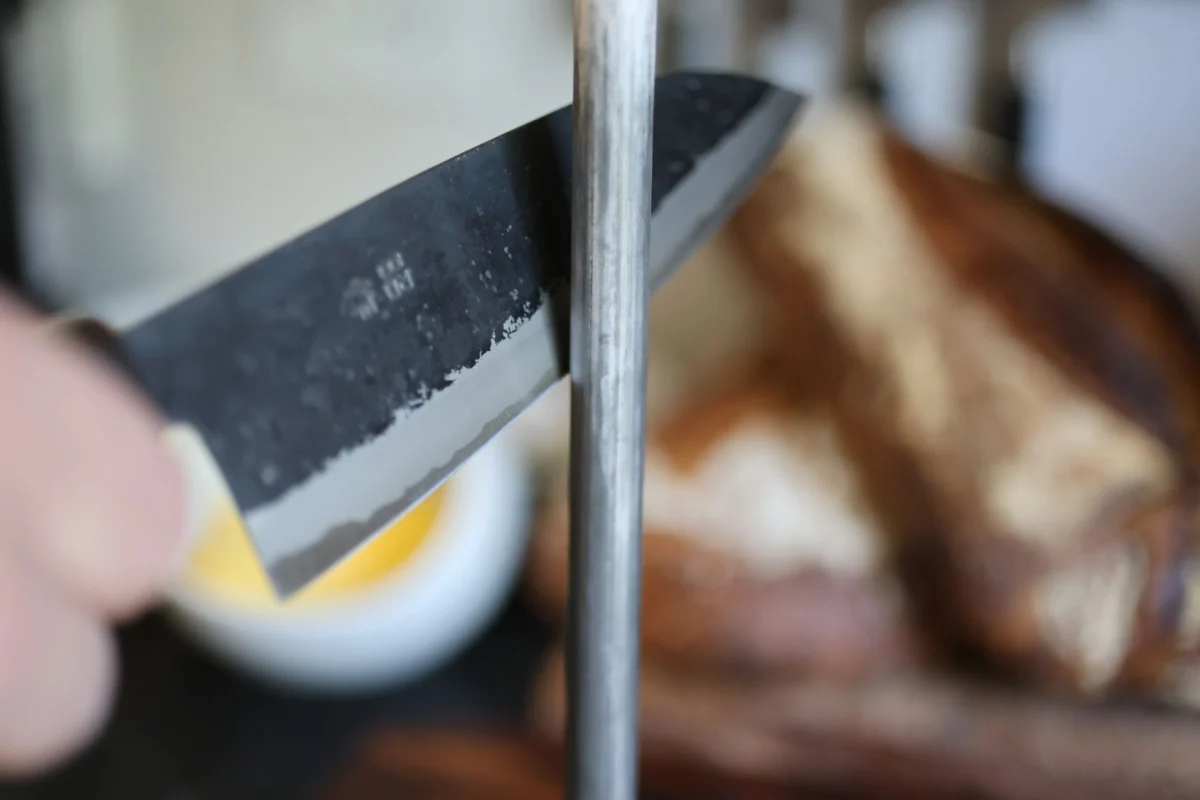
The distinction between a professional kitchen and a domestic one is often measured by the maintenance of its primary tools, specifically the cutlery used for daily preparation. For professional chefs, the integrity of a knife’s edge is not merely a matter of convenience but a fundamental requirement for safety, precision, and efficiency. While television cooking competitions frequently depict contestants utilizing a metal rod to "sharpen" their blades mid-service, this common visualization obscures a critical technical nuance. The tool in question is a honing rod, and its function is not to remove metal to create a new edge, but rather to realign the existing microscopic teeth of the blade. As culinary technology advances and high-carbon steel knives become more prevalent in home kitchens, the demand for specialized maintenance tools—specifically ceramic honing rods—has seen a significant uptick. Understanding the metallurgical requirements of modern blades is essential for any practitioner looking to preserve the longevity and performance of high-end cutlery.
The Fundamentals of Blade Geometry: Honing Versus Sharpening
To understand why a ceramic honing rod is necessary, one must first distinguish between the two primary stages of knife maintenance: honing and sharpening. Sharpening is an abrasive process that involves grinding away steel to create a new "V-shaped" edge. This is typically done using whetstones or electric grinders and is only required periodically. In contrast, honing is a maintenance task performed daily or even hourly. During use, the incredibly thin edge of a sharp knife—measured in microns—will eventually encounter resistance from cutting boards or food, causing the tip of the edge to fold or "roll" to one side.
When an edge rolls, the knife feels dull because the sharpest point is no longer making direct contact with the food. A honing rod acts as a corrective guide, pushing that rolled edge back into a straight, centered position. Traditional steel rods, often referred to as "honing steels," are effective for softer, Western-style blades. However, as the industry has shifted toward harder, more brittle steel alloys, the traditional steel rod has proven insufficient, leading to the rise of ceramic alternatives. Ceramic rods represent a middle ground; they are harder than steel and possess a fine abrasive quality, allowing them to realign the edge while simultaneously removing a microscopic amount of material, effectively refreshing the blade’s "bite" without the aggression of a whetstone.

Metallurgy and the Rockwell Hardness Scale
The necessity of a ceramic honing rod is dictated by the specific metallurgy of the knife in question. The hardness of knife steel is measured on the Rockwell C Scale (HRC). During the manufacturing process, steel is forged and heated to temperatures ranging from 1,500°F to 1,800°F before being rapidly cooled, or quenched. This process forces the carbon and iron molecules into a rigid lattice structure known as martensite.
Standard Western cutlery, produced by legacy manufacturers such as Wüsthof or Henckels, typically registers between 56 and 58 on the Rockwell scale. This steel is relatively "soft" in the world of high-end cutlery, meaning it is tough and resistant to chipping, but prone to edge rolling. A traditional steel honing rod is sufficient for these blades because the rod is harder than the knife.
Conversely, Japanese-style knives and high-end boutique blades often use high-carbon or "super steels" (such as VG-10, SG2, or Blue Super Steel), which are hardened to 60–62 HRC or higher. While these blades can be ground to a much finer angle and stay sharp for significantly longer periods, they are also more brittle. If a chef attempts to use a traditional ribbed steel rod on a 61 HRC blade, the rod may fail to move the steel, or worse, the ridges on the steel rod could cause the brittle edge of the knife to chip. Ceramic, which typically ranks much higher on the hardness scale than any kitchen steel, provides a smoother, harder surface that can safely interact with these high-performance alloys.
A Chronology of Knife Care and Maintenance
The lifecycle of a professional-grade knife follows a specific chronology of care, beginning with its initial forging and ending with its eventual thinning after years of use.

- Initial Forging and Factory Edge: The blade is heat-treated to a specific HRC and ground to an initial bevel (usually 15 degrees for Japanese knives and 20 degrees for Western knives).
- The Daily Honing Cycle: With every use, the edge undergoes microscopic deformation. For high-carbon blades, the user employs a ceramic honing rod every few hours of work. This stage maintains the "peak" of the edge’s performance.
- Abrasive Refreshing: Eventually, honing can no longer correct the edge because the metal has become fatigued or rounded. At this point, the blade requires a fine-grit whetstone (typically 3,000 to 6,000 grit). Ceramic rods with a 1,200-grit rating can often delay this stage by months.
- Major Sharpening: Once or twice a year, the knife requires a "reset" using coarse stones (400 to 1,000 grit) to remove enough metal to establish a brand-new primary bevel.
- Thinning: After several years of sharpening, the blade becomes thicker behind the edge. A professional smith must then grind the "cheeks" of the knife to restore its original geometry.
By integrating a ceramic honing rod into the daily cycle, the user significantly extends the time between the more invasive "Major Sharpening" and "Thinning" phases, thereby preserving the total mass and lifespan of the tool.
Comparative Analysis of Market Leaders: MAC vs. Messermeister
In the current market for ceramic maintenance tools, two products are frequently cited by industry professionals for their reliability and grit consistency: the MAC Ceramic Honing Rod and the Messermeister 12-Inch Ceramic Sharpening Rod. While both utilize a 1,200-grit ceramic surface—ideal for maintaining a "toothy" yet refined edge—they cater to different ergonomic preferences.
The MAC version features an 8.5-inch rod paired with a traditional wooden handle. Its shorter length makes it highly maneuverable and easier to store in standard knife rolls, which are often limited in space. However, the wooden handle requires more meticulous care; it cannot be soaked and must be dried immediately to prevent warping or bacterial growth.
The Messermeister option offers a 12-inch rod with a durable plastic handle. The additional length is a significant advantage for chefs using 10-inch chef knives or long slicing knives (sujihiki), as it allows for a full, sweeping stroke from the heel of the blade to the tip. The plastic handle is more resilient to the moisture and heat of a commercial kitchen environment. The primary drawback of any ceramic rod, including these two, is fragility. Unlike steel rods, which can survive a fall to the floor, a ceramic rod is likely to shatter upon impact, necessitating careful storage.

Economic and Safety Implications of Proper Honing
The move toward ceramic honing is supported by clear economic and safety data. A dull knife is widely recognized as the most dangerous tool in the kitchen. When a blade is unaligned or blunt, the user must apply more downward pressure to achieve a cut. This increased force reduces control and increases the likelihood of the blade slipping off the food and into the user’s hand. By maintaining a perfectly aligned edge through ceramic honing, the knife glides through cellular structures with minimal resistance, ensuring the user maintains total control.
From an economic perspective, the investment in a $35 to $50 ceramic rod protects a much larger investment. High-end Japanese chef knives often retail between $200 and $600. Without proper honing, these blades require more frequent professional sharpening. Professional sharpening services typically charge by the inch, and frequent grinding shortens the total lifespan of the knife. A ceramic rod effectively "pays for itself" within the first year by reducing the frequency of paid maintenance and extending the time before a knife must be replaced.
Broader Impact on Culinary Standards
The democratization of high-performance kitchen tools has shifted the expectations of the modern home cook. As consumers move away from disposable, low-quality "supermarket" knives toward artisan-crafted steel, the education surrounding maintenance must keep pace. The adoption of ceramic honing rods represents a professionalization of the domestic kitchen.
Experts in the field of metallurgy and culinary arts generally agree that the shift toward ceramic is irreversible. As steel technology continues to push the boundaries of hardness and edge retention, the tools used to maintain those edges must be equally advanced. For the modern cook, the ceramic honing rod is no longer an optional accessory; it is a critical component of a functional kitchen, ensuring that the precision engineered into the blade at the forge is maintained at the cutting board. Through the consistent application of these tools, practitioners can achieve a level of culinary precision that was once reserved only for the most elite professional environments.