Johny Marice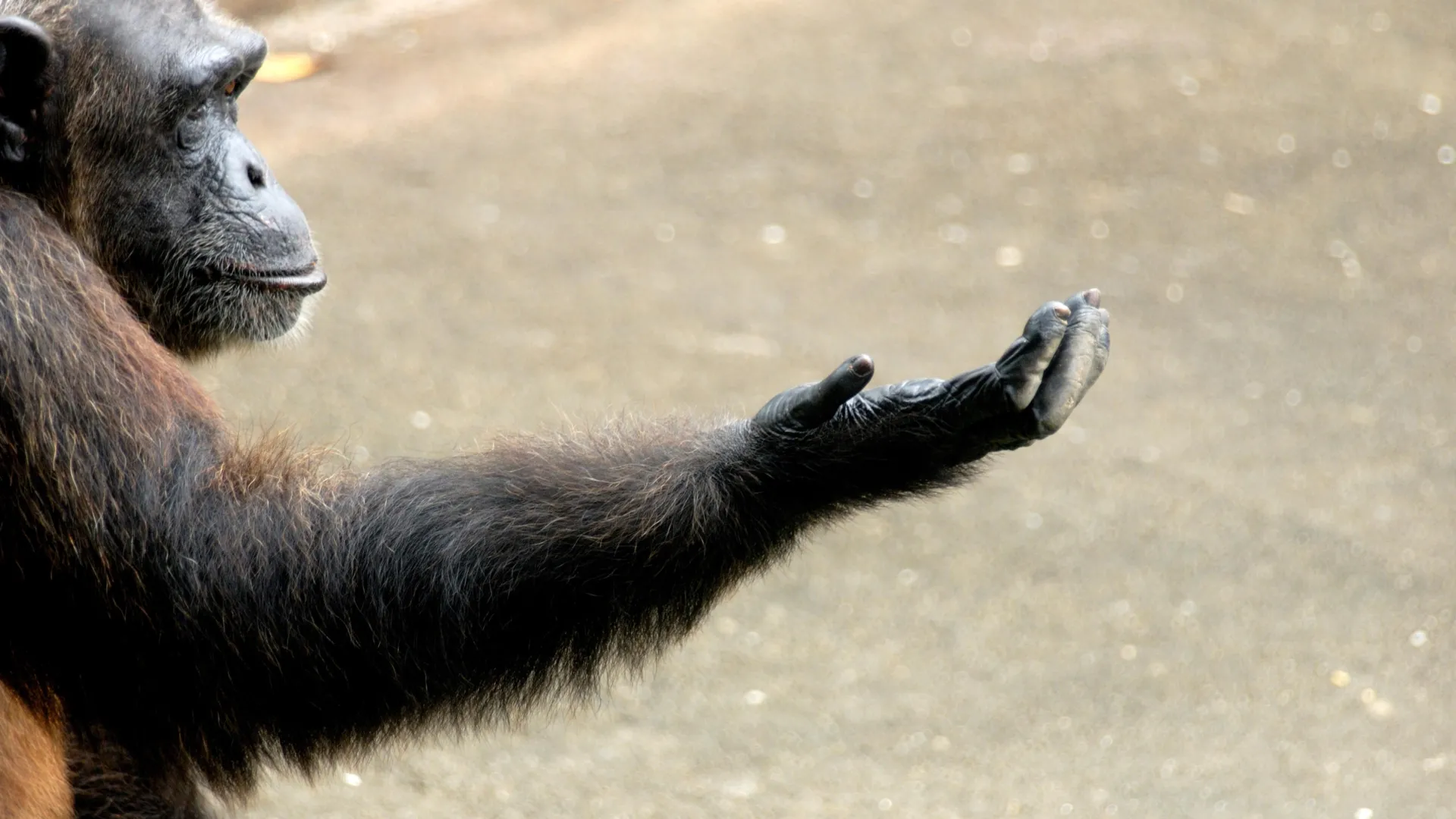
The enduring enigma of why humans exhibit such a pronounced preference for their right hand, a trait observed in approximately 90% of the global population across diverse cultures and unsupported by comparable dominance in other primate species, is beginning to yield to scientific inquiry. For decades, researchers have meticulously investigated the intricate interplay of brain structure, genetic predispositions, and developmental processes that underpin handedness. However, the definitive evolutionary drivers behind humanity’s striking right-hand bias have remained elusive, a persistent puzzle in the grand narrative of human evolution.
A groundbreaking new study, spearheaded by a collaborative team from the University of Oxford and the University of Reading, has identified two pivotal evolutionary milestones as the primary architects of this unique human characteristic: the transition to obligate bipedalism and the substantial expansion of the human brain. This research, meticulously detailed in the prestigious journal PLOS Biology, offers compelling evidence that these fundamental shifts in our ancestral lineage fundamentally reshaped the development and expression of handedness.
Unveiling the Primate Handedness Landscape
The comprehensive study, led by Dr. Thomas A. Püschel, a Wendy James Associate Professor in Evolutionary Anthropology at the University of Oxford, and Rachel M. Hurwitz from Oxford’s School of Anthropology and Museum Ethnography, in conjunction with Professor Chris Venditti from the University of Reading, embarked on an ambitious endeavor to dissect the origins of handedness. Their methodology involved a sophisticated analysis of behavioral data collected from an impressive cohort of 2,025 monkeys and apes, spanning an extensive diversity of 41 distinct primate species. This broad comparative approach was crucial for establishing a baseline understanding of handedness across the primate order before isolating the unique trajectory of human evolution.
The research team employed advanced Bayesian modeling techniques, a statistical framework that intelligently accounts for the evolutionary relatedness between species. This nuanced approach allowed them to rigorously test a spectrum of hypotheses concerning the origins of handedness, meticulously examining a wide array of potential contributing factors. These factors included the prevalence of tool use, dietary habits, the nature of their habitats, variations in body size, the complexity of social structures, the relative size of their brains, and distinct patterns of movement and locomotion. By systematically evaluating these variables, the researchers aimed to pinpoint which elements were most strongly correlated with observed patterns of handedness across the primate family tree.
The Bipedal Revolution and the Brain’s Expansion: A Converging Influence
Initially, when analyzed without considering specific evolutionary adaptations, humans appeared as a significant outlier in the primate handedness landscape. Their exceptionally strong right-hand preference stood in stark contrast to the more varied and often less pronounced asymmetries observed in other primate species. However, this perceived exceptionalism dramatically shifted once the researchers incorporated two critical evolutionary traits into their analytical models: brain size and the ratio between arm length and leg length. This latter metric, a well-established indicator of bipedal locomotion, provided a quantifiable measure of an individual species’ adaptation to upright walking.
The integration of these two variables into the analysis revealed a profound convergence. After accounting for the evolutionary impact of increased brain size and the morphological adaptations associated with bipedalism, the human lineage no longer presented as an isolated anomaly. The findings strongly suggest that the synergistic combination of habitually walking upright and the development of larger, more complex brains is the most plausible explanation for the evolution of such a pronounced and consistent right-hand preference in humans.
Tracing Handedness Through Hominin Ancestry
Beyond illuminating the origins of modern human handedness, this meticulously constructed study also provided an unprecedented opportunity to infer the likely handedness patterns of extinct human ancestors. By extrapolating their findings backward through the hominin lineage, the researchers were able to reconstruct a compelling chronology. Their analysis indicates that early hominins, such as Ardipithecus and Australopithecus, species that predated the genus Homo, likely exhibited only a mild preference for right-handedness. This pattern closely mirrors the handedness observed in modern great apes today, characterized by a less pronounced asymmetry and a greater proportion of individuals demonstrating ambidexterity or even left-handedness.
The study’s results indicate a significant strengthening of this right-hand bias with the emergence and diversification of the genus Homo. Fossil evidence and comparative anatomical studies suggest that species such as Homo ergaster, Homo erectus, and the Neanderthals likely possessed increasingly robust right-hand preferences. This evolutionary trajectory culminated in the extreme dominance of right-handedness that is a defining characteristic of Homo sapiens. This gradual amplification suggests a process of selection or developmental pathway that progressively favored right-hand proficiency over millions of years.
The Curious Case of Homo floresiensis
Intriguingly, the evolutionary narrative of handedness is not without its exceptions, and one species stands out as a notable deviation from the established trend: Homo floresiensis. This diminutive hominin species, colloquially nicknamed the "hobbit" due to its remarkably small stature, presented a unique case in the researchers’ analysis. The study’s predictive models suggested that Homo floresiensis possessed a significantly weaker right-hand bias compared to its contemporaries and later hominin relatives.
The researchers posit that this finding aligns seamlessly with the broader evolutionary context. Homo floresiensis is characterized by a relatively small brain size and retained a mosaic of physical adaptations that facilitated both arboreal (tree-climbing) behaviors and bipedal locomotion, rather than being fully specialized for upright walking in the manner of later hominins. This less specialized locomotor system, coupled with a smaller brain, likely meant that the selective pressures favoring strong right-hand dominance, driven by the freeing of hands for intricate tasks and enhanced cognitive processing, were not as pronounced in this unique lineage.
A Two-Stage Evolutionary Trajectory
The collective evidence from this comprehensive study points towards a compelling two-stage evolutionary process that ultimately led to the establishment of strong right-handedness in humans. The initial stage was marked by the transition to obligate bipedalism. This fundamental shift in locomotion liberated the hands from their role in supporting body weight and moving across the terrain. This liberation, in turn, created novel selective pressures that favored more specialized and asymmetric use of the hands. As hominins began to rely more heavily on their hands for manipulating objects, crafting tools, and engaging in increasingly complex behaviors, an asymmetry in skill and preference likely began to emerge.
The second, and arguably more significant, stage involved the dramatic increase in brain size and complexity that characterizes the human lineage. As human brains evolved to support higher cognitive functions, language, and intricate social interactions, the established asymmetry in hand use likely became more deeply ingrained and more strongly expressed. The larger brain, with its specialized hemispheres, may have further reinforced the tendency for one hand to become dominant for fine motor control and complex tasks. This synergistic interaction between freeing the hands and expanding the brain is believed to be the crucial evolutionary nexus that solidified the strong right-hand preference observed in modern humans.
Expert Commentary and Future Directions
Dr. Thomas A. Püschel emphasized the significance of the study’s comprehensive approach. "This is the first study to test several of the major hypotheses for human handedness in a single framework," he stated. "Our results suggest it is probably tied to some of the key features that make us human, especially walking upright and the evolution of larger brains. By looking across many primate species, we can begin to understand which aspects of handedness are ancient and shared, and which are uniquely human." This comparative perspective is vital for distinguishing traits that are fundamental to primate evolution from those that represent specific adaptations within our own lineage.
While this research provides a robust framework for understanding the origins of right-handedness, it also opens new avenues for scientific exploration. The persistent existence of left-handedness throughout human evolution, for instance, remains a complex question. Future research endeavors will undoubtedly delve deeper into the genetic, developmental, and potentially even cultural factors that have maintained this minority preference. Furthermore, the intricate role of human culture in potentially reinforcing or even instigating right-handedness over millennia warrants further investigation.
Beyond the human narrative, the researchers are also keen to explore whether similar limb preferences observed in other, distantly related animal groups, such as parrots and kangaroos, might signal deeper, more ancient evolutionary patterns. The potential for shared underlying mechanisms of lateralization across vastly different species could offer profound insights into the fundamental principles of brain organization and motor control in the animal kingdom. This ongoing scientific dialogue promises to further unravel the intricate tapestry of handedness, both within our own species and across the broader spectrum of life.