Danny Garick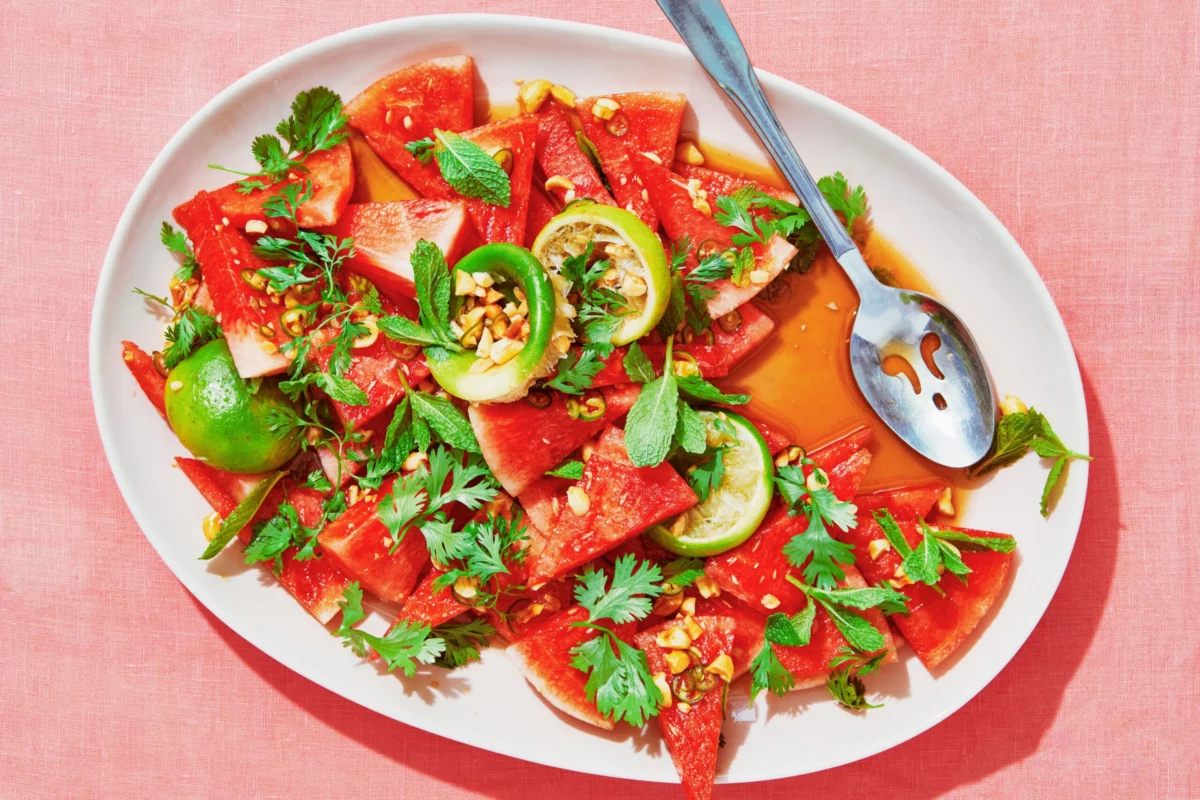
The traditional perception of Som Tam, the quintessential Thai salad, has long been synonymous with shredded green papaya. However, a modern culinary shift is redefining this staple, emphasizing that the dish is defined more by its preparation technique and flavor profile than by any single ingredient. At its core, Som Tam represents a harmonious balance of "som" (sour) and "tam" (pounded), a method that can be applied to a diverse range of produce. Among the most prominent contemporary variations is the Watermelon Som Tam, a dish that utilizes thick planks of fresh, sweet watermelon dressed in a traditional emulsion of lime juice, serrano chiles, fish sauce, and roasted peanuts. This adaptation exemplifies the versatility of Thai cuisine, transforming a classic savory-spicy profile into a refreshing summer side that maintains the "buzzing intensity" characteristic of Southeast Asian street food.
The Anatomy of the Som Tam Technique
To understand the rise of fruit-based variations like Watermelon Som Tam, one must first analyze the mechanical and chemical processes involved in its creation. The word "tam" refers to the act of pounding ingredients in a heavy mortar and pestle, typically made of wood or clay. This process is not merely about mixing; it is about bruising the aromatics—garlic and chiles—to release their essential oils, followed by the light bruising of the primary fruit or vegetable to allow the dressing to penetrate the cellular structure.
In the case of watermelon, the technique requires a delicate touch. Unlike the hardy, fibrous green papaya, watermelon has a high water content and a fragile crystalline structure. Culinary experts suggest that the "tam" element for watermelon involves pounding the dressing components first—chiles, garlic, dried shrimp (optional), and peanuts—before gently tossing the watermelon planks in the resulting slurry. This ensures the fruit retains its structural integrity while being coated in a complex layer of salt, acid, and heat.
Historical Context: From Isan to the Global Stage
The origins of Som Tam are rooted in the Isan region of Northeast Thailand and Laos, where it is known as "Tam Bak Hoong." Historically, the dish was a reflection of the local environment, utilizing unripened fruits that were readily available. Interestingly, the green papaya itself is not native to Southeast Asia; it was introduced by Portuguese and Spanish explorers in the 16th and 17th centuries. This historical fact underscores the inherent adaptability of the dish; Som Tam has always been an evolving concept, incorporating "new" ingredients into a traditional framework.
Throughout the 20th century, as labor migration brought Isan residents to Bangkok, Som Tam evolved from a regional specialty into a national icon. By the early 21st century, the Thai government’s "Global Thai" initiative—a program of gastro-diplomacy—helped export the dish to every corner of the globe. As Thai cuisine integrated into Western markets, chefs began to experiment with local, seasonal ingredients, leading to the "Farmers Market Challenge" style of cooking. This movement encourages the use of peak-season produce, such as summer watermelons, to replace or augment traditional ingredients that may not always be available in their optimal state in temperate climates.
Flavor Profile and Scientific Synergy
The success of Watermelon Som Tam lies in the scientific interaction between its five primary flavor pillars: spicy (phet), sour (prieo), salty (khem), sweet (wan), and savory/umami (klom klom).
- Sweetness: In traditional versions, palm sugar provides the sweetness. In the watermelon variant, the natural fructose of the fruit serves this purpose, offering a cleaner, more refreshing sugar profile.
- Acidity: Lime juice provides the necessary brightness that cuts through the sugar and balances the fermentation of the fish sauce.
- Heat: Serrano chiles, often used as a substitute for traditional bird’s eye chiles in Western kitchens, provide a sharp, immediate heat that lingers.
- Salt and Umami: Fish sauce (nam pla) provides the depth of flavor. For those seeking a vegetarian or vegan alternative, light soy sauce or fermented bean pastes are often utilized to maintain the umami backbone.
- Texture: Roasted peanuts provide a crucial fatty, crunchy counterpoint to the soft, hydrating texture of the watermelon.
The "buzzing intensity" mentioned by culinary critics refers to the capsaicin reaction from the chiles, which is modulated by the cooling effect of the watermelon’s high water content. This creates a sensory experience that is both stimulating and restorative, a key reason for the dish’s popularity during heatwaves and summer months.
Supporting Data: The Rise of Thai Flavors and Watermelon Consumption
The trend toward fruit-based Thai salads is supported by broader shifts in global food markets. According to data from the Thai Ministry of Commerce, the export of Thai food products and seasonings has seen a steady annual growth rate of approximately 5-7% over the last decade. Furthermore, market research indicates a 15% increase in "fusion" Thai dining experiences in North America and Europe, where traditional techniques are applied to local ingredients.
Watermelon production has also remained robust, with the Food and Agriculture Organization (FAO) reporting global production exceeding 100 million metric tonnes annually. As consumers move toward plant-based diets, the use of watermelon as a "steak" or a primary salad component has gained traction. The fruit is not only valued for its flavor but also for its nutritional profile, being rich in lycopene, Vitamin A, and Vitamin C. When paired with the metabolism-boosting properties of capsaicin from chiles, Watermelon Som Tam positions itself as a nutritionally dense, low-calorie culinary option.
Culinary Adaptations and Professional Responses
Professional chefs have noted that the versatility of the Som Tam dressing allows for significant customization. For a more substantial meal, the addition of poached shrimp or cold cooked chicken is common. These proteins absorb the lime and chile dressing, transforming the side dish into a balanced entrée.
Chef reactions to the watermelon variation have been largely positive, particularly in the context of high-end gastronomy. Many Michelin-starred Thai restaurants in Bangkok and abroad have introduced "Som Tam Phonlamai" (Fruit Som Tam) to their tasting menus. These versions may include a mix of dragon fruit, guava, apple, and watermelon. The consensus among culinary professionals is that the "Som Tam" label refers to the spirit of the dish—the aggressive seasoning and the use of the mortar—rather than a strict adherence to papaya.
"The goal is to achieve a balance that makes the palate dance," says one Bangkok-based culinary instructor. "Using watermelon isn’t a betrayal of tradition; it’s an exploration of the same principles of balance that our ancestors used with whatever fruit was hanging from the tree."
Broader Impact and Implications for the Food Industry
The rise of variations like Watermelon Som Tam has broader implications for the global food industry and cultural exchange. First, it highlights the success of "gastro-diplomacy," where a nation’s culture is shared and preserved through its culinary exports. As people become more familiar with the basic tenets of Thai flavor, they become more comfortable with innovative variations.
Second, this trend reflects a growing demand for "functional" and "experiential" eating. Modern diners are looking for dishes that provide a range of sensations—hot, cold, crunchy, soft—while remaining healthy. The Watermelon Som Tam fits this niche perfectly.
Finally, the adaptation of traditional recipes to include seasonal produce like watermelon supports local agriculture and reduces the carbon footprint associated with importing green papayas from tropical regions to temperate ones. By encouraging the use of what is available at a local farmers’ market, the "Farmers Market Challenge" philosophy promotes sustainability within the framework of international cuisine.
Conclusion: The Future of the "Som Tam" Identity
As the culinary world continues to globalize, the definition of traditional dishes will likely continue to expand. Watermelon Som Tam serves as a case study in how a recipe can maintain its cultural soul while changing its physical form. The dish retains the essential Thai identity—the "pounded sour" essence—while embracing the seasonal bounty of the wider world.
Whether enjoyed as a standalone refreshing snack on a humid afternoon or bulked out with protein for a summer dinner, Watermelon Som Tam is a testament to the enduring appeal of the Thai flavor palette. It proves that as long as the balance of spicy, sour, salty, and sweet is maintained, the "Som Tam" treatment can turn almost any produce into a sophisticated and intense culinary experience. This evolution ensures that Thai cuisine remains a living, breathing entity, capable of surprising the palate while honoring its historical roots in the Isan countryside.