Danny Garick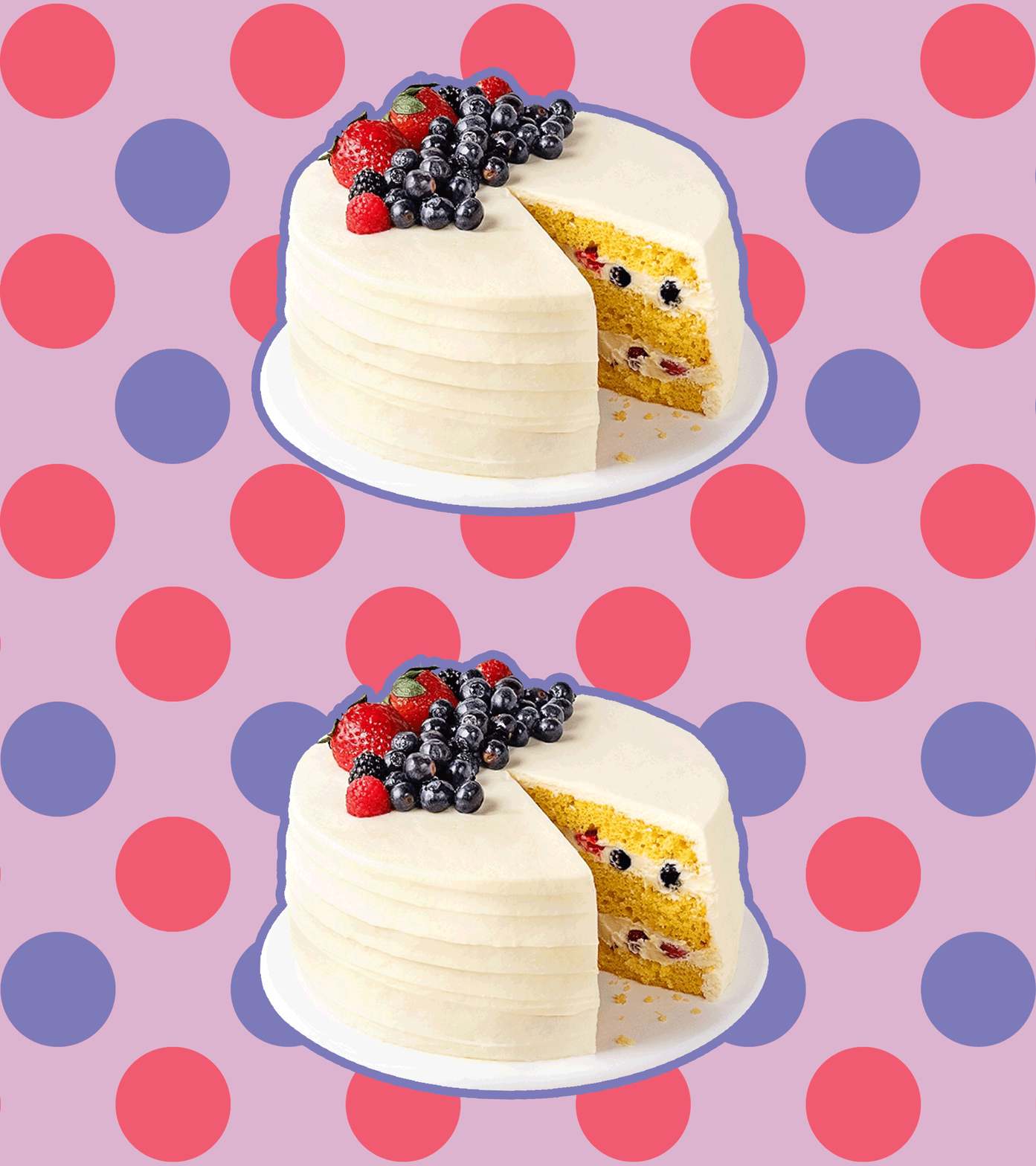
The Whole Foods Market Berry Chantilly Cake has transitioned from a regional specialty to a national retail cornerstone, driven by a combination of traditional culinary craftsmanship and modern social media virality. Originally developed at a single location in New Orleans, the dessert has become a case study in how specific grocery items can achieve "cult status," influencing consumer behavior across the United States. While grocery store bakeries have historically been viewed as providers of convenience rather than high-end patisserie, the Berry Chantilly Cake has challenged this perception, garnering praise from professional bakers and casual consumers alike for its technical execution and ingredient quality.
Product Specifications and Compositional Analysis
The Berry Chantilly Cake is distinguished by its specific structural and flavor profile, which departs from the heavy, sugar-forward compositions typical of mass-market grocery cakes. The foundation of the dessert consists of multiple layers of delicate vanilla sponge, characterized by a light crumb structure designed to absorb minimal moisture from the fruit and cream components.
The defining feature of the cake is the Chantilly frosting. Unlike standard American buttercream, which relies on a high ratio of powdered sugar and butter, the Whole Foods rendition utilizes a blend of mascarpone cheese, whipped cream, and cream cheese. This combination provides a structural stability similar to mousse while maintaining a sophisticated, tangy flavor profile. The addition of almond extract provides a distinct aromatic note that complements the acidity of the fruit.
The fruit component is comprised of four primary varieties: blueberries, blackberries, strawberries, and raspberries. In the standard preparation, these berries are layered between the sponge and frosting, ensuring that every serving contains fresh produce. The use of fresh, rather than macerated or frozen, fruit is a significant factor in the product’s premium positioning, as it requires a more rigorous supply chain and shorter shelf life than traditional shelf-stable cakes.
Historical Context and Regional Origins
The narrative of the Berry Chantilly Cake began approximately 15 years ago at the Whole Foods Market Arabella Station store in New Orleans, Louisiana. It was created by Charlyn Helgans, a bakery team member who sought to replicate a family recipe that resonated with the flavors of the South. The cake was initially a local success, capitalizing on the New Orleans tradition of high-quality, fruit-based desserts.
Recognizing the localized popularity of the item, Whole Foods Market began a phased rollout, introducing the recipe to other stores within the Southwest region before eventually standardizing the recipe for national distribution. This transition from a "secret" local favorite to a corporate standard involved significant logistical coordination to ensure that the delicate mascarpone-based frosting and fresh berry sourcing could be maintained across different climates and distribution hubs.
By the early 2020s, the cake had established itself as the top-selling bakery item for the company. Its availability in multiple formats—including full multi-tiered cakes, half-cakes, and individual slices—allowed it to penetrate various consumer segments, from wedding planners to individuals seeking a single-serving "affordable luxury."
The Role of Digital Media in Market Expansion
While the cake enjoyed steady growth for over a decade, its trajectory shifted significantly with the rise of food-focused content on TikTok and Instagram. The "TikTok Effect" refers to the phenomenon where a specific product experiences a massive surge in demand due to short-form video reviews. In the case of the Berry Chantilly Cake, the hashtag #BerryChantillyCake has amassed millions of views, featuring creators who document their first tasting experiences for a captive digital audience.
Market analysts note that the cake’s visual appeal—specifically the contrast between the white frosting and the vibrant colors of the fresh berries—makes it "algorithm-friendly." The trend reached a peak when professional chefs and former commercial bakers began posting "dupe" recipes or technical reviews, confirming the quality of the ingredients. This external validation from experts served to bridge the gap between "grocery store food" and "gourmet dessert," further cementing its status in the public consciousness.
The viral success of the cake has had a tangible impact on inventory management. During peak viral cycles, many Whole Foods locations reported sell-outs, leading the company to optimize its bakery production schedules to meet the increased demand. This digital-to-retail pipeline has become a vital component of Whole Foods’ marketing strategy, often requiring little to no traditional advertising spend.
Economic Implications and Consumer Behavior
The success of the Berry Chantilly Cake reflects broader shifts in the retail food industry, specifically the concept of "affordable luxury." In an era of fluctuating inflation and rising costs of living, consumers may eschew high-end restaurant desserts in favor of premium grocery items that offer a similar sensory experience at a lower price point.
The decision by Whole Foods to sell the cake by the slice is a strategic move that aligns with the "Lipstick Effect"—the theory that consumers will still purchase small, luxury items during economic downturns. At a price point significantly lower than a custom bakery cake but higher than a standard supermarket sheet cake, the Berry Chantilly slice occupies a unique middle ground.
Data from the specialty food industry suggests that the "premiumization" of grocery store bakeries is a growing trend. Consumers are increasingly scrutinizing ingredient labels, favoring products that avoid high-fructose corn syrup and artificial dyes. The Berry Chantilly Cake, with its emphasis on real cream, mascarpone, and fresh fruit, meets these evolving consumer demands.
Comparative Analysis of Commercial vs. Homemade Adaptations
The popularity of the cake has spurred a secondary market for "copycat" recipes. Professional culinary platforms have analyzed the cake’s components to provide home bakers with instructions on how to replicate the mascarpone-almond frosting. However, industry experts point out that the commercial success of the product relies on three factors that are difficult to replicate at home consistently:
- Sourcing Consistency: Large-scale retailers like Whole Foods have access to year-round berry supplies that maintain a specific caliber of ripeness and size, which can be challenging for individual consumers depending on their geographic location and the season.
- The Mascarpone-to-Cream Ratio: Achieving the exact density of the frosting—thick enough to hold layers but light enough to melt on the palate—requires specific industrial mixing techniques and temperature controls.
- Convenience and Labor: The assembly of a multi-layer fruit cake is labor-intensive. For many consumers, the opportunity cost of purchasing a pre-made slice outweighs the effort of baking, particularly during summer months when heat levels discourage the use of home ovens.
Official Responses and Corporate Strategy
Whole Foods Market, a subsidiary of Amazon since 2017, has leveraged the Berry Chantilly Cake as a flagship product to drive foot traffic. While the company does not typically release specific sales figures for individual SKUs, corporate statements have frequently highlighted the bakery department as a key driver of brand loyalty.
In response to the cake’s fame, Whole Foods has expanded the "Chantilly" line to include seasonal variations, such as mango or lemon versions, and even Chantilly-flavored muffins and cupcakes. This brand extension strategy indicates a corporate commitment to the flavor profile as a permanent fixture of their identity.
Furthermore, the company has emphasized its commitment to the original recipe’s integrity. Despite the pressures of national scaling, the use of real mascarpone and fresh berries remains a non-negotiable standard, a factor that PR representatives often cite when discussing the brand’s quality assurance protocols.
Broader Impact on the Grocery Industry
The phenomenon of the Berry Chantilly Cake has forced competitors in the grocery sector to re-evaluate their own bakery offerings. Retailers such as Costco, Publix, and Trader Joe’s have all seen increased scrutiny of their signature items as consumers begin to compare "viral" grocery products. This has led to an industry-wide push toward "cleaner" labels and more sophisticated flavor profiles in the refrigerated bakery section.
Moreover, the cake has become a symbol of the modern "hybrid" celebration. It is now common to see the Berry Chantilly Cake at high-stakes events such as weddings, graduations, and anniversary parties—occasions that were previously reserved for custom-ordered cakes from independent bakeries. This shift indicates a growing cultural acceptance of high-quality retail products as legitimate centerpieces for significant life events.
Conclusion
The Whole Foods Market Berry Chantilly Cake represents a successful intersection of traditional culinary values and modern digital marketing. By maintaining the quality standards established in a New Orleans kitchen 15 years ago while embracing the reach of social media platforms like TikTok, the product has achieved a level of market penetration rarely seen in the grocery industry. Its impact extends beyond sales figures, influencing consumer expectations for the retail bakery experience and setting a benchmark for what constitutes "good cake" in a commercial setting. As the industry continues to evolve, the Berry Chantilly Cake remains a primary example of how a single, well-executed product can define a brand’s reputation in the eyes of a national audience.