Prabowo Widodo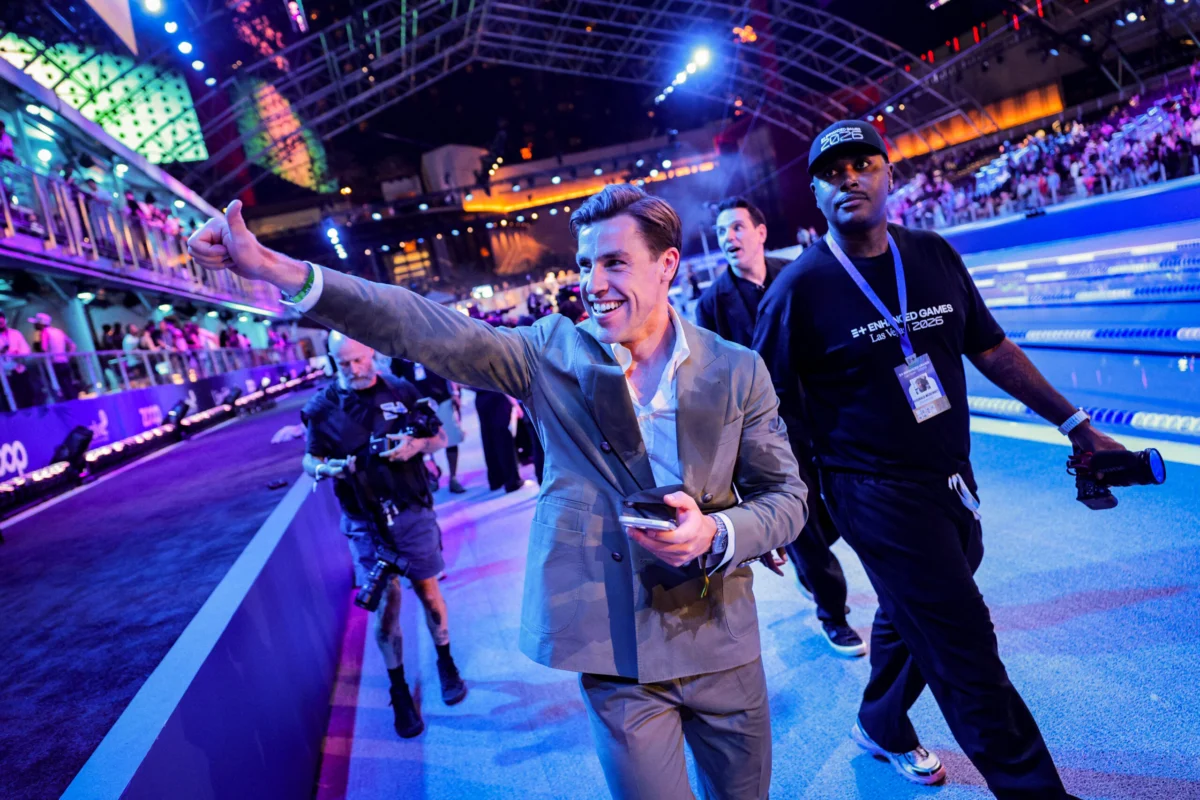
In the scorching Nevada desert heat, a scene unfolded that epitomized the bold, controversial spirit of the inaugural Enhanced Games. Boady Santavy, a two-time Olympic weightlifter from Canada, his physique honed to superhero-like proportions, strained under the immense weight of a barbell. His attempt to lift 183 kilograms (approximately 403 pounds) in the men’s snatch event – a challenge poised to break a world record and secure a $250,000 prize – concluded with a tortured few seconds before the bar crashed to the ground, a "no lift" verdict, and Santavy hobbling away in visible frustration. This dramatic moment was but one highlight of a singular athletic competition that has aggressively rewritten the rulebook for professional sports, embracing performance-enhancing drugs under medical supervision and sparking a global conversation about ethics, health, and commercial innovation in human capabilities.
A New Paradigm in Athletic Competition
The Enhanced Games, held over Memorial Day weekend in Las Vegas, brought together a diverse group of 42 athletes – including weightlifters, swimmers, and track runners – for an event unlike any other. Broadly dubbed the "steroid Olympics" by its detractors, the games have taken the unprecedented step of openly allowing and, in many cases, facilitating the use of performance-enhancing drugs (PEDs). Athletes were reportedly "juiced to the gills" with a cocktail of anabolics, testosterone, peptides, human growth hormones, and more, all administered under the watchful eye of a dedicated team of medical professionals. This revolutionary approach stems from a 12-week intensive training program in an elite compound in the United Arab Emirates, where competitors, varying widely in age, skill, and background, received personalized "protocols" – or drug regimens – tailored to their individual needs by doctors.

The financial incentives are substantial, further distinguishing the Enhanced Games from traditional amateur or professional circuits. Participants received "appearance fees" for simply competing, with significant additional cash prizes awarded for breaking world records or achieving first place. The stakes were particularly high in events like the 100-meter sprint and 50-meter freestyle, where record-breakers stood to gain up to $1 million. This combination of open drug use, medical oversight, and lucrative rewards represents a radical departure from the long-standing anti-doping ethos that underpins most international sports federations.
Silicon Valley’s Controversial Hand in Human Enhancement
Perhaps surprisingly, the genesis of this audacious spectacle can be traced back to Silicon Valley, a region more commonly associated with technological innovation than athletic prowess. The Enhanced Games are the brainchild of a startup founded by veterans of the crypto, artificial intelligence, and biotech sectors. It boasts high-profile backing from influential figures such as mega-investor Peter Thiel and former Coinbase executive Balaji Srinivasan, signaling a deep entanglement with the tech world’s burgeoning interest in human enhancement. This event positions itself at the forefront of a growing industry where injectable drugs and ingestible supplements are championed as sources of both physical empowerment and significant business opportunities.
This philosophy of "human enhancement" aligns with a broader movement in tech and biohacking that seeks to optimize human performance and longevity through scientific and pharmacological means. The venture capital flowing into such initiatives underscores a belief that traditional limitations on human capability are merely challenges to be overcome by technological and biochemical advancements. The Enhanced Games, in this context, serve not only as a competition but also as a high-profile demonstration of what these "enhanced" humans can achieve, implicitly promoting the products and ideologies of the human enhancement industry.

Condemnation and Defense: The Ethical Battleground
Unsurprisingly, traditional athletic health organizations have vehemently condemned the Enhanced Games. The World Anti-Doping Agency (WADA), the global regulatory body for the Olympics, issued a strong statement calling the event "dangerous and irresponsible." Travis Tygart, CEO of the U.S. Anti-Doping Agency (USADA), dismissed it as a "clown show that puts profit over people." These bodies emphasize the long-held wariness within the international health community regarding steroids and other performance-enhancing drugs, citing concerns about severe health risks and the integrity of sport. Even federally approved consumer drugs, when used for enhancement purposes outside medical necessity, have raised alarm among health professionals.
However, the organizers of the Enhanced Games present a counter-narrative, arguing that they are, in fact, addressing a fundamental flaw in organized sports: the pervasive, clandestine use of doping. They contend that a significant number of athletes already use PEDs secretly, leading to unsupervised and potentially dangerous practices. By contrast, the Enhanced model advocates for transparent drug use under stringent medical supervision, asserting that this approach prioritizes athlete safety by providing professional oversight and personalized medical protocols. This argument, while provocative, challenges the very foundation of anti-doping policies, shifting the focus from prohibition to controlled, medically guided enhancement.
The Business of "Enhancement": A Billion-Dollar Vision

Beyond the philosophical debate, the Enhanced Games are undeniably a commercial enterprise. The event is the marquee product of Enhanced Group, Inc., a newly public company that made its initial public offering (IPO) earlier this month, achieving a valuation of $1.2 billion. This financial success highlights the commercial ambitions driving the "enhanced" movement. Enhanced Group, Inc. is not just an events company; it also sells personalized health treatments, including peptides, GLP-1s for weight loss, testosterone injections, and other physically "enhancing" drugs. The company has further expanded its reach through a recent multi-million dollar strategic partnership with AI company Rezolve Ai, aimed at launching a digital telehealth platform for its consumer offerings.
The company’s vision extends far beyond Las Vegas: it aims to establish a global distribution network for consumers seeking to improve their physique and combat aging. While the drugs sold by Enhanced are FDA-cleared, critics express concern that by normalizing steroid use through its high-profile athletic competition, the company could inadvertently trigger a "trickle-down effect." This could lead to a wider cultural acceptance of enhancement, potentially encouraging consumers, particularly younger individuals, to seek out less regulated, more dangerous compounds with potentially disastrous health outcomes. The Games, therefore, are widely perceived as a massive advertisement for Enhanced Group’s products and, by extension, for the burgeoning peptide industry itself.
The Peptide Gold Rush: A Nation Under Enhancement
The narrative of human enhancement gains further traction amidst a "gold-rush-like boom" in the peptide industry, fueled by cultural shifts and potential regulatory changes. A significant moment occurred in February when U.S. Health Secretary Robert F. Kennedy Jr., known for his interest in health and fitness, publicly endorsed peptides on The Joe Rogan Experience podcast. Kennedy, whose own physique has been described as "enhanced," signaled his intent to encourage the FDA to increase public accessibility to certain peptides. Following this, the FDA is scheduled to convene a pharmaceutical advisory committee in July to consider loosening restrictions on previously banned peptides.

This impending regulatory shift has created a volatile market. Some startups are reportedly developing products based on chemicals residing in a legal "gray zone," hoping to be first-to-market if and when government restrictions ease. Others are adhering strictly to FDA-approved products. Silicon Valley has emerged as a hotspot for this frenzy, with tech professionals both investing in and personally using peptides with aggressive enthusiasm. Companies like Superpower, an AI longevity startup selling FDA-approved peptides, and Noho Labs, backed by prominent investor Elad Gil, have risen to prominence. Elite clubs, such as AGI House, have even begun hosting "peptide injecting parties," indicative of the booming personal use among the valley’s elite.
Beyond the Bay Area, peptide use is experiencing a nationwide surge, coinciding with an aggressive upswing in fitness culture. Recent reports indicate that teens and twenty-somethings are turning to peptides as part of the "looksmaxxing" trend – an extreme effort to enhance one’s physical appearance. The gym, increasingly, has become a central hub of cultural life for young people. This country-wide push for self-improvement is amplified by a social media landscape that often champions superficial ideals. Influencers like "Clavicular," a 20-year-old online figure, have controversially popularized peptides, alongside podcasters such as Joe Rogan and Andrew Huberman, who have platformed the topic to vast audiences. This confluence of tech investment, cultural trends, and potential regulatory shifts positions the peptide industry on the cusp of significant expansion.
The Spectacle in Sin City: More Than Just Sport
The atmosphere of the Enhanced Games on May 24th, the main day of competition, was a dazzling, sweltering blur. Held in a newly constructed, $50 million open-air stadium at Resorts World Las Vegas, the venue featured a track, swimming pools, and a spacious pavilion for weightlifters, all surrounded by enthusiastic crowds despite the intense heat. While superficially reminiscent of the Olympics, the event possessed a distinct "uncomfortable cocktail" vibe, blending elements of America’s Got Talent, WWE, and the historical grandeur of Gladiator. Stands were filled with youthful, colorful influencers, and a booming announcer provided commentary that evoked the excitement of WrestleMania. The evening culminated with a concert by Vegas staples, The Killers, underscoring the event’s entertainment-first approach.

Athletes, with their "bulking, unreal muscles glistening," moved through the grounds like mythical titans. Maximilian Martin, the 29-year-old CEO and co-founder of Enhanced, maintained his impeccably dressed composure, though his suit became progressively soaked as he enthusiastically hugged winning swimmers. Co-founder Christian Angermayer, the billionaire executive chairman, exuded a tranquil, breezy energy, making brief appearances to greet the press. Other prominent figures from the tech industry, such as biohacker Bryan Johnson, attended and even participated in commentary, adding to the eclectic mix of sports, tech, and celebrity.
The competitions themselves offered moments of genuine thrill. Athletes varied in their motivations and approaches:
- James Magnussen, a retired Australian Olympic swimmer, saw the games as an opportunity for a comeback, openly discussing how peptides and testosterone made him feel "18 again." Despite his optimism, he failed to break records and placed last in two races, highlighting the challenges even for "enhanced" former Olympians.
- Hafthor "Thor" Bjornsson, the massive Icelandic bodybuilder and former Game of Thrones star, a self-admitted past steroid user, sought to compete under safer, medically supervised conditions. Bjornsson, known for his incredible strength, made a thrilling attempt at a 1,135.4-pound deadlift world record but ultimately fell short.
- Hunter Armstrong, an American swimmer, represented a unique contingent: those competing without supplemental intake. Armstrong, who harbors Olympic ambitions and has a personal aversion to doping, participated primarily for the substantial prize money, successfully winning the 50-meter backstroke while remaining "unenhanced."
The day’s events concluded with a dramatic flourish. The final race, the men’s 50-meter swimming freestyle, delivered the Enhanced Games’ first and only world record. Kristian Gkolomeev, a towering Greek swimmer, sliced through the water in a blistering 20.81 seconds, besting the previous record by 0.07 seconds. The crowd erupted, lights blared red in a game-show-style celebration, and Martin, once again, rushed to embrace the triumphant Gkolomeev, solidifying the event’s narrative of "unlocked human potential."
Implications: Vanity, Commerce, and the Future of Human Potential

The critics of the Enhanced Games contend that its true motivations are not health or scientific advancement, but rather profit and vanity. The choice of Las Vegas, "Sin City," as the host city—a locale synonymous with hedonism and fleeting glory—strikingly contradicts any claims of a focus on long-term wellness or symbolic purity. Injecting oneself with drugs for massive muscles, in this view, aligns more with instant gratification and superficial appearance than with sustainable health practices, potentially overlooking future health consequences.
For the organizers, the "glory" lies in their ability to pioneer a new industry, commemorating its launch with an extravagant ritual that they themselves describe as a herald of future "scientific breakthroughs" and "human advancement." Their gamble is on the rapid expansion and widespread acceptance of this industry in the coming months, a bet that, much like the consumers of their supplements, appears to be made with an emphasis on immediate impact rather than distant repercussions.
The event’s nature as a massive advertisement was not lost on the nearly 200 journalists from around the world who descended upon Vegas. Provided with dedicated workspaces, meals, and access to athletes and executives, the press corps was an "integral part of their business plan"—free marketing to introduce this "Barnum & Bailey-esque curiosity" to the global masses.
As the games concluded late into the night, the exhausted press corps retreated. A chance encounter in a hotel bathroom between the author and Maximilian Martin, the CEO, who was admiring himself in a fresh suit, underscored the underlying spectacle. "Congratulations," the author offered, summarizing the monumental, if controversial, achievement. Martin’s brief nod and return to the mirror encapsulated the self-assured confidence of those ushering in a new era of human enhancement—an era that promises radical changes to sport, health, and societal perceptions of what it means to be truly "human." The Enhanced Games have thrown down a gauntlet, challenging established norms and forcing a reevaluation of the boundaries of human performance, with profound implications for the future of both athletics and the broader pursuit of self-optimization.