Ferry Irwandi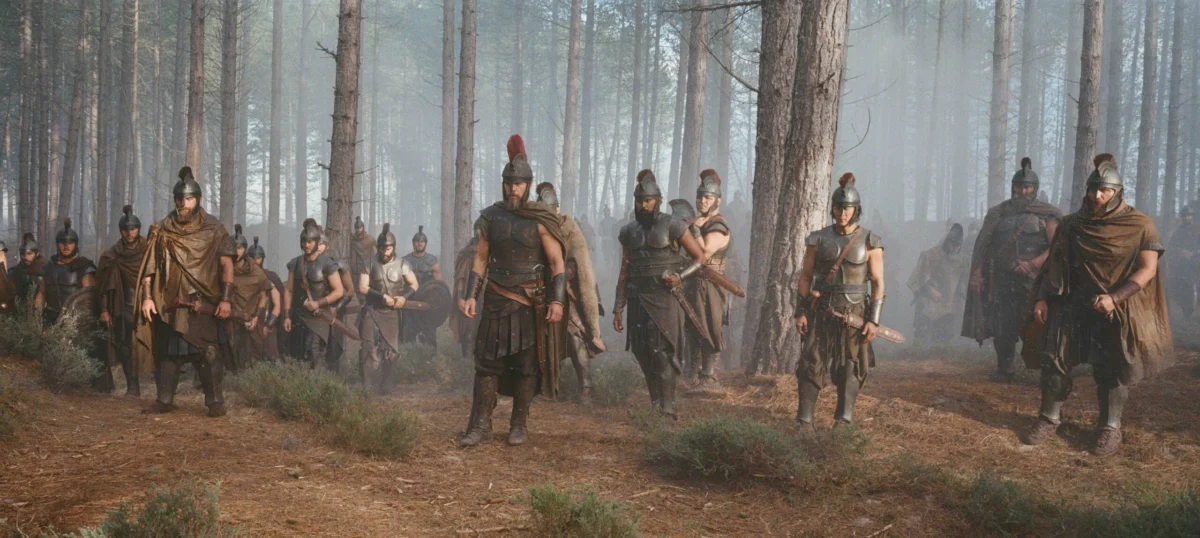
The production of Christopher Nolan’s latest cinematic undertaking, an expansive adaptation of Homer’s The Odyssey, marks a significant departure from contemporary CGI-heavy blockbusters, favoring instead a rigorous commitment to practical effects and authentic global locations. Distributed by Universal Pictures, the film features an ensemble cast led by Matt Damon as Odysseus, Anne Hathaway as Penelope, and Tom Holland as Telemachus. To capture the scale of a ten-year voyage through a world of gods and monsters, Nolan and production designer Ruth De Jong bypassed traditional studio environments, opting for a grueling international shoot that spanned the Mediterranean, the North Atlantic, and the North African desert.
The narrative framework of The Odyssey demands a visual transition from the charred remains of Troy to the rugged, isolated kingdom of Ithaca. While the source material is rooted in the geography of the Bronze Age Aegean, Nolan’s interpretation utilizes diverse topographical features from Greece, Italy, Iceland, Morocco, and Scotland to evoke the various mythical and mortal realms encountered by the protagonist. This multi-continent strategy was designed to avoid a uniform "sun-bleached" aesthetic, providing each leg of the journey with a distinct atmospheric identity.
Strategic Vision and the Nolan-De Jong Collaboration
The creative partnership between Christopher Nolan and Ruth De Jong, which previously yielded the Academy Award-winning Oppenheimer, was central to the logistical execution of The Odyssey. According to De Jong, the primary objective was to ground the mythological elements in tangible reality. The scouting process was exhaustive, involving the assessment of coastlines in Australia and forests in Japan before the production team settled on a European and North African circuit.
The decision to film in the off-season and in remote territories was a tactical move to maintain the isolation required for the story. "We wanted to start in the Mediterranean, and we wanted to end in the Mediterranean," De Jong stated in a recent production briefing. However, the team sought to avoid the cliché of the "classical" look, instead looking for environments that could convey the psychological weight of Odysseus’s displacement.

The Mediterranean Core: Greece and the Peloponnesian Legacy
Greece served as the historical and emotional anchor for the production. Filming lasted approximately one month in the region, focusing on sites that offered both architectural antiquity and natural grandeur. A significant portion of the Greek shoot took place in the Peloponnese, specifically near Pylos.
Nestor’s Cave, a site steeped in archaeological significance, was utilized for the sequence involving the Cyclops Polyphemus. By using a natural cavern rather than a soundstage, Nolan’s team was able to capture the authentic play of light and shadow, a hallmark of his cinematographic style. Further south in the Messinia region, the production utilized ancient olive groves for hunting sequences involving Telemachus.
The homecoming of Agamemnon, portrayed by Benny Safdie, was staged at Methoni Castle and the Acrocorinth. These locations provided the necessary "monolithic" scale to represent the Mycenaean power structures. Production notes indicate that the high-wind conditions at these sites were not viewed as a hindrance but as a vital environmental character. Nolan reportedly insisted on capturing the natural elements, such as the flapping of banners and the movement of dust, to emphasize the harsh reality of the ancient world.
The Fortress of Ithaca: Scaling the Heights of Favignana
While the historical Ithaca exists in the Ionian Sea, the production team selected the island of Favignana, located off the coast of Sicily, to represent Odysseus’s home. The focal point of this location was the Castle of Santa Caterina, a 15th-century fortification perched atop a steep hill.
The logistical challenges of filming on Favignana have become a point of interest for industry analysts. The cast and crew, including Matt Damon and Tom Holland, were required to perform a 30-minute uphill trek daily to reach the set. While helicopters were employed to transport construction materials and heavy equipment, the decision for the crew to hike was a deliberate part of the production’s immersive culture.

The choice of Favignana allowed the production to film in a location where the sea is visible from nearly every vantage point, reinforcing the theme of maritime longing. While the exterior of the palace and the rugged surrounding landscape were captured on-site, the intricate interiors were reconstructed on soundstages in Los Angeles to allow for controlled lighting and camera movement.
The Underworld in Daylight: Iceland’s Black Sands
One of the most visually striking departures from traditional Greek mythology is Nolan’s depiction of Hades. Rather than a dark, subterranean cavern, the film’s version of the Underworld was shot in Iceland during the summer solstice, utilizing the "Midnight Sun" to create a surreal, perpetual daylight.
Nolan’s vision for Hades focused on the black sand beaches near Hjörleifshöfði, east of Reykjavik. The stark contrast between the dark volcanic sand and the bright Icelandic sky serves as a visual metaphor for the purgatorial nature of the Land of the Dead. Interestingly, the production also found a "white sand" location in Iceland—referred to by the crew as Apollo’s Beach—which provided a stark contrast to the Hades sequences despite being only a few hours away.
To maintain biological accuracy within the film’s internal logic, De Jong sourced a specific breed of cattle in Iceland that shares genetic lineage with ancient Greek herds. This attention to detail underscores the production’s commitment to "practical world-building."
The Burning of Troy: Morocco’s Practical Scale
The siege and subsequent fall of Troy were filmed in the Atlas Mountains of Morocco. The village of Ait Benhaddou, a UNESCO World Heritage site known for its earthen clay architecture, served as the backdrop. The production team constructed approximately two and a half acres of practical sets adjacent to the existing village.

In a move that highlights Nolan’s preference for practical effects over digital manipulation, the production received permission to set fire to these custom-built sets to simulate the sacking of the city. This sequence involved hundreds of extras and complex pyrotechnics. De Jong noted that the heat and dust of the Moroccan desert presented some of the most difficult working conditions of the entire shoot, but the result provided a visceral realism that digital effects often struggle to replicate.
Additional Moroccan locations included Marrakech, for the interiors of King Menelaus’s palace, and the coastal town of Essaouira. The latter was used for the discovery of the Trojan Horse and the departure of the Greek fleet, utilizing the Atlantic coast’s dramatic waves to represent the beginning of the perilous journey.
The Highlands as Myth: Scotland’s Rugged Isolation
The final major location was the Scottish Highlands, specifically the area near Cullen. Though Scotland is geographically distant from the Mediterranean, its craggy cliffs and verdant, mist-covered landscapes were chosen to represent the island of the sorceress Circe, played by Samantha Morton.
The production utilized the serpentine paths and rugged rock formations of the Highlands to create a sense of disorientation and supernatural isolation. The "lonely home" of Circe was designed to look as if it were carved directly from the Scottish stone, blending seamlessly into the environment. This location choice emphasizes the "odyssey" as a journey into the unknown, where the familiar Mediterranean landscape gives way to more alien and intimidating territories.
Production Chronology and Technical Logistics
The timeline for The Odyssey reflects the massive scale of the project:

- Pre-Production (2023-2024): Eight months of global scouting and historical research.
- Principal Photography (Late 2024 – Mid 2025): A 120-day shoot across five countries.
- Post-Production (Current): Focus on sound design and the integration of IMAX 70mm footage.
The film was shot using a combination of IMAX and 65mm large-format film, a standard for Nolan productions. This choice necessitates large, heavy camera rigs, making the logistical feats in places like Favignana and the Highlands even more impressive. Industry experts estimate the production budget to be in the range of $200 million to $250 million, a significant portion of which was allocated to location logistics and the construction of practical sets.
Economic Implications and the Future of Epic Cinema
The "Nolan Effect" on local tourism is a well-documented phenomenon. Following the release of previous films like Interstellar and Dunkirk, the locations featured saw a measurable increase in tourism. Authorities in Greece and Italy have expressed optimism that The Odyssey will spur a renewed interest in archaeological and "set-jetting" tourism.
Furthermore, the film’s reliance on practical locations serves as a litmus test for the industry. In an era where many studios are pivoting toward "Volume" technology (LED wall environments), Nolan’s success with The Odyssey suggests that there remains a profound appetite for the authenticity and scale that only on-location filming can provide.
By weaving together the historical reality of the Mediterranean with the otherworldly landscapes of Iceland and Scotland, Nolan and De Jong have created a version of The Odyssey that is both grounded and grand. The film stands as a testament to the endurance of Homer’s narrative and the logistical capabilities of modern epic filmmaking.